Persian lessons and books, organized
Learn Persian (Farsi) online for free with step-by-step lessons from the alphabet to advanced reading: 1,700+ lessons and articles, a 12,000-word dictionary, 200 verbs, 20 practice tools, Rumi, Saadi and Hafez with English translations, and a guide to Iran. Written by Persian teacher Reza Nazari.
Every lesson on this site is free. Follow the five steps in order, or jump to your level. Persian (Farsi) uses a 32-letter alphabet written right to left, so most learners start with the script.
Learn the 32 letters, their sounds and joining forms.
Your first words, phrases and conversations.
How sentences work, and the verbs you need most.
Speak naturally and understand everyday Persian.
Read real texts, news and classical poetry.
The pages learners open most, each with Persian script, pronunciation and English meanings.
Type, convert, conjugate and practise in your browser. No sign-up needed.
Pick your goal. Every book is an instant PDF, and 2 or more books save up to 25% automatically.


The complete Learn Persian Online library as PDF ebooks: the step-by-step course and workbook, Learn to Speak Persian Fast at three levels, grammar, vocabulary, phrasebooks, conversations, idioms and proverbs, the six-book Farsi Reading series and three dictionaries.
$448.70$199.99 (55% less than buying them one by one)
Type in English, Persian or Finglish and get the Persian word with its transliteration, meaning and pronunciation.
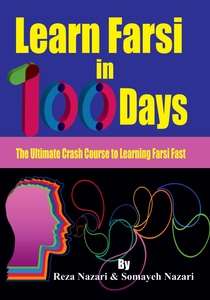
Learn Farsi in 100 Days: The Ultimate Crash Course...$14.99
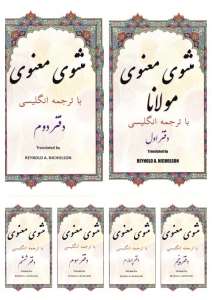
Masnawi: In Farsi with English Translation (6 Books)$59.99
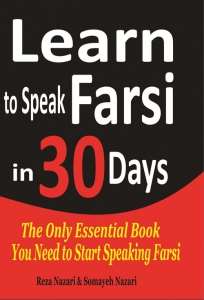
Learn to Speak Farsi in 30 Days: The Only...$17.99
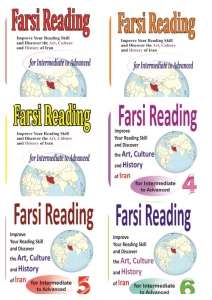
Farsi Reading Bundle: Improve your reading skill and discover...$59.99
Farsi Conversations: Learn the Most Common Words and Phrases...$17.99
The Gulistan of Saadi: In Persian with English Translation$11.99
Teaching Persian? See our books for schools, teachers and tutors.
Learn about the country where Persian is spoken: its cities, places to visit, key facts, and 3,000 years of history told one event at a time.
Read the great Persian poets in the original, with English translations and notes for learners.
Persian is one of the easier languages of the Middle East for English speakers. It is an Indo-European language, so it shares a distant family with English, its grammar has no grammatical gender and its verb endings are regular once you know each verb’s two stems. The main hurdle is the alphabet, which most learners can read within a few weeks. The US Foreign Service Institute places Persian in its Category III, at about 44 weeks of full-time study to professional fluency.
Yes. Farsi is the name of the language in Persian itself, and Persian is its English name. The Persian spoken in Afghanistan is called Dari and the variety spoken in Tajikistan is called Tajik; all three are mutually intelligible, with differences in pronunciation and some vocabulary.
With 20 to 30 minutes a day, most learners read the alphabet in two to four weeks and can hold simple conversations in a few months. Reaching an upper-intermediate level usually takes one to two years of regular study and practice with speakers.
Start with the alphabet, then follow a structured course such as Learn Farsi in 100 Days, which gives one short lesson a day. Add the 101 most common words and the most common verbs, and practise speaking from the first weeks.
Yes. All lessons, vocabulary pages, the dictionary and the practice tools on Learn Persian Online are free. The ebooks are optional for learners who want a printable course or a workbook.
The lessons and books are written by Reza Nazari, a Persian teacher and the author of more than 30 Persian learning books, and the Learn Persian Online team.
Do you teach Persian (Farsi), Dari or Tajik? List your profile in our tutor directory and meet students who are already learning Persian on this site, from all over the world.
Courses, readers, workbooks and children's books for Persian classes, heritage-language schools and private tutoring.
Persian and Pashto are both Iranian languages and both official in Afghanistan, but they are not mutually intelligible. Here is how their script, sounds, grammar and vocabulary differ, with side-by-side words and practice.
Ask "how much is this?" in Persian the way Iranians do, understand prices in tomans and rials, bargain politely and pay without confusion.