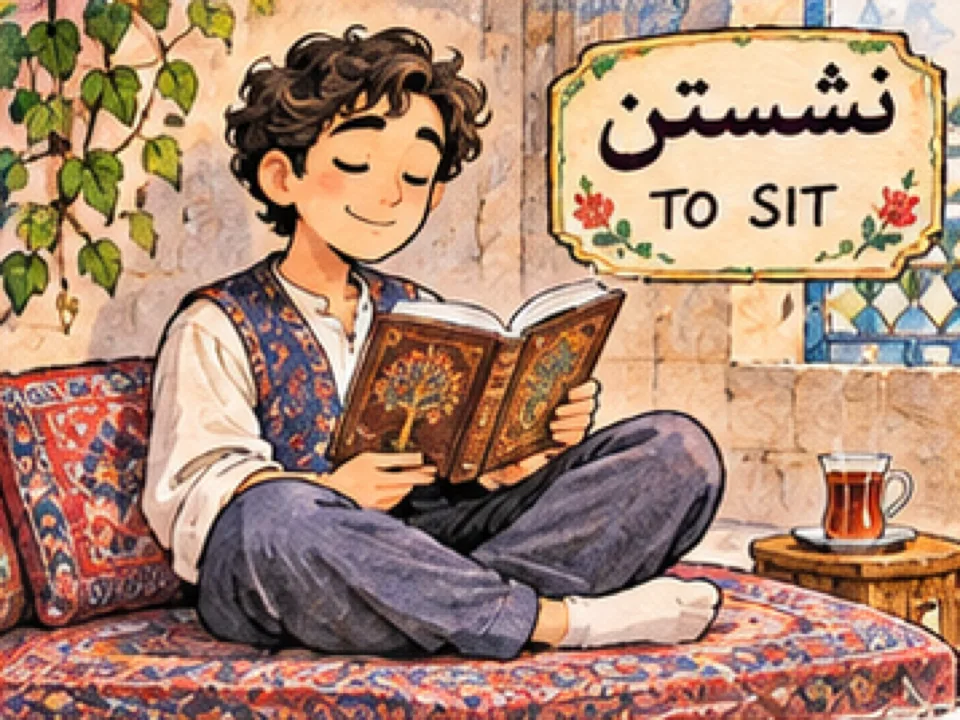
200 Most Common Persian Verbs
نِشَستَن
Watch and listen to Reza Nazari explain this verb. More in the free 200 Persian Verbs video course.
Sit – Perch
مُتَرادِفِ فارسی: مُستَقَر شُدَن
مُتَضادِ فارسی: ایستادَن
:صَرف
گُذَشتِه: نِشَستَم – نِشَستی – نِشَست – نِشَستیم – نِشَستید – نِشَستَند
حال: می نِشینَم – می نِشینی – می نِشینَد – می نِشینیم – می نِشینید – می نشینَند
:مِثال
.پیرِمَردِ هَمسایِه هَمیشِه دَر کِنارِ پَنجِرِه می نِشینَد
.مَن شَبها جلویِ تلوزیون مینِشینَم وَ فیلم نِگاه می کُنَم
.پِدَرِ مَن هَمیشِه رویِ صَندَلی مَخصوصِ خودَش می نِشینَد
نشستن (neshastan) means "to sit" or "to sit down" in Persian. See its irregular stems, full conjugation, examples, phrases and a quiz.
How to use نشستن (neshastan)
نشستن is a simple, intransitive verb meaning "to sit down". Its stems differ: the past stem is نشست (neshast) and the present stem is نشین (neshin), so "I sat" is نشستم (neshastam) and "I sit" is مینشینم (mineshinam). It is also used for birds perching and for planes landing: هواپیما نشست ("the plane landed").
The simple tenses describe the movement of sitting down. To say that someone is in a sitting position right now, Persian uses the perfect form: نشسته است (neshaste ast, "he is sitting"). The verb is everyday; in polite invitations you will hear بفرمایید بنشینید ("please have a seat"). The causative نشاندن (neshândan) means "to seat" someone.
Verb stems
| Infinitive | نشستن | /neshastan/ | to sit, to sit down; to land, to perch |
|---|---|---|---|
| Past stem | نشست | /neshast/ | used for past tenses |
| Present stem | نشین | /neshin/ | used for present, subjunctive and imperative |
Conjugation of نشستن
| Person | Simple past | Present | Future | Subjunctive |
|---|---|---|---|---|
| من I |
نشستم /neshastam/ |
مینشینم /mineshinam/ |
خواهم نشست /khâham neshast/ |
بنشینم /beneshinam/ |
| تو you (sg.) |
نشستی /neshasti/ |
مینشینی /mineshini/ |
خواهی نشست /khâhi neshast/ |
بنشینی /beneshini/ |
| او he / she |
نشست /neshast/ |
مینشیند /mineshinad/ |
خواهد نشست /khâhad neshast/ |
بنشیند /beneshinad/ |
| ما we |
نشستیم /neshastim/ |
مینشینیم /mineshinim/ |
خواهیم نشست /khâhim neshast/ |
بنشینیم /beneshinim/ |
| شما you (pl./polite) |
نشستید /neshastid/ |
مینشینید /mineshinid/ |
خواهید نشست /khâhid neshast/ |
بنشینید /beneshinid/ |
| آنها they |
نشستند /neshastand/ |
مینشینند /mineshinand/ |
خواهند نشست /khâhand neshast/ |
بنشینند /beneshinand/ |
Negative and imperative
| Persian | Pronunciation | English |
|---|---|---|
| ننشستم | /naneshastam/ | I did not sit down |
| نمینشینم | /nemineshinam/ | I do not sit down / I am not sitting down |
| بنشین! | /beneshin!/ | Sit down! (to one person) |
| بنشینید! | /beneshinid!/ | Sit down! (to several people, or politely) |
| ننشین! | /naneshin!/ | Don't sit down! |
The examples above, translated
| Persian | Pronunciation | English |
|---|---|---|
| پیرمرد همسایه همیشه در کنار پنجره مینشیند. | /pirmard-e hamsâye hamishe dar kenâr-e panjare mineshinad/ | The old man next door always sits by the window. |
| من شبها جلوی تلویزیون مینشینم و فیلم نگاه میکنم. | /man shab-hâ jelo-ye televiziyon mineshinam va film negâh mikonam/ | At night I sit in front of the TV and watch movies. |
| پدر من همیشه روی صندلی مخصوص خودش مینشیند. | /pedar-e man hamishe ru-ye sandali-ye makhsus-e khodash mineshinad/ | My father always sits in his own special chair. |
More example sentences
| Persian | Pronunciation | English |
|---|---|---|
| لطفا اینجا بنشینید. | /lotfan injâ beneshinid/ | Please sit here. |
| دیروز در کلاس کنار دوستم نشستم. | /diruz dar kelâs kenâr-e dustam neshastam/ | Yesterday in class I sat next to my friend. |
| یک پرنده روی شاخه نشست. | /yek parande ru-ye shâkhe neshast/ | A bird landed on the branch. |
| بچهها روی زمین نمینشینند. | /bachche-hâ ru-ye zamin nemineshinand/ | The children don't sit on the floor. |
Common phrases
| Persian | Pronunciation | English |
|---|---|---|
| بفرمایید بنشینید | /befarmâyid beneshinid/ | please have a seat |
| نشست | /neshast/ | meeting, session |
| پشت میز نشستن | /posht-e miz neshastan/ | to sit at a desk or table |
| هواپیما نشست | /havâpeymâ neshast/ | the plane landed |
In spoken Persian
In Tehran speech the present stem drops its first syllable: میشینم (mishinam, "I sit"), میشینه (mishine, "he sits"). The imperative is بشین (beshin), and the polite plural is بشینین (beshinin). بفرمایین بشینین (befarmâyin beshinin) is the everyday spoken "please have a seat".
Watch out for
- مینشینم means "I sit down" or "I usually sit". For "I am sitting" right now, use the perfect: نشستهام (neshaste am). In the same way ایستادهام means "I am standing".
- Note: one example on the page spells "television" as تلوزیون; the standard spelling is تلویزیون.
Practice
-
Translate into Persian: "Please sit down."
Show answer
lotfan beneshinid. لطفا بنشینید.
-
What is the past-tense form for "they"?
Show answer
neshastand نشستند
-
What does this sentence mean? هواپیما ساعت ده نشست.
Show answer
The plane landed at ten o'clock.
Related verbs in this course
This is lesson 197 of 200 Most Common Persian Verbs. For the sounds used in the pronunciation guide, see Persian pronunciation.


Take this lesson further

Study with the book
200 Absolutely Essential Persian Verbs
This free lesson is part of 200 Most Common Persian Verbs. The book puts the whole series in one printable PDF you can study offline.
Serious about Persian? Get all 30 of our Persian learning books for $199.99 (55% less than buying them one by one).
Free Persian Starter Kit (PDF)
The Persian alphabet chart and the 101 most common Persian words with pronunciation, in one printable PDF. You also get a one-time 15% code for any of our books.
We will email you new lessons and book news from Learn Persian Online. Unsubscribe any time.Free: 100 Core Persian Words + 20 Survival Phrases
Get the 14-page printable Starter Pack (all 32 letters, a 7-day reading plan, 100 core words and 20 survival phrases) and a short 5-email course. Free.
Practise with free Persian games