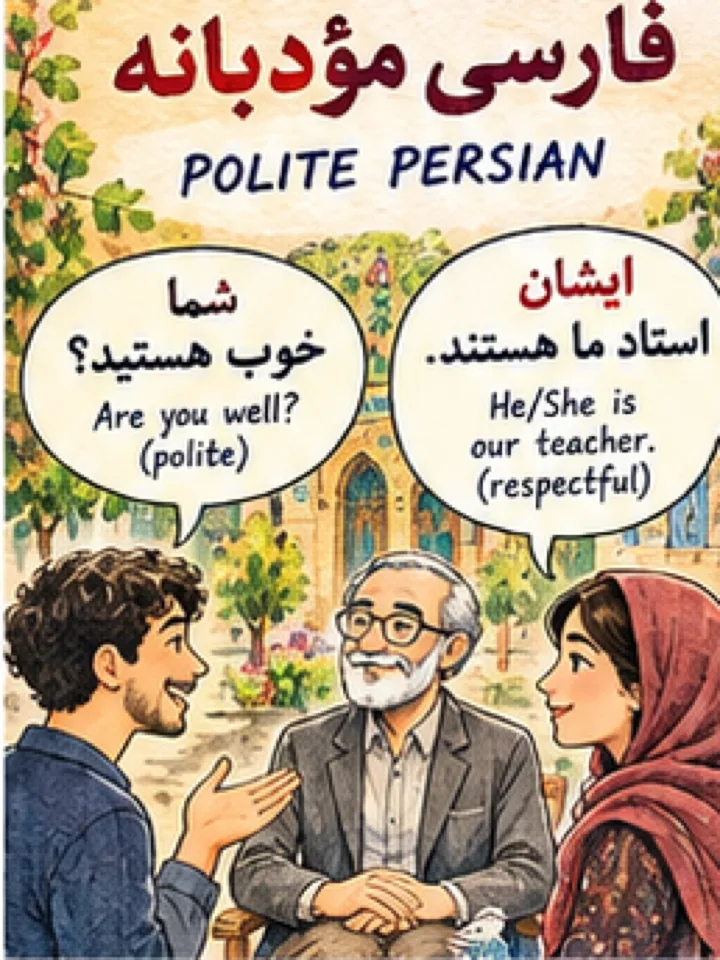
Learn when to use the polite pronouns shomâ and ishân in Persian, which verb endings they
polite pronouns
“شما” instead of “تو”:
شما is used as a polite substitute of تو
Example:
| Persian | Pronunciation | English |
| شُما دانِشجو هَستید؟ | /shomâ dâneshju hastid?/ |
Are you a student? |
| اِسمِ شُما چیست؟ | /esme shomâ chist? | What’s your name? |
| شُما کجا زندگی می کنید؟ | /shomâ kojâ zendegi mikonid?/ | Where do you live? |
“ایشان” instead of “او”:
“ایشان” is used as a polite substitute of “او”
Example:
| Persian | Pronunciation | English |
| ایشان اَهلِ کُجا هَستَند؟ | /ishân ahle kojâ hastand?/ | Where is s/he from? |
| اِسمِ ایشان چیست؟ | /esme ishân chist?/ | What is his/her name? |
| ایشان کُجا زِندِگی می کنند؟ | /ishân kojâ zendegi mikonand?/ | Where does s/he live? |
EXERCISE: write polite sentence.
1. آیا تو دانشجو هستی؟
2. او استاد هست.
3. خانه ی او اینجا هست.
4. تو ایرانی هستی.
5. او اینجا زندگی می کند.
Learn when to use the polite pronouns shomâ and ishân in Persian, which verb endings they take, and how politeness sounds in everyday speech.
Polite pronouns: shomâ and ishân
Persian, like French or German, has a polite way to say "you". It also has a polite way to say "he" or "she", which English does not. Choosing the right one is part of Persian courtesy (ادب, adab), and Iranians notice it.
Shomâ instead of to
تو (to) is the informal "you" for one person. شما (shomâ) means "you" for several people, and it is also the polite "you" for one person. Use شما with strangers, shopkeepers, older people, teachers, colleagues and anyone you are not close to. Use تو with close friends, family members your age or younger, and children. When unsure, choose شما.
شما always takes the plural verb ending -id, even when you speak to one person: شما خسته هستید؟ (shomâ khaste hastid?), "Are you tired?"
Ishân instead of u
او (u) means "he" or "she". When you talk about someone you respect, such as a teacher, an older relative or a guest, use ایشان (ishân) with a plural verb: ایشان استاد ما هستند (ishân ostâd-e mâ hastand), "He / She is our professor". Using او about such a person in front of them can sound cold.
| Informal → polite | Pronunciation | English |
|---|---|---|
| تو چطوری؟ ← شما چطورید؟ | /to chetori? → shomâ chetorid?/ | How are you? |
| اسمِ تو چیست؟ ← اسمِ شما چیست؟ | /esm-e to chist? → esm-e shomâ chist?/ | What is your name? |
| تو کجا کار میکنی؟ ← شما کجا کار میکنید؟ | /to kojâ kâr mikoni? → shomâ kojâ kâr mikonid?/ | Where do you work? |
| او معلم است. ← ایشان معلم هستند. | /u mo'allem ast. → ishân mo'allem hastand./ | He / She is a teacher. |
| او کجاست؟ ← ایشان کجا هستند؟ | /u kojâst? → ishân kojâ hastand?/ | Where is he / she? |
The page's examples, explained
| Persian | Pronunciation | English |
|---|---|---|
| شما دانشجو هستید؟ | /shomâ dâneshju hastid?/ | Are you a student? (polite, one person) |
| اسمِ شما چیست؟ | /esm-e shomâ chist?/ | What's your name? |
| شما کجا زندگی میکنید؟ | /shomâ kojâ zendegi mikonid?/ | Where do you live? |
| ایشان اهلِ کجا هستند؟ | /ishân ahl-e kojâ hastand?/ | Where is he / she from? |
| اسمِ ایشان چیست؟ | /esm-e ishân chist?/ | What is his / her name? |
| ایشان کجا زندگی میکنند؟ | /ishân kojâ zendegi mikonand?/ | Where does he / she live? |
More polite sentences
| Persian | Pronunciation | English |
|---|---|---|
| بفرمایید بنشینید. | /befarmâyid beneshinid./ | Please have a seat. |
| شما چای میخورید؟ | /shomâ chây mikhorid?/ | Would you like some tea? |
| ایشان پدرِ من هستند. | /ishân pedar-e man hastand./ | This is my father. (lit. he is my father) |
| شما فارسی صحبت میکنید؟ | /shomâ fârsi sohbat mikonid?/ | Do you speak Persian? |
| ببخشید، شما آقای احمدی هستید؟ | /bebakhshid, shomâ âghâ-ye ahmadi hastid?/ | Excuse me, are you Mr. Ahmadi? |
| ایشان امروز نمیآیند. | /ishân emruz nemiâyand./ | He / She isn't coming today. |
Spoken Persian
In speech ایشان is pronounced ایشون (ishun), and the plural endings become -in and -an: شما کجا زندگی میکنین؟ (shomâ kojâ zendegi mikonin?); ایشون کجان؟ (ishun kojân?). To make it clear you mean several people, people also say شماها (shomâhâ), "you all".
Common mistakes
- Using a singular verb with شما: شما خوبی؟ mixes polite and informal; say شما خوبید؟.
- Using است with ایشان: say ایشان معلم هستند, not ایشان معلم است.
- Switching between تو and شما with the same person in one conversation.
- Using ایشان about yourself or about things. It is only for people you show respect to.
Try the exercise on this page, then check it on the answer page.
- Lesson 13 answers
- Previous: Persian grammar lesson 12
- Next: simple and compound infinitives (lesson 14)
Practice
-
Make polite: {{تو کجا هستی؟}} تو کجا هستی؟
Show answer
shomâ kojâ hastid? شما کجا هستید؟
-
Make polite: {{او دکتر است.}} او دکتر است.
Show answer
ishân doktor hastand. ایشان دکتر هستند.
-
Which ending does {{شما}} take when you speak to one person? شما
Show answer
-id (spoken -in), the plural ending
-
Translate politely: "Where do you work?"
Show answer
shomâ kojâ kâr mikonid? شما کجا کار میکنید؟
-
How is {{ایشان}} pronounced in everyday speech? ایشان
Show answer
ishun ایشون
See all the lessons in this series on the Persian grammar page.


Take this lesson further

Study with the book
Farsi Grammar in Use: For Beginners
This free lesson is part of Persian grammar lessons. The book puts the whole series in one printable PDF you can study offline.
Serious about Persian? Get all 30 of our Persian learning books for $199.99 (55% less than buying them one by one).
Free Persian Starter Kit (PDF)
The Persian alphabet chart and the 101 most common Persian words with pronunciation, in one printable PDF. You also get a one-time 15% code for any of our books.
We will email you new lessons and book news from Learn Persian Online. Unsubscribe any time.Free: Persian Alphabet + 100 Core Words (PDF)
Get the 14-page printable Starter Pack (all 32 letters, a 7-day reading plan, 100 core words and 20 survival phrases) and a short 5-email course. Free.