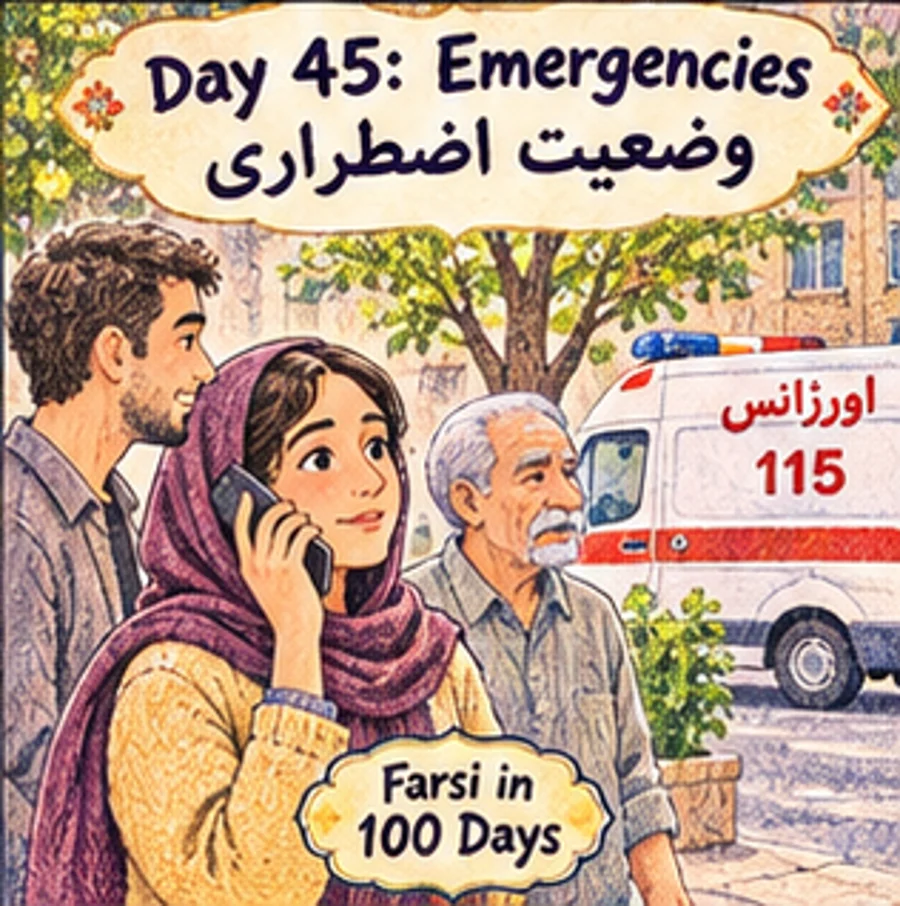
Day 45 of Learn Farsi in 100 Days, our free step-by-step Persian course: Emergencies. The lesson has four parts, with every Persian word in Persian script, pronunciation and English, and each part ends with a quick check.
Part 1Grammar and conversation
Day 45, Part 1 shows how causative verbs (فعل سببی, fe’l-e sababi) are built with -ândan or -ânidan, turning پوشیدن (pushidan, to wear) into پوشاندن (pushândan, to dress someone), then follows a passerby helping someone who fell down the stairs call اورژانس (urzhâns, the ambulance).
Grammar: causative verbs
A causative verb (فعل سببی, fe’l-e sababi) means “to make someone do something.” It is built by adding اندن (-ândan) or انیدن (-ânidan) to the present stem (ستاک حال, setâk-e hâl) of an intransitive or transitive verb. For example, the present stem of پوشیدن (pushidan, to wear) is پوش (push), so پوشاندن or پوشانیدن means “to dress someone, to cover”; from خوردن (khordan, to eat), stem خور (khor), you get خوراندن (khorândan, to feed). The two endings mean the same thing; -ândan is more common today.
| Persian | Pronunciation | English |
|---|---|---|
| این فعل با افزودن «اندن» یا «انیدن» به ستاک حال فعل لازم یا متعدی ساخته میشود. | in fe’l bâ afzudan-e “ândan” yâ “ânidan” be setâk-e hâl-e fe’l-e lâzem yâ mota’addi sâkhte mishavad. | This verb is made by adding -ândan or -ânidan to the present stem of an intransitive or transitive verb. |
| پوشیدن ← پوشاندن، پوشانیدن | pushidan → pushândan, pushânidan | to wear → to dress (someone), to cover |
| خوردن ← خوراندن، خورانیدن | khordan → khorândan, khorânidan | to eat → to feed (someone) |
Conversation: A fall on the stairs
| Speaker | Persian | English and pronunciation |
|---|---|---|
| A الف | چی شده است؟ من میتوانم کمکتان کنم؟ | What happened? Can I help you? chi shode ast? man mitavânam komaketân konam? |
| B ب | بله، لطفا من را به بیمارستان ببرید. | Yes, please take me to the hospital. bale, lotfan man râ be bimârestân bebarid. |
| A الف | چه اتفاقی برایتان افتاده است؟ | What happened to you? che ettefâghi barâyetân oftâde ast? |
| B ب | از پلهها افتادهام. نمیتوانم راه بروم. | I fell down the stairs. I can’t walk. az pelle-hâ oftâde-am. nemitavânam râh beravam. |
| A الف | اجازه بدهید به اورژانس زنگ بزنم. | Let me call an ambulance. ejâze bedahid be urzhâns zang bezanam. |
| B ب | ممنون میشوم. کیفم آنجا افتاده است میشود برایم بیاورید؟ | I’d be grateful. My bag fell over there; could you bring it to me? mamnun mishavam. kifam ânjâ oftâde ast mishavad barâyam biyâvarid? |
| A الف | بله حتما. اگر بخواهید میتوانم به خانوادهی شما اطلاع بدهم. | Yes, of course. If you like, I can let your family know. bale hatman. agar bekhâhid mitavânam be khânevâde-ye shomâ ettelâ’ bedaham. |
| B ب | شمارهی همسرم در تلفن همراهم است، با نام سینا ذخیره کردهام. | My husband’s number is in my cell phone; I’ve saved it under the name Sina. shomâre-ye hamsaram dar telefon-e hamrâham ast, bâ nâm-e sinâ zakhire karde-am. |
| A الف | نگران نباشید اورژانس زود میرسد. | Don’t worry, the ambulance will be here soon. negarân nabâshid urzhâns zud miresad. |
Quick check
- What is the causative verb made from خوردن (khordan, to eat)?
Show answer
خوراندن or خورانیدن (khorândan / khorânidan), to feed - Why can’t speaker B walk?
Show answer
B fell down the stairs: از پلهها افتادهام (az pelle-hâ oftâde-am). - How do you say “Let me call an ambulance”?
Show answer
اجازه بدهید به اورژانس زنگ بزنم. (ejâze bedahid be urzhâns zang bezanam.)
Part 2Grammar, common phrases, poetry and word of the day
Day 45, Part 2 explains single-ending verbs (فعل تکشناسه, fe’l-e tak-shenâse), where است and میشود stay the same and the person moves to the adjective, as in سردم است (sardam ast, I’m cold), then gives emergency phrases like لطفا یک آمبولانس خبر کنید (please call an ambulance), a Khayyam quatrain, and پرسنل (personel, staff).
Grammar: single-ending verbs with بودن and شدن
In some everyday expressions, بودن (budan, to be) and شدن (shodan, to become) are single-ending verbs (فعل تکشناسه, fe’l-e tak-shenâse): they always stay in the third person singular, است (ast) or میشود (mishavad). The person is shown instead by a possessive suffix on the word before the verb: سردم است (sardam ast, I am cold, literally “to me it is cold”) and سردمان است (sardemân ast, we are cold). The verb does not change between singular (مفرد, mofrad) and plural (جمع, jam’).
| Persian | Pronunciation | English |
|---|---|---|
| «بودن» و «شدن» در ترکیبهای گفتاری زیر تکشناسه هستند: | “budan” va “shodan” dar tarkib-hâ-ye goftâri-ye zir tak-shenâse hastand: | In the following spoken combinations, budan and shodan have a single ending: |
| سردم است | sardam ast | I am cold (singular) |
| سردمان است | sardemân ast | we are cold (plural) |
| سردم میشود | sardam mishavad | I get cold (singular) |
| سردمان میشود | sardemân mishavad | we get cold (plural) |
Common phrases
| Persian | Pronunciation | English |
|---|---|---|
| لطفا یک دکتر خبر کنید. | lotfan yek doktor khabar konid. | Please call a doctor. |
| لطفا یک آمبولانس خبر کنید. | lotfan yek âmbulâns khabar konid. | Please call an ambulance. |
Poetry: a quatrain by Khayyam (خیام)
A quatrain by Omar Khayyam, read line by line, right half first. The book also quotes Edward FitzGerald’s free English version: Ah, my Beloved, fill the cup that clears TO-DAY of past Regrets and future Fears. Tomorrow? Why, To-morrow I may be Myself with Yesterday’s Sev’n Thousand Years.
| Persian | Pronunciation | Meaning |
|---|---|---|
| ای دوست بیا تا غم فردا نخوریم | ey dust biyâ tâ gham-e fardâ nakhorim | Come, my friend, let us not worry about tomorrow, |
| وین یکدم عمر را غنیمت شمریم | v-in yekdam-e omr râ ghanimat shomorim | and let us treasure this one moment of life. |
| فردا که ازین دیر فنا درگذریم | fardâ ke az-in deyr-e fanâ dargozarim | Tomorrow, when we pass from this house of mortality, |
| با هفت هزار سالگان سر بسریم | bâ haft hezâr sâlegân sar be sarim | we will be equal with those who died seven thousand years ago. |
Word of the day: پرسنل (personel)
Meaning: personnel, staff
The company staff were in the meeting.
Quick check
- How do you say “we are cold” in Persian?
Show answer
سردمان است (sardemân ast) - How do you ask someone to call a doctor?
Show answer
لطفا یک دکتر خبر کنید. (lotfan yek doktor khabar konid.) - What does پرسنل (personel) mean?
Show answer
personnel, staff
Part 3Accidents and disasters, conversation and idiom of the day
Day 45, Part 3 teaches words for disasters and accidents such as زلزله (zelzele, earthquake) and آتشسوزی (âtashsuzi, fire), a conversation about a pedestrian hit by a motorbike, and the idiom جنگ اول به از صلح آخر (a fight at the start is better than peace at the end).
Accidents and disasters
| Persian | Pronunciation | English |
|---|---|---|
| جنگ | jang | war |
| زلزله | zelzele | earthquake |
| انفجار | enfejâr | explosion |
| آتشسوزی | âtashsuzi | fire (a blaze) |
| تصادف کردن | tasâdof kardan | to have an accident, to crash |
| سیل | seyl | flood |
Conversation: A road accident
| Speaker | Persian | English and pronunciation |
|---|---|---|
| A الف | لطفا کمک کنید! یک نفر مجروح شده است. | Please help! Someone has been injured. lotfan komak konid! yek nafar majruh shode ast. |
| B ب | چه اتفاقی برایش افتاده است؟ | What happened to him? che ettefâghi barâyash oftâde ast? |
| A الف | تصادف کرده است. میخواست از خیابان رد شود یک موتور به او زد و رفت. | He’s been in an accident. He was trying to cross the street when a motorbike hit him and drove off. tasâdof karde ast. mikhâst az khiyâbân rad shavad yek motor be u zad va raft. |
| B ب | اوه خدای من! من به اورژانس زنگ میزنم. | Oh my God! I’ll call an ambulance. oh khodâ-ye man! man be urzhâns zang mizanam. |
| A الف | لطفا به پلیس هم خبر بدهید. | Please tell the police too. lotfan be polis ham khabar bedahid. |
| B ب | حتما، خون زیادی از او میرود خدا کند زنده بماند. | Of course. He’s losing a lot of blood; I hope to God he survives. hatman, khun-e ziyâdi az u miravad khodâ konad zende bemânad. |
Idiom of the day
جنگ اول به از صلح آخر.
jang-e avval beh az solh-e âkhar.
Word for word: A fight at the beginning is better than peace at the end.
Meaning in Persian: بحث کردن در ابتدای کار بهتر از تفاهم پس از دعوا است.
Meaning: It is better to argue things out at the start than to have to make peace after a quarrel.
English equivalent: An ounce of prevention is better than a pound of cure.
Quick check
- What is the Persian word for “earthquake”?
Show answer
زلزله (zelzele) - What hit the injured man in the conversation?
Show answer
یک موتور (yek motor), a motorbike - What does جنگ اول به از صلح آخر mean?
Show answer
Settle disagreements at the start rather than after a fight; like “An ounce of prevention is better than a pound of cure.”
Part 4Reading and new words
Day 45, Part 4 is a reading about the Iranian هلال احمر (helâl-e ahmar, Red Crescent) and its relief work in floods, earthquakes and war, followed by new words such as مجروح (majruh, wounded), زنده ماندن (zende mândan, to survive) and انساندوستانه (ensândustâne, humanitarian).
Reading: The Red Crescent
هلال احمر نام یک سازمان انساندوستانه است. هلال احمر ایران نیز عضو نهضت بینالمللی هلال احمر است. هلال احمر ایران در داخل کشور و برخی مناطق دیگر در جهان فعالیتهای امدادی و بشردوستانه انجام میدهد.
The Red Crescent is the name of a humanitarian organization. The Iranian Red Crescent is a member of the International Red Crescent Movement. It carries out relief and humanitarian work inside the country and in some other parts of the world.
هلال احمر باید در هنگام وقوع بحرانهایی مانند سیل، زلزله و جنگ و … به مصدومان کمک کند. هلال احمر ایران نیز فعالیتهای گستردهی آموزشی، خدمات پزشکی، بهداشتی و امدادی را انجام میدهد.
When crises such as floods, earthquakes and war happen, the Red Crescent must help the injured. The Iranian Red Crescent also carries out wide-ranging educational activities and provides medical, health and relief services.
New words
| Persian | Pronunciation | English |
|---|---|---|
| افزودن | afzudan | to add |
| اتفاق افتادن | ettefâgh oftâdan | to happen |
| افتادن | oftâdan | to fall |
| اورژانس | urzhâns | emergency (services), ambulance |
| اطلاع | ettelâ’ | information, notice |
| ذخیره کردن | zakhire kardan | to save, to store |
| نگران | negarân | worried |
| ترکیب | tarkib | combination, compound |
| گفتاری | goftâri | spoken, colloquial |
| خبر کردن | khabar kardan | to notify, to call (someone) |
| غم | gham | sorrow |
| دم | dam | moment |
| غنیمت | ghanimat | spoils; a godsend (غنیمت شمردن: to make the most of) |
| دیر | deyr | monastery; (in poetry) the world, abode |
| فنا | fanâ | mortality, perishing |
| بهسر بردن | be sar bordan | to spend (time), to live |
| مجروح | majruh | wounded |
| رد شدن | rad shodan | to cross |
| زنده ماندن | zende mândan | to survive |
| صلح | solh | peace |
| قرار | gharâr | arrangement, appointment |
| بشردوستانه | bashardustâne | humanitarian, philanthropic |
| تفاهم | tafâhom | understanding, agreement |
| دعوا | da’vâ | quarrel |
| هلال احمر | helâl-e ahmar | Red Crescent |
| انساندوستانه | ensândustâne | humanitarian |
| عضو | ozv | member |
| نهضت | nehzat | movement |
| بینالمللی | beynolmelali | international |
| برخی | barkhi | some |
| فعالیت | fa’âliyyat | activity |
Quick check
- What is the Persian name of the Red Crescent?
Show answer
هلال احمر (helâl-e ahmar) - Name two crises mentioned in the reading.
Show answer
For example سیل (seyl, flood) and زلزله (zelzele, earthquake) - What does مجروح (majruh) mean?
Show answer
wounded
Take this lesson further

Study with the book
Learn Farsi in 100 Days: The Ultimate Crash Course to Learning Farsi Fast
This free lesson is part of Learn Farsi in 100 Days. The book puts the whole series in one printable PDF you can study offline.
Serious about Persian? Get all 30 of our Persian learning books for $199.99 (0% less than buying them one by one).
Free Persian Starter Pack: Alphabet + 100 Core Words
Get the 14-page printable Starter Pack (all 32 letters, a 7-day reading plan, 100 core words and 20 survival phrases) and a short 5-email course. Free.
Free. Every morning: that day’s four videos and the full lessons, with every Persian word, its pronunciation and its English meaning. Stop or pause with one click.