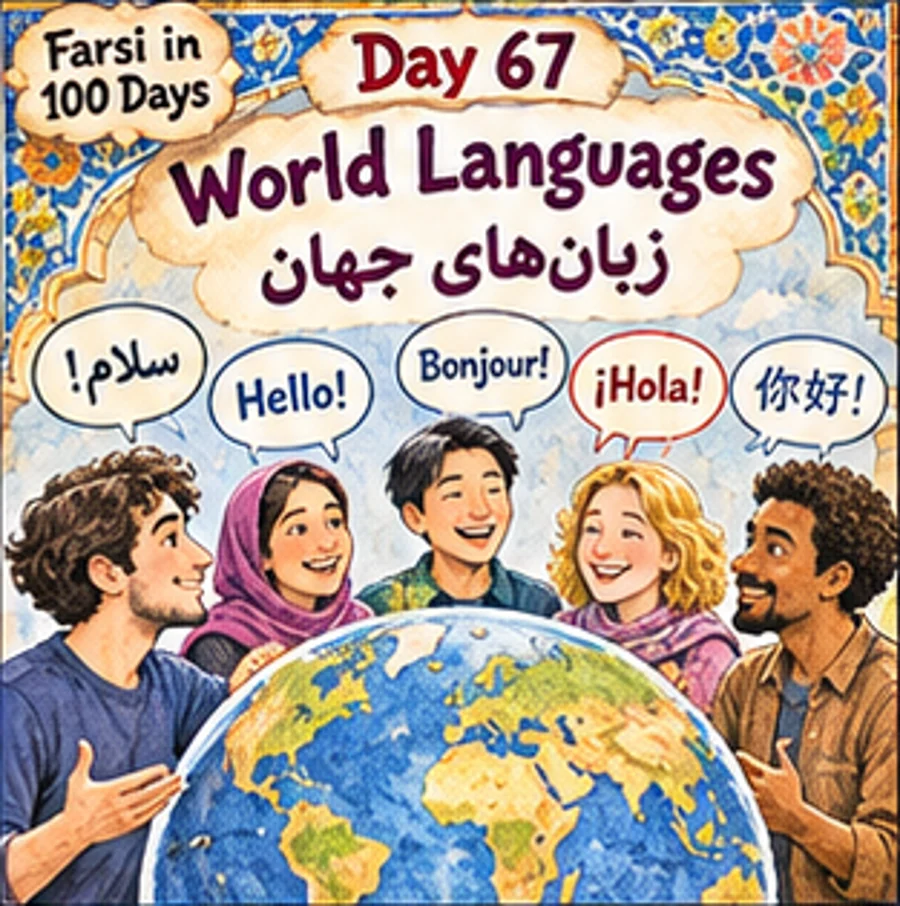
Day 67, Part 1 has a conversation in which Arzhang says he studies physics (من فیزیک میخوانم, man fizik mikhânam) and can read Persian better than he speaks it, and teaches the suffix ـیه (-iyye) in names of dynasties and places, such as صفویه (safaviyye, the Safavids).
Listen to this lesson with Reza Nazari. All 399 lessons are in the free Learn Farsi in 100 Days video course.
Conversation: a physics student who reads Persian
| Speaker | Persian | English and pronunciation |
|---|---|---|
| Arsham آرشام |
چه کاری انجام میدهی؟ | What do you do? che kâri anjâm midahi? |
| Arzhang ارژنگ |
من هنوز دانشجو هستم. | I’m still a student. man hanuz dâneshju hastam. |
| Arsham آرشام |
چه دانشگاهی میروی؟ | Which university do you go to? che dâneshgâhi miravi? |
| Arzhang ارژنگ |
دانشگاه تهران. | The University of Tehran. dâneshgâh-e tehrân. |
| Arsham آرشام |
چه دانشگاه خوبی. چه رشتهای میخوانی؟ | What a good university! What do you study? che dâneshgâh-e khubi. che reshte’i mikhâni? |
| Arzhang ارژنگ |
من فیزیک میخوانم. | I study physics. man fizik mikhânam. |
| Arsham آرشام |
چه مدت است که فیزیک میخوانی؟ | How long have you been studying physics? che moddat ast ke fizik mikhâni? |
| Arzhang ارژنگ |
سه سال. | Three years. se sâl. |
| Arsham آرشام |
میتوانی فارسی صحبت کنی؟ | Can you speak Persian? mitavâni fârsi sohbat koni? |
| Arzhang ارژنگ |
بله، من وقتی به دبیرستان میرفتم شروع کردم به یادگیری زبان فارسی. | Yes, I started learning Persian when I was in high school. bale, man vaghti be dabirestân miraftam shoru’ kardam be yâdgiri-ye zabân-e fârsi. |
| Arsham آرشام |
عجیب نیست که تو زبان فارسی خوب صحبت میکنی. | No wonder you speak Persian well. ajib nist ke to zabân-e fârsi khub sohbat mikoni. |
| Arzhang ارژنگ |
در واقع زیاد خوب نیست. من میتوانم بخوانم اما نمیتوانم خوب صحبت کنم. | Actually, it’s not that good. I can read, but I can’t speak well. dar vâghe’ ziyâd khub nist. man mitavânam bekhânam ammâ nemitavânam khub sohbat konam. |
| Arsham آرشام |
صحبت کردن با افراد دیگر خیلی مهم است. | Talking with other people is very important. sohbat kardan bâ afrâd-e digar kheyli mohem ast. |
Grammar: the suffix -iyye (ـیه)
The suffix ـیه (-iyye, often said -iye) is added to a name to make (1) the name of a dynasty (سلسله, selsele), from the founder’s family or tribe: زند → زندیه (zandiyye, the Zand dynasty); and (2) the name of a place or country (محل یا کشور): زعفران → زعفرانیه (za’farâniyye, a district of Tehran), ترک → ترکیه (torkiye, Turkey).
| Persian | Pronunciation | English |
|---|---|---|
| زندیه | zandiyye | the Zand dynasty |
| قاجاریه | ghâjâriyye | the Qajar dynasty |
| صفویه | safaviyye | the Safavid dynasty |
| افشاریه | afshâriyye | the Afsharid dynasty |
| زعفرانیه | za’farâniyye | Zafaraniyeh (a district of Tehran) |
| ترکیه | torkiye | Turkey |
Quick check
- How do you say “I study physics” in Persian?
Show answer
من فیزیک میخوانم. (man fizik mikhânam.)
- What does the suffix ـیه make in قاجاریه?
Show answer
the name of a dynasty: قاجاریه (ghâjâriyye), the Qajar dynasty
- What is the Persian name of Turkey?
Show answer
ترکیه (torkiye)


Take this lesson further
Study with the book
Learn Farsi in 100 Days: The Ultimate Crash Course to Learning Farsi Fast
This free lesson is part of Learn Farsi in 100 Days. The book puts the whole series in one printable PDF you can study offline.
Serious about Persian? Get all 30 of our Persian learning books for $199.99 (55% less than buying them one by one).
Free Persian Starter Pack: Alphabet + 100 Core Words
Get the 14-page printable Starter Pack (all 32 letters, a 7-day reading plan, 100 core words and 20 survival phrases) and a short 5-email course. Free.
Free. Every morning: that day’s four videos and the full lessons, with every Persian word, its pronunciation and its English meaning. Stop or pause with one click.