200 Most Common Persian Verbs
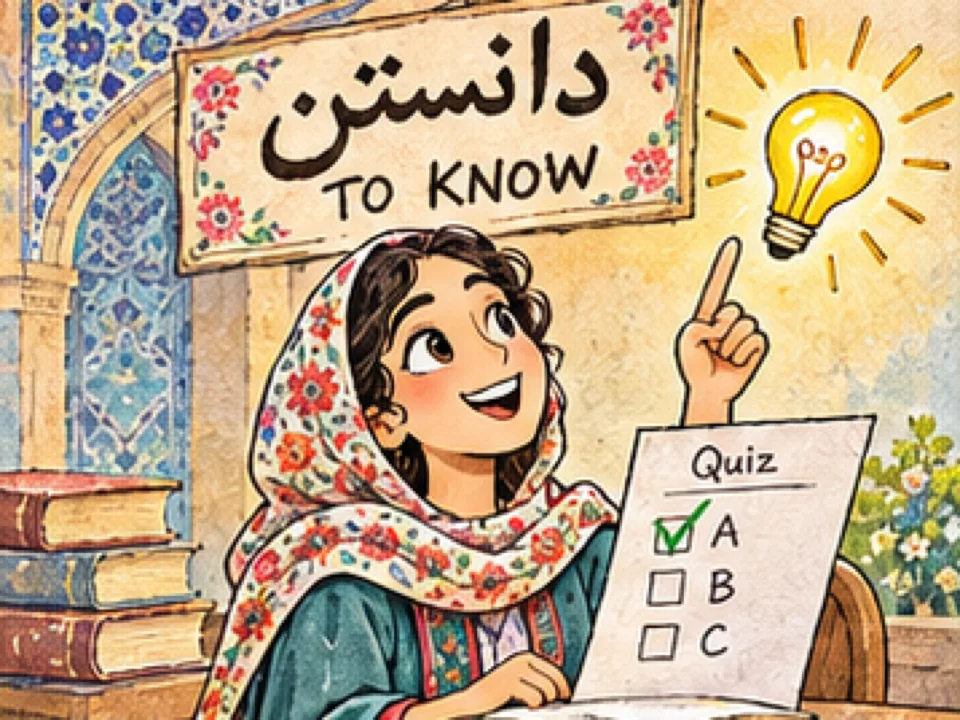
دانِستَن
Watch and listen to Reza Nazari explain this verb. More in the free 200 Persian Verbs video course.
Cognize – Know
مُتَرادِفِ فارسی: آگاه بودَن
مُتَضادِ فارسی: بی اِطلاع بودَن
:صَرف
گُذَشتِه: دانِستَم – دانِستی – دانِست – دانِستیم – دانِستید – دانِستَند
حال: می دانَم – می دانی – می دانَد – می دانیم – می دانید – می دانَند
:مِثال
.او هَمِه چیز را راجِبِ مَن می دانَد
.مَن می دانَم کِتابَت کُجاست
.تو می دانِستی کِه مَن بیمار هَستَم
دانستن (dânestan) means "to know" in Persian. Learn its stems, full conjugation, how it differs from شناختن, examples and a quiz.
How to use دانستن (dânestan)
دانستن means "to know" a fact or piece of information. It is a simple verb with the past stem دانست (dânest) and the present stem دان (dân): میدانم (midânam, "I know"), نمیدانم (nemidânam, "I don't know"). It is often followed by که and a clause: میدانم که خستهای ("I know you're tired").
For knowing a person or place, Persian uses شناختن (shenâkhtan): او را میشناسم ("I know him"). For a skill, people say بلد بودن (balad budan): رانندگی بلدم ("I know how to drive"). The simple past دانستم is rare; "I knew" is usually میدانستم (midânestam). The word دانش (dânesh, "knowledge") comes from this verb.
Verb stems
| Infinitive | دانستن | /dânestan/ | to know |
|---|---|---|---|
| Past stem | دانست | /dânest/ | used for past tenses |
| Present stem | دان | /dân/ | used for present, subjunctive and imperative |
Conjugation of دانستن
| Person | Simple past | Present | Future | Subjunctive |
|---|---|---|---|---|
| من I |
دانستم /dânestam/ |
میدانم /midânam/ |
خواهم دانست /khâham dânest/ |
بدانم /bedânam/ |
| تو you (sg.) |
دانستی /dânesti/ |
میدانی /midâni/ |
خواهی دانست /khâhi dânest/ |
بدانی /bedâni/ |
| او he / she |
دانست /dânest/ |
میداند /midânad/ |
خواهد دانست /khâhad dânest/ |
بداند /bedânad/ |
| ما we |
دانستیم /dânestim/ |
میدانیم /midânim/ |
خواهیم دانست /khâhim dânest/ |
بدانیم /bedânim/ |
| شما you (pl./polite) |
دانستید /dânestid/ |
میدانید /midânid/ |
خواهید دانست /khâhid dânest/ |
بدانید /bedânid/ |
| آنها they |
دانستند /dânestand/ |
میدانند /midânand/ |
خواهند دانست /khâhand dânest/ |
بدانند /bedânand/ |
Negative and imperative
| Persian | Pronunciation | English |
|---|---|---|
| ندانستم | /nadânestam/ | I did not know (literary; usually "nemidânestam") |
| نمیدانم | /nemidânam/ | I do not know |
| بدان! | /bedân!/ | Know! (to one person; literary) |
| بدانید! | /bedânid!/ | Know! (to several people, or politely; literary) |
| ندان! | /nadân!/ | Don't know! (rarely used) |
The examples above, translated
| Persian | Pronunciation | English |
|---|---|---|
| او همه چیز را راجع به من میداند. | /u hame chiz râ râje' be man midânad./ | He knows everything about me. |
| من میدانم کتابت کجاست. | /man midânam ketâbat kojâst./ | I know where your book is. |
| تو میدانستی که من بیمار هستم. | /to midânesti ke man bimâr hastam./ | You knew that I was sick. |
More example sentences
| Persian | Pronunciation | English |
|---|---|---|
| نمیدانم کلیدم کجاست. | /nemidânam kelidam kojâst./ | I don't know where my key is. |
| میدانی کلاس کی شروع میشود؟ | /midâni kelâs key shoru' mishavad?/ | Do you know when class starts? |
| نمیدانستم که تو اینجا هستی. | /nemidânestam ke to injâ hasti./ | I didn't know you were here. |
| او سه زبان میداند. | /u se zabân midânad./ | She knows three languages. |
Common phrases
| Persian | Pronunciation | English |
|---|---|---|
| دانش | /dânesh/ | knowledge |
| دانشجو | /dâneshju/ | university student |
| دانشگاه | /dâneshgâh/ | university |
| صلاح دانستن | /salâh dânestan/ | to see fit, to think it wise |
In spoken Persian
In speech â before n becomes u: میدونم (midunam), نمیدونم (nemidunam), میدونی (miduni), میدونه (midune), میدونن (midunan). چه میدونم (che midunam) means "who knows" or "I have no idea".
Watch out for
- Don't use دانستن for people: "I know Sara" is سارا را میشناسم (sârâ râ mishenâsam), not "midânam".
- Note: the page writes راجب in the first example; the standard spelling is راجع به (râje' be, "about"). Also, the imperative بدان (bedân) and the future خواهم دانست are literary and rare in speech.
Practice
-
Translate into Persian: "I don't know."
Show answer
nemidânam. نمیدانم.
-
Which verb do you use for "to know a person"?
Show answer
shenâkhtan شناختن
-
What does this sentence mean? تو میدانستی که او ایرانی است؟
Show answer
Did you know that she is Iranian?
Related verbs in this course
- شناختن (shenâkhtan): to know (a person or place), to recognize
- فهمیدن (fahmidan): to understand, to realize
This is lesson 115 of 200 Most Common Persian Verbs. For the sounds used in the pronunciation guide, see Persian pronunciation.


Take this lesson further

Study with the book
200 Absolutely Essential Persian Verbs
This free lesson is part of 200 Most Common Persian Verbs. The book puts the whole series in one printable PDF you can study offline.
Serious about Persian? Get all 30 of our Persian learning books for $199.99 (55% less than buying them one by one).
Free Persian Starter Kit (PDF)
The Persian alphabet chart and the 101 most common Persian words with pronunciation, in one printable PDF. You also get a one-time 15% code for any of our books.
We will email you new lessons and book news from Learn Persian Online. Unsubscribe any time.Free: 100 Core Persian Words + 20 Survival Phrases
Get the 14-page printable Starter Pack (all 32 letters, a 7-day reading plan, 100 core words and 20 survival phrases) and a short 5-email course. Free.
Practise with free Persian games