200 Most Common Persian Verbs
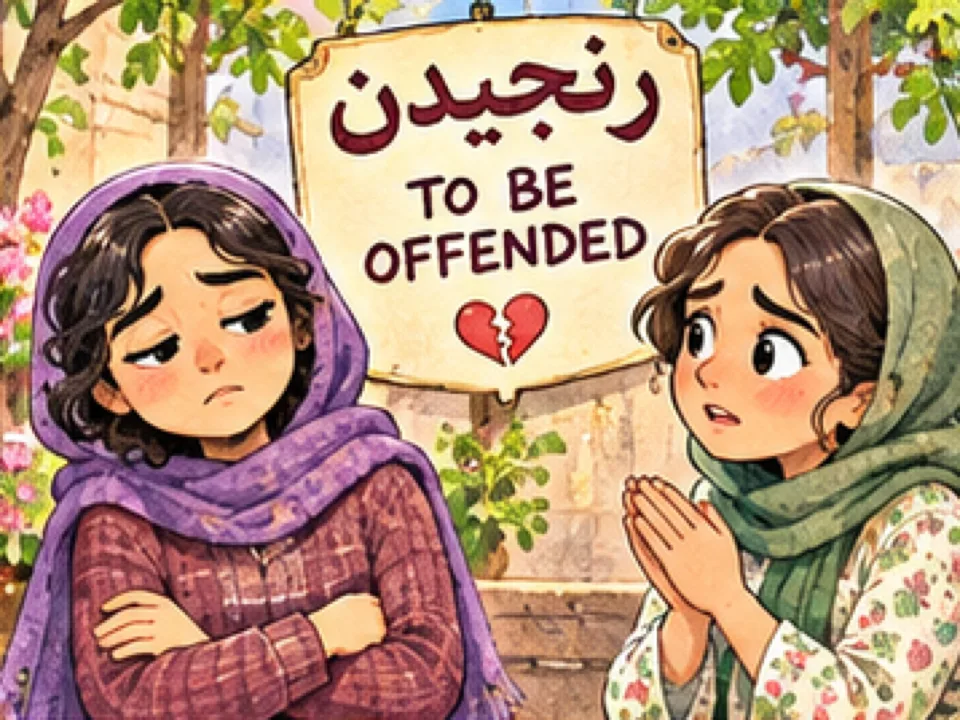
رَنجیدَن
Watch and listen to Reza Nazari explain this verb. More in the free 200 Persian Verbs video course.
Huff – Miff
مُتَرادِفِ فارسی: ناراحَت شُدَن – دِلگیر شُدَن
مُتَضادِ فارسی: لَذَت بُردَن – خوشحال شُدَن
:صَرف
گُذَشتِه: رَنجیدَم – رَنجیدی – رَنجید – رَنجیدیم – رَنجیدید – رَنجیدَند
حال: می رَنجَم – می رَنجی – می رَنجَد – می رَنجیم – می رَنجید – می رَنجَند
:مِثال
.او اَز رَفتارِ بَدِ مَن رَنجید
.مَن بِه خاطرِ حَرفهایِ دوستَم رَنجیدَم
رنجیدن (ranjidan) means "to be offended" or "to feel hurt" in Persian. See its stems, conjugation, examples, phrases and a quiz.
How to use رنجیدن (ranjidan)
رنجیدن means "to be offended" or "to feel hurt" by what someone said or did. It is a simple intransitive verb: the past stem is رنجید (ranjid) and the present stem is رنج (ranj). The cause is introduced with از (az): از حرفش رنجیدم (az harfash ranjidam, "I was hurt by what he said").
The verb is a bit literary and polite. In everyday conversation people more often say ناراحت شدن (nârâhat shodan) or دلخور شدن (delkhor shodan). Its transitive partner is رنجاندن (ranjândan, "to offend, to hurt someone"). It comes from the noun رنج (ranj, "suffering"), but it is about hurt feelings; physical pain is درد (dard).
Verb stems
| Infinitive | رنجیدن | /ranjidan/ | to be offended, to feel hurt |
|---|---|---|---|
| Past stem | رنجید | /ranjid/ | used for past tenses |
| Present stem | رنج | /ranj/ | used for present, subjunctive and imperative |
Conjugation of رنجیدن
| Person | Simple past | Present | Future | Subjunctive |
|---|---|---|---|---|
| من I |
رنجیدم /ranjidam/ |
میرنجم /miranjam/ |
خواهم رنجید /khâham ranjid/ |
برنجم /beranjam/ |
| تو you (sg.) |
رنجیدی /ranjidi/ |
میرنجی /miranji/ |
خواهی رنجید /khâhi ranjid/ |
برنجی /beranji/ |
| او he / she |
رنجید /ranjid/ |
میرنجد /miranjad/ |
خواهد رنجید /khâhad ranjid/ |
برنجد /beranjad/ |
| ما we |
رنجیدیم /ranjidim/ |
میرنجیم /miranjim/ |
خواهیم رنجید /khâhim ranjid/ |
برنجیم /beranjim/ |
| شما you (pl./polite) |
رنجیدید /ranjidid/ |
میرنجید /miranjid/ |
خواهید رنجید /khâhid ranjid/ |
برنجید /beranjid/ |
| آنها they |
رنجیدند /ranjidand/ |
میرنجند /miranjand/ |
خواهند رنجید /khâhand ranjid/ |
برنجند /beranjand/ |
Negative and imperative
| Persian | Pronunciation | English |
|---|---|---|
| نرنجیدم | /naranjidam/ | I was not offended |
| نمیرنجم | /nemiranjam/ | I am not offended / I don't take offense |
| برنج! | /beranj!/ | Be offended! (to one person; rarely used) |
| برنجید! | /beranjid!/ | Be offended! (to several, or politely; rarely used) |
| نرنج! | /naranj!/ | Don't be offended! |
The examples above, translated
| Persian | Pronunciation | English |
|---|---|---|
| او از رفتار بد من رنجید. | /u az raftâr-e bad-e man ranjid./ | She was hurt by my bad behavior. |
| من به خاطر حرفهای دوستم رنجیدم. | /man be khâter-e harf-hâ-ye dustam ranjidam./ | I was hurt by my friend's words. |
| استاد از برخورد نامناسب دانشجو رنجید. | /ostâd az barkhord-e nâmonâseb-e dâneshju ranjid./ | The professor was offended by the student's rude behavior. |
More example sentences
| Persian | Pronunciation | English |
|---|---|---|
| امیدوارم از من نرنجیده باشی. | /omidvâram az man naranjide bâshi./ | I hope you haven't been offended by me. |
| مادربزرگ زود میرنجد. | /mâdarbozorg zud miranjad./ | Grandma gets offended easily. |
| اگر حقیقت را بگویم، شاید برنجد. | /agar haghighat râ beguyam, shâyad beranjad./ | If I tell the truth, he might be hurt. |
| آنها از شوخی ما رنجیدند. | /ânhâ az shukhi-ye mâ ranjidand./ | They were offended by our joke. |
Common phrases
| Persian | Pronunciation | English |
|---|---|---|
| رنجیده | /ranjide/ | hurt, offended |
| رنجاندن | /ranjândan/ | to offend, to hurt someone's feelings |
| رنجش | /ranjesh/ | resentment, hurt feelings |
| دل کسی را رنجاندن | /del-e kasi râ ranjândan/ | to hurt someone's feelings |
In spoken Persian
In casual speech رنجیدن sounds formal. Tehranis usually say ازش ناراحت شدم (azash nârâhat shodam, "I got upset with him") or ازم دلخوره (azam delkhore, "she's upset with me"). If you do use the verb, the present shortens as usual: میرنجه (miranje).
Watch out for
- رنجیدن is intransitive, so it cannot take an object. To say "I offended him", use او را رنجاندم (u râ ranjândam) or, more casually, ناراحتش کردم (nârâhatash kardam).
- The positive imperative برنج is grammatical but hardly used, while از من نرنج (az man naranj, "don't be offended with me") is common. Note: the page's gloss "huff, miff" is rare English; "to be offended" is clearer.
Practice
-
Translate into Persian: "I was offended by his words."
Show answer
az harf-hâ-ye u ranjidam. از حرفهای او رنجیدم.
-
What is the verb for "to offend someone"?
Show answer
ranjândan رنجاندن
-
What does this sentence mean? از من نرنج.
Show answer
Don't be offended with me.
This is lesson 133 of 200 Most Common Persian Verbs. For the sounds used in the pronunciation guide, see Persian pronunciation.
.اُستاد اَز بَرخوردِ نامُناسِبِ دانِشجو رَنجید


Take this lesson further

Study with the book
200 Absolutely Essential Persian Verbs
This free lesson is part of 200 Most Common Persian Verbs. The book puts the whole series in one printable PDF you can study offline.
Serious about Persian? Get all 30 of our Persian learning books for $199.99 (55% less than buying them one by one).
Free Persian Starter Kit (PDF)
The Persian alphabet chart and the 101 most common Persian words with pronunciation, in one printable PDF. You also get a one-time 15% code for any of our books.
We will email you new lessons and book news from Learn Persian Online. Unsubscribe any time.Free: 100 Core Persian Words + 20 Survival Phrases
Get the 14-page printable Starter Pack (all 32 letters, a 7-day reading plan, 100 core words and 20 survival phrases) and a short 5-email course. Free.
Practise with free Persian games