200 Most Common Persian Verbs
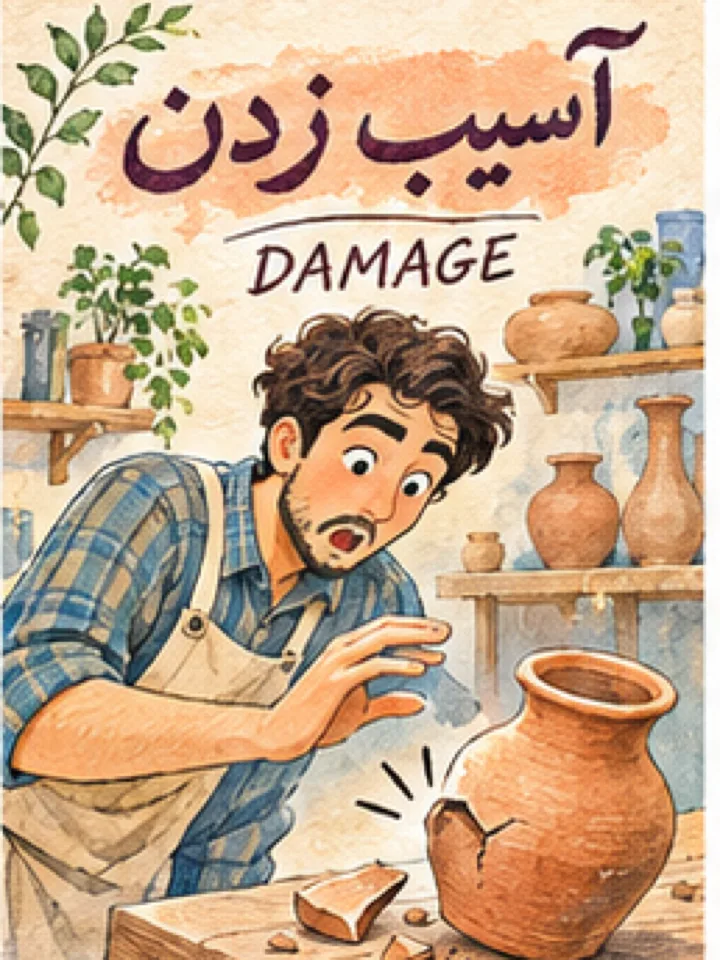
آسیب زَدَن
Watch and listen to Reza Nazari explain this verb. More in the free 200 Persian Verbs video course.
English: Damage -Injure
مُتَرادِفِ فارسی: خَراب کَردَن – صَدَمِه زَدَن
مُتَضادِ فارسی: تَرمیم کَردَن – دُرَست کَردَن
:صَرف
گُذَشتِه: آسیب زَدَم – آسیب زَدی – آسیب زَد – آسیب زَدیم – آسیب زَدید – آسیب زَدَند
حال: آسیب می زَدَم – آسیب می زَدی – آسیب می زَد – آسیب می زَدیم – آسیب می زَدید – آسیب می زَدَند
:مِثال
.آنها بِه آثارِ تاریخی آسیب می زَدَند –
.آفَت ها بِه مَحصُولاتِ کِشاوَرزی آسیب زَدَند –
.ما با بی دِقَتی بِه مُحیطِ زیست آسیب زَدیم –
آسیب زدن (âsib zadan) means "to damage" or "to harm" in Persian. Learn its stems, full conjugation, examples, phrases and a quiz.
How to use آسیب زدن (âsib zadan)
آسیب زدن is a compound verb: the noun آسیب (âsib, "harm, damage, injury") plus زدن (zadan, "to hit"). It means "to damage, to harm, to hurt". The thing or person harmed takes به, not را: به محیط زیست آسیب زدند, "they harmed the environment". Only زدن is conjugated, with the present stem زن (zan).
It is neutral and common in the news, in health topics and in everyday talk. Its partner for the one who suffers is آسیب دیدن (âsib didan, "to get hurt, to be damaged"): پایش آسیب دید, "his leg got hurt". A close synonym is صدمه زدن (sadame zadan). For breaking a machine, people usually say خراب کردن (kharâb kardan).
Verb stems
| Infinitive | آسیب زدن | /âsib zadan/ | to damage, to harm, to hurt |
|---|---|---|---|
| Past stem | آسیب زد | /âsib zad/ | used for past tenses |
| Present stem | آسیب زن | /âsib zan/ | used for present, subjunctive and imperative |
Conjugation of آسیب زدن
| Person | Simple past | Present | Future | Subjunctive |
|---|---|---|---|---|
| من I |
آسیب زدم /âsib zadam/ |
آسیب میزنم /âsib mizanam/ |
آسیب خواهم زد /âsib khâham zad/ |
آسیب بزنم /âsib bezanam/ |
| تو you (sg.) |
آسیب زدی /âsib zadi/ |
آسیب میزنی /âsib mizani/ |
آسیب خواهی زد /âsib khâhi zad/ |
آسیب بزنی /âsib bezani/ |
| او he / she |
آسیب زد /âsib zad/ |
آسیب میزند /âsib mizanad/ |
آسیب خواهد زد /âsib khâhad zad/ |
آسیب بزند /âsib bezanad/ |
| ما we |
آسیب زدیم /âsib zadim/ |
آسیب میزنیم /âsib mizanim/ |
آسیب خواهیم زد /âsib khâhim zad/ |
آسیب بزنیم /âsib bezanim/ |
| شما you (pl./polite) |
آسیب زدید /âsib zadid/ |
آسیب میزنید /âsib mizanid/ |
آسیب خواهید زد /âsib khâhid zad/ |
آسیب بزنید /âsib bezanid/ |
| آنها they |
آسیب زدند /âsib zadand/ |
آسیب میزنند /âsib mizanand/ |
آسیب خواهند زد /âsib khâhand zad/ |
آسیب بزنند /âsib bezanand/ |
Negative and imperative
| Persian | Pronunciation | English |
|---|---|---|
| آسیب نزدم | /âsib nazadam/ | I did not damage |
| آسیب نمیزنم | /âsib nemizanam/ | I do not damage / I am not damaging |
| آسیب بزن! | /âsib bezan!/ | Damage! (to one person) |
| آسیب بزنید! | /âsib bezanid!/ | Damage! (to several people, or politely) |
| آسیب نزن! | /âsib nazan!/ | Don't damage! |
The examples above, translated
| Persian | Pronunciation | English |
|---|---|---|
| آنها به آثار تاریخی آسیب میزدند. | /ân-hâ be âsâr-e târikhi âsib mizadand./ | They were damaging historical monuments. |
| آفتها به محصولات کشاورزی آسیب زدند. | /âfat-hâ be mahsulât-e keshâvarzi âsib zadand./ | Pests damaged the crops. |
| ما با بیدقتی به محیط زیست آسیب زدیم. | /mâ bâ bideghghati be mohit-e zist âsib zadim./ | We harmed the environment through carelessness. |
More example sentences
| Persian | Pronunciation | English |
|---|---|---|
| سیگار به ریهها آسیب میزند. | /sigâr be riye-hâ âsib mizanad./ | Smoking damages the lungs. |
| طوفان به خانههای روستا آسیب زد. | /tufân be khâne-hâ-ye rustâ âsib zad./ | The storm damaged the village houses. |
| مواظب باش به خودت آسیب نزنی. | /movâzeb bâsh be khodat âsib nazani./ | Be careful not to hurt yourself. |
| نور شدید به چشم آسیب خواهد زد. | /nur-e shadid be cheshm âsib khâhad zad./ | Strong light will damage the eyes. |
Common phrases
| Persian | Pronunciation | English |
|---|---|---|
| آسیب دیدن | /âsib didan/ | to get hurt, to be damaged |
| آسیبپذیر | /âsibpazir/ | vulnerable |
| آسیبدیده | /âsibdide/ | damaged, injured |
| صدمه زدن | /sadame zadan/ | to harm (synonym) |
In spoken Persian
In Tehran speech the endings are shortened: آسیب میزنه (âsib mizane), آسیب میزنن (âsib mizanan). In casual talk صدمه زدن is just as common: به خودت صدمه نزن (be khodet sadame nazan), "don't hurt yourself". خودت is pronounced khodet in speech.
Watch out for
- Note: the page's "present" row actually shows the past progressive (آسیب میزدم, "I was damaging"). The simple present is آسیب میزنم (âsib mizanam), as in the table above.
- Use به for what gets damaged: به ماشین آسیب زد, not ماشین را آسیب زد.
Practice
-
Translate into Persian: "The accident damaged the car."
Show answer
tasâdof be mâshin âsib zad. تصادف به ماشین آسیب زد.
-
What is the simple present form for "it"?
Show answer
âsib mizanad آسیب میزند
-
What does this sentence mean? در تصادف کسی آسیب ندید.
Show answer
No one got hurt in the accident.
Related verbs in this course
This is lesson 7 of 200 Most Common Persian Verbs. For the sounds used in the pronunciation guide, see Persian pronunciation.


Take this lesson further

Study with the book
200 Absolutely Essential Persian Verbs
This free lesson is part of 200 Most Common Persian Verbs. The book puts the whole series in one printable PDF you can study offline.
Serious about Persian? Get all 30 of our Persian learning books for $199.99 (55% less than buying them one by one).
Free Persian Starter Kit (PDF)
The Persian alphabet chart and the 101 most common Persian words with pronunciation, in one printable PDF. You also get a one-time 15% code for any of our books.
We will email you new lessons and book news from Learn Persian Online. Unsubscribe any time.Free: 100 Core Persian Words + 20 Survival Phrases
Get the 14-page printable Starter Pack (all 32 letters, a 7-day reading plan, 100 core words and 20 survival phrases) and a short 5-email course. Free.
Practise with free Persian games