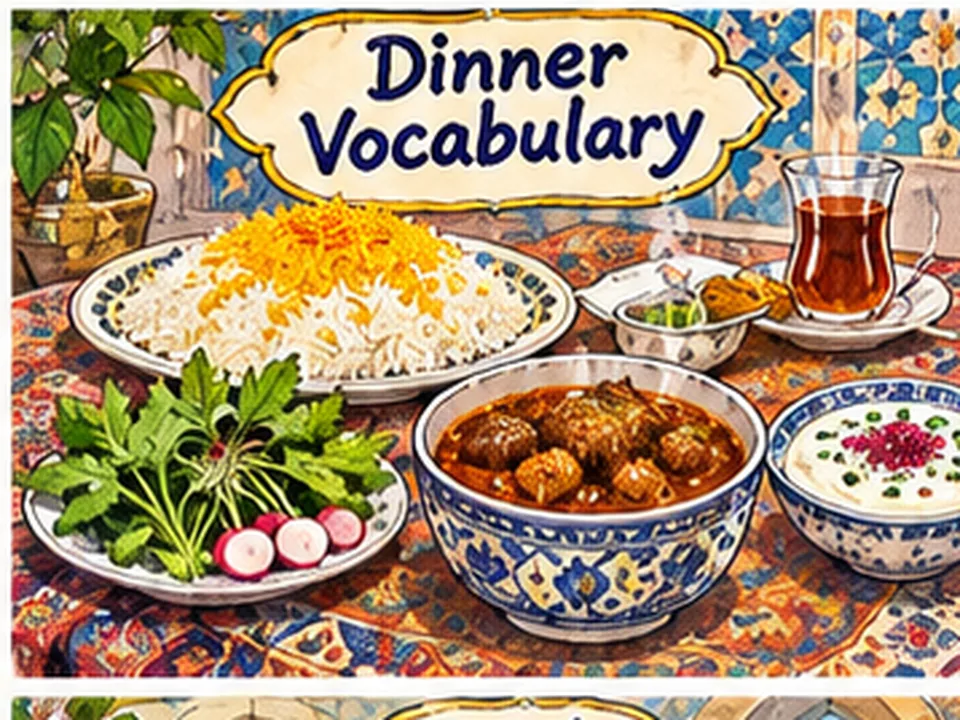
Lesson 21 of Learn to Speak Persian Fast, our free video course: A Dinner Invitation. Watch the video for each part, then read the notes, with every Persian word in Persian script, pronunciation and English, and try the practice questions at the end of each part.
New words: Persian words for a dinner invitation
Learn 20 Persian words for dinner invitations, guests and food, with pronunciation, example sentences and a quiz for Lesson 21.
Study notes for this lesson. The Lesson 21 video introduces the new words for this lesson, which is about a dinner invitation. Below is a word list on the same theme, example sentences and a short quiz. On the other pages of this lesson, Leila invites her friend Sara and Sara's husband, Kamran, to dinner on Friday night.
The words fall into three groups: the invitation itself (invitation, party, guest, host), the meal (dinner, rice, stew, dessert), and the details (address, Friday, evening). Learn one group at a time.
Word list
| Persian | Pronunciation | English |
|---|---|---|
| دعوت | /da'vat/ | invitation |
| دعوت کردن | /da'vat kardan/ | to invite |
| مهمانی | /mehmâni/ | party, gathering (spoken: mehmuni) |
| مهمان | /mehmân/ | guest (spoken: mehmun) |
| میزبان | /mizbân/ | host |
| شام | /shâm/ | dinner |
| ناهار | /nâhâr/ | lunch |
| غذا | /ghazâ/ | food, meal |
| خوشمزه | /khoshmaze/ | delicious |
| برنج | /berenj/ | rice |
| خورش | /khoresh/ | stew (eaten with rice) |
| سالاد | /sâlâd/ | salad |
| دسر | /deser/ | dessert |
| میوه | /mive/ | fruit |
| شیرینی | /shirini/ | pastries, sweets |
| گل | /gol/ | flower(s) |
| آدرس | /âdres/ | address |
| جمعه | /jom'e/ | Friday |
| شب | /shab/ | night, evening |
| آشپزی کردن | /âshpazi kardan/ | to cook |
Notes on the words
- مهمان (mehmân) is a guest; مهمانی (mehmâni) is the party or gathering. In spoken Tehran Persian, the â before n often becomes u: مهمون (mehmun), مهمونی (mehmuni).
- To throw a party is مهمانی گرفتن (mehmâni gereftan), literally "to take a party."
- A typical Persian meal is rice (برنج) with a stew (خورش) poured over it or served beside it.
- Friday (جمعه) is the weekly day off in Iran, so Thursday and Friday evenings are popular times for dinner invitations.
Example sentences
| Persian | Pronunciation | English |
|---|---|---|
| لیلا ما را برای شام دعوت کرد. | /leylâ mâ râ barâye shâm da'vat kard./ | Leila invited us for dinner. |
| جمعه شب مهمانی داریم. | /jom'e shab mehmâni dârim./ | We're having a party on Friday night. |
| غذا خیلی خوشمزه بود. | /ghazâ kheyli khoshmaze bud./ | The food was very delicious. |
| مهمانها ساعت هشت میآیند. | /mehmânhâ sâ'at-e hasht miâyand./ | The guests are coming at eight. |
| یک جعبه شیرینی و یک دسته گل خریدم. | /yek ja'be shirini va yek daste gol kharidam./ | I bought a box of pastries and a bunch of flowers. |
| آدرست را برایم بفرست. | /âdresat râ barâyam befrest./ | Send me your address. |
| لیلا آشپزی را خیلی دوست دارد. | /leylâ âshpazi râ kheyli dust dârad./ | Leila loves cooking. |
Polite phrases for guests and hosts
| Persian | Pronunciation | English |
|---|---|---|
| خوش آمدید. | /khosh âmadid./ | Welcome. |
| ممنون از دعوتتان. | /mamnun az da'vatetân./ | Thank you for your invitation. |
| دستتان درد نکند. | /dastetân dard nakonad. (spoken: dastetun dard nakone.)/ | Thank you; said especially for food someone made. |
| نوش جان. | /nush-e jân./ | Enjoy (your meal); a reply when someone thanks you for food. |
Practice tip
Picture a dinner table and name everything on it in Persian: rice, stew, salad, fruit, pastries, flowers. Then imagine you are the host and say who you will invite and when, for example جمعه شب دوستانم را دعوت میکنم. (jom'e shab dustânam râ da'vat mikonam), "I'll invite my friends on Friday night." Saying full sentences out loud helps the words stay with you much longer than reading the list.
Practice
How do you say "guest" and "host" in Persian?
Show answer
mehmân and mizbân مهمان، میزبان
What does this mean? جمعه شب مهمانی داریم.
Show answer
We're having a party on Friday night.
What is {{خورش}}?
Show answer
A stew, usually eaten with rice.
What do you say to welcome guests?
Show answer
khosh âmadid. خوش آمدید.
What is the spoken form of {{مهمانی}}?
Show answer
mehmuni مهمونی
Grammar: Question words in Persian
Learn Persian question words (what, who, when, where, why, how, which, how many) with spoken forms, word order, examples and a quiz.
Study notes for this lesson. The Lesson 21 video teaches question words. When you are invited to dinner you need them all: who is coming, when, where, and what to bring. Persian question words are easy to use, because the word order of a question is usually the same as the word order of the answer.
The main question words
| Persian | Pronunciation | English |
|---|---|---|
| چه / چی | /che / chi (spoken)/ | what |
| چه کسی / کی | /che kasi / ki (spoken)/ | who |
| کی / چه وقت | /key / che vaght/ | when |
| کجا | /kojâ/ | where |
| چرا | /cherâ/ | why |
| چطور / چطوری | /chetor / chetori (spoken)/ | how |
| چند | /chand/ | how many; what (time) |
| چقدر | /cheghadr/ | how much |
| کدام / کدوم | /kodâm / kodum (spoken)/ | which |
| آیا | /âyâ/ | yes/no question word, mostly in writing |
One spelling, two words: کی
کی can be read two ways. Pronounced ki, it means "who" (spoken). Pronounced key, it means "when." The context almost always makes it clear: کی میاد؟ as ki miyâd? is "Who is coming?" and as key miyâd? is "When is he or she coming?" In writing, you can use چه کسی for "who" and چه وقت or چه زمانی for "when" to avoid confusion.
Word order: the question word stays in place
In English, question words move to the front. In Persian, they usually go where the answer would be. Compare the statement and the question:
| Persian | Pronunciation | English |
|---|---|---|
| سارا ساعت هشت میآید. / سارا کی میآید؟ | /sârâ sâ'at-e hasht miâyad. / sârâ key miâyad?/ | Sara is coming at eight. / When is Sara coming? |
| مهمانی خانهی لیلا است. / مهمانی کجاست؟ | /mehmâni khâne-ye leylâ ast. / mehmâni kojâst?/ | The party is at Leila's house. / Where is the party? |
| لیلا خورش درست میکند. / لیلا چه درست میکند؟ | /leylâ khoresh dorost mikonad. / leylâ che dorost mikonad?/ | Leila is making stew. / What is Leila making? |
Useful details
- چند (chand) is followed by a singular noun: چند مهمان؟ (chand mehmân?), "how many guests?" For people, چند نفر؟ (chand nafar?) is very common. "What time?" is ساعت چند؟ (sâ'at-e chand?).
- چه + noun + -i means "what kind of": چه غذایی؟ (che ghazâyi?), "what (kind of) food?"
- With است: کجا است becomes کجاست (kojâst); in speech چی است becomes چیه (chiye), "what is it?"
- Yes/no questions need no question word in speech. Just raise your voice at the end: میای؟ (miyây?), "Are you coming?" In formal writing you may see آیا at the start.
- In speech, "who" can be plural: کیا میان؟ (kiyâ miyân?), "who (all) is coming?"
Examples
| Persian | Pronunciation | English |
|---|---|---|
| مهمانی کی است؟ | /mehmâni key ast?/ | When is the party? |
| چه کسی شام را درست میکند؟ | /che kasi shâm râ dorost mikonad?/ | Who is making dinner? |
| خانهی لیلا کجاست؟ | /khâne-ye leylâ kojâst?/ | Where is Leila's house? |
| چرا کامران نمیآید؟ | /cherâ kâmrân nemiâyad?/ | Why isn't Kamran coming? |
| چند نفر دعوت هستند؟ | /chand nafar da'vat hastand?/ | How many people are invited? |
| چی بیاوریم؟ | /chi biyâvarim? (spoken: chi biyârim?)/ | What should we bring? |
| کدام دسر را دوست داری؟ | /kodâm deser râ dust dâri?/ | Which dessert do you like? |
| غذا چطور بود؟ | /ghazâ chetor bud?/ | How was the food? |
Common mistakes
- Using a plural after چند: چند مهمانها is wrong; say چند مهمان.
- Mixing up ki and key. Listen to the vowel: ki is "who," key is "when."
- Using چه کسی in casual speech. It is correct but sounds formal; friends say کی (ki).
- Confusing چقدر and چند: چقدر is for amounts and prices (چقدر پول؟), چند is for counting (چند تا؟).
Practice
Ask "Where is the party?"
Show answer
mehmâni kojâst? مهمانی کجاست؟
Ask "How many guests?"
Show answer
chand mehmân? چند مهمان؟
What are the two meanings of {{کی}}?
Show answer
ki, "who"; key, "when"
Turn this sentence into a "what" question: "Leila is making stew." لیلا خورش درست میکند.
Show answer
leylâ che dorost mikonad? لیلا چه درست میکند؟
Ask a friend "Why aren't you coming?" in spoken Persian.
Show answer
cherâ nemiyây? چرا نمیای؟
Speaking practice: inviting a friend to dinner
A spoken Persian phone call inviting a friend to dinner, with useful phrases, notes on polite refusals, a role-play and a quiz.
Study notes for this lesson. After the speaking video, practice with this original dialogue. Leila calls her friend Sara to invite her and her husband, Kamran, to dinner. The two women are close friends, so they speak informally, using spoken Tehran Persian.
Dialogue
| Speaker | Persian | Pronunciation | English |
|---|---|---|---|
| Leila | سلام سارا جان، خوبی؟ | /salâm sârâ jân, khubi?/ | Hi, Sara dear. How are you? |
| Sara | سلام لیلا، مرسی. چه خبر؟ | /salâm leylâ, mersi. che khabar?/ | Hi, Leila. Fine, thanks. What's new? |
| Leila | جمعه شب یه مهمونی کوچیک دارم. تو و کامران هم بیاین. | /jom'e shab ye mehmuni-ye kuchik dâram. to va kâmrân ham biyâin./ | I'm having a small party on Friday night. You and Kamran should come too. |
| Sara | چه خوب، ممنون از دعوتت. ساعت چند؟ | /che khub, mamnun az da'vatet. sâ'at-e chand?/ | How nice, thanks for the invitation. What time? |
| Leila | ساعت هشت. | /sâ'at-e hasht./ | At eight. |
| Sara | کیا میان؟ | /kiyâ miyân?/ | Who's coming? |
| Leila | فقط چند تا از دوستای دانشگاه. | /faghat chand tâ az dustâ-ye dâneshgâh./ | Just a few friends from university. |
| Sara | چی درست میکنی؟ | /chi dorost mikoni?/ | What are you making? |
| Leila | خورش و برنج، با سالاد. | /khoresh o berenj, bâ sâlâd./ | Stew and rice, with salad. |
| Sara | ما چی بیاریم؟ دسر بیارم؟ | /mâ chi biyârim? deser biyâram?/ | What should we bring? Shall I bring dessert? |
| Leila | نه، زحمت نکش. فقط خودتون بیاین. | /na, zahmat nakesh. faghat khodetun biyâin./ | No, don't go to any trouble. Just bring yourselves. |
| Sara | باشه، پس جمعه میبینمت. آدرست رو برام بفرست. | /bâshe, pas jom'e mibinamet. âdreset ro barâm befrest./ | OK, see you on Friday then. Send me your address. |
Useful phrases
| Persian | Pronunciation | English |
|---|---|---|
| تو و کامران هم بیاین. | /to va kâmrân ham biyâin./ | You and Kamran should come too. |
| ممنون از دعوتت. | /mamnun az da'vatet./ | Thanks for the invitation. (polite: mamnun az da'vatetun.) |
| ساعت چند؟ | /sâ'at-e chand?/ | What time? |
| کیا میان؟ | /kiyâ miyân?/ | Who's coming? (written: che kasâni miâyand?) |
| چی بیاریم؟ | /chi biyârim?/ | What should we bring? (written: che biyâvarim?) |
| زحمت نکش. | /zahmat nakesh./ | Don't go to any trouble. (polite: zahmat nakeshid.) |
| جمعه میبینمت. | /jom'e mibinamet./ | See you on Friday. |
Notes
- Count the question words: چه خبر, ساعت چند, کیا, چی (twice). All are spoken forms from the grammar page.
- جان (jân, "dear") after a name is warm and friendly: سارا جان.
- "Don't go to any trouble, just bring yourselves" is a typical polite answer from a host. Guests in Iran often bring something anyway, such as pastries, fruit or flowers.
Role-play
Work with a partner. Invite your partner to lunch (ناهار, nâhâr) on Friday. Your partner must ask at least four questions with different question words: when, where, who, and what to bring. Answer each question, then end the call with a polite goodbye.
Tip: record yourself reading Sara's lines, then play the recording and answer as Leila. Switching roles helps you learn both the questions and the answers.
Practice
When is Leila's party?
Show answer
Friday night, at eight. جمعه شب، ساعت هشت.
Who else is coming?
Show answer
A few friends from university. چند تا از دوستای دانشگاه.
What is Leila cooking?
Show answer
Stew and rice, with salad. خورش و برنج، با سالاد.
What does Sara offer to bring?
Show answer
Dessert. دسر
How do you ask "Who's coming?" in spoken Persian?
Show answer
kiyâ miyân? کیا میان؟
Reading practice: Leila's dinner party
A short beginner Persian reading about a dinner invitation, with pronunciation, English, key words and a comprehension quiz for Lesson 21.
Study notes for this lesson. This original reading text uses the words and question words of Lesson 21. It is in standard written Persian, so the dialogue lines from the speaking page appear here in their written forms. Read each sentence aloud, check the pronunciation, then cover the English column and read again.
Reading text
| Persian | Pronunciation | English |
|---|---|---|
| لیلا آشپزی را خیلی دوست دارد. | /leylâ âshpazi râ kheyli dust dârad./ | Leila loves cooking. |
| او برای جمعه شب یک مهمانی کوچک گرفته است. | /u barâye jom'e shab yek mehmâni-ye kuchak gerefte ast./ | She is having a small party on Friday night. |
| لیلا دوستش سارا و همسر او، کامران، را دعوت کرده است. | /leylâ dustash sârâ va hamsar-e u, kâmrân, râ da'vat karde ast./ | Leila has invited her friend Sara and Sara's husband, Kamran. |
| چند دوست دانشگاهی هم مهمان او هستند. | /chand dust-e dâneshgâhi ham mehmân-e u hastand./ | A few university friends are also her guests. |
| لیلا برای شام خورش و برنج و سالاد درست میکند. | /leylâ barâye shâm khoresh va berenj va sâlâd dorost mikonad./ | For dinner, Leila is making stew, rice and salad. |
| مهمانها ساعت هشت میآیند. | /mehmânhâ sâ'at-e hasht miâyand./ | The guests are coming at eight. |
| سارا پرسید: «چه چیزی بیاوریم؟» | /sârâ porsid: "che chizi biyâvarim?"/ | Sara asked, "What should we bring?" |
| لیلا گفت: «هیچ چیز، فقط خودتان بیایید.» | /leylâ goft: "hich chiz, faghat khodetân biyâyid."/ | Leila said, "Nothing, just come yourselves." |
| اما سارا میداند که در ایران مهمانها معمولاً دست خالی نمیروند. | /ammâ sârâ midânad ke dar irân mehmânhâ ma'mulan dast-e khâli nemiravand./ | But Sara knows that in Iran guests usually don't arrive empty-handed. |
| برای همین، او یک جعبه شیرینی و یک دسته گل میخرد. | /barâye hamin, u yek ja'be shirini va yek daste gol mikharad./ | So she is buying a box of pastries and a bunch of flowers. |
| کامران میپرسد: «خانهی لیلا کجاست؟» | /kâmrân miporsad: "khâne-ye leylâ kojâst?"/ | Kamran asks, "Where is Leila's house?" |
| سارا آدرس را در گوشیاش به او نشان میدهد. | /sârâ âdres râ dar gushi-ash be u neshân midahad./ | Sara shows him the address on her phone. |
Key words
- مهمانی گرفتن (mehmâni gereftan): to have (throw) a party
- همسر (hamsar): husband or wife, spouse
- دانشگاهی (dâneshgâhi): from university
- هیچ چیز (hich chiz): nothing
- دست خالی (dast-e khâli): empty-handed
- جعبه (ja'be): box
- دسته گل (daste gol): bunch of flowers
- گوشی (gushi): (mobile) phone
- نشان دادن (neshân dâdan): to show
Grammar to notice
The text has two questions. Sentence 7 uses چه چیزی (che chizi), a written way to say "what" (in speech, چی). Sentence 11 uses کجاست, which is کجا plus است. In both, the question word sits where the answer would go.
After you read
- Write three questions about the text with different question words, for example مهمانی کی است؟ (When is the party?), and answer them in Persian.
- What does Sara decide to buy, and why?
Finally, read the whole text aloud once more without stopping. Pay attention to the written forms, such as بیاوریم and خودتان, and compare them with the spoken forms بیاریم and خودتون on the speaking page.
Practice
Who has Leila invited? لیلا چه کسانی را دعوت کرده است؟
Show answer
Sara, her husband Kamran, and a few university friends. سارا، کامران و چند دوست دانشگاهی.
What is Leila making for dinner? لیلا برای شام چه درست میکند؟
Show answer
Stew, rice and salad. خورش و برنج و سالاد.
What time are the guests coming? مهمانها ساعت چند میآیند؟
Show answer
At eight. ساعت هشت.
What does Sara buy? سارا چه میخرد؟
Show answer
A box of pastries and a bunch of flowers. یک جعبه شیرینی و یک دسته گل.
Why does she buy them? چرا؟
Show answer
Because guests in Iran usually don't arrive empty-handed. چون مهمانها معمولاً دست خالی نمیروند.
Take this lesson further

Study with the book
Learn to Speak Persian Fast: For Beginners
This free lesson is part of Learn to Speak Persian Fast. The book puts the whole series in one printable PDF you can study offline.
Serious about Persian? Get all 30 of our Persian learning books for $199.99 (55% less than buying them one by one).
Free Persian Starter Kit (PDF)
The Persian alphabet chart and the 101 most common Persian words with pronunciation, in one printable PDF. You also get a one-time 15% code for any of our books.
We will email you new lessons and book news from Learn Persian Online. Unsubscribe any time.Free Persian Starter Pack: Alphabet + 100 Core Words
Get the 14-page printable Starter Pack (all 32 letters, a 7-day reading plan, 100 core words and 20 survival phrases) and a short 5-email course. Free.