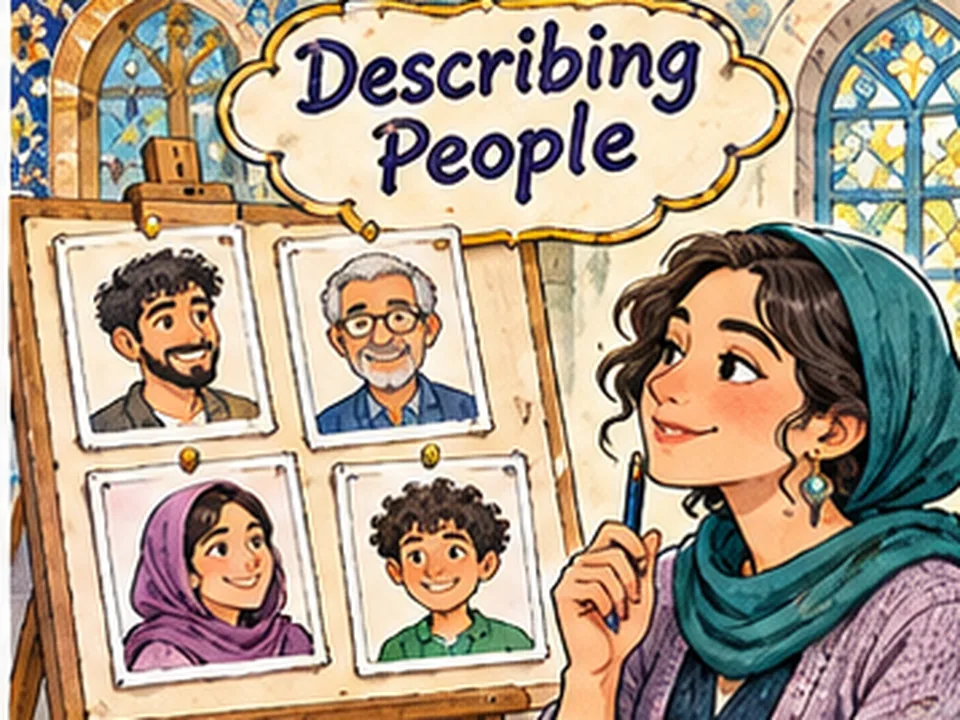
Lesson 23 of Learn to Speak Persian Fast, our free video course: Describing Differences. Watch the video for each part, then read the notes, with every Persian word in Persian script, pronunciation and English, and try the practice questions at the end of each part.
New words: Persian words for describing differences
Learn 20 Persian words for describing people and the differences between them, with pronunciation, examples and a quiz for Lesson 23.
Study notes for this lesson. The Lesson 23 video introduces the new words for this lesson, whose theme is "the differences." Below is a word list for describing people and comparing them, example sentences and a short quiz. On the other pages of this lesson, we meet Mina and Mona, twin sisters who look alike but are very different.
The list has three groups: words for comparing (difference, similar, like, both, but), words for appearance (height, hair, eyes, tall, short), and words for personality (calm, quiet, shy, sociable).
Word list
| Persian | Pronunciation | English |
|---|---|---|
| فرق | /fargh/ | difference |
| تفاوت | /tafâvot/ | difference (more formal) |
| فرق داشتن | /fargh dâshtan/ | to be different |
| شبیه | /shabih/ | similar, alike |
| مثل | /mesl-e/ | like, the same as |
| دوقلو | /doghulu/ | twins; twin |
| خواهر | /khâhar/ | sister |
| قد | /ghad/ | height |
| بلند | /boland/ | tall; long |
| کوتاه | /kutâh/ | short |
| مو | /mu/ | hair |
| چشم | /cheshm/ | eye |
| آرام | /ârâm/ | calm; quietly |
| ساکت | /sâket/ | quiet, silent |
| شلوغ | /sholugh/ | lively, noisy; crowded |
| خجالتی | /khejâlati/ | shy |
| اجتماعی | /ejtemâ'i/ | sociable |
| ورزش | /varzesh/ | sport, exercise |
| هر دو | /har do/ | both |
| اما | /ammâ/ | but |
Notes on the words
- فرق (fargh) is the everyday word for "difference"; تفاوت (tafâvot) means the same but sounds more formal. "What's the difference?" is چه فرقی دارد؟ (che farghi dârad?), in speech چه فرقی داره؟.
- شبیه (shabih) takes an ezâfe: شبیه مادرش است (shabih-e mâdarash ast), "she looks like her mother." "Like each other" is شبیه هم (shabih-e ham).
- بلند (boland) means "tall" for people and "long" for hair: موی بلند (mu-ye boland), "long hair." کوتاه (kutâh) is the opposite of both.
- For a person's height, Persian uses the noun قد: قدش بلند است (ghadash boland ast), literally "her height is tall," means "she is tall."
- شلوغ (sholugh) describes a crowded place or a lively, noisy person, often a child.
Example sentences
| Persian | Pronunciation | English |
|---|---|---|
| مینا و مونا دوقلو هستند. | /minâ va monâ doghulu hastand./ | Mina and Mona are twins. |
| آنها خیلی شبیه هم هستند. | /ânhâ kheyli shabih-e ham hastand./ | They look very much alike. |
| قد مونا بلندتر است. | /ghad-e monâ bolandtar ast./ | Mona is taller. |
| موهای مینا بلند است. | /muhâ-ye minâ boland ast./ | Mina's hair is long. |
| مینا ساکت و خجالتی است، اما مونا اجتماعی است. | /minâ sâket va khejâlati ast, ammâ monâ ejtemâ'i ast./ | Mina is quiet and shy, but Mona is sociable. |
| هر دو ورزش را دوست دارند. | /har do varzesh râ dust dârand./ | Both like sport. |
| فرق آنها چیست؟ | /fargh-e ânhâ chist?/ | What is the difference between them? |
Comparing with -tar
To compare two people, add -تر (-tar) to the adjective, as you learned in Lesson 19, and use از (az) for "than."
| Persian | Pronunciation | English |
|---|---|---|
| مونا از مینا بلندتر است. | /monâ az minâ bolandtar ast./ | Mona is taller than Mina. |
| موهای مینا بلندتر است. | /muhâ-ye minâ bolandtar ast./ | Mina's hair is longer. |
| مینا از مونا آرامتر است. | /minâ az monâ ârâmtar ast./ | Mina is calmer than Mona. |
Practice tip
Think of two people you know well, such as two friends or two family members. Describe one thing that is the same about them with هر دو and one thing that is different with اما, for example هر دو قد بلندی دارند، اما … (both are tall, but …).
Practice
How do you say "twins" in Persian?
Show answer
doghulu دوقلو
What is the opposite of {{بلند}}?
Show answer
kutâh, "short" کوتاه
Translate: "They look very much alike."
Show answer
ânhâ kheyli shabih-e ham hastand. آنها خیلی شبیه هم هستند.
Which word means "shy"?
Show answer
khejâlati خجالتی
Ask "What's the difference?" in spoken Persian.
Show answer
che farghi dâre? چه فرقی داره؟
Grammar: The negative present subjunctive
How to make the Persian present subjunctive negative with na-, spoken forms, uses with bâyad, behtar ast and tâ, examples and a quiz.
Study notes for this lesson. The Lesson 23 video teaches the negative of the present subjunctive, which you learned in Lesson 22. You use it to say things like "you'd better not go," "I hope it doesn't rain" and "speak quietly so she doesn't wake up." The examples use the twin sisters Mina and Mona from this lesson.
How to form it
Replace ب (be-) with ن (na-). Everything else stays the same: the present stem and the personal endings.
| Persian | Pronunciation | English |
|---|---|---|
| (من) نروم | /(man) naravam (spoken: naram)/ | (that) I don't go |
| (تو) نروی | /(to) naravi (spoken: nari)/ | (that) you don't go |
| (او) نرود | /(u) naravad (spoken: nare)/ | (that) he/she doesn't go |
| (ما) نرویم | /(mâ) naravim (spoken: narim)/ | (that) we don't go |
| (شما) نروید | /(shomâ) naravid (spoken: narid / narin)/ | (that) you (pl./polite) don't go |
| (آنها) نروند | /(ânhâ) naravand (spoken: naran)/ | (that) they don't go |
More verbs
| Positive: negative | Pronunciation | English |
|---|---|---|
| بخوابم: نخوابم | /bekhâbam: nakhâbam/ | (that) I sleep: (that) I don't sleep |
| بیایم: نیایم | /biyâyam: nayâyam (spoken: nayâm)/ | (that) I come: (that) I don't come |
| برگردم: برنگردم | /bargardam: barnagardam/ | (that) I return: (that) I don't return |
| دعوا کنیم: دعوا نکنیم | /da'vâ konim: da'vâ nakonim/ | (that) we fight: (that) we don't fight |
| بیدار شود: بیدار نشود | /bidâr shavad: bidâr nashavad/ | (that) she wakes up: (that) she doesn't wake up |
| باشم: نباشم | /bâsham: nabâsham/ | (that) I am: (that) I am not |
| داشته باشم: نداشته باشم | /dâshte bâsham: nadâshte bâsham/ | (that) I have: (that) I don't have |
With compound verbs, na- goes on the verb part (دعوا نکنیم). With prefixed verbs like برگشتن, it goes after the prefix (برنگردم).
When to use it
- After بهتر است, "it's better, you'd better": بهتر است دیر نخوابی (behtar ast dir nakhâbi), "you'd better not go to bed late."
- After تا or که, "so that … not": آرام صحبت کن تا بیدار نشود, "speak quietly so that she doesn't wake up."
- After امیدوارم, "I hope": امیدوارم باران نیاید (omidvâram bârân nayâyad), "I hope it doesn't rain."
- After ممکن است, "it's possible": ممکن است نیاید, "he might not come."
- After خواستن, when you want something not to happen: مادر میخواهد آنها دعوا نکنند, "Mother wants them not to fight."
Which verb gets the negative?
Moving the negative changes the meaning. نمیخواهم بروم (nemikhâham beravam) means "I don't want to go"; میخواهم نروم (mikhâham naravam) means "I want not to go," a stronger decision. With "must," the usual way to forbid something is نباید with a positive subjunctive: نباید بروی (nabâyad beravi), "you must not go." باید نروی also exists and means "you have to not go," stressing that staying is required.
Examples
| Persian | Pronunciation | English |
|---|---|---|
| مونا، بهتر است اینقدر دیر نخوابی. | /monâ, behtar ast inghadr dir nakhâbi./ | Mona, you'd better not go to bed so late. |
| مونا آرام صحبت میکند تا خواهرش بیدار نشود. | /monâ ârâm sohbat mikonad tâ khâharash bidâr nashavad./ | Mona speaks quietly so that her sister doesn't wake up. |
| مادرشان میخواهد آنها دعوا نکنند. | /mâdarashân mikhâhad ânhâ da'vâ nakonand./ | Their mother wants them not to fight. |
| ممکن است مینا امروز به باشگاه نیاید. | /momken ast minâ emruz be bâshgâh nayâyad./ | Mina might not come to the gym today. |
| امیدوارم فردا باران نیاید. | /omidvâram fardâ bârân nayâyad./ | I hope it doesn't rain tomorrow. |
| مینا میخواهد به مهمانی نرود. | /minâ mikhâhad be mehmâni naravad./ | Mina wants to not go to the party. |
Common mistakes
- Keeping be- with na-: نبروم is wrong; say نروم (naravam).
- Putting na- on the first part of a compound verb: say دعوا نکنیم, not "nada'vâ konim."
- Negating both verbs: نمیخواهم نروم means "I don't want not to go," which is rarely what you mean.
- Forgetting the y in verbs with â: the negative of بیایم is نیایم (nayâyam), not "naâyam."
Practice
Make negative: {{بروی}} (beravi)
Show answer
naravi نروی
Make negative: {{خرید کنم}} (kharid konam)
Show answer
kharid nakonam خرید نکنم
Translate: "You'd better not come late."
Show answer
behtar ast dir nayâyi. بهتر است دیر نیایی.
What is the difference between {{نمیخواهم بروم}} and {{میخواهم نروم}}?
Show answer
The first is "I don't want to go"; the second is "I want not to go," a decision to stay.
Correct the mistake: {{نبیایم}}
Show answer
nayâyam نیایم
Speaking practice: telling twins apart
A spoken Persian dialogue about twin sisters and their differences, with useful phrases, a role-play idea and a quiz for Lesson 23.
Study notes for this lesson. After the speaking video, practice with this original dialogue. Arash, a classmate, is not sure whether he is talking to Mina or to her twin sister, Mona. They are classmates of the same age, so they speak informally in spoken Tehran Persian.
Dialogue
| Speaker | Persian | Pronunciation | English |
|---|---|---|---|
| Arash | ببخشید، تو مونایی یا مینا؟ | /bebakhshid, to monâyi yâ minâ?/ | Excuse me, are you Mona or Mina? |
| Mina | من مینام. خیلیها ما رو اشتباه میگیرن. | /man minâm. kheylihâ mâ ro eshtebâh migiran./ | I'm Mina. Lots of people mix us up. |
| Arash | آخه خیلی شبیه همین. فرقتون چیه؟ | /âkhe kheyli shabih-e hamin. farghetun chiye?/ | Well, you look so alike. What's the difference between you? |
| Mina | قد مونا یه کم بلندتره، موهاش هم کوتاهتره. | /ghad-e monâ ye kam bolandtare, muhâsh ham kutâhtare./ | Mona is a bit taller, and her hair is shorter. |
| Arash | اخلاقتون هم فرق داره؟ | /akhlâghetun ham fargh dâre?/ | Are your personalities different too? |
| Mina | آره، خیلی. من ساکت و خجالتیام، ولی مونا خیلی اجتماعیه. | /âre, kheyli. man sâket o khejâlati-am, vali monâ kheyli ejtemâ'iye./ | Yes, very. I'm quiet and shy, but Mona is very sociable. |
| Arash | جمعه میاین مهمونی کلاس؟ | /jom'e miyâin mehmuni-ye kelâs?/ | Are you coming to the class party on Friday? |
| Mina | مونا حتماً میاد. من شاید نیام. | /monâ hatman miyâd. man shâyad nayâm./ | Mona is definitely coming. I might not come. |
| Arash | چرا؟ بهتره خونه نمونی، خوش میگذره. | /cherâ? behtare khune namuni, khosh migzare./ | Why? You'd better not stay home; it'll be fun. |
| Mina | باشه، میام. ولی باید دیر برنگردم. | /bâshe, miyâm. vali bâyad dir barnagardam./ | OK, I'll come. But I mustn't get back late. |
| Arash | عالیه. فقط به مونا نگو که اشتباهت گرفتم. | /âliye. faghat be monâ nagu ke eshtebâhet gereftam./ | Great. Just don't tell Mona I mixed you up. |
Useful phrases
| Persian | Pronunciation | English |
|---|---|---|
| ما رو اشتباه میگیرن. | /mâ ro eshtebâh migiran./ | They mix us up. (written: mâ râ eshtebâh migirand.) |
| خیلی شبیه همین. | /kheyli shabih-e hamin./ | You look very alike. (written: kheyli shabih-e ham hastid.) |
| فرقتون چیه؟ | /farghetun chiye?/ | What's the difference between you? |
| یه کم بلندتره. | /ye kam bolandtare./ | She's a bit taller. |
| شاید نیام. | /shâyad nayâm./ | I might not come. (written: shâyad nayâyam.) |
| بهتره خونه نمونی. | /behtare khune namuni./ | You'd better not stay home. (written: behtar ast dar khâne namâni.) |
| خوش میگذره. | /khosh migzare./ | It'll be fun. (written: khosh migozarad.) |
Notes
- Find the negative subjunctives from the grammar page: نیام (after شاید), نمونی (after بهتره) and برنگردم (after باید).
- نگو (nagu) in the last line is a negative imperative (Lesson 17), not a subjunctive.
- اخلاق (akhlâgh) means "character, personality" in everyday speech: اخلاقش خوبه, "she is good-natured."
- بمونی / نمونی (bemuni / namuni) are spoken forms of بمانی / نمانی, from ماندن (mândan), "to stay."
Role-play
Work with a partner. Describe two people you both know, such as two classmates, two relatives or two characters from a film. Ask each other what the differences are in appearance and personality. Then give each other advice using at least two negative subjunctives, such as بهتره دیر نخوابی (you'd better not go to bed late).
Practice
Who is Arash talking to?
Show answer
Mina. مینا
How is Mona different in appearance?
Show answer
She is a bit taller, and her hair is shorter. یه کم بلندتره، موهاش کوتاهتره.
How are their personalities different?
Show answer
Mina is quiet and shy; Mona is very sociable.
What does Mina say first about the party?
Show answer
She might not come. شاید نیام.
Say "You'd better not stay home" in spoken Persian.
Show answer
behtare khune namuni. بهتره خونه نمونی.
Reading practice: Mina and Mona
A short beginner Persian reading about twin sisters and their differences, with pronunciation, English, key words and a quiz.
Study notes for this lesson. This original reading text uses the words for describing people and the negative subjunctive of Lesson 23. It is in standard written Persian. Read each sentence aloud, check the pronunciation, then cover the English column and read again.
Before you read, make two columns on a piece of paper, one for Mina and one for Mona. As you read, write each sister's features in her column.
Reading text
| Persian | Pronunciation | English |
|---|---|---|
| مینا و مونا خواهرهای دوقلو هستند. | /minâ va monâ khâharhâ-ye doghulu hastand./ | Mina and Mona are twin sisters. |
| آنها خیلی شبیه هم هستند، اما فرقهای زیادی هم دارند. | /ânhâ kheyli shabih-e ham hastand, ammâ farghhâ-ye ziyâdi ham dârand./ | They look very much alike, but they also have many differences. |
| قد مونا کمی بلندتر است و موهایش کوتاه است. | /ghad-e monâ kami bolandtar ast va muhâyash kutâh ast./ | Mona is a little taller, and her hair is short. |
| موهای مینا بلند است. | /muhâ-ye minâ boland ast./ | Mina's hair is long. |
| هر دو چشمهای قهوهای دارند. | /har do cheshmhâ-ye ghahvei dârand./ | Both have brown eyes. |
| مینا ساکت و خجالتی است و دوست دارد کتاب بخواند. | /minâ sâket va khejâlati ast va dust dârad ketâb bekhânad./ | Mina is quiet and shy, and she likes to read. |
| مونا اجتماعی و شلوغ است و هر روز ورزش میکند. | /monâ ejtemâ'i va sholugh ast va har ruz varzesh mikonad./ | Mona is sociable and lively, and she exercises every day. |
| شبها مینا زود میخوابد، اما مونا دیر میخوابد. | /shabhâ minâ zud mikhâbad, ammâ monâ dir mikhâbad./ | At night Mina goes to bed early, but Mona goes to bed late. |
| مادرشان میگوید: «مونا، بهتر است اینقدر دیر نخوابی.» | /mâdarashân miguyad: "monâ, behtar ast inghadr dir nakhâbi."/ | Their mother says, "Mona, you'd better not go to bed so late." |
| گاهی دوستانشان آنها را اشتباه میگیرند. | /gâhi dustânashân ânhâ râ eshtebâh migirand./ | Sometimes their friends mix them up. |
| اما مینا و مونا با وجود این تفاوتها بهترین دوست هم هستند. | /ammâ minâ va monâ bâ vojud-e in tafâvothâ behtarin dust-e ham hastand./ | But despite these differences, Mina and Mona are each other's best friend. |
Key words
- دوقلو (doghulu): twin(s)
- شبیه هم (shabih-e ham): like each other
- کمی (kami): a little
- قهوهای (ghahvei): brown (literally "coffee-colored")
- خواندن (khândan): to read
- خوابیدن (khâbidan): to sleep, to go to bed
- اشتباه گرفتن (eshtebâh gereftan): to mix up, to mistake one for another
- با وجود (bâ vojud-e): despite
- تفاوت (tafâvot): difference
Grammar to notice
Sentence 9 has a negative subjunctive after بهتر است: نخوابی (nakhâbi), "(that) you don't sleep." Sentence 6 has a positive subjunctive after دوست دارد: بخواند (bekhânad). Sentence 3 uses the comparative بلندتر from Lesson 19.
After you read
- Use your two columns to say three differences between the sisters, each with اما: مینا … است، اما مونا … است.
- Give Mona one more piece of advice with بهتر است and a negative subjunctive.
Practice
Who is taller? قد کدام خواهر بلندتر است؟
Show answer
Mona. مونا.
What do the sisters have in common in appearance?
Show answer
Both have brown eyes. هر دو چشمهای قهوهای دارند.
What does Mina like to do? مینا دوست دارد چه کار کند؟
Show answer
Read books. کتاب بخواند.
What does their mother tell Mona? مادرشان به مونا چه میگوید؟
Show answer
That she'd better not go to bed so late. بهتر است اینقدر دیر نخوابی.
What happens sometimes with their friends?
Show answer
Their friends mix them up. دوستانشان آنها را اشتباه میگیرند.
Take this lesson further

Study with the book
Learn to Speak Persian Fast: For Beginners
This free lesson is part of Learn to Speak Persian Fast. The book puts the whole series in one printable PDF you can study offline.
Serious about Persian? Get all 30 of our Persian learning books for $199.99 (55% less than buying them one by one).
Free Persian Starter Kit (PDF)
The Persian alphabet chart and the 101 most common Persian words with pronunciation, in one printable PDF. You also get a one-time 15% code for any of our books.
We will email you new lessons and book news from Learn Persian Online. Unsubscribe any time.Free Persian Starter Pack: Alphabet + 100 Core Words
Get the 14-page printable Starter Pack (all 32 letters, a 7-day reading plan, 100 core words and 20 survival phrases) and a short 5-email course. Free.