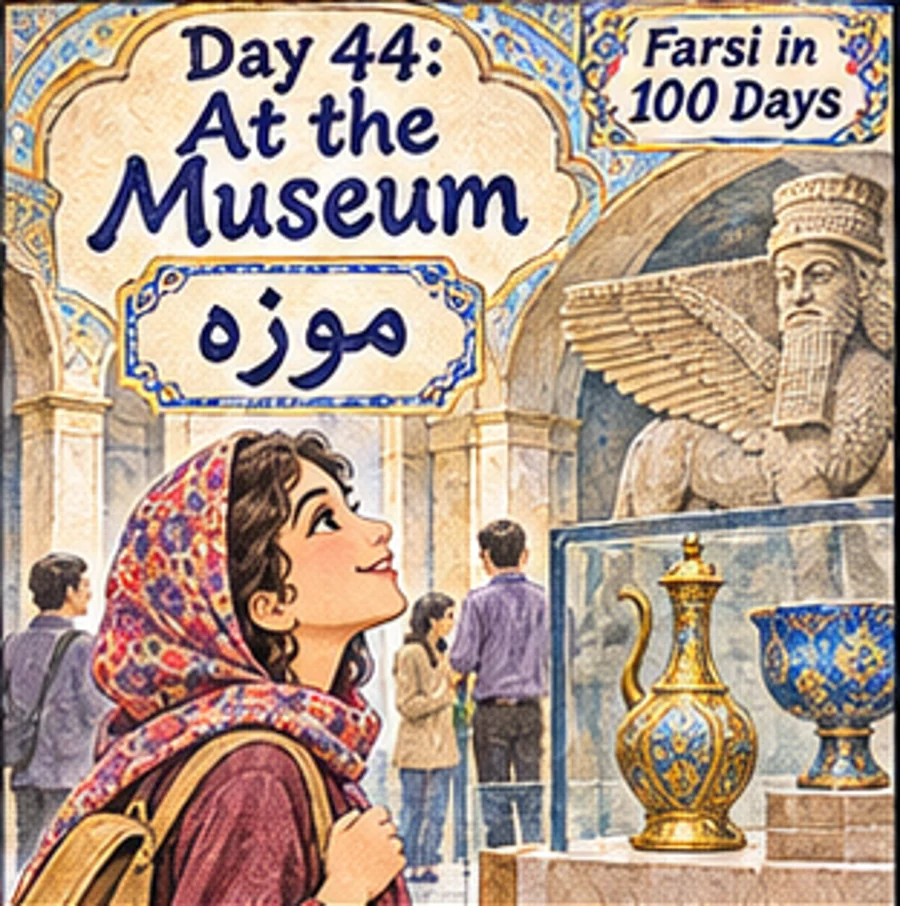
Day 44 of Learn Farsi in 100 Days, our free step-by-step Persian course: At the Museum. The lesson has four parts, with every Persian word in Persian script, pronunciation and English, and each part ends with a quick check.
Part 1Grammar and conversation
Day 44, Part 1 explains intransitive verbs (فعل لازم, fe’l-e lâzem), verbs that need no object, as in سارا رفت (sârâ raft, Sara left), then follows a visitor asking whether a clock museum is open to the public and whether عکسبرداری (aksbardâri, photography) is allowed.
Grammar: intransitive verbs
An intransitive verb (فعل لازم, fe’l-e lâzem) is a verb that does not need a direct object (مفعول, maf’ul) to complete its meaning. In رفتن (raftan, to go), the subject alone is enough: سارا رفت (Sara left). Such a verb can still take a phrase with a preposition, like به کلاس (be kelâs, to class), but never a direct object marked with را (râ).
| Persian | Pronunciation | English |
|---|---|---|
| فعل لازم فعلی است که به مفعول نیاز نداشته باشد. | fe’l-e lâzem fe’li ast ke be maf’ul niyâz nadâshte bâshad. | An intransitive verb is a verb that does not need an object. |
Examples
Sara left.
The students went to class.
Conversation: Visiting a museum
| Speaker | Persian | English and pronunciation |
|---|---|---|
| A الف | سلام ببخشید این موزه برای بازدید عموم آزاد است؟ | Hello, excuse me, is this museum open to the public? salâm bebakhshid in muze barâye bâzdid-e omum âzâd ast? |
| B ب | بله، میتوانید بروید داخل و از موزه دیدن کنید. | Yes, you can go in and visit the museum. bale, mitavânid beravid dâkhel va az muze didan konid. |
| A الف | این موزه چه آثاری دارد؟ | What kind of works does this museum have? in muze che âsâri dârad? |
| B ب | این موزه شامل آثار مختلفی در مورد زمان و ساعتها است. | This museum has various works about time and clocks. in muze shâmel-e âsâr-e mokhtalefi dar mored-e zamân va sâ’at-hâ ast. |
| A الف | باید خیلی جالب باشد! | It must be very interesting! bâyad kheyli jâleb bâshad! |
| B ب | بله، راهنما در مورد تمام آثار برای شما توضیح خواهد داد. | Yes, the guide will explain all the works to you. bale, râhnamâ dar mored-e tamâm-e âsâr barâye shomâ towzih khâhad dâd. |
| A الف | ممنون، از آثار میتوانم عکس بگیرم؟ | Thanks. May I take pictures of the works? mamnun, az âsâr mitavânam aks begiram? |
| B ب | خیر، اینجا عکسبرداری ممنوع است. | No, photography is not allowed here. kheyr, injâ aksbardâri mamnu’ ast. |
| A الف | بسیار خوب، ممنون از راهنمایی شما. | All right, thank you for your help. besyâr khub, mamnun az râhnamâyi-ye shomâ. |
Quick check
- What is a فعل لازم (fe’l-e lâzem)?
Show answer
An intransitive verb: a verb that needs no object, e.g. سارا رفت (sârâ raft, Sara left) - What is the museum in the conversation about?
Show answer
زمان و ساعتها (zamân va sâ’at-hâ), time and clocks - How do you say “Photography is not allowed here”?
Show answer
اینجا عکسبرداری ممنوع است. (injâ aksbardâri mamnu’ ast.)
Part 2Grammar, common phrases, poetry and word of the day
Day 44, Part 2 explains transitive verbs (فعل متعدی, fe’l-e mota’addi), which need an object, as in سارا کیف را برد (Sara took the bag), gives museum questions such as موزه چه ساعتی تعطیل میشود؟ (what time does the museum close?), a quatrain by Khayyam, and the word پرده (parde, curtain).
Grammar: transitive verbs
A transitive verb (فعل متعدی, fe’l-e mota’addi) needs an object (مفعول, maf’ul) to complete its meaning: you take something, you pick something up. When the object is definite, it is followed by را (râ): سارا کیف را برد (Sara took the bag). Compare the intransitive verbs from Part 1, such as رفتن (raftan, to go), which never take an object.
| Persian | Pronunciation | English |
|---|---|---|
| فعل متعدی فعلی است که به مفعول نیاز داشته باشد. | fe’l-e mota’addi fe’li ast ke be maf’ul niyâz dâshte bâshad. | A transitive verb is a verb that needs an object. |
Examples
Sara took the bag.
He picked up the apples.
Common phrases
| Persian | Pronunciation | English |
|---|---|---|
| ممکن است به من بگویید اینجا چه موزهای است؟ | momken ast be man beguyid injâ che muze-i ast? | Could you please tell me what kind of museum this is? |
| موزه چه ساعتی تعطیل میشود؟ | muze che sâ’ati ta’til mishavad? | What time does the museum close? |
Poetry: a quatrain by Khayyam (خیام)
A quatrain (رباعی, robâ’i) by Omar Khayyam, read line by line, right half first. The book also quotes Edward FitzGerald’s famous loose English version: “How sweet is mortal Sovranty!” think some: Others “How blest the Paradise to come”! Ah, take the Cash and let the Credit go, Nor heed the rumble of a distant Drum!
| Persian | Pronunciation | Meaning |
|---|---|---|
| گویند کسان بهشت با حور خوش است | guyand kasân behesht bâ hur khosh ast | People say paradise with its houris is pleasant; |
| من میگویم که آب انگور خوش است | man miguyam ke âb-e angur khosh ast | I say the juice of the grape is pleasant. |
| این نقد بگیر و دست از آن نسیه بدار | in naghd begir o dast az ân nesye bedâr | Take this cash and let go of that credit, |
| کآواز دهل شنیدن از دور خوش است | k-âvâz-e dohol shenidan az dur khosh ast | for the sound of a drum is pleasant only from afar. |
Word of the day: پرده (parde)
Meaning: curtain
The room’s window had a beautiful curtain.
Quick check
- Is برداشتن (bardâshtan, to pick up) transitive or intransitive?
Show answer
Transitive (فعل متعدی, fe’l-e mota’addi): او سیبها را برداشت (u sib-hâ râ bardâsht), He picked up the apples. - How do you ask “What time does the museum close?”
Show answer
موزه چه ساعتی تعطیل میشود؟ (muze che sâ’ati ta’til mishavad?) - What does پرده (parde) mean?
Show answer
curtain
Part 310 important historical monuments of Iran, conversation and idiom of the day
Day 44, Part 3 lists ten important historical monuments of Iran, including چغازنبیل (choghâzanbil, Chogha Zanbil) and میدان نقش جهان (meydân-e naghsh-e jahân, Naqsh-e Jahan Square), follows Jamshid and Minoosh admiring a painting by Kamal-ol-Molk, and teaches the idiom پول، علف خرس است؟ (money doesn’t grow on trees).
10 important historical monuments of Iran
| Persian | Pronunciation | English |
|---|---|---|
| چغازنبیل | choghâzanbil | Chogha Zanbil (ancient Elamite ziggurat near Susa) |
| میدان نقش جهان | meydân-e naghsh-e jahân | Naqsh-e Jahan Square (Isfahan) |
| تخت جمشید | takht-e jamshid | Persepolis |
| تخت سلیمان | takht-e soleymân | Takht-e Soleyman (ancient fire-temple site) |
| ارگ بم | arg-e bam | Bam Citadel |
| گنبد سلطانیه | gonbad-e soltâniyye | Dome of Soltaniyeh |
| مسجد جامع اصفهان | masjed-e jâme’-e esfahân | Jameh (Friday) Mosque of Isfahan |
| بیستون | bisotun | Behistun (rock inscription) |
| کاخ گلستان | kâkh-e golestân | Golestan Palace (Tehran) |
| شهر سوخته | shahr-e sukhte | Shahr-e Sukhteh (the Burnt City) |
Conversation: A painting in the museum
| Speaker | Persian | English and pronunciation |
|---|---|---|
| Jamshid جمشید | این تابلو را نگاه کن ببین چقدر زیبا است. | Look at this painting, see how beautiful it is. in tâblo râ negâh kon bebin cheghadr zibâ ast. |
| Minoosh مینوش | فوقالعاده زیبا است! اثر چه کسی است؟ | It’s extremely beautiful! Whose work is it? fogh-ol-âde zibâ ast! asar-e che kasi ast? |
| Jamshid جمشید | اثر استاد کمالالملک است. | It’s a work by the master Kamal-ol-Molk. asar-e ostâd kamâl-ol-molk ast. |
| Minoosh مینوش | جالب است! من اولینبار است به این موزه میآیم. | Interesting! This is my first time at this museum. jâleb ast! man avvalin bâr ast be in muze mi-âyam. |
| Jamshid جمشید | من علاقهی زیادی به آثار هنری دارم و تقریبا تمام موزههای کشور را دیدهام. | I’m very interested in works of art, and I’ve seen almost every museum in the country. man alâghe-ye ziyâdi be âsâr-e honari dâram va taghriban tamâm-e muze-hâ-ye keshvar râ dide-am. |
| Minoosh مینوش | عالی است! پس اطلاعات خوبی در مورد آثار هنری و تاریخی داری. | Great! So you know a lot about artistic and historical works. âli ast! pas ettelâ’ât-e khubi dar mored-e âsâr-e honari va târikhi dâri. |
Idiom of the day
پول، علف خرس است؟
pul, alaf-e khers ast?
Word for word: Is money bear’s grass?
Meaning in Persian: اشاره به خرج تراشی و بیهوده خرج کردن مال.
Meaning: Said about creating needless expenses and wasting money.
English equivalent: Money doesn’t grow on trees.
Quick check
- What is the Persian name for Persepolis?
Show answer
تخت جمشید (takht-e jamshid) - Whose painting are Jamshid and Minoosh looking at?
Show answer
استاد کمالالملک (ostâd kamâl-ol-molk), the master painter Kamal-ol-Molk - What does پول، علف خرس است؟ mean?
Show answer
“Money doesn’t grow on trees”: a warning against wasting money.
Part 4Reading and new words
Day 44, Part 4 is a reading about the Tehran Museum of Contemporary Art (موزهی هنرهای معاصر, muze-ye honarhâ-ye mo’âser), designed by Kamran Diba after Iranian windcatchers, followed by new words such as بادگیر (bâdgir, windcatcher), گنبد (gonbad, dome) and عکسبرداری (aksbardâri, photography).
Reading: The Tehran Museum of Contemporary Art
موزهی هنرهای معاصر یکی از معروفترین موزههای شهر تهران است. این موزه در ۱۴ اکتبر سال ۱۹۷۷ میلادی ساخته شده است. این موزه را کامران دیبا و با الهام گرفتن از بادگیرهای ایرانی طراحی کرده است.
The Museum of Contemporary Art is one of the most famous museums in Tehran. The museum was built on October 14, 1977. It was designed by Kamran Diba, who took his inspiration from Iranian windcatchers.
موزهی هنرهای معاصر شامل جامعترین و باارزشترین گنجینههای هنر مدرن از بعد از جنگ جهانی دوم تا پیش از دهه ۱۹۸۰ میلادی در خارج از اروپا و آمریکای شمالی است.
The Museum of Contemporary Art holds the most complete and valuable collection of modern art from after World War II to before the 1980s anywhere outside Europe and North America.
ارزش آثار موزه در حدود ۲/۵ میلیارد دلار تخمین زده شده است. اکثر این آثار در دهه ۱۹۷۰ میلادی با نظارت فرح پهلوی خریده شده است.
The value of the museum’s works is estimated at about 2.5 billion dollars. Most of these works were bought in the 1970s under the supervision of Farah Pahlavi.
New words
| Persian | Pronunciation | English |
|---|---|---|
| بازدید کردن | bâzdid kardan | to visit |
| عموم | omum | the public |
| آزاد بودن | âzâd budan | to be free, to be open (to) |
| دیدن کردن | didan kardan | to visit |
| در مورد | dar mored-e | about |
| راهنما | râhnamâ | guide |
| توضیح دادن | towzih dâdan | to explain |
| عکسبرداری | aksbardâri | photography |
| ممنوع | mamnu’ | prohibited |
| مفعول | maf’ul | object (grammar) |
| پنجره | panjere | window |
| بادگیر | bâdgir | windcatcher |
| نیاز داشتن | niyâz dâshtan | to need |
| بهشت | behesht | paradise |
| خوش | khosh | pleasant, good |
| نقد | naghd | cash |
| نسیه | nesye | credit |
| آواز | âvâz | singing; sound |
| دهل | dohol | drum |
| میدان | meydân | square |
| ارگ | arg | citadel |
| گنبد | gonbad | dome |
| کاخ | kâkh | palace |
| سوخته | sukhte | burned |
| تابلو | tâblo | painting; board, sign |
| اثر | asar | work (of art); effect |
| تقریبا | taghriban | almost |
| خرج تراشی | kharj-tarâshi | creating needless expenses |
| بیهوده | bihude | in vain, pointless |
| خرج کردن | kharj kardan | to spend |
| مال | mâl | property, wealth |
| علف | alaf | grass |
| معاصر | mo’âser | contemporary |
| الهام گرفتن | elhâm gereftan | to be inspired |
Quick check
- Who designed the Tehran Museum of Contemporary Art?
Show answer
کامران دیبا (kâmrân dibâ), Kamran Diba - What inspired the museum’s design?
Show answer
بادگیرهای ایرانی (bâdgir-hâ-ye irâni), Iranian windcatchers - What is the difference between نقد (naghd) and نسیه (nesye)?
Show answer
نقد means cash (paid now); نسیه means credit (paid later).
Take this lesson further

Study with the book
Learn Farsi in 100 Days: The Ultimate Crash Course to Learning Farsi Fast
This free lesson is part of Learn Farsi in 100 Days. The book puts the whole series in one printable PDF you can study offline.
Serious about Persian? Get all 30 of our Persian learning books for $199.99 (0% less than buying them one by one).
Free Persian Starter Pack: Alphabet + 100 Core Words
Get the 14-page printable Starter Pack (all 32 letters, a 7-day reading plan, 100 core words and 20 survival phrases) and a short 5-email course. Free.
Free. Every morning: that day’s four videos and the full lessons, with every Persian word, its pronunciation and its English meaning. Stop or pause with one click.