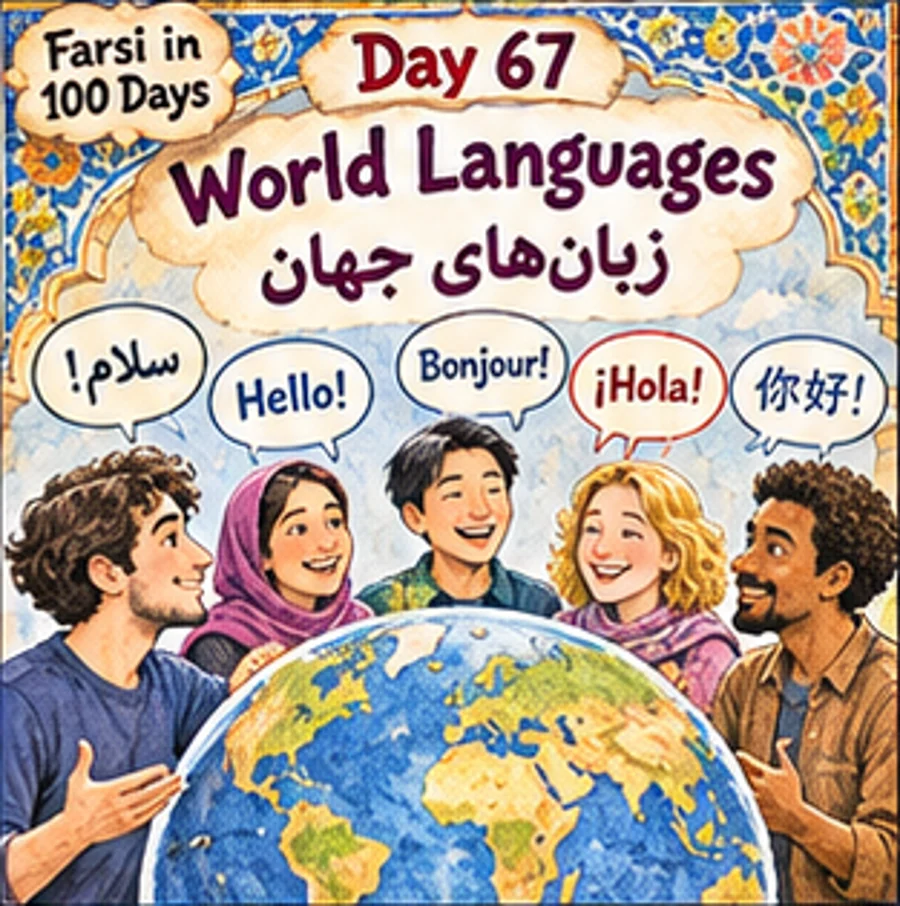
Day 67 of Learn Farsi in 100 Days, our free step-by-step Persian course: World Languages. The lesson has four parts, with every Persian word in Persian script, pronunciation and English, and each part ends with a quick check.
Part 1Conversation and grammar
Day 67, Part 1 has a conversation in which Arzhang says he studies physics (من فیزیک میخوانم, man fizik mikhânam) and can read Persian better than he speaks it, and teaches the suffix ـیه (-iyye) in names of dynasties and places, such as صفویه (safaviyye, the Safavids).
Conversation: a physics student who reads Persian
| Speaker | Persian | English and pronunciation |
|---|---|---|
| Arsham آرشام | چه کاری انجام میدهی؟ | What do you do? che kâri anjâm midahi? |
| Arzhang ارژنگ | من هنوز دانشجو هستم. | I’m still a student. man hanuz dâneshju hastam. |
| Arsham آرشام | چه دانشگاهی میروی؟ | Which university do you go to? che dâneshgâhi miravi? |
| Arzhang ارژنگ | دانشگاه تهران. | The University of Tehran. dâneshgâh-e tehrân. |
| Arsham آرشام | چه دانشگاه خوبی. چه رشتهای میخوانی؟ | What a good university! What do you study? che dâneshgâh-e khubi. che reshte’i mikhâni? |
| Arzhang ارژنگ | من فیزیک میخوانم. | I study physics. man fizik mikhânam. |
| Arsham آرشام | چه مدت است که فیزیک میخوانی؟ | How long have you been studying physics? che moddat ast ke fizik mikhâni? |
| Arzhang ارژنگ | سه سال. | Three years. se sâl. |
| Arsham آرشام | میتوانی فارسی صحبت کنی؟ | Can you speak Persian? mitavâni fârsi sohbat koni? |
| Arzhang ارژنگ | بله، من وقتی به دبیرستان میرفتم شروع کردم به یادگیری زبان فارسی. | Yes, I started learning Persian when I was in high school. bale, man vaghti be dabirestân miraftam shoru’ kardam be yâdgiri-ye zabân-e fârsi. |
| Arsham آرشام | عجیب نیست که تو زبان فارسی خوب صحبت میکنی. | No wonder you speak Persian well. ajib nist ke to zabân-e fârsi khub sohbat mikoni. |
| Arzhang ارژنگ | در واقع زیاد خوب نیست. من میتوانم بخوانم اما نمیتوانم خوب صحبت کنم. | Actually, it’s not that good. I can read, but I can’t speak well. dar vâghe’ ziyâd khub nist. man mitavânam bekhânam ammâ nemitavânam khub sohbat konam. |
| Arsham آرشام | صحبت کردن با افراد دیگر خیلی مهم است. | Talking with other people is very important. sohbat kardan bâ afrâd-e digar kheyli mohem ast. |
Grammar: the suffix -iyye (ـیه)
The suffix ـیه (-iyye, often said -iye) is added to a name to make (1) the name of a dynasty (سلسله, selsele), from the founder’s family or tribe: زند → زندیه (zandiyye, the Zand dynasty); and (2) the name of a place or country (محل یا کشور): زعفران → زعفرانیه (za’farâniyye, a district of Tehran), ترک → ترکیه (torkiye, Turkey).
| Persian | Pronunciation | English |
|---|---|---|
| زندیه | zandiyye | the Zand dynasty |
| قاجاریه | ghâjâriyye | the Qajar dynasty |
| صفویه | safaviyye | the Safavid dynasty |
| افشاریه | afshâriyye | the Afsharid dynasty |
| زعفرانیه | za’farâniyye | Zafaraniyeh (a district of Tehran) |
| ترکیه | torkiye | Turkey |
Quick check
- How do you say “I study physics” in Persian?
Show answer
من فیزیک میخوانم. (man fizik mikhânam.) - What does the suffix ـیه make in قاجاریه?
Show answer
the name of a dynasty: قاجاریه (ghâjâriyye), the Qajar dynasty - What is the Persian name of Turkey?
Show answer
ترکیه (torkiye)
Part 2Idiom of the day, common phrases, poetry and word of the day
Day 67, Part 2 gives two proverbs about water, phrases for saying where you are from, such as اهل ایرانم (ahl-e irânam, I’m from Iran), a quatrain by Khayyam, and the word of the day همدردی (hamdardi, sympathy).
Idiom of the day
آب در دست داری، نخور و بیا.
âb dar dast dâri, nakhor va biyâ.
Word for word: If you have water in your hand, don’t drink it; come.
Meaning in Persian: به این معنی است که در آمدن فوقالعاده عجله کن.
Meaning: It means: hurry and come as fast as you possibly can.
English equivalent: Drop everything and come.
Idiom of the day
آب در کوزه و ما تشنهلبان میگردیم.
âb dar kuze va mâ teshne-labân migardim.
Word for word: The water is in the jug, and we go around with thirsty lips.
Meaning in Persian: مقصود در کنار ما قرار دارد اما به دنبال آن میگردیم.
Meaning: What we want is right beside us, but we go looking for it elsewhere.
English equivalent: It’s right under your nose.
Common phrases
| Persian | Pronunciation | English |
|---|---|---|
| من استرالیایی هستم. | man ostorâliyâyi hastam. | I’m Australian. |
| اهل ایرانم. ایران در خاورمیانه قرار دارد. | ahl-e irânam. irân dar khâvarmiyâne gharâr dârad. | I’m from Iran. It’s in the Middle East. |
Poetry: Khayyam
A quatrain (rubâ’i) by Omar Khayyam (خیام). The book gives Edward FitzGerald’s famous English version: “Ah Love! could thou and I with Fate conspire, / To grasp the sorry Scheme of Things entire, / Would not we shatter it to bits – and then / Re-mould it nearer to the Heart’s Desire!” The line-by-line meaning below is closer to the Persian.
| Persian | Pronunciation | English |
|---|---|---|
| گر بر فلکم دست بدی چون یزدان | gar bar falakam dast bodi chon yazdân | If I had power over the heavens as God does, |
| برداشتمی من این فلک را ز میان | bardâshtami man in falak râ ze miyân | I would sweep these heavens away |
| از نو فلکی دگر چنان ساختمی | az now falaki degar chonân sâkhtami | and build another heaven anew, in such a way |
| کآزاده به کام دل رسیدی آسان | k-âzâde be kâm-e del residi âsân | that the free-spirited would easily reach their heart’s desire. |
Word of the day: همدردی (hamdardi)
Meaning: sympathy
Sara offered her sympathy to him on his father’s death.
Quick check
- How do you say “I’m from Iran” in Persian?
Show answer
اهل ایرانم. (ahl-e irânam.) - What does the proverb آب در کوزه و ما تشنهلبان میگردیم mean?
Show answer
What we are looking for is right beside us, but we search for it elsewhere. - What does همدردی (hamdardi) mean?
Show answer
sympathy
Part 310 well-known languages of the world, conversation and idiom of the day
Day 67, Part 3 names ten major world languages, such as چینی (chini, Chinese) and عربی (arabi, Arabic), has a conversation in which Farimah explains how she learned French (فرانسه, farânse), and gives the idiom دهنکجی کردن (dahan-kaji kardan, to thumb one’s nose at someone).
10 well-known languages of the world (۱۰ زبان معروف دنیا)
| Persian | Pronunciation | English |
|---|---|---|
| چینی | chini | Chinese |
| عربی | arabi | Arabic |
| انگلیسی | engelisi | English |
| بنگالی | bangâli | Bengali |
| هندی | hendi | Hindi |
| پرتغالی | porteghâli | Portuguese |
| اسپانیایی | espâniyâyi | Spanish |
| مالایی | mâlâyi | Malay |
| روسی | rusi | Russian |
| فرانسوی | farânsavi | French |
Conversation: learning French
| Speaker | Persian | English and pronunciation |
|---|---|---|
| Negar نگار | چقدر خوب فرانسه صحبت میکنی؟ | How well you speak French! cheghadr khub farânse sohbat mikoni? |
| Farimah فریماه | من چندین سال است که فرانسه را یاد گرفتهام. | I’ve been learning French for several years. man chandin sâl ast ke farânse râ yâd gerefte’am. |
| Negar نگار | کلاس رفتی یا خودت یاد گرفتهای؟ | Did you take classes, or did you teach yourself? kelâs rafti yâ khodet yâd gerefte’i? |
| Farimah فریماه | کلاس میرفتم. حدود یک سال کلاسهای فرانسه شرکت کردم. | I went to classes. I took French classes for about a year. kelâs miraftam. hodud-e yek sâl kelâs-hâ-ye farânse sherkat kardam. |
| Negar نگار | دیگر چه زبانهایی بلد هستی؟ | What other languages do you know? digar che zabân-hâyi balad hasti? |
| Farimah فریماه | انگلیسی و کمی هم آلمانی. | English, and a little German too. engelisi va kami ham âlmâni. |
| Negar نگار | خوب است. | That’s good. khub ast. |
Idiom of the day
دهنکجی کردن.
dahan-kaji kardan.
Word for word: to twist one’s mouth
Meaning in Persian: به حرف کسی گوش نکردن، کار خود را انجام دادن.
Meaning: To ignore what someone says and do as one pleases; to defy someone openly.
English equivalent: to thumb one’s nose at someone (the book gives “He makes faces.”)
Quick check
- How do you say “Russian” (the language) in Persian?
Show answer
روسی (rusi) - How long did Farimah take French classes?
Show answer
about a year: حدود یک سال (hodud-e yek sâl) - What does دهنکجی کردن (dahan-kaji kardan) mean?
Show answer
to ignore what someone says and do as one pleases; to thumb one’s nose at someone
Part 4Reading and new words
Day 67, Part 4 is a reading about Cyrus the Great (کوروش کبیر, kurosh-e kabir), founder of the Achaemenid dynasty, followed by a vocabulary list with words like سلسله (selsele, dynasty), طغیان (toghyân, rebellion) and یورش بردن (yuresh bordan, to attack).
Reading: Cyrus the Great
کوروش دوم به کوروش بزرگ و کوروش کبیر مشهور است. او بنیانگذار و نخستین شاه سلسلهی هخامنشی بود. کوروش بزرگ در بین سالهای ۵۵۹ تا ۵۲۹ پیش از میلاد، بر نواحی گستردهای از قارهی آسیا حکومت میکرد.
Cyrus II is known as Cyrus the Great. He was the founder and first king of the Achaemenid dynasty. Between 559 and 529 BC, Cyrus the Great ruled over vast regions of the continent of Asia.
کوروش در جوانی، ابتدا علیه شاه ماد که پادشاه ایران بود، طغیان کرد و سپس به هگمتانه (همدان امروزی) یورش برد و آن را فتح کرد. پس از این، کوروش سلسلهی هخامنشی را تأسیس کرد.
As a young man, Cyrus first rebelled against the king of the Medes, who was the king of Iran, and then attacked Hegmataneh (today’s Hamadan) and conquered it. After this, Cyrus founded the Achaemenid dynasty.
New words
| Persian | Pronunciation | English |
|---|---|---|
| سلسله | selsele | dynasty; series, chain |
| واجد شرایط | vâjed-e sharâyet | eligible, qualified |
| نمایان | namâyân | visible |
| مرسوم کردن | marsum kardan | to make customary, to bring into use |
| وجب | vajab | span (of the hand) |
| تشنه | teshne | thirsty |
| نقل کردن | naghl kardan | to tell, to narrate, to quote |
| یزدان | yazdân | God |
| نهی کردن | nahy kardan | to forbid, to prohibit |
| بگو مگو | begu magu | argument, squabble |
| واژگون کردن | vâzhgun kardan | to overturn, to topple |
| سازندگی | sâzandegi | construction, development |
| مزیت | maziyyat | advantage, merit |
| بهسازی | behsâzi | improvement |
| نگارش | negâresh | writing, composition |
| مرمت | maremmat | repair, restoration |
| گیاهشناسی | giyâh-shenâsi | botany |
| هنگفت | hengoft | enormous, huge (of amounts) |
| کبیر | kabir | great |
| یاوه گفتن | yâve goftan | to talk nonsense, to babble |
| مستقر شدن | mostaghar shodan | to be stationed, to settle in |
| مسلم | mosallam | certain |
| هولناک | hulnâk | terrible, horrifying |
| شاهنشاهی | shâhanshâhi | imperial; empire |
| نواحی | navâhi | regions, areas |
| هنرکده | honarkade | art school, college of arts |
| یکتا | yektâ | unique, one and only |
| وصول کردن | vosul kardan | to collect (money owed), to receive |
| طغیان | toghyân | rebellion, uprising; outburst |
| هیچگاه | hichgâh | never |
| مزاح کردن | mezâh kardan | to joke, to jest |
| همینقدر | hamin-ghadr | this much |
| یورش بردن | yuresh bordan | to attack, to raid |
Quick check
- Which dynasty did Cyrus the Great found?
Show answer
the Achaemenid dynasty, سلسلهی هخامنشی (selsele-ye hakhâmaneshi) - What is the old name of today’s Hamadan in the reading?
Show answer
هگمتانه (hegmatâne) - What does نهی کردن (nahy kardan) mean?
Show answer
to forbid, to prohibit
Take this lesson further

Study with the book
Learn Farsi in 100 Days: The Ultimate Crash Course to Learning Farsi Fast
This free lesson is part of Learn Farsi in 100 Days. The book puts the whole series in one printable PDF you can study offline.
Serious about Persian? Get all 30 of our Persian learning books for $199.99 (55% less than buying them one by one).
Free Persian Starter Pack: Alphabet + 100 Core Words
Get the 14-page printable Starter Pack (all 32 letters, a 7-day reading plan, 100 core words and 20 survival phrases) and a short 5-email course. Free.
Free. Every morning: that day’s four videos and the full lessons, with every Persian word, its pronunciation and its English meaning. Stop or pause with one click.