47 pages · Printable PDF · Instant download
- Instant downloadYours right after checkout
- Secure checkoutCard (Stripe) or PayPal
- Read anywherePhone, tablet or computer, or print it

Paperback sold separately. As an Amazon Associate I earn from qualifying purchases.
Buy 2 or more books and save up to 25% at checkout.
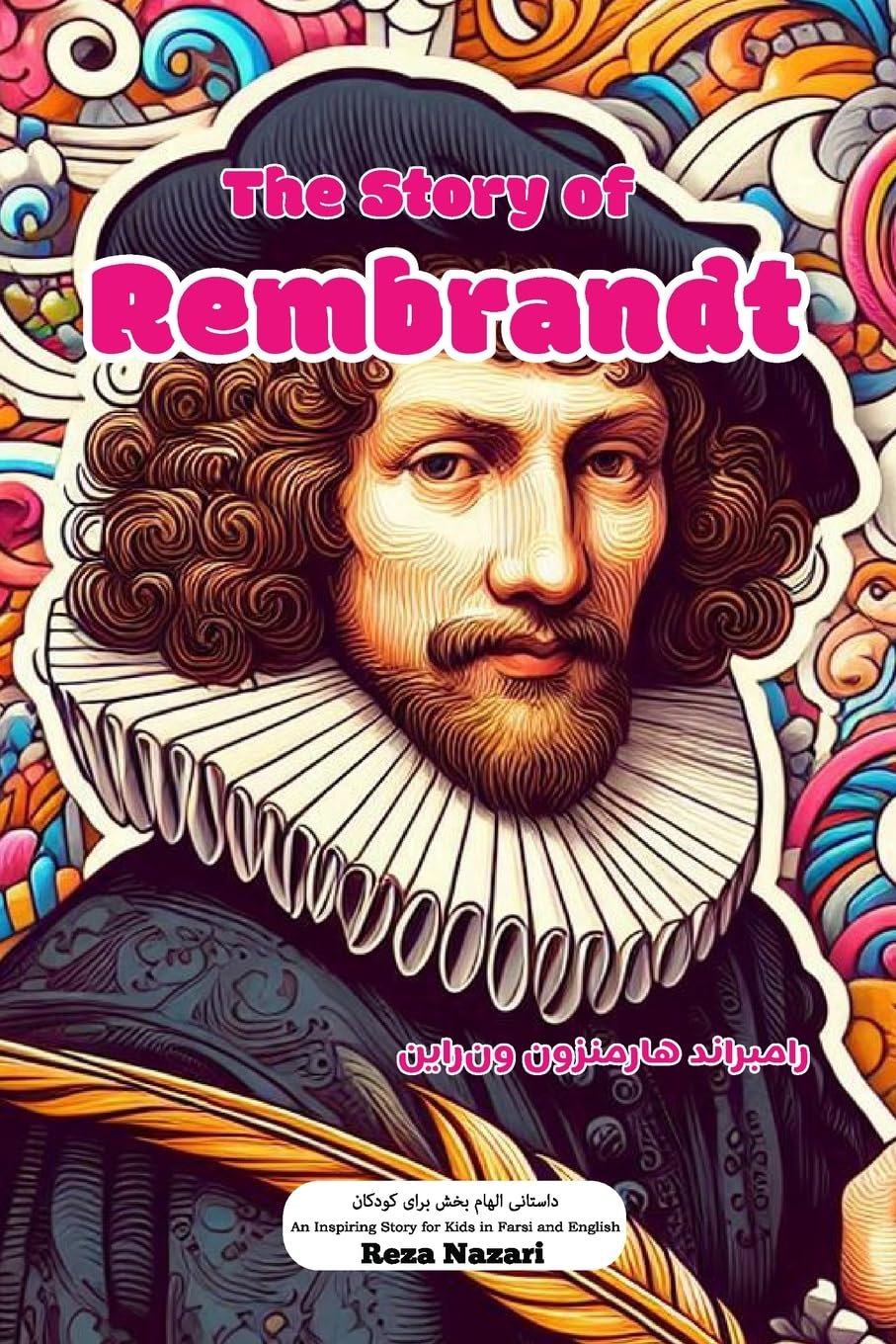
The Story of Rembrandt
The Story of Rembrandt follows Rembrandt Harmenszoon van Rijn from Leiden, where he was the ninth child of a miller, to Amsterdam, where his portraits made him famous. Children read about his teacher Jacob van Swanenburg, his marriage to Saskia, the money troubles that cost him his house in 1658, and how his brushwork changed over the years. The Persian sits with the English, passage by passage. 47-page PDF by Reza Nazari.
Meet the Dutch painter who kept working even after he lost his house
Rembrandt left the University of Leiden because he loved painting more than studying. The Story of Rembrandt follows what happened next: three years of lessons with Jacob van Swanenburg, a studio shared with his friend Jan Lievens, paintings bought by Prince Frederik Hendrik, and a move to busy Amsterdam at the end of 1631, where everyone wanted a portrait.
The book is honest about the hard years. Rembrandt spent more than he earned on art and rare objects, sold his paintings in 1657 and his house in 1658, yet kept painting. Later pages explain his art in simple words: strong light and dark, stormy landscapes such as The Three Trees, etchings, and drawings he made from 23 Mughal paintings from India.
At a glance
What your child will read
The book runs from his birth on 15 July 1606 to his death on 4 October 1669.
His life
A big family in Leiden, a school where he learned Latin, his first students in 1627, marriage to Saskia van Uylenburgh in 1634 and a house with a view of the Amstel River.
His art
How his style moved from smooth, detailed pictures to thick brushstrokes, why he left parts of a print as empty white paper, and his group portrait The Militia Company of Captain Frans Banning Cocq, painted between 1640 and 1642.
What children learn
That success and trouble can come together, and that keeping at your work matters: he painted The Sampling Officials in 1662, after losing his home.
How the Persian is written
No vowel marks, everyday modern Persian. Words such as نقاشی (naghâshi, painting) and آسیابان (âsiyâbân, miller) appear on the first pages.
From the Leiden years
Three sentences from the early pages, with the English the book prints for them:
| Persian | English |
|---|---|
| مذهب برای رامبراند بسیار مهم بود و در بسیاری از نقاشیهای زیبای او نمایان است. | Religion was very important to Rembrandt, and it showed up in many of his beautiful paintings. |
| او سه سال را صرف تمرین مهارتهای نقاشی خود کرد. | He spent three years practicing his painting skills. |
| در سال 1625، رامبراند استودیوی هنری خود را در لیدن افتتاح کرد و آن را با دوست خوب خود، یان لیونز، شریک شد. | In 1625, Rembrandt opened his very own art studio in Leiden, and he shared it with his good friend, Jan Lievens. |
Reading it together
- Look up one Rembrandt painting before each sitting, so your child has a picture in mind while you read.
- Read the English passage, then the Persian, and ask your child to find لیدن (Leiden) and آمستردام (Amsterdam) in the Persian text.
- Talk about the money pages: why buying too many things got him into trouble, and what he did next.
- Let your child draw one scene with bright light on one side and deep shadow on the other, then name the colors in Persian with the free Persian vocabulary topics.
Who this book is for
A good fit if you
- have a child who loves drawing or visiting art museums
- want a biography that shows a famous person facing debt and loss and carrying on
- are reading a series of artists’ lives in English and Persian
Look elsewhere if you
- have a child under 7; the passages are long and mention mortgages and auctions, so a Farsi Coloring Book: Animals and Insects suits a small artist better
- want to learn the Persian script yourself before reading with your child; Read and Write Persian Language in 7 Days starts adults from the first letter
Use it with
- The Story of Johannes Vermeer: another painter of the Dutch Golden Age, a generation younger.
- The Story of Vincent van Gogh: a later Dutch painter also known for thick, visible brushstrokes.
Common questions
What age is it for?
About 8 to 12. Younger children can listen, but words like foreclosure and guild need explaining.
Does it mention The Night Watch?
Yes, under its full name, The Militia Company of Captain Frans Banning Cocq, painted between 1640 and 1642.
Is the Persian Iranian Farsi?
Yes. The translation is in standard written Persian as used in Iran.
What do I get after I buy?
The 47-page PDF, which you can download straight after checkout and open on a tablet or computer, or print at home.
Is it also a paperback?
Yes. Amazon lists the paperback, while the download sold here is the PDF.
Related Persian books
More Persian learning books on similar topics.
 Learn Farsi in 100 Days: Book + Workbook (2 PDF Ebooks)
Original price was: $29.98.$24.99Current price is: $24.99.


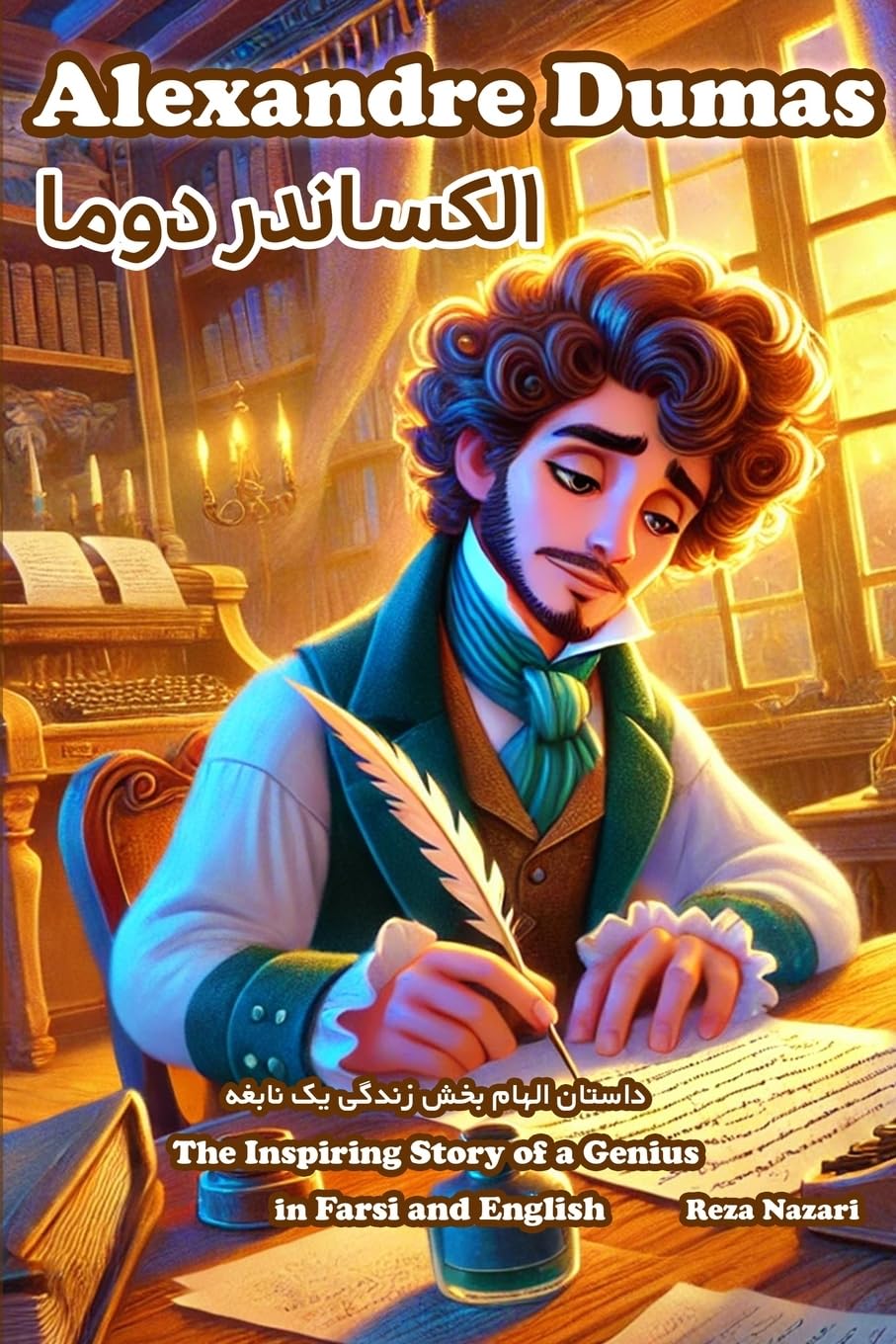 Alexandre Dumas: The Inspiring Story of a Genius in Farsi and English
$12.99
What do you think about "The Story of Rembrandt" book?
You must be logged in to post a review.
Product Reviews
There are no reviews yet.