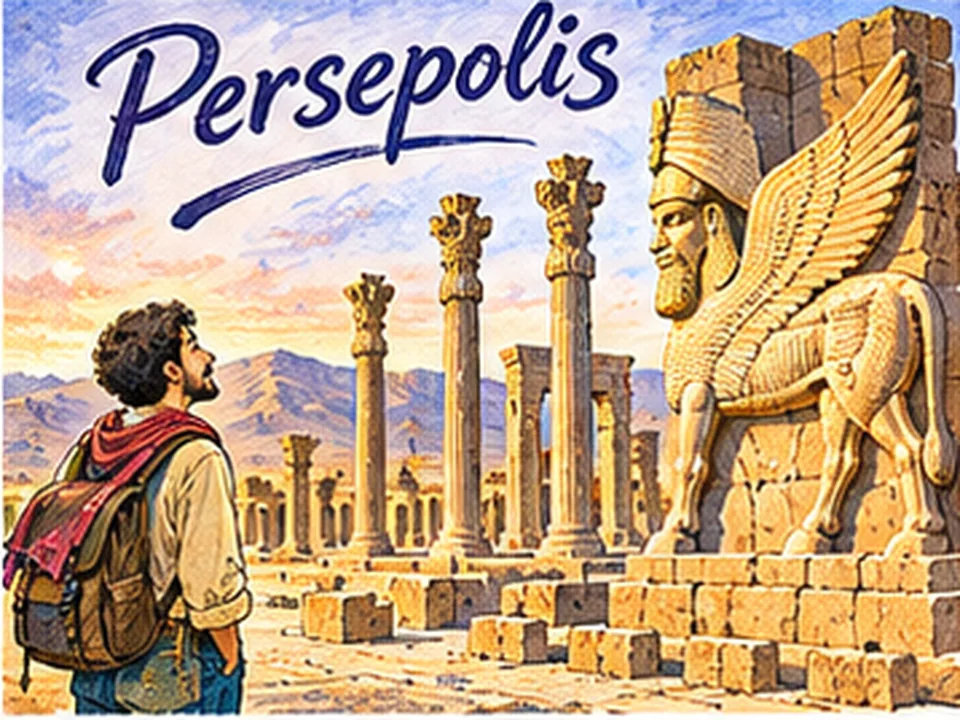

To help you choose where to go on your next trip to Iran, we compiled a list of best destinations in Iran using opinions and recommendations from trusted travel experts and many of travelers. We hope these recommendations can help point you toward your next destination in Iran.
1- Persepolis
Founded by Darius I in 518 B.C., Persepolis was the capital of the Achaemenid Empire. It was built on an immense half-artificial, half-natural terrace, where the king of kings created an impressive palace complex inspired by Mesopotamian models. The importance and quality of the monumental ruins make it a unique archaeological site.
Visiting Persepolis? Learn takht-e jamshid vocabulary, useful phrases, a short Persian reading about the site with translation, and a quiz.
Persepolis in Persian: words and a reading for visitors
In Persian, Persepolis is called تخت جمشید (takht-e jamshid), "the Throne of Jamshid", after a legendary king of Iranian tradition. The site lies in Fars province, northeast of the city of Shiraz. It was a capital of the Achaemenid Empire, and its ruins are among the most famous monuments of ancient Iran. This page gives you the Persian you need to visit it and a short reading text about its history.
Key facts
- Darius I, داریوش (dâriush), began building Persepolis around 518 BC.
- It was a capital of the Achaemenid Empire, شاهنشاهی هخامنشی (shâhanshâhi-ye hakhâmaneshi).
- The palaces stand on a large terrace, partly cut from the mountain and partly built up.
- Alexander the Great burned Persepolis in 330 BC.
- Persepolis is a UNESCO World Heritage Site, listed in 1979.
- Nearby is Naqsh-e Rostam, نقش رستم (naghsh-e rostam), with the rock-cut tombs of Achaemenid kings.
Vocabulary for your visit
| Persian | Pronunciation | English |
|---|---|---|
| تخت جمشید | /takht-e jamshid/ | Persepolis |
| کاخ | /kâkh/ | palace |
| ستون | /sotun/ | column |
| سنگنگاره | /sang-negâre/ | stone relief |
| پلکان | /pellekân/ | staircase |
| دروازه | /darvâze/ | gate |
| ویرانه | /virâne/ | ruins |
| باستانی | /bâstâni/ | ancient |
| راهنما | /râhnamâ/ | guide |
| بلیت | /belit/ | ticket |
| ورودی | /vorudi/ | entrance |
| میراث جهانی | /mirâs-e jahâni/ | world heritage |
Useful phrases
| Persian | Pronunciation | English |
|---|---|---|
| ببخشید، ورودی کجاست؟ | /bebakhshid, vorudi kojâst?/ | Excuse me, where is the entrance? |
| راهنمای انگلیسیزبان دارید؟ | /râhnamâ-ye engelisi-zabân dârid?/ | Do you have an English-speaking guide? |
| اینجا میشه عکس گرفت؟ | /injâ mishe aks gereft?/ | Can I take photos here? |
| این کاخ مال کدوم پادشاهه؟ | /in kâkh mâl-e kodum pâdeshâhe?/ | Which king does this palace belong to? |
| چقدر قدیمیه! | /cheghadr ghadimiye!/ | How old it is! |
The phrase میشه عکس گرفت؟ uses a handy impersonal pattern: میشه (mishe), "is it possible", followed by the short infinitive, which looks like the past stem: گرفت (gereft). It asks about what is allowed or possible in general, without naming a person. You can reuse it everywhere: میشه اینجا نشست؟ (mishe injâ neshast?), "Can one sit here?"
Reading: Persepolis
| Persian | Pronunciation | English |
|---|---|---|
| تخت جمشید در استان فارس و نزدیک شهر شیراز است. | /takht-e jamshid dar ostân-e fârs va nazdik-e shahr-e shirâz ast./ | Persepolis is in Fars province, near the city of Shiraz. |
| داریوش بزرگ ساختن آن را حدود ۵۱۸ سال پیش از میلاد شروع کرد. | /dâriush-e bozorg sâkhtan-e ân râ hodud-e 518 sâl pish az milâd shoru' kard./ | Darius the Great began building it around 518 BC. |
| تخت جمشید یکی از پایتختهای شاهنشاهی هخامنشی بود. | /takht-e jamshid yeki az pâyetakht-hâ-ye shâhanshâhi-ye hakhâmaneshi bud./ | Persepolis was one of the capitals of the Achaemenid Empire. |
| کاخهای آن روی یک سکوی بزرگ ساخته شدهاند. | /kâkh-hâ-ye ân ru-ye yek saku-ye bozorg sâkhte shode-and./ | Its palaces were built on a large platform. |
| روی پلکانها سنگنگارههایی هست که نمایندگان ملتهای مختلف را با هدیه نشان میدهد. | /ru-ye pellekân-hâ sang-negâre-hâyi hast ke namâyandegân-e mellat-hâ-ye mokhtalef râ bâ hedye neshân midahad./ | On the staircases there are reliefs that show representatives of different nations carrying gifts. |
| اسکندر مقدونی در سال ۳۳۰ پیش از میلاد تخت جمشید را آتش زد. | /eskandar-e maghduni dar sâl-e 330 pish az milâd takht-e jamshid râ âtash zad./ | Alexander of Macedon set Persepolis on fire in 330 BC. |
| امروز تخت جمشید در فهرست میراث جهانی یونسکو ثبت شده است. | /emruz takht-e jamshid dar fehrest-e mirâs-e jahâni-ye yunesko sabt shode ast./ | Today Persepolis is registered on the UNESCO World Heritage List. |
Grammar note: the passive with shodan
The reading uses the passive twice: ساخته شدهاند (sâkhte shode-and), "have been built", and ثبت شده است (sabt shode ast), "has been registered". The Persian passive is formed with the past participle of the main verb, such as ساخته (sâkhte) from ساختن, "to build", plus a form of شدن (shodan), "to become". Note also پیش از میلاد (pish az milâd), literally "before the birth (of Christ)", the Persian way to say BC.
Practice
-
What is Persepolis called in Persian?
Show answer
takht-e jamshid تخت جمشید
-
Who began building Persepolis?
Show answer
Darius I (Darius the Great) داریوش بزرگ
-
How do you ask "Where is the entrance?"
Show answer
bebakhshid, vorudi kojâst? ببخشید، ورودی کجاست؟
-
Translate: پیش از میلاد
Show answer
BC, "before Christ"
-
What does "sang-negâre" mean? سنگنگاره
Show answer
stone relief
More about Iran's sights: Saadi Tomb.
Want to learn Persian? Get the free Starter Pack
Get the 14-page printable Starter Pack (all 32 letters, a 7-day reading plan, 100 core words and 20 survival phrases) and a short 5-email course. Free.