200 Most Common Persian Verbs
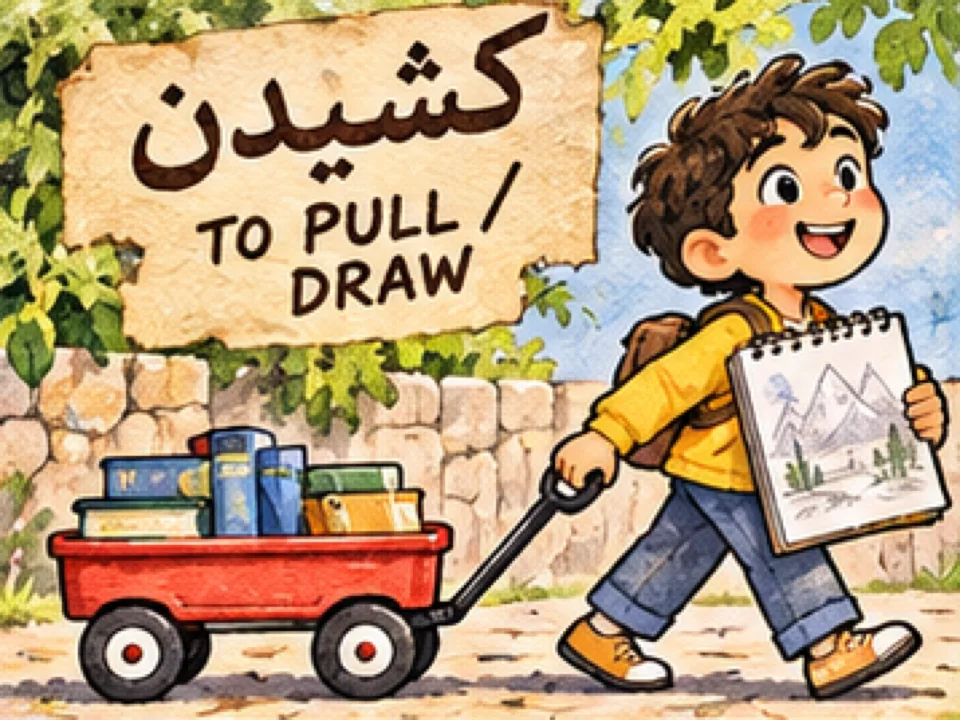
کِشیدَن
Watch and listen to Reza Nazari explain this verb. More in the free 200 Persian Verbs video course.
Trace – Weigh – Draw
مُتَرادِفِ فارسی: رَسم کَردَن – وَزن کَردَن
مُتَضادِ فارسی: هُل دادَن – پاک کَردَن
:صَرف
گُذَشتِه: کِشیدَم – کِشیدی – کِشید – کِشیدیم – کِشیدید – کِشیدَند
حال: می کِشَم – می کِشی – می کِشَد – می کِشیم – می کِشید – می کِشَند
:مِثال
.او یِک نَقاشیِ زیبا اَز مَنظَرِه ساحِل کِشید
.مَن نَقشِه یِک ساختِمان را کِشیدَم
.فُروشَندِه وَزنِ میوِه ها را کِشید
کشیدن (keshidan) means "to pull" or "to draw" and has many other uses. See its conjugation, examples, key compounds and a short quiz.
How to use کشیدن (keshidan)
کشیدن is a simple, transitive verb with regular stems: past کشید (keshid), present کش (kesh). Its basic meaning is "to pull" (در را کشید, "he pulled the door"), and from that come many others: to draw a picture, to weigh something on a scale, to smoke a cigarette, to stretch, and to endure pain.
It is one of the busiest light verbs in Persian: نفس کشیدن ("to breathe"), طول کشیدن ("to take time"), خجالت کشیدن ("to feel shy or embarrassed"), دراز کشیدن ("to lie down"). The verb is everyday and neutral. Don't confuse it with کشتن (koshtan, "to kill"), whose present stem is also written کش but pronounced kosh.
Verb stems
| Infinitive | کشیدن | /keshidan/ | to pull; to draw; to weigh; to smoke; to suffer |
|---|---|---|---|
| Past stem | کشید | /keshid/ | used for past tenses |
| Present stem | کش | /kesh/ | used for present, subjunctive and imperative |
Conjugation of کشیدن
| Person | Simple past | Present | Future | Subjunctive |
|---|---|---|---|---|
| من I |
کشیدم /keshidam/ |
میکشم /mikesham/ |
خواهم کشید /khâham keshid/ |
بکشم /bekesham/ |
| تو you (sg.) |
کشیدی /keshidi/ |
میکشی /mikeshi/ |
خواهی کشید /khâhi keshid/ |
بکشی /bekeshi/ |
| او he / she |
کشید /keshid/ |
میکشد /mikeshad/ |
خواهد کشید /khâhad keshid/ |
بکشد /bekeshad/ |
| ما we |
کشیدیم /keshidim/ |
میکشیم /mikeshim/ |
خواهیم کشید /khâhim keshid/ |
بکشیم /bekeshim/ |
| شما you (pl./polite) |
کشیدید /keshidid/ |
میکشید /mikeshid/ |
خواهید کشید /khâhid keshid/ |
بکشید /bekeshid/ |
| آنها they |
کشیدند /keshidand/ |
میکشند /mikeshand/ |
خواهند کشید /khâhand keshid/ |
بکشند /bekeshand/ |
Negative and imperative
| Persian | Pronunciation | English |
|---|---|---|
| نکشیدم | /nakeshidam/ | I did not pull |
| نمیکشم | /nemikesham/ | I do not pull / I am not pulling |
| بکش! | /bekesh!/ | Pull! (to one person) |
| بکشید! | /bekeshid!/ | Pull! (to several people, or politely) |
| نکش! | /nakesh!/ | Don't pull! |
The examples above, translated
| Persian | Pronunciation | English |
|---|---|---|
| او یک نقاشی زیبا از منظره ساحل کشید. | /u yek naghghâshi-ye zibâ az manzare-ye sâhel keshid/ | She drew a beautiful picture of the seaside. |
| من نقشه یک ساختمان را کشیدم. | /man naghshe-ye yek sâkhtemân râ keshidam/ | I drew the plan of a building. |
| فروشنده وزن میوهها را کشید. | /forushande vazn-e mive-hâ râ keshid/ | The seller weighed the fruit. |
More example sentences
| Persian | Pronunciation | English |
|---|---|---|
| در را بکش، هل نده. | /dar râ bekesh, hol nade/ | Pull the door, don't push. |
| بچهها روی کاغذ یک خانه کشیدند. | /bachche-hâ ru-ye kâghaz yek khâne keshidand/ | The children drew a house on the paper. |
| سفر به شیراز ده ساعت طول کشید. | /safar be shirâz dah sâ'at tul keshid/ | The trip to Shiraz took ten hours. |
| پدرم سیگار نمیکشد. | /pedaram sigâr nemikeshad/ | My father doesn't smoke. |
Common phrases
| Persian | Pronunciation | English |
|---|---|---|
| نفس کشیدن | /nafas keshidan/ | to breathe |
| طول کشیدن | /tul keshidan/ | to take (time) |
| خجالت کشیدن | /khejâlat keshidan/ | to feel shy or embarrassed |
| دراز کشیدن | /derâz keshidan/ | to lie down |
In spoken Persian
In speech the endings shorten: میکشه (mikeshe) for میکشد, میکشن (mikeshan) for میکشند. You will hear چقدر طول میکشه؟ (cheghadr tul mikeshe?, "how long does it take?") and خجالت نکش (khejâlat nakesh, "don't be shy") all the time.
Watch out for
- میکشد can be mikeshad ("he pulls", from کشیدن) or mikoshad ("he kills", from کشتن). The past forms are clearly different: کشید (keshid) but کشت (kosht).
- Note: the page translates the verb as "Trace – Weigh – Draw" and leaves out its most basic meaning, "to pull".
Practice
-
Translate into Persian: "Breathe deeply." (to one person)
Show answer
amigh nafas bekesh. عمیق نفس بکش.
-
What does this question mean? کار چقدر طول کشید؟
Show answer
How long did the work take?
-
What is the past-tense form for "we"?
Show answer
keshidim کشیدیم
This is lesson 177 of 200 Most Common Persian Verbs. For the sounds used in the pronunciation guide, see Persian pronunciation.


Take this lesson further

Study with the book
200 Absolutely Essential Persian Verbs
This free lesson is part of 200 Most Common Persian Verbs. The book puts the whole series in one printable PDF you can study offline.
Serious about Persian? Get all 30 of our Persian learning books for $199.99 (55% less than buying them one by one).
Free Persian Starter Kit (PDF)
The Persian alphabet chart and the 101 most common Persian words with pronunciation, in one printable PDF. You also get a one-time 15% code for any of our books.
We will email you new lessons and book news from Learn Persian Online. Unsubscribe any time.Free: 100 Core Persian Words + 20 Survival Phrases
Get the 14-page printable Starter Pack (all 32 letters, a 7-day reading plan, 100 core words and 20 survival phrases) and a short 5-email course. Free.
Practise with free Persian games