200 Most Common Persian Verbs
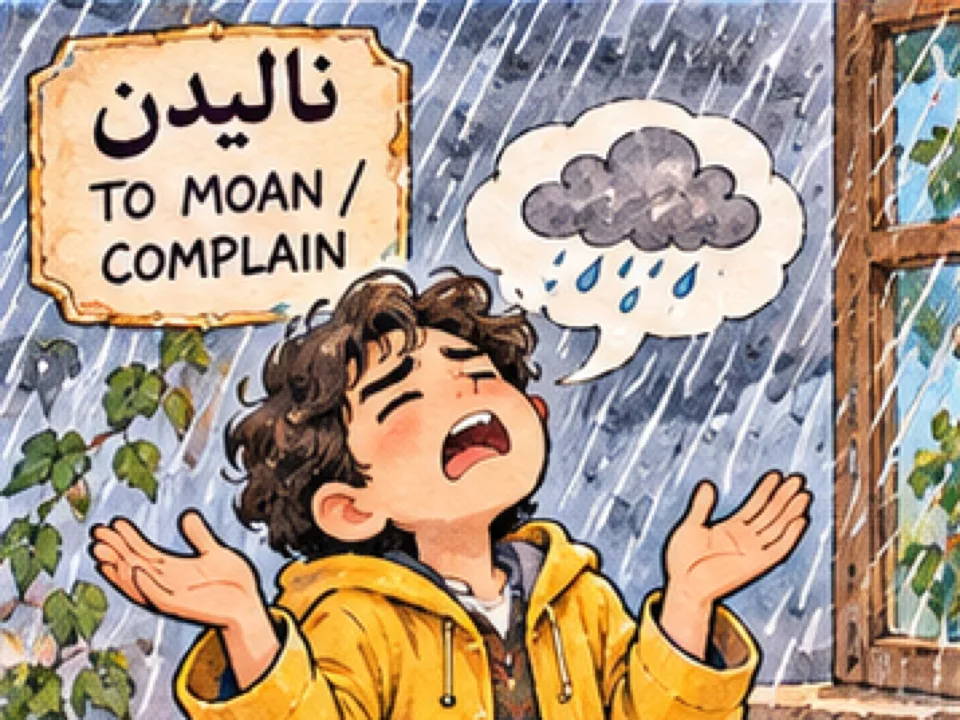
نالیدَن
Watch and listen to Reza Nazari explain this verb. More in the free 200 Persian Verbs video course.
Complain – Groan
مُتَرادِفِ فارسی: شِکایَت کَردَن – گِلِه کَردَن – زاری کَردَن
مُتَضادِ فارسی: راضی بودَن – رِضایَت داشتَن
:صَرف
گُذَشتِه: نالیدَم – نالیدی – نالید – نالیدیم – نالیدید – نالیدَند
حال: می نالَم – می نالی – می نالَد – می نالیم – می نالید – می نالَند
:مِثال
.او بِه خاطِرِ مُشکِلاتِ زیادی کِه داشت می نالید
.مَن اَز پِلِه ها اُفتادَم وَ اَز دَرد نالیدَم
.تو دیشَب دَر خواب نالیدی، حَتما خواب بَد می دیدی
نالیدن (nâlidan) means "to moan" or "to complain" in Persian. See its conjugation, translated examples, everyday alternatives and a quiz.
How to use نالیدن (nâlidan)
نالیدن is a simple, intransitive verb. Its basic meaning is to make a long sound of pain or sadness, "to moan" or "to groan": از درد نالید ("he groaned with pain"). From this comes a second meaning, "to complain" or "to lament", usually with از: از زندگیاش مینالد ("she complains about her life").
The stems are regular: past نالید (nâlid), present نال (nâl). The verb sounds somewhat literary and is common in poetry and in written Persian. In everyday conversation people usually say ناله کردن (nâle kardan) for moaning, and غر زدن (gher zadan) or گله کردن (gele kardan) for complaining about something.
Verb stems
| Infinitive | نالیدن | /nâlidan/ | to moan, to groan; to complain |
|---|---|---|---|
| Past stem | نالید | /nâlid/ | used for past tenses |
| Present stem | نال | /nâl/ | used for present, subjunctive and imperative |
Conjugation of نالیدن
| Person | Simple past | Present | Future | Subjunctive |
|---|---|---|---|---|
| من I |
نالیدم /nâlidam/ |
مینالم /minâlam/ |
خواهم نالید /khâham nâlid/ |
بنالم /benâlam/ |
| تو you (sg.) |
نالیدی /nâlidi/ |
مینالی /minâli/ |
خواهی نالید /khâhi nâlid/ |
بنالی /benâli/ |
| او he / she |
نالید /nâlid/ |
مینالد /minâlad/ |
خواهد نالید /khâhad nâlid/ |
بنالد /benâlad/ |
| ما we |
نالیدیم /nâlidim/ |
مینالیم /minâlim/ |
خواهیم نالید /khâhim nâlid/ |
بنالیم /benâlim/ |
| شما you (pl./polite) |
نالیدید /nâlidid/ |
مینالید /minâlid/ |
خواهید نالید /khâhid nâlid/ |
بنالید /benâlid/ |
| آنها they |
نالیدند /nâlidand/ |
مینالند /minâland/ |
خواهند نالید /khâhand nâlid/ |
بنالند /benâland/ |
Negative and imperative
| Persian | Pronunciation | English |
|---|---|---|
| ننالیدم | /nanâlidam/ | I did not moan |
| نمینالم | /neminâlam/ | I do not moan / I am not moaning |
| بنال! | /benâl!/ | Moan! (to one person) |
| بنالید! | /benâlid!/ | Moan! (to several people, or politely) |
| ننال! | /nanâl!/ | Don't moan! |
The examples above, translated
| Persian | Pronunciation | English |
|---|---|---|
| او به خاطر مشکلات زیادی که داشت مینالید. | /u be khâter-e moshkelât-e ziyâdi ke dâsht minâlid/ | He kept complaining about all the problems he had. |
| من از پلهها افتادم و از درد نالیدم. | /man az pelle-hâ oftâdam va az dard nâlidam/ | I fell down the stairs and groaned with pain. |
| تو دیشب در خواب نالیدی، حتما خواب بد میدیدی. | /to dishab dar khâb nâlidi, hatman khâb-e bad mididi/ | You moaned in your sleep last night; you must have been having a bad dream. |
More example sentences
| Persian | Pronunciation | English |
|---|---|---|
| بیمار تمام شب از درد مینالید. | /bimâr tamâm-e shab az dard minâlid/ | The patient was moaning with pain all night. |
| او همیشه از کارش مینالد. | /u hamishe az kârash minâlad/ | He always complains about his job. |
| سگ پشت در نالید. | /sag posht-e dar nâlid/ | The dog whined behind the door. |
| از گرما ننال، تابستان است. | /az garmâ nanâl, tâbestân ast/ | Don't complain about the heat, it's summer. |
Common phrases
| Persian | Pronunciation | English |
|---|---|---|
| ناله | /nâle/ | a moan, a groan |
| ناله کردن | /nâle kardan/ | to moan, to groan (everyday) |
| از درد نالیدن | /az dard nâlidan/ | to groan with pain |
| آه و ناله | /âh o nâle/ | sighs and moans; endless complaining |
In spoken Persian
In colloquial Tehran Persian the forms shorten in the normal way, for example میناله (minâle) for مینالد, but the verb itself is not very common in speech. People prefer ناله میکنه (nâle mikone, "he's moaning") or, for complaining, همش غر میزنه (hamash gher mizane, "he's always grumbling").
Watch out for
- Use از for the cause or the thing you complain about: از سرما نالید ("he moaned from the cold"), از همسایهها مینالد ("she complains about the neighbors").
- نالیدن is a bit literary. For an everyday complaint in conversation, غر زدن or شکایت کردن (shekâyat kardan) sound more natural.
Practice
-
Translate into Persian: "He was moaning with pain."
Show answer
u az dard minâlid. او از درد مینالید.
-
What is the present stem of nâlidan?
Show answer
nâl نال
-
What does this question mean? چرا همیشه از کارت مینالی؟
Show answer
Why do you always complain about your job?
This is lesson 196 of 200 Most Common Persian Verbs. For the sounds used in the pronunciation guide, see Persian pronunciation.


Take this lesson further

Study with the book
200 Absolutely Essential Persian Verbs
This free lesson is part of 200 Most Common Persian Verbs. The book puts the whole series in one printable PDF you can study offline.
Serious about Persian? Get all 30 of our Persian learning books for $199.99 (55% less than buying them one by one).
Free Persian Starter Kit (PDF)
The Persian alphabet chart and the 101 most common Persian words with pronunciation, in one printable PDF. You also get a one-time 15% code for any of our books.
We will email you new lessons and book news from Learn Persian Online. Unsubscribe any time.Free: 100 Core Persian Words + 20 Survival Phrases
Get the 14-page printable Starter Pack (all 32 letters, a 7-day reading plan, 100 core words and 20 survival phrases) and a short 5-email course. Free.
Practise with free Persian games