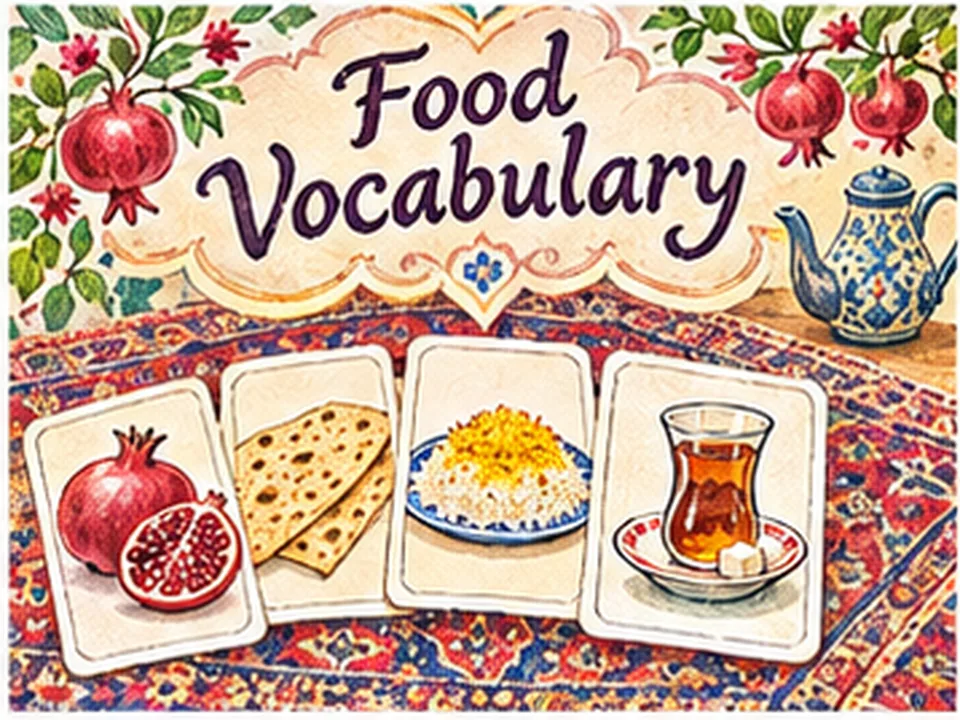
Lesson 14 of Learn to Speak Persian Fast, our free video course: Food. Watch the video for each part, then read the notes, with every Persian word in Persian script, pronunciation and English, and try the practice questions at the end of each part.
New words: Food and meals in Persian
Study notes for Lesson 14: twenty everyday Persian food and meal words, from bread and rice to tea, with pronunciation, example sentences and a quiz.
These study notes go with the Lesson 14 video of Learn to Speak Persian Fast. The theme is food: the basic things you find on an Iranian table and the names of the three meals. In this lesson you will follow Mina, who has guests for dinner, and her friend Babak.
Word list
| Persian | Pronunciation | English |
|---|---|---|
| نان | /nân/ | bread |
| برنج | /berenj/ | rice |
| گوشت | /gusht/ | meat |
| مرغ | /morgh/ | chicken |
| ماهی | /mâhi/ | fish |
| کباب | /kabâb/ | kebab |
| سبزی | /sabzi/ | fresh herbs; vegetables |
| سالاد | /sâlâd/ | salad |
| سوپ | /sup/ | soup |
| ماست | /mâst/ | yogurt |
| پنیر | /panir/ | cheese |
| تخممرغ | /tokhm-e morgh/ | egg |
| میوه | /mive/ | fruit |
| سیب | /sib/ | apple |
| چای | /chây/ | tea |
| آب | /âb/ | water |
| شیر | /shir/ | milk |
| صبحانه | /sobhâne/ | breakfast |
| ناهار | /nâhâr/ | lunch |
| شام | /shâm/ | dinner |
Notes on usage
- سبزی (sabzi) usually means fresh herbs such as mint, basil and parsley. A plate of them, سبزی خوردن (sabzi khordan), is often served with meals.
- تخممرغ is literally "hen's egg" (تخم means egg or seed). In speech it is often shortened to tokhm-morgh.
- شیر (shir) means milk, but also lion and water tap. Context makes it clear.
- Persian usually "eats" drinks too: چای خوردن (chây khordan), to drink tea. نوشیدن (nushidan) also means "to drink" but sounds more formal.
- چلوکباب (chelo kabâb), rice with kebab, is one of the best known Iranian dishes. چلو is plain cooked rice.
Example sentences
| Persian | Pronunciation | English |
|---|---|---|
| صبحانه نان و پنیر خوردم. | /sobhâne nân-o panir khordam./ | I had bread and cheese for breakfast. |
| دیشب شام مرغ و برنج داشتیم. | /dishab shâm morgh-o berenj dâshtim./ | Last night we had chicken and rice for dinner. |
| چای میخوری؟ | /chây mikhori?/ | Would you like some tea? |
| من ماهی دوست ندارم. | /man mâhi dust nadâram./ | I don't like fish. |
| این سوپ خیلی خوشمزه است. | /in sup kheyli khoshmaze ast./ | This soup is very tasty. |
| یک کیلو سیب خریدم. | /yek kilo sib kharidam./ | I bought a kilo of apples. |
| با غذا ماست و سبزی هم داریم. | /bâ ghazâ mâst-o sabzi ham dârim./ | We also have yogurt and herbs with the meal. |
At the table
These short phrases are used at almost every Iranian meal. They are fixed expressions, so learn them as whole units.
| Persian | Pronunciation | English |
|---|---|---|
| بفرمایید. | /befarmâyid./ | Please, help yourself. / Here you are. |
| نوش جان. | /nush-e jân./ | Enjoy your meal. (also said after someone thanks you for food) |
| دستتان درد نکند. | /dastetân dard nakonad./ | Thank you (for the food or the effort). |
| خیلی خوشمزه است. | /kheyli khoshmaze ast./ | It's very tasty. |
| سیر شدم. | /sir shodam./ | I'm full. |
Notice و ("and") between two foods: it is pronounced -o and joins the words in speech, as in nân-o panir. The word غذا (ghazâ) means food in general, or a cooked dish.
More from Lesson 14
Practice
What does this word mean? برنج
Show answer
rice
How do you say "breakfast" in Persian?
Show answer
sobhâne صبحانه
Name the three meals in Persian.
Show answer
sobhâne, nâhâr, shâm صبحانه، ناهار، شام
Translate: نان و پنیر
Show answer
bread and cheese
Which verb do Iranians usually use for drinking tea?
Show answer
khordan, as in chây khordan چای خوردن
Grammar: The simple past of "to have": dâshtan
Study notes for Lesson 14: the simple past of dâshtan (to have) in Persian, with conjugation, negatives, examples, food sentences and common mistakes.
The Lesson 14 grammar video teaches the simple past of داشتن (dâshtan), "to have". You already know the simple past from Lesson 12, and داشتن follows the same rule: past stem plus personal endings. It is worth learning on its own because it is one of the most frequent verbs in Persian and has a few special uses.
Present and past side by side
The present stem is دار (dâr) and the past stem is داشت (dâsht). Note that the present of داشتن has no می prefix: "I have" is دارم, not میدارم.
| Present → past | Pronunciation | English |
|---|---|---|
| دارم ← داشتم | /dâram → dâshtam/ | I have → I had |
| داری ← داشتی | /dâri → dâshti/ | you have → you had |
| دارد ← داشت | /dârad → dâsht/ | he / she has → had |
| داریم ← داشتیم | /dârim → dâshtim/ | we have → we had |
| دارید ← داشتید | /dârid → dâshtid/ | you (pl./polite) have → had |
| دارند ← داشتند | /dârand → dâshtand/ | they have → they had |
In speech, the plural forms often sound like داشتین (dâshtin) and داشتن (dâshtan).
The negative
Add ن (na-): نداشتم (nadâshtam), "I didn't have"; نداشتیم (nadâshtim), "we didn't have". The present negative works the same way: ندارم (nadâram), "I don't have".
How dâshtan is used
- Owning or having something: پارسال یک ماشین داشتم (pârsâl yek mâshin dâshtam), "last year I had a car".
- What a place offered: رستوران ماهی داشت (resturân mâhi dâsht), "the restaurant had fish".
- Guests, plans and things to do: مهمان داشتیم (mehmân dâshtim), "we had guests"; کار داشتم (kâr dâshtam), "I had things to do".
- Illness and feelings: تب داشتم (tab dâshtam), "I had a fever"; دوست داشتم (dust dâshtam), "I liked".
- As a helper for the past progressive, mainly in speech: داشتم غذا میخوردم (dâshtam ghazâ mikhordam), "I was eating". You will meet this again in later lessons.
Examples
| Persian | Pronunciation | English |
|---|---|---|
| دیشب مهمان داشتیم. | /dishab mehmân dâshtim./ | We had guests last night. |
| برای شام برنج و مرغ داشتیم. | /barâye shâm berenj-o morgh dâshtim./ | We had rice and chicken for dinner. |
| مغازه نان تازه نداشت. | /maghâze nân-e tâze nadâsht./ | The shop didn't have fresh bread. |
| دیروز وقت داشتی؟ | /diruz vaght dâshti?/ | Did you have time yesterday? |
| بچه که بودم، یک گربه داشتم. | /bachche ke budam, yek gorbe dâshtam./ | When I was a child, I had a cat. |
| آنها پول نداشتند. | /ânhâ pul nadâshtand./ | They didn't have money. |
| سارا دیروز سرماخوردگی داشت. | /sârâ diruz sarmâkhordegi dâsht./ | Sara had a cold yesterday. |
| غذا را خیلی دوست داشتیم. | /ghazâ râ kheyli dust dâshtim./ | We really liked the food. |
Common mistakes
- Using داشتن for eating. "I had lunch" in the sense of eating is ناهار خوردم (nâhâr khordam). ناهار داشتیم means there was lunch, or what was on the menu.
- Adding می to the present: say دارم, not میدارم.
- Forgetting that he or she has no ending: او داشت (u dâsht), not او داشتد.
- Negating the progressive helper. "I wasn't eating" is غذا نمیخوردم (ghazâ nemikhordam); the helper داشتم is simply dropped, never made negative.
More from Lesson 14
Practice
Conjugate: "we had".
Show answer
dâshtim داشتیم
Make this negative: داشت
Show answer
nadâsht, "he / she didn't have" نداشت
Translate: دیشب مهمان داشتیم.
Show answer
We had guests last night.
How do you say "I had lunch" (I ate lunch)?
Show answer
nâhâr khordam ناهار خوردم
What does this sentence mean? داشتم غذا میخوردم.
Show answer
I was eating (food).
Speaking: talking about food
Study notes for Lesson 14: an original Persian dialogue about a dinner and a restaurant, useful food phrases, a role-play and a short quiz.
These study notes accompany the Lesson 14 speaking video. The dialogue below is original practice material, not a transcript. The day after Mina's dinner party, her friend Babak calls to thank her. They talk about the food and about a restaurant Babak went to for lunch. The dialogue is in everyday spoken Persian; written forms are listed below it.
Dialogue
| Speaker | Persian | Pronunciation | English |
|---|---|---|---|
| Babak | سلام مینا. دیشب خیلی خوش گذشت. مرسی. | /salâm minâ. dishab kheyli khosh gozasht. mersi./ | Hi Mina. Last night was really nice. Thank you. |
| Mina | خواهش میکنم. غذا خوب بود؟ | /khâhesh mikonam. ghazâ khub bud?/ | You're welcome. Was the food good? |
| Babak | عالی بود. مرغ مادرت خیلی خوشمزه بود. | /âli bud. morgh-e mâdaret kheyli khoshmaze bud./ | It was excellent. Your mother's chicken was delicious. |
| Mina | ببخشید، ماهی نداشتیم. | /bebakhshid, mâhi nadâshtim./ | Sorry we didn't have fish. |
| Babak | اشکالی نداره. امروز ناهار ماهی خوردم. | /eshkâli nadâre. emruz nâhâr mâhi khordam./ | No problem. I had fish for lunch today. |
| Mina | کجا؟ | /kojâ?/ | Where? |
| Babak | یه رستوران نزدیک دفترم. | /ye resturân nazdik-e daftaram./ | At a restaurant near my office. |
| Mina | کباب هم داشت؟ | /kabâb ham dâsht?/ | Did it have kebab too? |
| Babak | آره، کباب و خورش هم داشت. | /âre, kabâb-o khoresh ham dâsht./ | Yes, it had kebab and stews too. |
| Mina | گرون بود؟ | /gerun bud?/ | Was it expensive? |
| Babak | نه، ارزون بود. فردا با هم بریم؟ | /na, arzun bud. fardâ bâ ham berim?/ | No, it was cheap. Shall we go together tomorrow? |
| Mina | باشه، بریم. | /bâshe, berim./ | OK, let's go. |
Useful phrases
| Persian | Pronunciation | English |
|---|---|---|
| خیلی خوش گذشت. | /kheyli khosh gozasht./ | I had a great time. |
| غذا خوب بود؟ | /ghazâ khub bud?/ | Was the food good? |
| خیلی خوشمزه بود. | /kheyli khoshmaze bud./ | It was delicious. |
| اشکالی نداره. | /eshkâli nadâre./ | No problem. / It doesn't matter. |
| … هم داشت؟ | /… ham dâsht?/ | Did it have … too? |
| گرون بود؟ | /gerun bud?/ | Was it expensive? |
| با هم بریم؟ | /bâ ham berim?/ | Shall we go together? |
Spoken and written forms
- نداره (nadâre) = ندارد (nadârad); یه (ye) = یک (yek), "a, one".
- گرون (gerun) = گران (gerân), "expensive"; ارزون (arzun) = ارزان (arzân), "cheap". In Tehran speech, â before n often becomes u.
- بریم (berim) = برویم (beravim), "let's go".
- خورش (khoresh) is a stew eaten with rice, such as قورمهسبزی (ghorme sabzi) or قیمه (gheyme).
More questions about a meal
| Persian | Pronunciation | English |
|---|---|---|
| چی خوردی؟ | /chi khordi?/ | What did you eat? |
| ناهار کجا خوردی؟ | /nâhâr kojâ khordi?/ | Where did you have lunch? |
| چی سفارش دادی؟ | /chi sefâresh dâdi?/ | What did you order? |
| چقدر شد؟ | /cheghadr shod?/ | How much was it? |
| شلوغ بود؟ | /shulugh bud?/ | Was it busy? |
Role-play
Partner A had dinner at a friend's house or a restaurant yesterday. Partner B asks questions with the simple past: چی خوردی؟ (chi khordi?, what did you eat?), … داشت؟ (did it have …?), گرون بود؟, خوشمزه بود؟. Partner A answers using at least three food words and one sentence with نداشت or نداشتیم. Finish by inviting each other: فردا با هم بریم؟
More from Lesson 14
Practice
Why does Mina say sorry?
Show answer
Because they didn't have fish at dinner. ماهی نداشتیم.
What did Babak eat for lunch today?
Show answer
Fish. ماهی
Was the restaurant expensive?
Show answer
No, it was cheap. نه، ارزون بود.
Say in spoken Persian: "Did it have kebab too?"
Show answer
kabâb ham dâsht? کباب هم داشت؟
What is the written form of this word? گرون
Show answer
gerân گران
Reading: dinner with guests
Study notes for Lesson 14: a short beginner Persian reading about a family dinner with guests, using food words and dâshtan, plus a comprehension quiz.
This short text goes with the Lesson 14 reading video. It is an original beginner text, told by Mina, about the dinner her family gave the night before. It uses the food words of this lesson and the simple past of داشتن. Read each line, then cover the English and try again.
The text
| Persian | Pronunciation | English |
|---|---|---|
| دیشب مهمان داشتیم. | /dishab mehmân dâshtim./ | Last night we had guests. |
| دوستم بابک و خانوادهاش برای شام آمدند. | /dustam bâbak va khânevâde-ash barâye shâm âmadand./ | My friend Babak and his family came for dinner. |
| مادرم برنج و مرغ درست کرد. | /mâdaram berenj-o morgh dorost kard./ | My mother made rice and chicken. |
| من یک سالاد بزرگ درست کردم. | /man yek sâlâd-e bozorg dorost kardam./ | I made a big salad. |
| ما سبزی، ماست و نان تازه هم داشتیم. | /mâ sabzi, mâst va nân-e tâze ham dâshtim./ | We also had fresh herbs, yogurt and fresh bread. |
| بابک ماهی دوست دارد، اما ما ماهی نداشتیم. | /bâbak mâhi dust dârad, ammâ mâ mâhi nadâshtim./ | Babak likes fish, but we didn't have any fish. |
| همه غذا را خیلی دوست داشتند. | /hame ghazâ râ kheyli dust dâshtand./ | Everyone really liked the food. |
| بعد از شام میوه و چای خوردیم. | /ba'd az shâm mive va chây khordim./ | After dinner we had fruit and tea. |
| خواهر کوچک بابک چای نخورد. | /khâhar-e kuchek-e bâbak chây nakhord./ | Babak's little sister didn't drink tea. |
| او یک لیوان شیر خورد. | /u yek livân shir khord./ | She drank a glass of milk. |
| مهمانها ساعت یازده رفتند. | /mehmânhâ sâ'at-e yâzdah raftand./ | The guests left at eleven. |
Grammar in the text
The text mixes three past verbs you know: داشتیم and نداشتیم (we had, we didn't have), خوردیم and نخورد (we ate, she didn't eat) and درست کرد (she made). Look at sentence 7: دوست داشتند is the past of دوست داشتن, "to like", so it also uses the past stem داشت. Sentence 6 uses the present, دوست دارد, because Babak still likes fish.
Also notice that milk and tea are "eaten" in Persian: شیر خورد, چای خوردیم. And درست کردن (dorost kardan), literally "to make right", is the everyday verb for making or cooking a dish.
After reading
- Read the text aloud, then retell it as Babak: دیشب خانهی مینا مهمان بودیم (dishab khâne-ye minâ mehmân budim), "last night we were guests at Mina's house".
- Write three sentences about your last dinner with داشتیم and خوردیم.
- Find every negative verb in the text and say what it means.
Key words
- مهمان (mehmân): guest; مهمانها (mehmânhâ): guests
- درست کردن (dorost kardan): to make, to cook
- تازه (tâze): fresh
- همه (hame): everyone, all
- بعد از (ba'd az): after
- لیوان (livân): glass (for drinking)
- کوچک (kuchek): small, little
More from Lesson 14
Practice
Who came for dinner?
Show answer
Babak and his family. بابک و خانوادهاش
What did Mina make?
Show answer
A big salad. یک سالاد بزرگ
What did they not have, even though Babak likes it?
Show answer
Fish. ماهی
What did Babak's little sister drink?
Show answer
A glass of milk. یک لیوان شیر
What time did the guests leave?
Show answer
At eleven. ساعت یازده
Take this lesson further

Study with the book
Learn to Speak Persian Fast: For Beginners
This free lesson is part of Learn to Speak Persian Fast. The book puts the whole series in one printable PDF you can study offline.
Serious about Persian? Get all 30 of our Persian learning books for $199.99 (55% less than buying them one by one).
Free Persian Starter Kit (PDF)
The Persian alphabet chart and the 101 most common Persian words with pronunciation, in one printable PDF. You also get a one-time 15% code for any of our books.
We will email you new lessons and book news from Learn Persian Online. Unsubscribe any time.Free Persian Starter Pack: Alphabet + 100 Core Words
Get the 14-page printable Starter Pack (all 32 letters, a 7-day reading plan, 100 core words and 20 survival phrases) and a short 5-email course. Free.