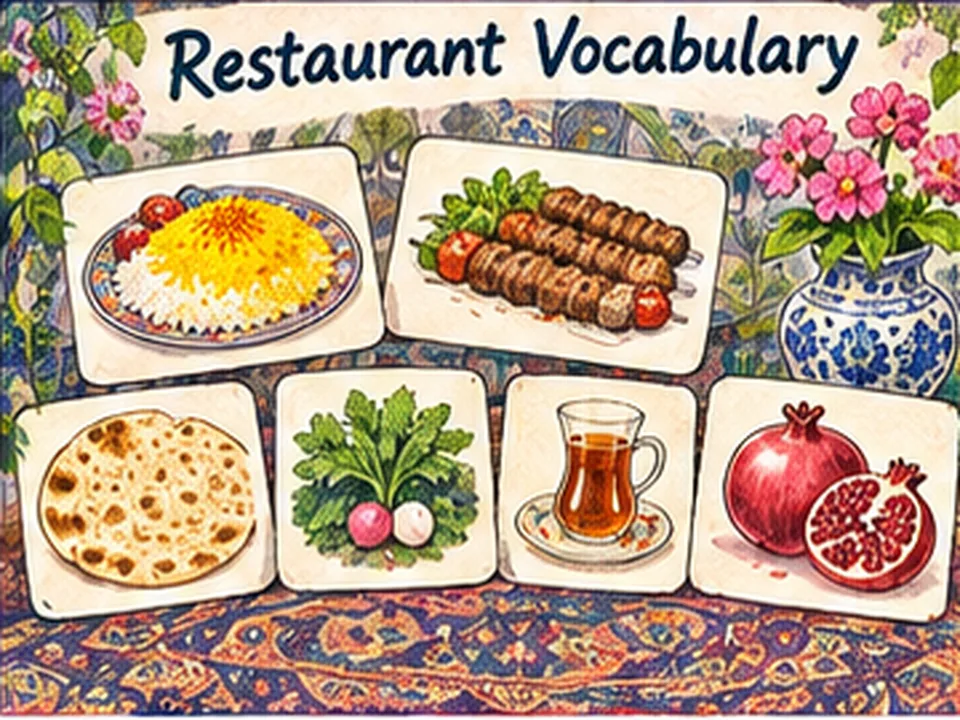
Lesson 9 of Learn to Speak Persian Fast, our free video course: At the Restaurant. Watch the video for each part, then read the notes, with every Persian word in Persian script, pronunciation and English, and try the practice questions at the end of each part.
New words: Persian words for eating at a restaurant
Learn 20 Persian words for eating out, from menu and waiter to rice, kebab and the bill, with example sentences and a quiz.
Study notes for this lesson. These are the words you need to read a menu, order a meal and ask for the bill in Persian. Amir and Shirin, who have dinner together in the reading and speaking parts of this lesson, appear in the example sentences.
Vocabulary: at the restaurant
| Persian | Pronunciation | English |
|---|---|---|
| رستوران | /resturân/ | restaurant |
| منو | /meno/ | menu |
| گارسون | /gârson/ | waiter |
| غذا | /ghazâ/ | food, meal |
| صبحانه | /sobhâne/ | breakfast |
| ناهار | /nâhâr/ | lunch |
| شام | /shâm/ | dinner |
| نوشیدنی | /nushidani/ | drink, beverage |
| آب | /âb/ | water |
| چای | /chây/ | tea |
| نان | /nân/ | bread |
| برنج | /berenj/ | rice |
| کباب | /kabâb/ | kebab |
| مرغ | /morgh/ | chicken |
| سالاد | /sâlâd/ | salad |
| قاشق | /ghâshogh/ | spoon |
| چنگال | /changâl/ | fork |
| صورتحساب | /surat-hesâb/ | bill, check |
| سفارش دادن | /sefâresh dâdan/ | to order |
| خوشمزه | /khoshmaze/ | tasty, delicious |
Example sentences
| Persian | Pronunciation | English |
|---|---|---|
| امیر و شیرین به رستوران میروند. | /amir va shirin be resturân miravand./ | Amir and Shirin go to a restaurant. |
| گارسون منو را میآورد. | /gârson meno râ miâvarad./ | The waiter brings the menu. |
| امیر کباب با برنج سفارش میدهد. | /amir kabâb bâ berenj sefâresh midahad./ | Amir orders kebab with rice. |
| شیرین مرغ و سالاد میخواهد. | /shirin morgh va sâlâd mikhâhad./ | Shirin wants chicken and salad. |
| لطفاً یک بطری آب هم بیاورید. | /lotfan yek botri âb ham biâvarid./ | Please bring a bottle of water too. |
| غذا خیلی خوشمزه است. | /ghazâ kheyli khoshmaze ast./ | The food is very tasty. |
| بعد از شام چای میخوریم. | /ba'd az shâm chây mikhorim./ | After dinner we drink tea. |
| صورتحساب را لطفاً بیاورید. | /surat-hesâb râ lotfan biâvarid./ | Please bring the bill. |
Notes on the words
- چلوکباب (chelo kabâb), plain rice with kebab, is one of the best-known restaurant dishes in Iran. چلو (chelo) is cooked white rice served on its own; برنج (berenj) is the general word for rice.
- Persians usually "eat" drinks: چای میخورم (chây mikhoram), "I drink tea". نوشیدن (nushidan), "to drink", is more formal and is common in writing.
- گارسون (gârson) comes from French. Customers often call a waiter politely with آقا (âghâ), "sir", or ببخشید (bebakhshid), "excuse me".
- صورتحساب (surat-hesâb) is the bill. In speech you will also hear حساب (hesâb): حساب لطفاً (hesâb lotfan), "the bill, please".
- صبحانه, ناهار and شام are the three daily meals. ناهار is often the main meal of the day in Iranian homes.
Polite words you will need
Three small words make any order sound polite. لطفاً (lotfan) means "please" and can come at the start or end: یک چای لطفاً (yek chây lotfan), "a tea, please". ببخشید (bebakhshid), "excuse me", gets the waiter's attention. مرسی (mersi) and ممنون (mamnun) both mean "thank you" and are used all the time in restaurants and shops. When the waiter puts a plate in front of you, you will often hear بفرمایید (befarmâyid), "here you are" or "please go ahead".
Tip: group these words in your notebook as meals, food, drinks and things on the table. Then say a short sentence for each group, such as برای ناهار برنج و مرغ میخورم (barâye nâhâr berenj-o morgh mikhoram), "For lunch I eat rice and chicken".
Other parts of Lesson 9
Practice
How do you say "the bill" in Persian?
Show answer
surat-hesâb (spoken: hesâb) صورتحساب
Translate: "The food is very tasty."
Show answer
ghazâ kheyli khoshmaze ast. غذا خیلی خوشمزه است.
Which verb do Persians usually use for drinking tea in everyday speech?
Show answer
khordan: chây mikhoram. چای میخورم.
Name the three meals of the day in Persian.
Show answer
sobhâne, nâhâr, shâm صبحانه، ناهار، شام
What is chelo kabâb? چلوکباب
Show answer
Kebab served with plain white rice.
Grammar: Present indicative, part 2: verbs for ordering food
Practice the Persian present indicative with restaurant verbs: want, eat, bring, order. Stems, spoken forms, negatives and a quiz.
Study notes for this lesson. Lesson 8 introduced the present indicative: می (mi-) plus the present stem plus a personal ending. In a restaurant you use a handful of verbs whose present stems look very different from their infinitives. This page shows those stems, the spoken forms you will hear from waiters and customers, and how negatives and compound verbs work.
Restaurant verbs and their present stems
| Infinitive and stem | Pronunciation | Meaning and “I” form |
|---|---|---|
| خواستن ← خواه | /khâstan → khâh/ | to want → mikhâham (spoken: mikhâm) |
| خوردن ← خور | /khordan → khor/ | to eat, drink → mikhoram |
| آوردن ← آور | /âvardan → âvar/ | to bring → miâvaram (spoken: miyâram) |
| دادن ← ده | /dâdan → dah/ | to give → midaham (spoken: midam) |
| گرفتن ← گیر | /gereftan → gir/ | to take, get → migiram |
| نوشیدن ← نوش | /nushidan → nush/ | to drink (formal) → minusham |
| سفارش دادن ← سفارش ده | /sefâresh dâdan → sefâresh dah/ | to order → sefâresh midaham (spoken: sefâresh midam) |
Full example: خواستن (khâstan), to want
| Persian | Pronunciation | English |
|---|---|---|
| من میخواهم | /man mikhâham (spoken: mikhâm)/ | I want |
| تو میخواهی | /to mikhâhi (spoken: mikhây)/ | you want |
| او میخواهد | /u mikhâhad (spoken: mikhâd)/ | he / she wants |
| ما میخواهیم | /mâ mikhâhim (spoken: mikhâym)/ | we want |
| شما میخواهید | /shomâ mikhâhid (spoken: mikhâyn)/ | you want (plural or polite) |
| آنها میخواهند | /ânhâ mikhâhand (spoken: mikhân)/ | they want |
Notice that the spoken forms drop syllables in a regular way: the h of خواه disappears (میخوام), the v of آور becomes y (میارم), and ده shortens to d (میدم). Learn to recognize both forms. You can use the written ones when you speak and be understood, but you will hear the short ones from everyone.
Compound verbs
Many Persian verbs are made of a noun plus a simple verb, such as سفارش دادن (sefâresh dâdan), "to order". Only the verb part changes: سفارش میدهم (sefâresh midaham), "I order"; سفارش میدهیم (sefâresh midahim), "we order". The می and the negative نمی attach to the verb part, never to the noun: سفارش نمیدهم (sefâresh nemidaham), "I'm not ordering".
Negative
Use نمی (nemi-) in place of می: گوشت نمیخورم (gusht nemikhoram), "I don't eat meat"; نوشابه نمیخواهم (nushâbe nemikhâham), "I don't want a soft drink". In speech: نمیخوام (nemikhâm).
Examples
| Persian | Pronunciation | English |
|---|---|---|
| چه میخواهید؟ / چی میخواین؟ | /che mikhâhid? / chi mikhâyn?/ | What would you like? (written / spoken) |
| من چلوکباب میخواهم. | /man chelo kabâb mikhâham./ | I'd like chelo kebab. |
| شیرین گوشت نمیخورد. | /shirin gusht nemikhorad./ | Shirin doesn't eat meat. |
| گارسون منو را میآورد. | /gârson meno râ miâvarad./ | The waiter brings the menu. |
| ما دو تا چای میخوریم. | /mâ do tâ chây mikhorim./ | We'll have two teas. |
| امیر سفارش میدهد. | /amir sefâresh midahad./ | Amir places the order. |
| الان براتون میارم. | /alân barâtun miyâram./ | I'll bring it for you right away. (spoken) |
Common mistakes
- Building the stem from the infinitive: "I want" is میخواهم (mikhâham), not میخواستم, which means "I wanted" or "I was going to".
- Putting می on the noun of a compound verb: say سفارش میدهم, not میسفارش دهم.
- Pronouncing written میخواهم with a clear h in casual talk. In conversation it is almost always میخوام (mikhâm); the h form sounds bookish.
- Using نوشیدن in everyday speech. It is correct but formal; خوردن is what most people say for tea or water.
Other parts of Lesson 9
Practice
What is the present stem of âvardan (to bring)? آوردن
Show answer
âvar: miâvaram (spoken: miyâram) آور
Say "We want rice" in written Persian.
Show answer
mâ berenj mikhâhim. ما برنج میخواهیم.
Make negative: sefâresh midaham. سفارش میدهم.
Show answer
sefâresh nemidaham. سفارش نمیدهم.
Give the spoken form of mikhâhad. میخواهد
Show answer
mikhâd میخواد
Translate: "Shirin doesn't eat meat."
Show answer
shirin gusht nemikhorad. شیرین گوشت نمیخورد.
Speaking: Ordering food in Persian at a restaurant
Practice ordering food in spoken Persian with a restaurant dialogue, polite waiter phrases, a role-play idea and a short quiz.
Study notes for this lesson. Amir and Shirin have dinner at a restaurant. They ask for the menu, order, and pay. The waiter uses polite spoken forms, which is typical in Iranian restaurants. Read the dialogue aloud with a partner, taking turns as each speaker.
Dialogue: Amir, Shirin and the waiter
| Speaker | Persian | Pronunciation | English |
|---|---|---|---|
| Waiter | خوش اومدین. بفرمایید، اینم منو. | /khosh umadin. befarmâyid, inam meno./ | Welcome. Here you are, here's the menu. |
| Amir | مرسی. شما چی پیشنهاد میکنین؟ | /mersi. shomâ chi pishnahâd mikonin?/ | Thanks. What do you recommend? |
| Waiter | چلوکباب امروز خیلی خوبه. | /chelo kabâb emruz kheyli khube./ | The chelo kebab is very good today. |
| Amir | باشه، من یه چلوکباب میخوام. | /bâshe, man ye chelo kabâb mikhâm./ | OK, I'll have a chelo kebab. |
| Shirin | من گوشت نمیخورم. یه جوجهکباب با سالاد، لطفاً. | /man gusht nemikhoram. ye juje-kabâb bâ sâlâd, lotfan./ | I don't eat red meat. A chicken kebab with salad, please. |
| Waiter | نوشیدنی چی میل دارین؟ | /nushidani chi meyl dârin?/ | What would you like to drink? |
| Amir | دو تا دوغ، لطفاً. یه بطری آب هم بیارین. | /do tâ dugh, lotfan. ye botri âb ham biyârin./ | Two doughs, please. And bring a bottle of water too. |
| Waiter | چشم، الان میارم. | /cheshm, alân miyâram./ | Certainly, I'll bring it right away. |
| Shirin | به به، چه غذای خوشمزهای. | /bah bah, che ghazâ-ye khoshmaze-i./ | Mmm, what tasty food. |
| Amir | ببخشید آقا، صورتحساب لطفاً. | /bebakhshid âghâ, surat-hesâb lotfan./ | Excuse me, sir, the bill please. |
| Waiter | قابل نداره. بفرمایید. | /ghâbel nadâre. befarmâyid./ | It's nothing. Here you are. |
Notes on the dialogue
- جوجهکباب (juje-kabâb) is kebab made from pieces of chicken. Shirin says she does not eat گوشت (gusht), which in everyday use usually means red meat.
- دوغ (dugh) is a savory yogurt drink that is often served with kebab.
- چشم (cheshm), literally "eye", is a very polite way to say "certainly" or "right away" when someone asks you to do something.
- قابل نداره (ghâbel nadâre), "it's not worthy of you", is a polite phrase of تعارف (ta'ârof), Iranian ritual courtesy. The customer still pays; a friendly reply is مرسی، لطف دارین (mersi, lotf dârin), "thanks, you're kind".
- میل دارین (meyl dârin), "would you like", is a polite verb waiters use for food and drink.
Useful phrases
| Persian | Pronunciation | English |
|---|---|---|
| منو لطفاً. | /meno lotfan./ | The menu, please. |
| چی پیشنهاد میکنین؟ | /chi pishnahâd mikonin?/ | What do you recommend? |
| من … میخوام. | /man … mikhâm./ | I'll have … / I want … |
| … لطفاً. | /… lotfan./ | …, please. |
| من گوشت نمیخورم. | /man gusht nemikhoram./ | I don't eat meat. |
| یه بطری آب هم بیارین. | /ye botri âb ham biyârin./ | Bring a bottle of water too. |
| خیلی خوشمزه بود. | /kheyli khoshmaze bud./ | It was very tasty. |
| صورتحساب لطفاً. | /surat-hesâb lotfan./ | The bill, please. |
Role-play
- One person is the waiter, the others are customers. Write a short menu of five dishes and two drinks in Persian.
- The waiter greets the customers with خوش اومدین and gives them the menu.
- Each customer orders with من … میخوام and one says what they do not eat.
- Order drinks, then say something about the food.
- Ask for the bill. The waiter answers with قابل نداره and the customer thanks them.
Other parts of Lesson 9
Practice
What does the waiter recommend?
Show answer
The chelo kebab. چلوکباب
Why doesn't Shirin order chelo kebab?
Show answer
She doesn't eat (red) meat, so she orders chicken kebab. من گوشت نمیخورم.
What do they order to drink?
Show answer
Two doughs and a bottle of water. دو تا دوغ و یه بطری آب
What does cheshm mean when a waiter says it? چشم
Show answer
Certainly, right away.
Ask for the bill politely in spoken Persian.
Show answer
bebakhshid, surat-hesâb lotfan. ببخشید، صورتحساب لطفاً.
Reading: dinner at a restaurant
Read a short beginner Persian story about dinner at a restaurant, with sentence-by-sentence translation, key words and a quiz.
Study notes for this lesson. This short text tells the story of Amir and Shirin's dinner in standard written Persian, in the present tense. It uses the same words and restaurant verbs as the other pages of this lesson.
Before you read, try to predict the story: two friends, a menu, an order, a meal and a bill. Read once without looking at the English column, underline every verb you recognize, and then check your understanding sentence by sentence. On a second reading, say each sentence aloud.
Reading text
| Persian | Pronunciation | English |
|---|---|---|
| امروز جمعه است و امیر و شیرین شام را در رستوران میخورند. | /emruz jom'e ast va amir va shirin shâm râ dar resturân mikhorand./ | Today is Friday, and Amir and Shirin are having dinner at a restaurant. |
| رستوران کوچک است، اما غذاهایش خیلی خوشمزه است. | /resturân kuchak ast, ammâ ghazâhâyash kheyli khoshmaze ast./ | The restaurant is small, but its food is very tasty. |
| گارسون منو را میآورد. | /gârson meno râ miâvarad./ | The waiter brings the menu. |
| امیر چلوکباب سفارش میدهد. | /amir chelo kabâb sefâresh midahad./ | Amir orders chelo kebab. |
| شیرین گوشت نمیخورد، برای همین جوجهکباب و سالاد میخواهد. | /shirin gusht nemikhorad, barâye hamin juje-kabâb va sâlâd mikhâhad./ | Shirin doesn't eat red meat, so she wants chicken kebab and salad. |
| آنها دو دوغ و یک بطری آب هم سفارش میدهند. | /ânhâ do dugh va yek botri âb ham sefâresh midahand./ | They also order two doughs and a bottle of water. |
| غذا زود میرسد. | /ghazâ zud miresad./ | The food arrives quickly. |
| امیر میگوید: «کباب خیلی خوب است.» | /amir miguyad: "kabâb kheyli khub ast."/ | Amir says, "The kebab is very good." |
| بعد از شام، آنها چای میخورند. | /ba'd az shâm, ânhâ chây mikhorand./ | After dinner, they drink tea. |
| در آخر امیر صورتحساب را میخواهد و پول را میدهد. | /dar âkhar amir surat-hesâb râ mikhâhad va pul râ midahad./ | At the end, Amir asks for the bill and pays. |
Key words
- جمعه (jom'e): Friday, the weekend day in Iran
- غذاهایش (ghazâhâyash): its food (plural with a possessive suffix)
- برای همین (barâye hamin): that's why, so
- زود (zud): quickly, early
- رسیدن (residan): to arrive; present stem رس (res)
- گفتن (goftan): to say; present stem گو (gu)
- در آخر (dar âkhar): in the end, finally
- پول دادن (pul dâdan): to pay, literally "to give money"
The same story in spoken Persian
| Persian | Pronunciation | English |
|---|---|---|
| گارسون منو رو میاره. | /gârson meno ro miyâre./ | The waiter brings the menu. |
| امیر چلوکباب سفارش میده. | /amir chelo kabâb sefâresh mide./ | Amir orders chelo kebab. |
| شیرین گوشت نمیخوره. | /shirin gusht nemikhore./ | Shirin doesn't eat red meat. |
| بعد از شام چای میخورن. | /ba'd az shâm chây mikhoran./ | After dinner they drink tea. |
In speech را (râ) becomes رو (ro) or just و (-o) after a consonant, and the third-person endings ـد and ـند become -e and -an.
Grammar in the text
- Every verb is present indicative. Several use the irregular stems from the Grammar page: میآورد (âvar), سفارش میدهد (dah), میخواهد (khâh).
- را (râ) marks a definite direct object: منو را میآورد, "brings the menu". With an indefinite object there is no را: چای میخورند, "they drink tea".
- The subject آنها takes the ending ـند: میخورند, سفارش میدهند.
- غذا with a plural ending and a suffix becomes غذاهایش, following the rule from Lesson 7.
Writing task: describe your last meal at a restaurant or cafe in five present-tense sentences. Say where you go, who goes with you, what each person orders, and what you drink after the meal.
Other parts of Lesson 9
Practice
What day is it in the story?
Show answer
Friday (jom'e). جمعه
What does Amir order?
Show answer
Chelo kebab. چلوکباب
Why does Shirin order chicken kebab?
Show answer
Because she doesn't eat red meat. گوشت نمیخورد.
What do they have after dinner?
Show answer
Tea. چای
Who pays the bill?
Show answer
Amir. امیر
Take this lesson further

Study with the book
Learn to Speak Persian Fast: For Beginners
This free lesson is part of Learn to Speak Persian Fast. The book puts the whole series in one printable PDF you can study offline.
Serious about Persian? Get all 30 of our Persian learning books for $199.99 (55% less than buying them one by one).
Free Persian Starter Kit (PDF)
The Persian alphabet chart and the 101 most common Persian words with pronunciation, in one printable PDF. You also get a one-time 15% code for any of our books.
We will email you new lessons and book news from Learn Persian Online. Unsubscribe any time.Free Persian Starter Pack: Alphabet + 100 Core Words
Get the 14-page printable Starter Pack (all 32 letters, a 7-day reading plan, 100 core words and 20 survival phrases) and a short 5-email course. Free.