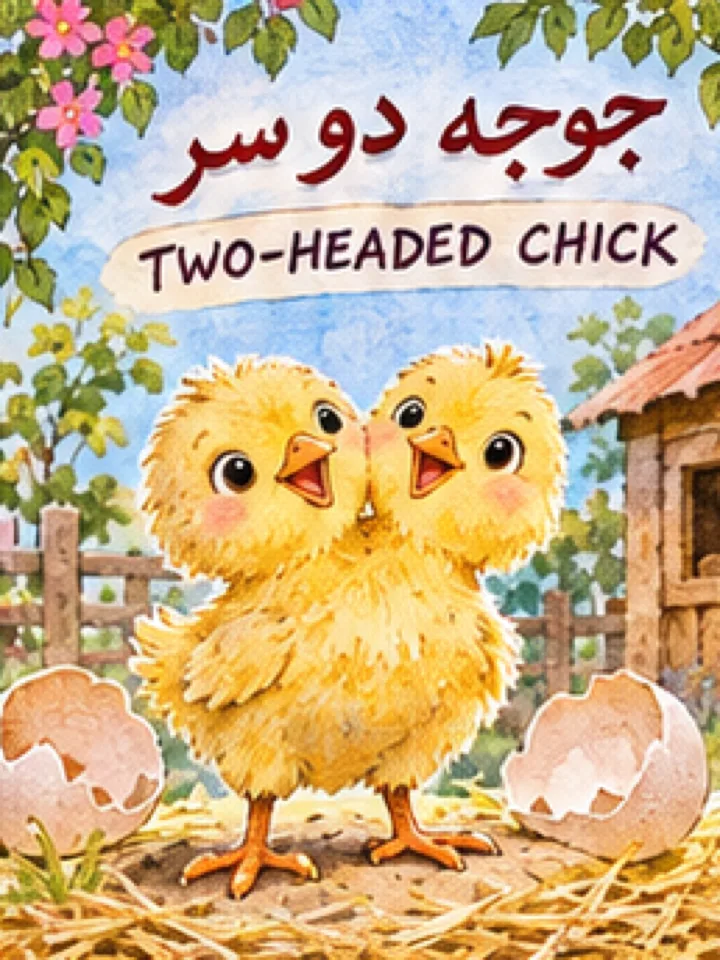
جوجه دوسر

یک جوجه سهره سرخ در آمریکا دو سر و سه منقار دارد.
آپریل بریت و همسرش که در منطقه ای به نام نورتامپتون زندگی می کنند صدای جیک جیک چند پرنده را از روی درختی در حیاط پشتی خانه شان شنیدند و پس از پیدا کردن جوجه ها، متوجه شدند یکی از آنها که ماده است، شکلی غیرعادی و ناقص دارد.
آنها در این باره می گویند: چند ساعت بعد، حیوان بیچاره از روی درخت به زمین افتاد و ما تلاش کردیم دوباره آن را داخل لانه اش بگذاریم اما صبح روز بعد هیچ اثری از جوجه سهره سرخ روی درخت نبود.
منبع : همشهری آنلاین
Read a short Persian news story about a two-headed chick found in a backyard, with a sentence-by-sentence translation, key words and a quiz.
Reading the news: the two-headed chick
The headline جوجه دوسر (juje-ye dosar) means "the two-headed chick". A couple in Northampton hear chicks in a tree in their backyard and find that one of them has two heads and three beaks. It is a short story told mostly in the past tense, with a quote from the couple at the end, so it is a good text for practicing simple past verbs.
The text, sentence by sentence
| Persian | Pronunciation | English |
|---|---|---|
| یک جوجه سهره سرخ در آمریکا دو سر و سه منقار دارد. | /yek juje-ye sehre-ye sorkh dar âmrikâ do sar va se menghâr dârad./ | A red finch chick in America has two heads and three beaks. |
| آپریل بریت و همسرش که در منطقهای به نام نورتامپتون زندگی میکنند صدای جیکجیک چند پرنده را از روی درختی در حیاط پشتی خانهشان شنیدند | /âpril brit va hamsarash ke dar mantaghe-i be nâm-e northâmpton zendegi mikonand sedâ-ye jik-jik-e chand parande râ az ru-ye derakhti dar hayât-e poshti-ye khâneshân shenidand/ | April Britt and her husband, who live in an area called Northampton, heard several birds chirping in a tree in their backyard, |
| و پس از پیدا کردن جوجهها، متوجه شدند یکی از آنها که ماده است، شکلی غیرعادی و ناقص دارد. | /va pas az peydâ kardan-e jujehâ, motavajjeh shodand yeki az ânhâ ke mâde ast, shekli gheyr-e âdi va nâghes dârad./ | and after finding the chicks, they noticed that one of them, a female, had an unusual, deformed shape. |
| آنها در این باره میگویند: چند ساعت بعد، حیوان بیچاره از روی درخت به زمین افتاد | /ânhâ dar in bâre miguyand: chand sâ'at ba'd, heyvân-e bichâre az ru-ye derakht be zamin oftâd/ | They say about it: a few hours later, the poor animal fell from the tree to the ground, |
| و ما تلاش کردیم دوباره آن را داخل لانهاش بگذاریم | /va mâ talâsh kardim dobâre ân râ dâkhel-e lâne-ash begozârim/ | and we tried to put it back in its nest, |
| اما صبح روز بعد هیچ اثری از جوجه سهره سرخ روی درخت نبود. | /ammâ sobh-e ruz-e ba'd hich asari az juje-ye sehre-ye sorkh ru-ye derakht nabud./ | but the next morning there was no trace of the red finch chick in the tree. |
| منبع: همشهری آنلاین | /manba': hamshahri ânlâyn/ | Source: Hamshahri Online |
Key words
| Persian | Pronunciation | English |
|---|---|---|
| جوجه | /juje/ | chick, baby bird |
| سهره | /sehre/ | finch |
| سر | /sar/ | head |
| منقار | /menghâr/ | beak |
| منطقه | /mantaghe/ | area, region |
| جیکجیک | /jik-jik/ | chirping, tweet-tweet |
| حیاط پشتی | /hayât-e poshti/ | backyard |
| متوجه شدن | /motavajjeh shodan/ | to notice, realize |
| ماده / نر | /mâde / nar/ | female / male (animals) |
| غیرعادی | /gheyr-e âdi/ | unusual |
| ناقص | /nâghes/ | defective, incomplete |
| بیچاره | /bichâre/ | poor, wretched |
| تلاش کردن | /talâsh kardan/ | to try |
| لانه | /lâne/ | nest |
| اثر | /asar/ | trace, sign |
Grammar in the text
No tense shift in reported clauses. After متوجه شدند (motavajjeh shodand), "they noticed", Persian keeps the present tense for what was true at that moment: یکی از آنها … شکلی غیرعادی … دارد, literally "one of them has an unusual shape". English moves this into the past ("had"), but Persian reports the situation as it was seen.
تلاش کردن + subjunctive. Verbs of trying, wanting and deciding are followed by a subjunctive verb: تلاش کردیم … بگذاریم (talâsh kardim … begozârim), "we tried to put". Even when the first verb is in the past, the second stays in the present subjunctive.
Talk about it
Retell it. Close the page and tell the story in three short sentences of your own, in simple Persian. You do not need the formal news style: plain sentences such as یک جوجه دو سر داشت are fine. Then compare your version with the original and note one word or phrase you want to remember. Reading the text aloud once a day for three days is a good way to make the new words stick.
The text uses a sound word: جیکجیک (jik-jik), the chirping of small birds. Persian has many such doubled sound words, for example تیکتاک (tik-tâk) for a clock and واقواق (vâgh-vâgh) for a dog's bark. They are easy to learn and make your Persian sound natural.
Keep reading
- Previous story: Yalda Night customs
- Next story: smart glasses for low vision
- All Persian news stories for learners
Practice
-
How many heads and beaks does the chick have?
Show answer
Two heads and three beaks. دو سر و سه منقار
-
Where did the couple hear the birds?
Show answer
In a tree in their backyard. از روی درختی در حیاط پشتی خانهشان
-
What happened a few hours later?
Show answer
The chick fell from the tree to the ground. حیوان بیچاره از روی درخت به زمین افتاد.
-
What did they find the next morning?
Show answer
No trace of the chick. هیچ اثری از جوجه نبود.
-
Complete: We tried to help it. تلاش کردیم به آن کمک …
Show answer
konim تلاش کردیم به آن کمک کنیم.
Find more short stories in Persian news for learners.


Take this lesson further
Serious about Persian? Get all 30 of our Persian learning books for $199.99 (55% less than buying them one by one).
Free Persian Starter Kit (PDF)
The Persian alphabet chart and the 101 most common Persian words with pronunciation, in one printable PDF. You also get a one-time 15% code for any of our books.
We will email you new lessons and book news from Learn Persian Online. Unsubscribe any time.Free Persian Starter Pack: Alphabet + 100 Core Words
Get the 14-page printable Starter Pack (all 32 letters, a 7-day reading plan, 100 core words and 20 survival phrases) and a short 5-email course. Free.