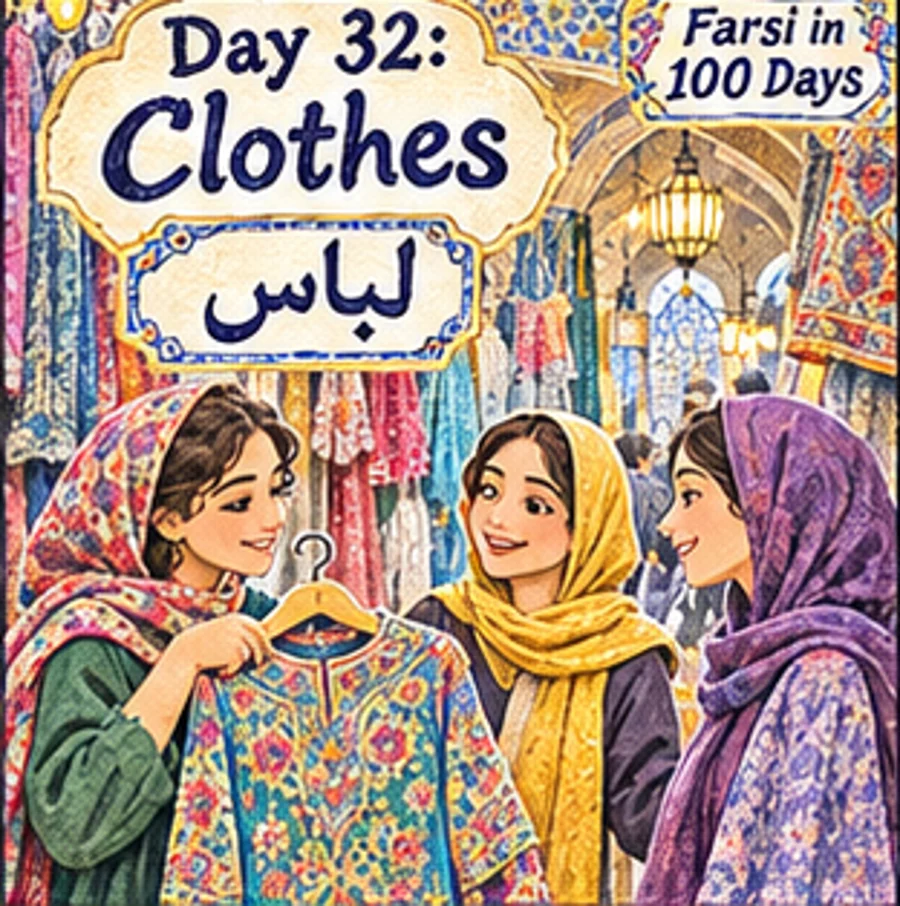
Day 32 of Learn Farsi in 100 Days, our free step-by-step Persian course: Clothes. The lesson has four parts, with every Persian word in Persian script, pronunciation and English, and each part ends with a quick check.
Part 1Grammar and conversation
Day 32, Part 1 explains how to say “also” and “too” with هم (ham) and نیز (niz), as in ما هم به مسافرت میرویم (we are going on a trip too), and gives a conversation in a clothing store about a کت و شلوار (kot o shalvâr, suit) in size 44.
Grammar: also, too (هم and نیز)
Persian says ‘also’ or ‘too’ with هم (ham) or نیز (niz). Both usually come right after the word or phrase they refer to: ما هم (mâ ham) means ‘we too’. هم is used in both speech and writing, while نیز is more formal and mostly written.
| Persian | Pronunciation | English |
|---|---|---|
| هم | ham | also, too |
| نیز | niz | also, too (formal) |
Examples
We are going on a trip too.
They came to the movies too.
Conversation: buying a suit
| Speaker | Persian | English and pronunciation |
|---|---|---|
| Salesperson فروشنده | خوش آمدید، چه چیزی لازم دارید؟ | Welcome. What do you need? khosh âmadid, che chizi lâzem dârid? |
| Customer مشتری | من یک دست کت و شلوار سایز ۴۴ میخواهم. | I’d like a suit in size 44. man yek dast kot o shalvâr sâyz-e chehel-o-chahâr mikhâham. |
| Salesperson فروشنده | کت و شلوارهای ما آن قسمت هستند، نگاه کنید هر کدام را خواستید میتوانید امتحان (پرو) کنید. | Our suits are in that section. Have a look; you can try on whichever one you like. kot o shalvâr-hâ-ye mâ ân ghesmat hastand, negâh konid har kodâm râ khâstid mitavânid emtehân (porov) konid. |
| Customer مشتری | ممنون، از این کت و شلوار رنگ آبی دارید؟ | Thanks. Do you have this suit in blue? mamnun, az in kot o shalvâr rang-e âbi dârid? |
| Salesperson فروشنده | خیر، اگر رنگ آبی دوست دارید میتوانید این را بردارید. | No. If you like blue, you can take this one. kheyr, agar rang-e âbi dust dârid mitavânid in râ bardârid. |
| Customer مشتری | نه ممنون، مدل این را دوست ندارم. | No, thanks. I don’t like the style of this one. na mamnun, model-e in râ dust nadâram. |
| Salesperson فروشنده | میتوانید به این مجلهها هم نگاه کنید و مدلها را در تن مانکنها ببینید. | You can also look at these magazines and see the styles on the models. mitavânid be in majalle-hâ ham negâh konid va model-hâ râ dar tan-e mânken-hâ bebinid. |
Quick check
- How do you say “We are going on a trip too”?
Show answer
ما هم به مسافرت میرویم. (mâ ham be mosâferat miravim.) - Where do هم (ham) and نیز (niz) usually go in a sentence?
Show answer
Right after the word or phrase they refer to, e.g. آنها هم (ân-hâ ham), “they too” - What does the customer want to buy?
Show answer
یک دست کت و شلوار سایز ۴۴ (yek dast kot o shalvâr sâyz-e chehel-o-chahâr), a suit in size 44
Part 2Grammar, common phrases, joke and word of the day
Day 32, Part 2 teaches همچنین (hamchenin, also, in addition) for adding a second idea to a sentence, useful clothes-shopping phrases like گشاد است (goshâd ast, it is loose), a short Mulla joke, and the word of the day, پارک (pârk, park).
Grammar: همچنین (also, in addition)
همچنین (hamchenin) means ‘also’ or ‘in addition’. Unlike هم (ham), which follows a word, همچنین usually comes at the start of a clause that completes the sentence before it. It is often joined with و (va, and) or follows a semicolon.
| Persian | Pronunciation | English |
|---|---|---|
| همچنین | hamchenin | also, in addition, as well |
Examples
I went to the university and also met with the professor.
I learned Persian and also got to know Iranian culture.
We went on a trip; we also learned a lot of things.
Common phrases
| Persian | Pronunciation | English |
|---|---|---|
| گشاد است. | goshâd ast. | It is loose. |
| این خیلی گران است. | in kheyli gerân ast. | This is too expensive. |
| این اندازه نیست. | in andâze nist. | This doesn’t fit. |
| سایز دیگری دارید؟ | sâyz-e digari dârid? | Do you have another size? |
Joke
پسر ملا در شب آواز میخواند. همسایه از پشت بام گفت: هنگام خواب است، آواز نخوان. ملا گفت: شب و روز سگهای شما سر و صدا میکنند، من حتی یکبار هم اعتراض نکردم. اما شما نتوانستید چند دقیقه آواز خواندن پسر من را تحمل کنید.
Mulla’s son was singing at night. The neighbor called from the rooftop: “It’s time to sleep, stop singing!” Mulla said: “Your dogs make noise day and night, and I have never complained even once. But you couldn’t put up with my son singing for a few minutes.”
Word of the day: پارک (pârk)
Meaning: park
The mother took the children to the park. The children played in the park.
Quick check
- Where does همچنین (hamchenin) usually go in a sentence?
Show answer
At the start of the clause that adds to the previous one: … و همچنین … (va hamchenin, and also) - How do you ask a salesperson “Do you have another size?”
Show answer
سایز دیگری دارید؟ (sâyz-e digari dârid?) - In the joke, what did the neighbor’s dogs do day and night?
Show answer
سر و صدا میکنند (sar o sedâ mikonand), they make noise
Part 3Clothing, conversation and idiom of the day
Day 32, Part 3 names fifteen items of clothing, from کت (kot, jacket) to روسری (rusari, headscarf), presents a conversation about what to wear to a party, including the handy phrase به تو میآید (be to miâyad, it suits you), and the idiom اسراف نکن تا محتاج نشوی (waste not, want not).
Clothing
| Persian | Pronunciation | English |
|---|---|---|
| کت | kot | jacket, coat |
| کلاه | kolâh | hat |
| شلوار جین | shalvâr-e jin | jeans |
| شلوار | shalvâr | pants |
| پیراهن | pirâhan | shirt |
| دامن | dâman | skirt |
| جوراب | jurâb | socks |
| دستکش | dastkesh | gloves |
| شال گردن | shâl-gardan | scarf |
| کراوات | kerâvât | tie |
| لباس زنانه | lebâs-e zanâne | women’s clothing |
| لباس مردانه | lebâs-e mardâne | menswear |
| جلیقه | jelighe | vest |
| زیرپوش | zirpush | underwear |
| روسری | rusari | headscarf |
Conversation: what to wear to the party
| Speaker | Persian | English and pronunciation |
|---|---|---|
| Shabnam شبنم | برای مهمانی فردا شب چه لباسی میخواهی بپوشی؟ | What are you going to wear to the party tomorrow night? barâ-ye mehmâni-ye fardâ shab che lebâsi mikhâhi bepushi? |
| Pouya پویا | تیشرت با شلوار جین میپوشم. تو چی میپوشی؟ | I’ll wear a T-shirt with jeans. What are you wearing? ti-shert bâ shalvâr-e jin mipusham. to chi mipushi? |
| Shabnam شبنم | من میخواهم یک پیراهن بلند قرمز رنگ بپوشم. | I want to wear a long red dress. man mikhâham yek pirâhan-e boland-e ghermez rang bepusham. |
| Pouya پویا | رنگ قرمز به تو خیلی میآید، حتما زیبا خواهی شد. | Red really suits you. You’ll look beautiful for sure. rang-e ghermez be to kheyli miâyad, hatman zibâ khâhi shod. |
| Shabnam شبنم | ممنون، نمیدانم کفش چه رنگی بپوشم، قرمز یا مشکی؟ | Thanks. I don’t know what color shoes to wear, red or black? mamnun, nemidânam kafsh-e che rangi bepusham, ghermez yâ meshki? |
| Pouya پویا | هر دو رنگ به لباس تو میآید. | Both colors go with your dress. har do rang be lebâs-e to miâyad. |
| Shabnam شبنم | بله، احتمالا کیف و کفش مشکی بپوشم. | Yes, I’ll probably wear a black bag and black shoes. bale, ehtemâlan kif o kafsh-e meshki bepusham. |
Idiom of the day
اسراف نکن تا محتاج نشوی.
esrâf nakon tâ mohtâj nashavi.
Word for word: Don’t waste, so that you don’t become needy.
Meaning in Persian: با اسراف کردن، انسان فقیر و محتاج میشود.
Meaning: By being wasteful, a person becomes poor and needy.
English equivalent: Waste not, want not.
Quick check
- What is the Persian word for “gloves”?
Show answer
دستکش (dastkesh) - How do you say “Red really suits you”?
Show answer
رنگ قرمز به تو خیلی میآید. (rang-e ghermez be to kheyli miâyad.) - What is the English equivalent of اسراف نکن تا محتاج نشوی (esrâf nakon tâ mohtâj nashavi)?
Show answer
Waste not, want not.
Part 4Reading and new words
Day 32, Part 4 is a reading about the historic Tabriz bazaar, called the largest بازار سرپوشیده (bâzâr-e sarpushide, covered bazaar) in the world and listed as میراث جهانی (mirâs-e jahâni, world heritage), with a vocabulary list including ارزان (arzân, cheap) and گران (gerân, expensive).
Reading: The Tabriz bazaar
بازار تبریز بزرگترین بازار در ایران و جنوب غربی قارهی آسیا است. این بازار در قسمت شمال شهر تبریز قرار دارد. بازار تبریز بزرگترین بازار سرپوشیده در جهان محسوب میشود. این بازار دارای چند مدرسه و مسجد است.
The Tabriz bazaar is the largest bazaar in Iran and in southwest Asia. It is in the northern part of the city of Tabriz. The Tabriz bazaar is considered the largest covered bazaar in the world. It contains several schools and mosques.
بازار تبریز بسیار قدیمی است و در فهرست میراث جهانی یونسکو ثبت شده است.
The Tabriz bazaar is very old and is listed as a UNESCO World Heritage Site.
معماری این بازار بسیار زیبا است. هر سال گردشگران زیادی از این بازار تاریخی بازدید میکنند.
The architecture of this bazaar is very beautiful. Every year many tourists visit this historic bazaar.
New words
| Persian | Pronunciation | English |
|---|---|---|
| نگاه کردن | negâh kardan | to look |
| برداشتن | bardâshtan | to pick up, to take |
| فرهنگ | farhang | culture |
| مانکن | mânken | mannequin, model |
| آشنا شدن | âshnâ shodan | to become familiar (with), to get to know |
| معمولا | ma’mulan | usually |
| قاره | ghârre | continent |
| دارای | dârâ-ye | having, containing |
| فهرست | fehrest | list, table of contents |
| شمال | shomâl | north |
| بازدید کردن | bâzdid kardan | to visit |
| تاریخی | târikhi | historical, historic |
| پیشنهاد | pishnahâd | offer, suggestion |
| معماری | me’mâri | architecture |
| گردشگران | gardeshgarân | tourists |
| مدرسه | madrese | school |
| سایز | sâyz | size |
| گشاد | goshâd | loose |
| گران | gerân | expensive |
| محتاج | mohtâj | needy |
| یاد گرفتن | yâd gereftan | to learn |
| سرپوشیده | sarpushide | covered, roofed |
| در نظر گرفتن | dar nazar gereftan | to consider |
| اسراف کردن | esrâf kardan | to waste, to be extravagant |
| ارزان | arzân | cheap |
| ملاقات کردن | molâghât kardan | to meet |
| بلند | boland | tall, long |
| فقیر | faghir | poor |
| پوشیدن | pushidan | to wear |
| آسیا | âsiyâ | Asia |
| مسجد | masjed | mosque |
| کوتاه | kutâh | short |
| میراث | mirâs | heritage |
| اندازه | andâze | size |
| محسوب شدن | mahsub shodan | to be considered |
Quick check
- In which part of Tabriz is the bazaar located?
Show answer
در قسمت شمال شهر (dar ghesmat-e shomâl-e shahr), in the northern part of the city - What is the opposite of گران (gerân, expensive)?
Show answer
ارزان (arzân), cheap - What does سرپوشیده (sarpushide) mean?
Show answer
covered, roofed (as in بازار سرپوشیده, a covered bazaar)
Take this lesson further

Study with the book
Learn Farsi in 100 Days: The Ultimate Crash Course to Learning Farsi Fast
This free lesson is part of Learn Farsi in 100 Days. The book puts the whole series in one printable PDF you can study offline.
Serious about Persian? Get all 30 of our Persian learning books for $199.99 (55% less than buying them one by one).
Free Persian Starter Pack: Alphabet + 100 Core Words
Get the 14-page printable Starter Pack (all 32 letters, a 7-day reading plan, 100 core words and 20 survival phrases) and a short 5-email course. Free.
Free. Every morning: that day’s four videos and the full lessons, with every Persian word, its pronunciation and its English meaning. Stop or pause with one click.