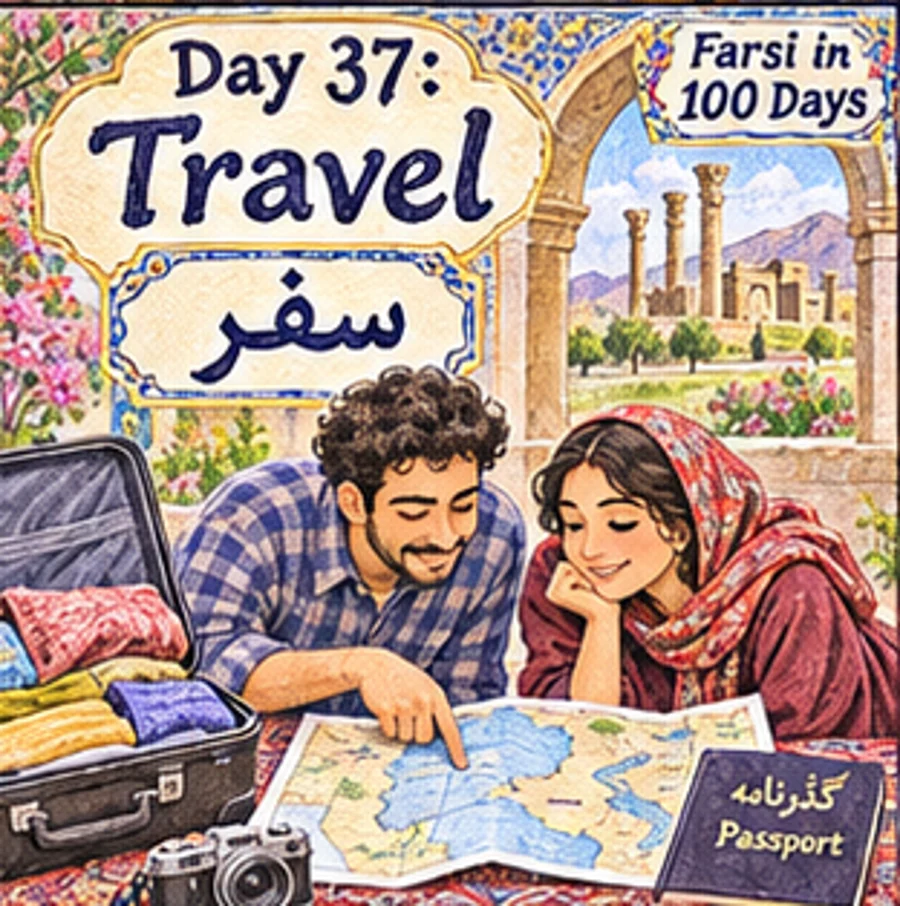
Day 37 of Learn Farsi in 100 Days, our free step-by-step Persian course: Planning a Trip. The lesson has four parts, with every Persian word in Persian script, pronunciation and English, and each part ends with a quick check.
Part 1Grammar and conversation
Day 37, Part 1 teaches six conjunctions (حرف ربط, harf-e rabt), including اگر (agar, if), چون (chon, because) and زیرا (zirâ, because), each in a sample sentence, then a conversation about planning a vacation (تعطیلات, ta’tilât) somewhere with a tropical climate on a budget of one million tomans.
Grammar: conjunctions (حرف ربط)
A conjunction (حرف ربط, harf-e rabt) links two words or clauses. اگر (agar) introduces a condition, پس (pas) a result, چون (chon) and زیرا (zirâ) a reason, اما (ammâ) a contrast, and نه (na) sets one thing against another (“not …”). چون usually comes at the start of the sentence, while زیرا comes in the middle, after the main clause.
| Persian | Pronunciation | English |
|---|---|---|
| اگر | agar | if |
| پس | pas | so, therefore |
| چون | chon | because, since |
| اما | ammâ | but |
| زیرا | zirâ | because (formal) |
| نه | na | not, rather than |
Examples
If you have time, let’s go to the park.
He has studied well, so he will pass.
Because he came late, I didn’t see him.
She invited everyone, but I didn’t go.
I passed because I had studied well.
You are an actor, not a director.
Conversation: planning a vacation
| Speaker | Persian | English and pronunciation |
|---|---|---|
| A الف | ممکن است به من کمک کنید تا برای تعطیلات برنامهریزی کنم؟ | Could you help me plan my vacation? momken ast be man komak konid tâ barâ-ye ta’tilât barnâme-rizi konam? |
| B ب | میدانید کجا میخواهید بروید؟ | Do you know where you want to go? midânid kojâ mikhâhid beravid? |
| A الف | من هنوز تصمیم نگرفتهام که کجا بروم. | I haven’t decided yet where to go. man hanuz tasmim nagerefte’am ke kojâ beravam. |
| B ب | آب و هوای گرم دوست دارید یا سرد؟ | Do you like a warm climate or a cold one? âb-o havâ-ye garm dust dârid yâ sard? |
| A الف | من آب و هوای استوایی را دوست دارم. | I like a tropical climate. man âb-o havâ-ye ostovâyi râ dust dâram. |
| B ب | من اینجا یک سری روزنامه و مجله دارم، شما میتوانید آنها را ببینید. | I have some newspapers and magazines here; you can look at them. man injâ yek seri ruznâme va majalle dâram, shomâ mitavânid ân-hâ râ bebinid. |
| A الف | این به نظر عالی است. | That sounds great. in be nazar âli ast. |
| B ب | میدانید که چقدر میخواهید در این سفر هزینه کنید؟ | Do you know how much you want to spend on this trip? midânid ke cheghadr mikhâhid dar in safar hazine konid? |
| A الف | من حدود یک میلیون تومان دارم. | I have about one million tomans. man hodud-e yek milyun tomân dâram. |
Quick check
- Which conjunction means “if”?
Show answer
اگر (agar) - Complete with the right conjunction: من قبول شدم … خوب درس خوانده بودم (“I passed because I had studied well”).
Show answer
زیرا (zirâ) - What kind of climate does speaker A like?
Show answer
آب و هوای استوایی (âb-o havâ-ye ostovâyi), a tropical climate.
Part 2Grammar, common phrases, joke and word of the day
Day 37, Part 2 adds compound conjunctions such as از آنجا که (az ânjâ ke, since) and از بس (az bas, so much that), travel questions like چمدانهایت را بستهای؟ (have you packed your suitcases?), a Mulla Nasreddin joke about a thief, and the word تعطیلات (ta’tilât, holidays).
Grammar: compound conjunctions
Some Persian conjunctions (حرف ربط, harf-e rabt) are made of several words. از آنجا که (az ânjâ ke) and از این رو (az in ru) express reason and result; از بس (az bas) means “because … so much” and stresses how extreme the cause was; اکنون که (aknun ke) means “now that”. از آنجا که, از بس and اکنون که start the reason clause, while از این رو starts the result clause.
| Persian | Pronunciation | English |
|---|---|---|
| از آنجا که | az ânjâ ke | since, because |
| از این رو | az in ru | therefore, for this reason |
| از بس | az bas | because … so (much) |
| اکنون که | aknun ke | now that |
Examples
Since you wanted me to, I came.
The street was crowded, so I went back.
The store was so crowded that I came out.
Now that I have succeeded, I’m happy.
Common phrases
| Persian | Pronunciation | English |
|---|---|---|
| چمدانهایت را بستهای؟ | chamedân-hâyat râ baste’i? | Have you packed your suitcases? |
| جا رزرو کردهای؟ | jâ rezerv karde’i? | Have you made a reservation? |
Joke: the Mulla moves house
یک شب ملا در خانهی خود خوابیده بود. دزدی وارد خانهی او شد و اثاثیه ملا را که کم بود جمع کرد و رفت.
One night the Mulla was asleep in his house. A thief came into his house, gathered up the Mulla’s few belongings and left.
ملا نیز که دزد را دیده بود، رختخواب خود را برداشت و به دنبال دزد رفت.
The Mulla, who had seen the thief, picked up his bedding and followed him.
وقتی دزد وارد خانهی خود شد ملا را دید و گفت: تو اینجا چه کار میکنی؟ ملا گفت: هیچ، من منزلم را تغییر دادم.
When the thief got to his own house, he saw the Mulla and said, “What are you doing here?” The Mulla said, “Nothing. I’ve just moved house.”
Word of the day: تعطیلات (ta’tilât)
Meaning: holidays, vacation
We have made plans for the weekend holiday.
Quick check
- What does اکنون که (aknun ke) mean?
Show answer
now that - How do you ask “Have you made a reservation?” in Persian?
Show answer
جا رزرو کردهای؟ (jâ rezerv karde’i?) - In the joke, why does the Mulla follow the thief with his bedding?
Show answer
Because the thief took all his belongings, so he says he has “moved house”: من منزلم را تغییر دادم (man manzelam râ taghyir dâdam).
Part 3Seasons, conversation and idiom of the day
Day 37, Part 3 lists the four seasons with their Iranian months, such as بهار (bahâr, spring: Farvardin, Ordibehesht, Khordad), follows Kasra and Golrokh talking about a trip to Tehran, and explains the idiom آنچه عوض دارد گله ندارد (ân-che avaz dârad gele nadârad, fair exchange, no robbery).
Seasons (فصلها)
The Iranian (solar) year starts on the first day of spring, around March 21. Each season has three months of the Persian calendar.
| Season | Pronunciation | English | Months | Months (pronunciation) |
|---|---|---|---|---|
| ۱. بهار | bahâr | spring | فروردین، اردیبهشت، خرداد | farvardin, ordibehesht, khordâd |
| ۲. تابستان | tâbestân | summer | تیر، مرداد، شهریور | tir, mordâd, shahrivar |
| ۳. پاییز | pâyiz | fall, autumn | مهر، آبان، آذر | mehr, âbân, âzar |
| ۴. زمستان | zemestân | winter | دی، بهمن، اسفند | dey, bahman, esfand |
Conversation: a trip to Tehran
| Speaker | Persian | English and pronunciation |
|---|---|---|
| Kasra کسری | داری میروی سفر؟ کجا میخواهی بروی؟ | Are you going on a trip? Where do you want to go? dâri miravi safar? kojâ mikhâhi beravi? |
| Golrokh گلرخ | آره میروم به تهران. برای دیدن خواهرم میروم. | Yes, I’m going to Tehran. I’m going to see my sister. âre miravam be tehrân. barâ-ye didan-e khâharam miravam. |
| Kasra کسری | واقعا؟ خواهرت کی به تهران رفته است؟ | Really? When did your sister go to Tehran? vâghe’an? khâharat key be tehrân rafte ast? |
| Golrokh گلرخ | حدود یک سال است. تهران کار پیدا کرد. | About a year ago. She found a job in Tehran. hodud-e yek sâl ast. tehrân kâr peydâ kard. |
| Kasra کسری | کی برمیگردی؟ | When are you coming back? key barmigardi? |
| Golrokh گلرخ | حدود دو هفته دیگر برمیگردم. | I’ll be back in about two weeks. hodud-e do hafte-ye digar barmigardam. |
| Kasra کسری | سفر خوبی داشته باشی. | Have a good trip. safar-e khubi dâshte bâshi. |
| Golrokh گلرخ | ممنونم. | Thank you. mamnunam. |
Idiom of the day
آنچه عوض دارد گله ندارد.
ân-che avaz dârad gele nadârad.
Word for word: What has a replacement has no complaint.
Meaning in Persian: آنچه را که میتوان اصلاح کرد، نیازی به گله و شکایت ندارد.
Meaning: There is no need to complain about something that can be put right.
English equivalent: Fair exchange, no robbery.
Quick check
- Which three months make up spring (بهار, bahâr)?
Show answer
فروردین، اردیبهشت، خرداد (farvardin, ordibehesht, khordâd) - Why is Golrokh going to Tehran?
Show answer
To see her sister: برای دیدن خواهرم میروم (barâ-ye didan-e khâharam miravam). - How do you say “Have a good trip” in Persian?
Show answer
سفر خوبی داشته باشی (safar-e khubi dâshte bâshi)
Part 4Reading and new words
Day 37, Part 4 is a reading about Persian carpets (قالی, ghâli) and the Pazyryk carpet found in Siberia, more than three thousand years old, followed by the day’s vocabulary list, including چمدان (chamedân, suitcase), رزرو کردن (rezerv kardan, to book) and هزینه کردن (hazine kardan, to spend).
Reading: Persian carpets
قالیها و فرشهای ایرانی از معروفترین قالیها و فرشهای جهان هستند. قالی از سالیان دور مورد توجه اقوام گوناگون ایرانی بوده است.
Iranian rugs and carpets are among the most famous rugs and carpets in the world. Carpets have been valued by Iran’s many different peoples since ancient times.
قدیمیترین نمونهی قالی ایرانی، قالی پازیریک نامیده میشود. این قالی در سیبری پیدا شده است.
The oldest example of an Iranian carpet is called the Pazyryk carpet. It was found in Siberia.
این قالیچه از دستبافتهای اقوام پارت و یا ماد در بیش از سه هزار سال پیش است.
This rug was handwoven by the Parthians or the Medes more than three thousand years ago.
New words
| Persian | Pronunciation | English |
|---|---|---|
| فرش | farsh | carpet |
| رزرو کردن | rezerv kardan | to book, to reserve |
| اصلاح کردن | eslâh kardan | to correct, to fix |
| زیرا | zirâ | because |
| شکایت کردن | shekâyat kardan | to complain |
| برنامه ریزی | barnâme rizi | planning |
| قالی | ghâli | carpet |
| بیش از | bish az | more than |
| چمدان | chamedân | suitcase |
| تابستان | tâbestân | summer |
| هزینه کردن | hazine kardan | to spend (money) |
| هنوز | hanuz | still, yet |
| پس | pas | so |
| دعوت کردن | da’vat kardan | to invite |
| کارگردان | kârgardân | director |
| گله | gele | complaint |
| نمونه | nemune | sample, example |
| مورد توجه | mored-e tavajjoh | of interest, receiving attention |
| سالیان | sâliyân | years |
| پیش | pish | ago |
| استوایی | ostovâyi | tropical, equatorial |
| از آنجا که | az ânjâ ke | since |
| بازیگر | bâzigar | actor |
| قبول شدن | ghabul shodan | to pass (an exam) |
| پاییز | pâyiz | fall, autumn |
| زمستان | zemestân | winter |
| اقوام | aghvâm | peoples, ethnic groups |
| کی | key | when |
| جنجال | janjâl | brawl, uproar |
| بنابراین | banâbar-in | so, therefore |
| قدمت | ghedmat | antiquity, age |
| ساک | sâk | bag |
| آماده بودن | âmâde budan | to be ready |
| خر | khar | donkey |
| بهار | bahâr | spring |
| فروختن | forukhtan | to sell |
| مثلا | masalan | for example |
Quick check
- Where was the Pazyryk carpet (قالی پازیریک) found?
Show answer
In Siberia: در سیبری (dar sibri). - What is the Persian word for “suitcase”?
Show answer
چمدان (chamedân) - What does قبول شدن (ghabul shodan) mean?
Show answer
to pass (an exam)
Take this lesson further

Study with the book
Learn Farsi in 100 Days: The Ultimate Crash Course to Learning Farsi Fast
This free lesson is part of Learn Farsi in 100 Days. The book puts the whole series in one printable PDF you can study offline.
Serious about Persian? Get all 30 of our Persian learning books for $199.99 (55% less than buying them one by one).
Free Persian Starter Pack: Alphabet + 100 Core Words
Get the 14-page printable Starter Pack (all 32 letters, a 7-day reading plan, 100 core words and 20 survival phrases) and a short 5-email course. Free.
Free. Every morning: that day’s four videos and the full lessons, with every Persian word, its pronunciation and its English meaning. Stop or pause with one click.