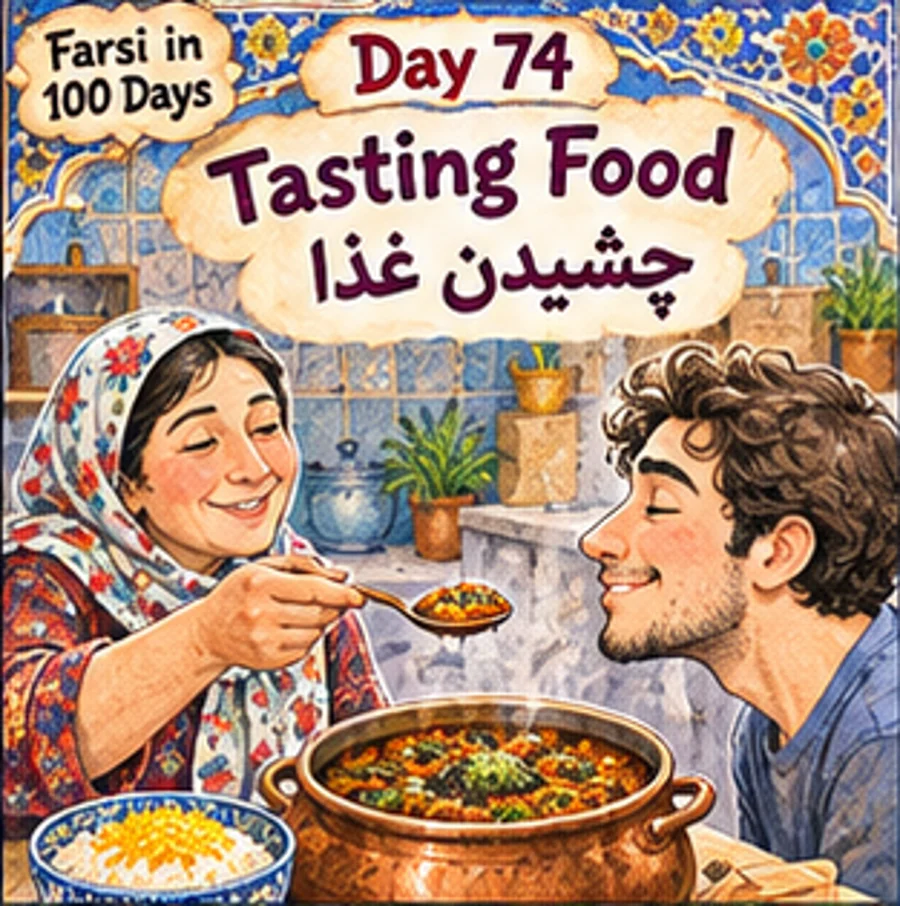
Day 74 of Learn Farsi in 100 Days, our free step-by-step Persian course: Tasting Food. The lesson has four parts, with every Persian word in Persian script, pronunciation and English, and each part ends with a quick check.
Part 1Conversation and joke
Day 74, Part 1 has a conversation in which Farnaz tastes Saman’s cooking, with phrases like مزهاش واقعا عالی بود (maze-ash vâghe’an âli bud, it tasted really great) and سیر شدم (sir shodam, I’m full), and a joke about Molla thanking God after losing his donkey (خر, khar).
Conversation: how was the food?
| Speaker | Persian | English and pronunciation |
|---|---|---|
| Saman ثمن | غذا چطور بود؟ | How was the food? ghazâ chetor bud? |
| Farnaz فرناز | مزهاش واقعا عالی بود. تو آن را درست کردهای؟ | It tasted really great. Did you make it? maze-ash vâghe’an âli bud. to ân râ dorost karde-i? |
| Saman ثمن | بله. من آن را عصر درست کردم. میخواهی بیشتر بخوری؟ | Yes. I made it this afternoon. Would you like some more? bale. man ân râ asr dorost kardam. mikhâhi bishtar bokhori? |
| Farnaz فرناز | باشد، فقط یک مقدار. واقعا سیر شدم. | OK, just a little. I’m really full. bâshad, faghat yek meghdâr. vâghe’an sir shodam. |
| Saman ثمن | میخواهید به جای آن مقداری سوپ بخوری؟ | Would you like some soup instead? mikhâhid be jâ-ye ân meghdâri sup bokhori? |
| Farnaz فرناز | چه نوع سوپی است؟ | What kind of soup is it? che no’ supi ast? |
| Saman ثمن | گوجه و برنج. قبلا خوردهای؟ | Tomato and rice. Have you had it before? gowje va berenj. ghablan khorde-i? |
| Farnaz فرناز | نه. اولین بار است. مزهاش چطور است؟ | No, it’s my first time. How does it taste? na. avvalin bâr ast. maze-ash chetor ast? |
| Saman ثمن | خوب است. امتحان کن. چی فکر میکنی؟ | It’s good. Try it. What do you think? khub ast. emtehân kon. chi fekr mikoni? |
| Farnaz فرناز | خوب است. این هم خودت درست کردهای؟ | It’s good. Did you make this yourself too? khub ast. in ham khodat dorost karde-i? |
| Saman ثمن | بله. | Yes. bale. |
| Farnaz فرناز | تو واقعا خوب آشپزی میکنی! | You’re a really good cook! to vâghe’an khub âshpazi mikoni! |
| Saman ثمن | ممنون دفعهی بعد سوپ مرغ درست میکنم. | Thanks. Next time I’ll make chicken soup. mamnun, daf’e-ye ba’d sup-e morgh dorost mikonam. |
Joke: Molla’s lost donkey
روزی ملا خرش را گم کرده بود اما خدا را شکر میکرد.
One day Molla had lost his donkey, but he was thanking God.
دوستش پرسید تو که خرت را گم کردهای چرا خدا را شکر میکنی؟
His friend asked, “You’ve lost your donkey, so why are you thanking God?”
ملا گفت: به این خاطر که خودم بر روی آن ننشسته بودم وگرنه خودم هم با آن گم شده بودم!!!
Molla said, “Because I wasn’t sitting on it. Otherwise I would have been lost along with it!”
Quick check
- How do you say “I’m really full” in Persian?
Show answer
واقعا سیر شدم. (vâghe’an sir shodam.) - What kind of soup does Saman offer Farnaz?
Show answer
tomato and rice soup: گوجه و برنج (gowje va berenj) - Why does Molla thank God after losing his donkey?
Show answer
because he wasn’t riding it; otherwise he would have been lost too
Part 2Common phrases, poetry and word of the day
Day 74, Part 2 gives phrases for describing how food tastes, such as خوشمزه است اما کمی شور است (khoshmaze ast ammâ kami shur ast, it’s tasty but a little salty) and بیمزه است (bi-maze ast, it’s tasteless), a Khayyam quatrain, and the word of the day طلوع (tolu’, sunrise).
Common phrases
| Persian | Pronunciation | English |
|---|---|---|
| چه طعمی را دوست داری؟ | che ta’mi râ dust dâri? | What flavor do you like? |
| خوشمزه است اما کمی شور است. | khoshmaze ast ammâ kami shur ast. | It’s tasty, but it’s a little salty. |
| مزهی انبه دارد. | maze-ye anbe dârad. | It tastes of mangoes. |
| این غذا طعم خوبی ندارد. | in ghazâ ta’m-e khubi nadârad. | This food doesn’t taste very nice. |
| بیمزه است. | bi-maze ast. | It’s tasteless. |
| به چاشنی بیشتری نیاز دارد. | be châshni-ye bishtari niyâz dârad. | It needs a little more seasoning. |
Poetry: a quatrain by Khayyam (خیام)
A quatrain (رباعی, robâ’i) by Omar Khayyam, read right half first. The book gives Edward FitzGerald’s English version: “Think, in this batter’d Caravanserai / Whose Doorways are alternate Night and Day, / How Sultan after Sultan with his Pomp / Abode his Hour or two, and went his way.”
| Persian | Pronunciation | English |
|---|---|---|
| این کهنه رباط را که عالم نام است | in kohne robât râ ke âlam nâm ast | This old inn whose name is “the world” |
| و آرامگه ابلق صبح و شام است | va ârâmgah-e ablagh-e sobh o shâm ast | is the resting place of the piebald horse of morning and evening; |
| بزمیست که واماندهی صد جمشید است | bazmi-st ke vâmânde-ye sad jamshid ast | it is a feast left behind by a hundred Jamshids, |
| قصریست که تکیهگاه صد بهرام است | ghasri-st ke tekye-gâh-e sad bahrâm ast | a palace that has been the seat of a hundred Bahrams. |
Word of the day: طلوع (tolu’)
Meaning: rise, sunrise
The sunrise is very beautiful. I watched the sunrise.
Quick check
- How do you say “It needs a little more seasoning” in Persian?
Show answer
به چاشنی بیشتری نیاز دارد. (be châshni-ye bishtari niyâz dârad.) - What does بیمزه است (bi-maze ast) mean?
Show answer
It’s tasteless. - What does طلوع خورشید (tolu’-e khorshid) mean?
Show answer
sunrise
Part 3Idiom of the day and conversation
Day 74, Part 3 teaches the proverbs خر من از کرگی دم نداشت (khar-e man az korregi dom nadâsht) and خاک بر سر (khâk bar sar), a conversation about seasoning soup with pepper (فلفل, felfel) and garlic powder (پودر سیر, pudr-e sir), and the idiom حالیش نیست (hâlish nist, he doesn’t get it).
Idiom of the day
خر من از کرگی دم نداشت.
khar-e man az korregi dom nadâsht.
Word for word: My donkey had no tail even as a foal.
Meaning in Persian: این ضربالمثل از طرف شخصی بیان میشود که از قضاوت و داوری دیگران ناامید شده است و فکر میکند با بیعدالتی مواجه شده است.
Meaning: This proverb is said by someone who has given up hope of a fair judgment from others and feels he has been treated unjustly, so he drops the whole matter.
English equivalent: Forget it; I don’t want anything anymore.
Idiom of the day
خاک بر سر
khâk bar sar
Word for word: dust on (one’s) head
Meaning in Persian: از این اصطلاح برای تحقیر کردن شخصی استفاده میشود. به معنی بیچاره و ضعیف بودن نیز است. و همچنین به معنی راهحل است. مثلا یک نفر که مشکلی دارد میگوید: چه خاکی بر سر کنم؟ یعنی چه کاری انجام بدهم تا این مشکل را حل کنم.
Meaning: This expression is used to insult or belittle someone. It can also mean being wretched and helpless. It is also used when looking for a way out: someone with a problem says چه خاکی بر سر کنم؟ (che khâki bar sar konam?, literally “what dust should I pour on my head?”), meaning “What on earth should I do to solve this problem?”
English equivalent: Shame on you! / What on earth shall I do?
Conversation: seasoning the soup
| Speaker | Persian | English and pronunciation |
|---|---|---|
| Golrokh گلرخ | چه بوی غذایی میآید! چی داری درست میکنی؟ | What a smell of cooking! What are you making? che bu-ye ghazâyi miâyad! chi dâri dorost mikoni? |
| Shahdokht شهدخت | سوپ درست میکنم. بیا کمی بچش. | I’m making soup. Come and have a taste. sup dorost mikonam. biyâ kami bechesh. |
| Golrokh گلرخ | بسیار خوب، … طعم خوبی دارد اما فکر کنم بهتر است کمی فلفل هم به آن اضافه کنی. | All right… It tastes good, but I think you’d better add a little pepper too. besyâr khub, … ta’m-e khubi dârad ammâ fekr konam behtar ast kami felfel ham be ân ezâfe koni. |
| Shahdokht شهدخت | فلفل به آن اضافه کردهام اما مقدار خیلی کمی، همسرم طعم تند را دوست ندارد. | I’ve added pepper, but only a very little. My husband doesn’t like spicy food. felfel be ân ezâfe karde-am ammâ meghdâr-e kheyli kami, hamsaram ta’m-e tond râ dust nadârad. |
| Golrokh گلرخ | پس یک مقدار چاشنی به آن اضافه کن تا طعم بهتری پیدا کند. | Then add some seasoning so it tastes better. pas yek meghdâr châshni be ân ezâfe kon tâ ta’m-e behtari peydâ konad. |
| Shahdokht شهدخت | بسیار خوب، کمی پودر سیر به آن اضافه میکنم. | All right, I’ll add a little garlic powder. besyâr khub, kami pudr-e sir be ân ezâfe mikonam. |
Idiom of the day
حالیش نیست.
hâlish nist.
Word for word: It isn’t clear to him.
Meaning in Persian: نمیفهمد. مثال: او حالیش نیست من چه میگویم.
Meaning: He/she doesn’t understand. Example: او حالیش نیست من چه میگویم. (u hâlish nist man che miguyam.), “He doesn’t get what I’m saying.”
English equivalent: It goes right over his head.
Quick check
- How do you ask “What on earth should I do?” with خاک بر سر (khâk bar sar)?
Show answer
چه خاکی بر سر کنم؟ (che khâki bar sar konam?) - Why did Shahdokht add only a little pepper to the soup?
Show answer
همسرم طعم تند را دوست ندارد (hamsaram ta’m-e tond râ dust nadârad), “my husband doesn’t like spicy food” - What does حالیش نیست (hâlish nist) mean?
Show answer
he/she doesn’t understand; it goes over his/her head
Part 4Reading and new words
Day 74, Part 4 is a reading about Niavaran Palace (کاخ نیاوران, kâkh-e niyâvarân) in Tehran, once a Qajar summer residence (اقامت ییلاقی, eghâmat-e yeylâghi), followed by a vocabulary list with words like چاپلوس (châplus, flatterer) and چشمگیر (cheshmgir, striking).
Reading: Niavaran Palace
کاخ نیاوران در شهر تهران قرار دارد. این کاخ از زیبایی و جذابیت طبیعی و تاریخی فراوانی برخوردار است. بناهای مجموعهی کاخ نیاوران به دوران قاجار و پهلوی تعلق دارد.
Niavaran Palace is in Tehran. It has great natural and historic beauty and charm. The buildings of the Niavaran Palace complex belong to the Qajar and Pahlavi periods.
کاخ نیاوران ابتدا مکانی خوش آب و هوا جهت اقامت ییلاقی شاهان قاجار بود. در زمان حکومت پهلوی دوم، بعضی از بناهای باغ نیاوران تخریب شد و کاخ نیاوران با سبکی مدرن جهت سکونت شاه و خانوادهاش ساخته شد.
Niavaran was first a place with a pleasant climate where the Qajar kings spent their summers. Under the second Pahlavi king, some of the buildings in the Niavaran garden were torn down, and Niavaran Palace was built in a modern style as a residence for the Shah and his family.
محوطهی کاخ هم اکنون شامل کاخ اختصاصی نیاوران، کاخ صاحبقرانیه، کوشک احمدشاهی و گلخانهها و مدرسهی اختصاصی پهلوی است.
Today the palace grounds include the private Niavaran Palace, the Sahebqaraniyeh Palace, the Ahmad Shahi Pavilion, the greenhouses and the private Pahlavi school.
New words
| Persian | Pronunciation | English |
|---|---|---|
| رباط | robât | caravansary, inn |
| حاشا کردن | hâshâ kardan | to deny |
| ابلق (روزگار) | ablagh (-e ruzgâr) | piebald (horse); (poetic) day and night, time |
| خودداری کردن | khoddâri kardan | to refrain, to hold back |
| بزم | bazm | banquet, feast |
| تکان دادن | tekân dâdan | to shake |
| خوش اقبال | khosh eghbâl | lucky |
| وامانده | vâmânde | left behind, remaining |
| قصر | ghasr | palace, castle |
| کوشک | kushk | pavilion, summerhouse |
| گلخانه | golkhâne | greenhouse |
| جذب کردن | jazb kardan | to attract |
| چاپلوس | châplus | flatterer, bootlicker |
| تکیهگاه | tekye-gâh | support, seat |
| تکرار کردن | tekrâr kardan | to repeat |
| قضاوت | ghezâvat | judgment |
| خواب رفتن | khâb raftan | to fall asleep |
| داوری | dâvari | judging, arbitration |
| چشمگیر | cheshmgir | striking, remarkable |
| بیعدالتی | bi-edâlati | injustice |
| مواجه شدن | movâjeh shodan | to face, to be faced with |
| جدا شدن | jodâ shodan | to separate, to split off |
| بیچاره | bichâre | poor, wretched, helpless |
| اختصاصی | ekhtesâsi | private, exclusive |
| راهحل | râh-hal | solution |
| جبران کردن | jobrân kardan | to compensate, to make up for |
| برخوردار بودن | barkhordâr budan | to have, to enjoy (a quality) |
| تعلق داشتن | ta’allogh dâshtan | to belong |
| جنبیدن | jonbidan | to move, to stir |
| ییلاقی | yeylâghi | summer (resort), country (retreat) |
| جدول | jadval | table, chart |
| تخریب کردن | takhrib kardan | to destroy, to demolish |
| جهت | jahat | direction; for (the purpose of) |
| محوطه | mohavvate | grounds, area |
Quick check
- What was Niavaran first used for?
Show answer
as a summer residence for the Qajar kings: جهت اقامت ییلاقی شاهان قاجار (jahat-e eghâmat-e yeylâghi-ye shâhân-e ghâjâr) - Name two places inside the palace grounds.
Show answer
any two of: کاخ صاحبقرانیه (kâkh-e sâheb-gherâniye), کوشک احمدشاهی (kushk-e ahmad-shâhi), the greenhouses (گلخانهها, golkhâne-hâ), the private Pahlavi school - What does چاپلوس (châplus) mean?
Show answer
flatterer, bootlicker
Take this lesson further

Study with the book
Learn Farsi in 100 Days: The Ultimate Crash Course to Learning Farsi Fast
This free lesson is part of Learn Farsi in 100 Days. The book puts the whole series in one printable PDF you can study offline.
Serious about Persian? Get all 30 of our Persian learning books for $199.99 (55% less than buying them one by one).
Free Persian Starter Pack: Alphabet + 100 Core Words
Get the 14-page printable Starter Pack (all 32 letters, a 7-day reading plan, 100 core words and 20 survival phrases) and a short 5-email course. Free.
Free. Every morning: that day’s four videos and the full lessons, with every Persian word, its pronunciation and its English meaning. Stop or pause with one click.