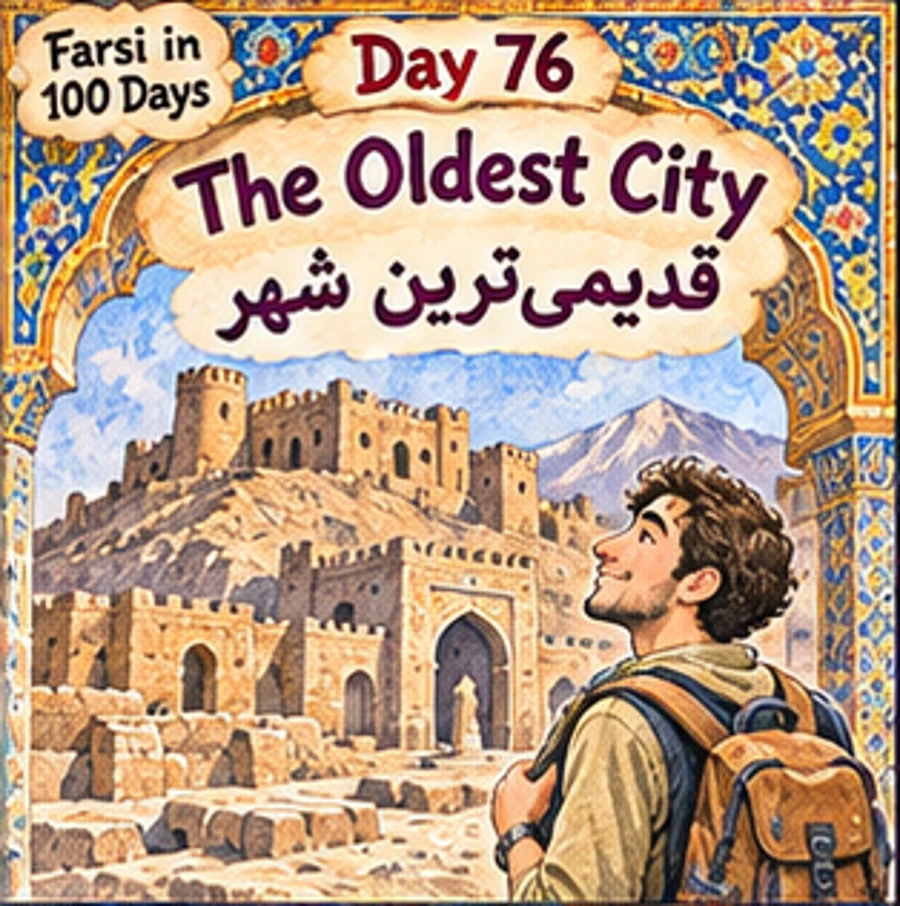
Day 76 of Learn Farsi in 100 Days, our free step-by-step Persian course: The Oldest City in the World. The lesson has four parts, with every Persian word in Persian script, pronunciation and English, and each part ends with a quick check.
Part 1Conversation and joke
Day 76, Part 1 has a conversation about finding the nearest ATM (نزدیکترین دستگاه ای تی ام, nazdik-tarin dastgâh-e i ti em) and a store open 24 hours (بیست و چهار ساعت شبانه روز), plus a joke about a father, his child and hard-working ants (مورچهها, murche-hâ).
Conversation: finding an ATM and a store
| Speaker | Persian | English and pronunciation |
|---|---|---|
| A الف | نزدیکترین دستگاه ای تی ام کجاست؟ | Where is the nearest ATM? nazdik-tarin dastgâh-e i ti em kojâst? |
| B ب | دور نیست. آیا آن ساختمان زرد را میبینید؟ | It isn’t far. Do you see that yellow building? dur nist. âyâ ân sâkhtemân-e zard râ mibinid? |
| A الف | آن یکی که بزرگ است یا آن یکی که کوچک است؟ | The one that is big or the one that is small? ân yeki ke bozorg ast yâ ân yeki ke kuchak ast? |
| B ب | آن که بزرگ است. | The big one. ân ke bozorg ast. |
| A الف | بله. | Yes. bale. |
| B ب | نزدیک آن ساختمان است. سمت راست. | It’s near that building, on the right. nazdik-e ân sâkhtemân ast. samt-e râst. |
| A الف | آیا این اطراف فروشگاه است؟ | Is there a store around here? âyâ in atrâf forushgâh ast? |
| B ب | فکر نمیکنم این اطراف باشد. نزدیکترین فروشگاه در خیابان سوم است، اما احتمالا الان بسته است. | I don’t think there is one around here. The nearest store is on Third Street, but it’s probably closed now. fekr nemikonam in atrâf bâshad. nazdik-tarin forushgâh dar khiyâbân-e sevvom ast, ammâ ehtemâlan alân baste ast. |
| A الف | من واقعا نیاز دارم چیزهایی را بخرم. | I really need to buy some things. man vâghe’an niyâz dâram chiz-hâyi râ bekharam. |
| B ب | خوب شما میتوانید به خیابان بیست و دوم بروید. آنجا مغازههای زیادی است که بیست و چهار ساعت شبانه روز باز هستند. | Well, you can go to Twenty-Second Street. There are lots of shops there that are open twenty-four hours a day. khob, shomâ mitavânid be khiyâbân-e bist-o-dovvom beravid. ânjâ maghâze-hâ-ye ziyâdi ast ke bist-o-chahâr sâ’at-e shabâne ruz bâz hastand. |
| A الف | میتوانم با مترو بروم؟ | Can I go by subway? mitavânam bâ metro beravam? |
| B ب | بله، اما ممکن است یک ساعت طول بکشد. | Yes, but it may take an hour. bale, ammâ momken ast yek sâ’at tul bekeshad. |
Joke: the ants on Friday
پدر: «بچه جان! کار کردن را از این مورچهها یاد بگیر. بیچارهها دائما کار میکنند؛ یک روز هم تفریح و استراحت ندارند.»
Father: “My child! Learn how to work from these ants. The poor things work all the time; they don’t have a single day of fun or rest.”
بچه: «پس باباجان! چطور روزهای جمعه که ما میرویم گردش، آنها هم آمدهاند؟»
Child: “Then, Dad, how come on Fridays, when we go on an outing, they’ve come along too?”
Quick check
- How do you ask “Where is the nearest ATM?” in Persian?
Show answer
نزدیکترین دستگاه ای تی ام کجاست؟ (nazdik-tarin dastgâh-e i ti em kojâst?) - How do you say “it may take an hour”?
Show answer
ممکن است یک ساعت طول بکشد. (momken ast yek sâ’at tul bekeshad.) - In the joke, what does the father tell the child to learn from the ants?
Show answer
how to work: کار کردن (kâr kardan)
Part 2Common phrases, poetry and word of the day
Day 76, Part 2 gives phrases for distances and directions, such as پیاده حدود پنج دقیقه راه است (piyâde hodud-e panj daghighe râh ast, it’s about five minutes’ walk) and پشت مسجد است (it’s behind the mosque), a quatrain by Khayyam, and the word جایگزین (jâygozin, alternative).
Common phrases
| Persian | Pronunciation | English |
|---|---|---|
| حدود پانصد متر راه است. | hodud-e pânsad metr râh ast. | It’s about five hundred meters away. |
| پیاده حدود پنج دقیقه راه است. | piyâde hodud-e panj daghighe râh ast. | It’s about five minutes’ walk. |
| سر چهارراه بپیچ سمت راست. | sar-e chahârrâh bepich samt-e râst. | Take a right at the junction/the intersection. |
| روبهروی بانک است. | ruberu-ye bânk ast. | It’s across from the bank. |
| پشت مسجد است. | posht-e masjed ast. | It’s behind the mosque. |
| ابتدای جادهی کمربندی است. | ebtedâ-ye jâdde-ye kamarbandi ast. | This is the beginning of the bypass. |
Poetry: Khayyam
A quatrain (robâ’i) by Omar Khayyam. The book gives Edward FitzGerald’s English version: “I sometimes think that never blows so red / The Rose as where some buried Caesar bled; / That every Hyacinth the Garden wears / Dropt in its Lap from some once lovely Head.”
| Persian | Pronunciation | English |
|---|---|---|
| در هر دشتی که لالهزاری بوده است | dar har dashti ke lâle-zâri bude ast | In every plain where a field of tulips has grown, |
| از سرخی خون شهریاری بوده است | az sorkhi-ye khun-e shahriyâri bude ast | it came from the redness of some king’s blood; |
| هر شاخ بنفشه کز زمین میروید | har shâkh-e banafshe kaz zamin miruyad | every sprig of violet that grows from the ground |
| خالی است که بر رخ نگاری بوده است | khâli ast ke bar rokh-e negâri bude ast | is a mole that was once on a beauty’s cheek. |
Word of the day: جایگزین (jâygozin)
Meaning: alternative, replacement
They replaced paper books with e-books.
Quick check
- How do you say “It’s behind the mosque” in Persian?
Show answer
پشت مسجد است. (posht-e masjed ast.) - What does روبهروی بانک است (ruberu-ye bânk ast) mean?
Show answer
It’s across from the bank. - What does جایگزین (jâygozin) mean?
Show answer
alternative, replacement; جایگزین … کردن (jâygozin-e … kardan) means “to replace … with”
Part 3Idiom of the day and conversation
Day 76, Part 3 explains two proverbs, گرگ باران دیده (gorg-e bârân dide, a seasoned old hand) and آش نخورده و دهن سوخته (blamed for what you did not do), a conversation about finding the post office (ادارهی پست, edâre-ye post), and the idiom خدا را چه دیدی (you never know).
Idiom of the day
گرگ باران دیده
gorg-e bârân dide
Word for word: a wolf that has seen the rain
Meaning in Persian: این اصطلاح به معنی افراد باتجربه و دانا است که در زندگی تجربههای زیادی را کسب کردهاند. البته این اصطلاح کمتر برای تعریف از طرف مقابل بهکار میرود و بیشتر برای سرزنش به کار میرود.
Meaning: This expression means experienced, wise people who have gained a lot of experience in life. However, it is seldom used to praise someone; it is used mostly as a reproach (for someone too shrewd to be fooled).
English equivalent: an old hand; an old fox
Idiom of the day
آش نخورده و دهن سوخته
âsh nakhorde va dahan sukhte
Word for word: the soup not eaten, yet the mouth burned
Meaning in Persian: این ضربالمثل به این معنی است که شخصی کاری را انجام نداده باشد ولی گناهکار شناخته شود.
Meaning: This proverb means that someone has not done something but is still considered guilty of it.
English equivalent: to take the blame for something you didn’t do
Conversation: looking for the post office
| Speaker | Persian | English and pronunciation |
|---|---|---|
| A الف | ببخشید ممکن است به من کمک کنید؟ | Excuse me, could you help me? bebakhshid, momken ast be man komak konid? |
| B ب | بله حتما، چه کمکی میتوانم بکنم؟ | Yes, of course. How can I help? bale hatman, che komaki mitavânam bokonam? |
| A الف | من به دنبال ادارهی پست میگردم، ادارهی پست این شهر کجاست؟ | I’m looking for the post office. Where is the post office in this town? man be donbâl-e edâre-ye post migardam, edâre-ye post-e in shahr kojâst? |
| B ب | خوب من اهل این شهر نیستم. من مسافر هستم. | Well, I’m not from this town. I’m a traveler. khob, man ahl-e in shahr nistam. man mosâfer hastam. |
| A الف | میدانید از چه کسی بپرسم؟ | Do you know whom I should ask? midânid az che kasi beporsam? |
| B ب | به نظر من بهتر است از فروشنده بپرسید. | I think you’d better ask the shopkeeper. be nazar-e man behtar ast az forushande beporsid. |
| A الف | ممنون. ببخشید وقتتان را گرفتم. | Thanks. Sorry for taking your time. mamnun. bebakhshid vaghtetân râ gereftam. |
| B ب | خواهش میکنم. | You’re welcome. khâhesh mikonam. |
Idiom of the day
خدا را چه دیدی!؟
khodâ râ che didi!?
Word for word: What have you seen of God?! (Who knows what God will do?)
Meaning in Persian: امیدوار باش.
Meaning: Be hopeful. Example: خدا را چه دیدی! شاید به آرزویت رسیدی. (khodâ râ che didi! shâyad be ârezuyat residi.) “You never know! Maybe your wish will come true.”
English equivalent: You never know!
Quick check
- What kind of person is called گرگ باران دیده (gorg-e bârân dide)?
Show answer
an experienced, shrewd person who has seen a lot in life (often said as a reproach) - How do you say “I’m looking for the post office” in Persian?
Show answer
من به دنبال ادارهی پست میگردم. (man be donbâl-e edâre-ye post migardam.) - What does خدا را چه دیدی (khodâ râ che didi) mean?
Show answer
You never know! Be hopeful.
Part 4Reading and new words
Day 76, Part 4 is a reading about Susa (شوش, shush), known as the oldest city in the world (کهنترین شهر جهان, kohan-tarin shahr-e jahân), and the looting of its treasures, followed by a vocabulary list with words like دهه (dahe, decade) and دستفروش (dastforush, street vendor).
Reading: Susa, the oldest city
شوش به عنوان کهنترین شهر جهان شناخته شده است. در این شهر از آغاز حیات بشر تا کنون زندگی شهری جریان دارد. این شهر باستانی در شمال غرب شهر اهواز قرار دارد.
Susa is known as the oldest city in the world. Urban life has gone on in this city from the beginning of human life until today. This ancient city lies northwest of the city of Ahvaz.
شوش به خاطر موقعیت جغرافیایی و سیاسی خاص خود با نقاط گوناگون جهان ارتباط داشت.
Because of its special geographical and political position, Susa had ties with many different parts of the world.
امروز موزهای در جهان نیست که آثار متعددی از شوش در آن نباشد و این نشاندهندهی ابعاد وسیع غارتگری آثار شوش باستان در طول چند دههی اخیر است.
Today there is hardly a museum in the world without many objects from Susa, and this shows how widely the treasures of ancient Susa have been looted over the last few decades.
New words
| Persian | Pronunciation | English |
|---|---|---|
| دائما | dâeman | always, constantly |
| دستفروش | dastforush | street vendor, peddler |
| درک کردن | dark kardan | to perceive, to understand |
| شهریار | shahriyâr | king |
| دردسترس | dar dastres | available, within reach |
| خمیرمایه | khamirmâye | leaven, yeast |
| بنفشه | banafshe | violet |
| رخ | rokh | face, cheek |
| دفترچه | daftarche | booklet, notebook |
| خریداری کردن | kharidâri kardan | to purchase |
| نگار | negâr | beloved, sweetheart |
| در این باره | dar in bâre | about this, in this regard |
| دفترخانه | daftarkhâne | notary office, registry office |
| داخل شدن | dâkhel shodan | to enter |
| خال | khâl | mole, beauty spot |
| جغرافیا | joghrâfiyâ | geography |
| سیاسی | siyâsi | political |
| دلفریب | delfarib | lovely, charming |
| ارتباط داشتن | ertebât dâshtan | to be related, to have ties |
| خاتمه دادن | khâteme dâdan | to terminate, to end |
| متعدد | mote’added | multiple, numerous |
| نشاندهنده | neshân-dahande | indicating, showing |
| ابعاد | ab’âd | dimensions, extent |
| خرده ریز | khorde riz | odds and ends, trinkets |
| خالص | khâles | pure |
| غارتگری | ghâratgari | plundering, looting |
| دهه | dahe | decade |
| طی کردن | tey kardan | to pass, to cover (a distance or time) |
| ژله | zhele | jelly, gelatin |
| در طول | dar tul-e | during, over |
| کاغذی | kâghazi | paper (adj.), made of paper |
Quick check
- Where is the ancient city of شوش (shush, Susa)?
Show answer
northwest of the city of Ahvaz: در شمال غرب شهر اهواز (dar shomâl-e gharb-e shahr-e ahvâz) - What does کهنترین (kohan-tarin) mean?
Show answer
oldest - How do you say “decade” in Persian?
Show answer
دهه (dahe)
Take this lesson further

Study with the book
Learn Farsi in 100 Days: The Ultimate Crash Course to Learning Farsi Fast
This free lesson is part of Learn Farsi in 100 Days. The book puts the whole series in one printable PDF you can study offline.
Serious about Persian? Get all 30 of our Persian learning books for $199.99 (55% less than buying them one by one).
Free Persian Starter Pack: Alphabet + 100 Core Words
Get the 14-page printable Starter Pack (all 32 letters, a 7-day reading plan, 100 core words and 20 survival phrases) and a short 5-email course. Free.
Free. Every morning: that day’s four videos and the full lessons, with every Persian word, its pronunciation and its English meaning. Stop or pause with one click.