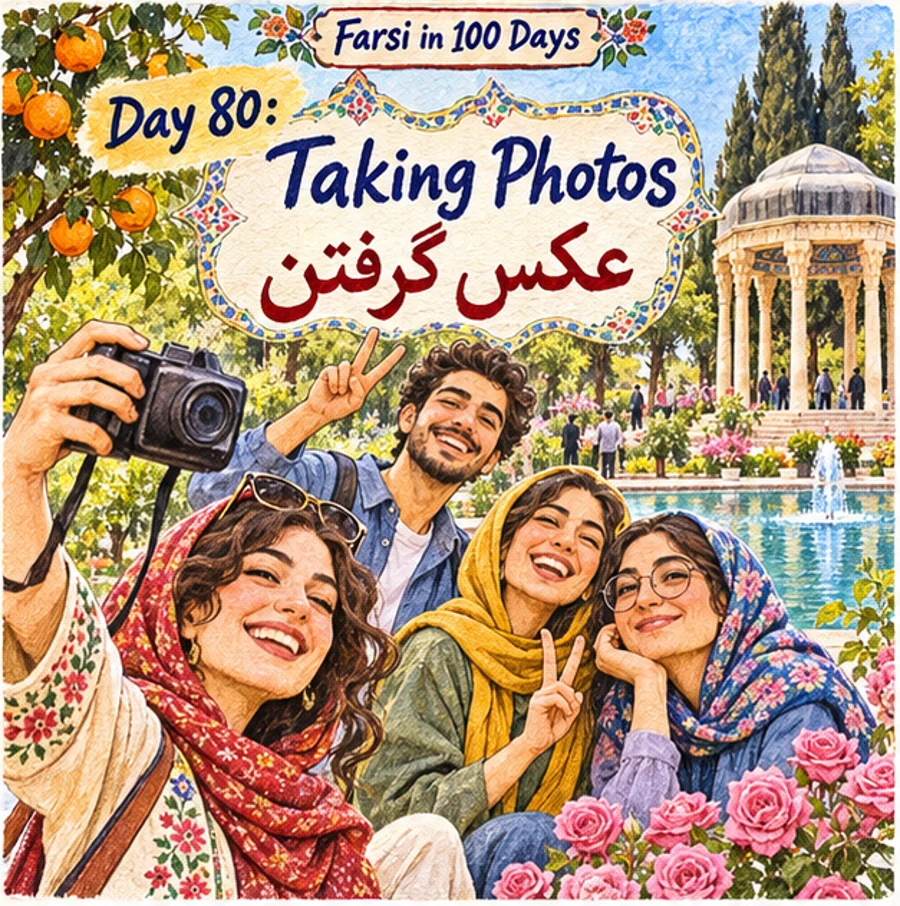
Day 80 of Learn Farsi in 100 Days, our free step-by-step Persian course: Taking Photos. The lesson has four parts, with every Persian word in Persian script, pronunciation and English, and each part ends with a quick check.
Part 1Conversation and joke
Day 80, Part 1 has a conversation in which a tourist asks a stranger ممکن است از ما عکس بگیرید؟ (momken ast az mâ aks begirid?, could you take our picture?) and explains the camera (دوربین, durbin), plus a joke about a student choosing a calendar (تقویم, taghvim) with the most holidays.
Conversation: could you take our picture?
| Speaker | Persian | English and pronunciation |
|---|---|---|
| A الف | ببخشید، آقا، ممکن است از ما عکس بگیرید؟ | Excuse me, sir, could you take a picture of us? bebakhshid, âghâ, momken ast az mâ aks begirid? |
| B ب | حتما، این یک دوربین خیلی خوب است. | Sure. This is a very good camera. hatman, in yek durbin-e kheyli khub ast. |
| A الف | ممنون، والدینم آن را به من دادند. | Thanks. My parents gave it to me. mamnun, vâledeynam ân râ be man dâdand. |
| B ب | چطور استفاده میشود؟ | How does it work? chetor estefâde mishavad? |
| A الف | این دکمه را فشار دهید. | Press this button. in dokme râ feshâr dahid. |
| B ب | بیایید یکم نزدیکتر. صبر کنید، نه! خیلی نزدیک است، یکم برید سمت چپ، همین جا! بایستید. | Come a little closer. Wait, no! That’s too close. Move a little to the left. Right there! Stay there. biyâyid yekam nazdik-tar. sabr konid, na! kheyli nazdik ast, yekam berid samt-e chap, hamin jâ! beistid. |
| A الف | لازم است دکمه را برای سه ثانیه نگه دارید. | You need to hold the button down for three seconds. lâzem ast dokme râ barâ-ye se sâniye negah dârid. |
| B ب | بسیار خوب فهمیدم، آماده هستید؟ | OK, got it. Are you ready? besyâr khub, fahmidam. âmâde hastid? |
| A الف | بله. | Yes. bale. |
| B ب | لبخند… | Smile… labkhand… |
Joke: the calendar with the most holidays
دانشآموز: آقای فروشنده!
Student: Excuse me, sir! (literally “Mr. Shopkeeper!”)
فروشنده: بله پسرم!
Shopkeeper: Yes, son?
دانشآموز: تقویم امسال را دارید؟
Student: Do you have this year’s calendar?
فروشنده: بله کدام یکی را میخواهی؟
Shopkeeper: Yes. Which one do you want?
دانشآموز: لطفا هر کدام که تعطیلی بیشتری دارد را بدهید!
Student: Please give me whichever one has more holidays!
Quick check
- How do you ask a stranger “Could you take a picture of us?”
Show answer
ممکن است از ما عکس بگیرید؟ (momken ast az mâ aks begirid?) - How long must the button be held down?
Show answer
three seconds: برای سه ثانیه (barâ-ye se sâniye) - What does تقویم (taghvim) mean?
Show answer
calendar
Part 2Common phrases, poetry and word of the day
Day 80, Part 2 gives photo phrases such as عکس رنگی (aks-e rangi, color photograph) and من خوش عکس نیستم (man khosh-aks nistam, I’m not very photogenic), a Khayyam quatrain about youth and learning, and the word منظره (manzare, view).
Common phrases
| Persian | Pronunciation | English |
|---|---|---|
| عکس رنگی میخواهید؟ | aks-e rangi mikhâhid? | Do you want a color photograph? |
| کی این فیلم را ظاهر میکنید؟ | key in film râ zâher mikonid? | When will you develop this film? |
| من خوش عکس نیستم. | man khosh-aks nistam. | I’m not very photogenic. |
| ممکن است این عکس را برای من قاب کنید؟ | momken ast in aks râ barâ-ye man ghâb konid? | Can you frame this photo for me? |
Poetry: Khayyam
A quatrain (robâ’i) by Omar Khayyam. The book gives Edward FitzGerald’s English version: “Myself when young did eagerly frequent / Doctor and Saint, and heard great Argument / About it and about: but evermore / Came out by the same Door wherein I went.”
| Persian | Pronunciation | English |
|---|---|---|
| یک چند به کودکی به استاد شدیم | yek chand be kudaki be ostâd shodim | For a while, as children, we went to a master; |
| یک چند به استادی خود شاد شدیم | yek chand be ostâdi-ye khod shâd shodim | for a while we were pleased with our own mastery. |
| پایان سخن شنو که ما را چه رسید | pâyân-e sokhan shenow ke mâ râ che resid | Hear the end of the story, what became of us: |
| از خاک درآمدیم و بر باد شدیم | az khâk darâmadim va bar bâd shodim | we came from dust and went with the wind. |
Word of the day: منظره (manzare)
Meaning: view, scenery
The garden had a beautiful view, and we really enjoyed it.
Quick check
- How do you say “I’m not very photogenic” in Persian?
Show answer
من خوش عکس نیستم. (man khosh-aks nistam.) - What does فیلم را ظاهر کردن (film râ zâher kardan) mean?
Show answer
to develop a film - What does منظره (manzare) mean?
Show answer
view, scenery
Part 3Idiom of the day and conversation
Day 80, Part 3 explains two proverbs, کلاهش پس معرکه است (kolâhash pas-e ma’reke ast, he has no chance) and قمپز درکردن (ghompoz dar kardan, to brag), a conversation at the photographer’s (عکاس, akkâs) about a driver’s license photo, and the idiom خود را به دردسر انداختن (to get oneself into trouble).
Idiom of the day
کلاهش پس معرکه است.
kolâhash pas-e ma’reke ast.
Word for word: His hat is behind the show (he is left out of the crowd’s circle).
Meaning in Persian: این ضربالمثل زمانی بهکار میرود که شخصی در کاری عقب باشد یا احتمال شکستش در امری قطعی باشد، در این موارد گفته میشود: کلاهش پس معرکه است. یعنی شرایط طوری است که احتمال موفقیت ندارد.
Meaning: This proverb is used when someone is falling behind in something or is sure to fail at it. In such cases people say, “His hat is behind the show,” meaning the situation is such that he has no chance of success.
English equivalent: He’s out of the running; he doesn’t stand a chance.
Idiom of the day
قمپز درکردن
ghompoz dar kardan
Word for word: to let off a bang (to fire a blank)
Meaning in Persian: این عبارت برای شخصی بهکار میرود که از خودش تعریف کند و مدام دروغ بگوید و دروغهایی به خودش نسبت دهد. اینجا است که دیگران میگویند: او قمپز درمیکند. یعنی حرفهایش حقیقت ندارد و باور نکن.
Meaning: This expression is used for someone who praises himself, keeps telling lies and makes false claims about himself. That is when others say, “He’s just bragging,” meaning that what he says isn’t true and you shouldn’t believe it.
English equivalent: to brag, to talk big, to show off
Conversation: at the photographer’s
| Speaker | Persian | English and pronunciation |
|---|---|---|
| Photographer عکاس | چه نوع عکسی میخواهید؟ | What kind of photo would you like? che no’ aksi mikhâhid? |
| Customer مشتری | عکس سیاه و سفید میخواهم. | I’d like a black-and-white photo. aks-e siyâh-o sefid mikhâham. |
| Photographer عکاس | این عکس را برای کجا نیاز دارید؟ | What do you need this photo for? in aks râ barâ-ye kojâ niyâz dârid? |
| Customer مشتری | برای گواهینامهی رانندگی میخواهم. | I need it for my driver’s license. barâ-ye govâhinâme-ye rânandegi mikhâham. |
| Photographer عکاس | بسیار خوب. … لطفا بنشینید روی صندلی و به دوربین نگاه کنید. | All right… Please sit on the chair and look at the camera. besyâr khub. … lotfan beneshinid ru-ye sandali va be durbin negâh konid. |
| Customer مشتری | بسیار خوب. | OK. besyâr khub. |
| Photographer عکاس | میتوانید عکستان را ببینید. اگر راضی نیستید میتوانم دوباره بگیرم. | You can look at your photo. If you’re not happy with it, I can take it again. mitavânid aksetân râ bebinid. agar râzi nistid mitavânam dobâre begiram. |
| Customer مشتری | نه همین خوب است، ممنون. | No, this one is fine, thanks. na, hamin khub ast, mamnun. |
Idiom of the day
خود را به دردسر انداختن.
khod râ be dardesar andâkhtan.
Word for word: to throw oneself into a headache
Meaning in Persian: زحمت و دردسر ایجاد کردن برای خود.
Meaning: To create trouble and difficulty for oneself.
English equivalent: to get oneself into trouble; to ask for trouble
Quick check
- What does the customer need the photo for?
Show answer
a driver’s license: گواهینامهی رانندگی (govâhinâme-ye rânandegi) - What does او قمپز درمیکند (u ghompoz dar mikonad) mean?
Show answer
He is bragging, talking big; don’t believe him. - What does خود را به دردسر انداختن (khod râ be dardesar andâkhtan) mean?
Show answer
to get oneself into trouble
Part 4Reading and new words
Day 80, Part 4 is a reading about Mount Dena (دنا, denâ) in the Zagros range near Yasuj, with 40 peaks above 4,000 meters (قله, gholle), followed by a vocabulary list with words like باختر (bâkhtar, west), خاور (khâvar, east) and فلات (falât, plateau).
Reading: Mount Dena
دنا بلندترین کوه از رشتهکوههای زاگرس در باختر ایران است. این کوه، مرکز فلات ایران است. دنا از ۲۰ کیلومتری شرق شهر یاسوج آغاز میشود و تا ۷۰ کیلومتری شمال غرب آن ادامه پیدا میکند.
Dena is the highest mountain of the Zagros range in western Iran. This mountain is at the center of the Iranian plateau. Dena begins 20 kilometers east of the city of Yasuj and stretches to 70 kilometers northwest of it.
دنا دارای ۴۰ قلهی بالای ۴۰۰۰ متر است که بلندترین قله آن، بیژن، ۴۴۰۹ متر ارتفاع دارد و در ۳۵ کیلومتری شمال غربی یاسوج قرار دارد. شهر سیسخت مرکز شهرستان دنا در دامنهی این کوه قرار گرفته است.
Dena has 40 peaks over 4,000 meters; the highest, Bijan, is 4,409 meters high and lies 35 kilometers northwest of Yasuj. The town of Sisakht, the center of Dena County, sits on the slopes of this mountain.
با توجه به طول زیاد و ارتفاعات گوناگون، بارش سالانه در این کوه متغیر است و رودهای متعددی از آن سرچشمه میگیرند.
Because of its great length and varied heights, the yearly rainfall on the mountain varies, and many rivers have their source there.
New words
| Persian | Pronunciation | English |
|---|---|---|
| باختر | bâkhtar | west |
| جانشین | jâneshin | substitute, successor |
| فلات | falât | plateau |
| خاور | khâvar | east |
| تفحص | tafahhos | investigation, inquiry |
| ترغیب | targhib | encouragement |
| جدال | jedâl | dispute, quarrel |
| غضب | ghazab | wrath, anger |
| جهانگردی | jahângardi | tourism, world travel |
| عاری | âri | free (of), devoid of |
| فاصله | fâsele | distance, space, gap |
| شایعه | shâye’e | rumor |
| خرابکاری | kharâbkâri | sabotage, vandalism |
| ادامه پیدا کردن | edâme peydâ kardan | to continue |
| قله | gholle | peak, summit |
| ساکن بودن | sâken budan | to be still, to be stationary; to reside |
| شهادت | shahâdat | testimony; martyrdom |
| درخشان | derakhshân | bright, shining |
| رأی دادن | ra’y dâdan | to vote |
| قرار گرفتن | gharâr gereftan | to be located, to be situated |
| سالانه | sâlâne | yearly, annual |
| صعود | so’ud | ascent, climb, rise |
| متغیر بودن | moteghayyer budan | to be variable |
| تعظیم | ta’zim | bow (n.) |
| رقابت کردن | reghâbat kardan | to compete |
| ساکت | sâket | silent, quiet |
| سست | sost | loose, weak; sluggish |
| فعال | fa”âl | active |
| فرو ریختن | foru rikhtan | to collapse |
| ثابت بودن | sâbet budan | to be stable, to be fixed |
Quick check
- How high is Bijan, the highest peak of Dena?
Show answer
4,409 meters: ۴۴۰۹ متر (chahâr hezâr-o chahârsad-o noh metr) - What do باختر (bâkhtar) and خاور (khâvar) mean?
Show answer
west and east - What does قله (gholle) mean?
Show answer
peak, summit
Take this lesson further

Study with the book
Learn Farsi in 100 Days: The Ultimate Crash Course to Learning Farsi Fast
This free lesson is part of Learn Farsi in 100 Days. The book puts the whole series in one printable PDF you can study offline.
Serious about Persian? Get all 30 of our Persian learning books for $199.99 (55% less than buying them one by one).
Free Persian Starter Pack: Alphabet + 100 Core Words
Get the 14-page printable Starter Pack (all 32 letters, a 7-day reading plan, 100 core words and 20 survival phrases) and a short 5-email course. Free.
Free. Every morning: that day’s four videos and the full lessons, with every Persian word, its pronunciation and its English meaning. Stop or pause with one click.