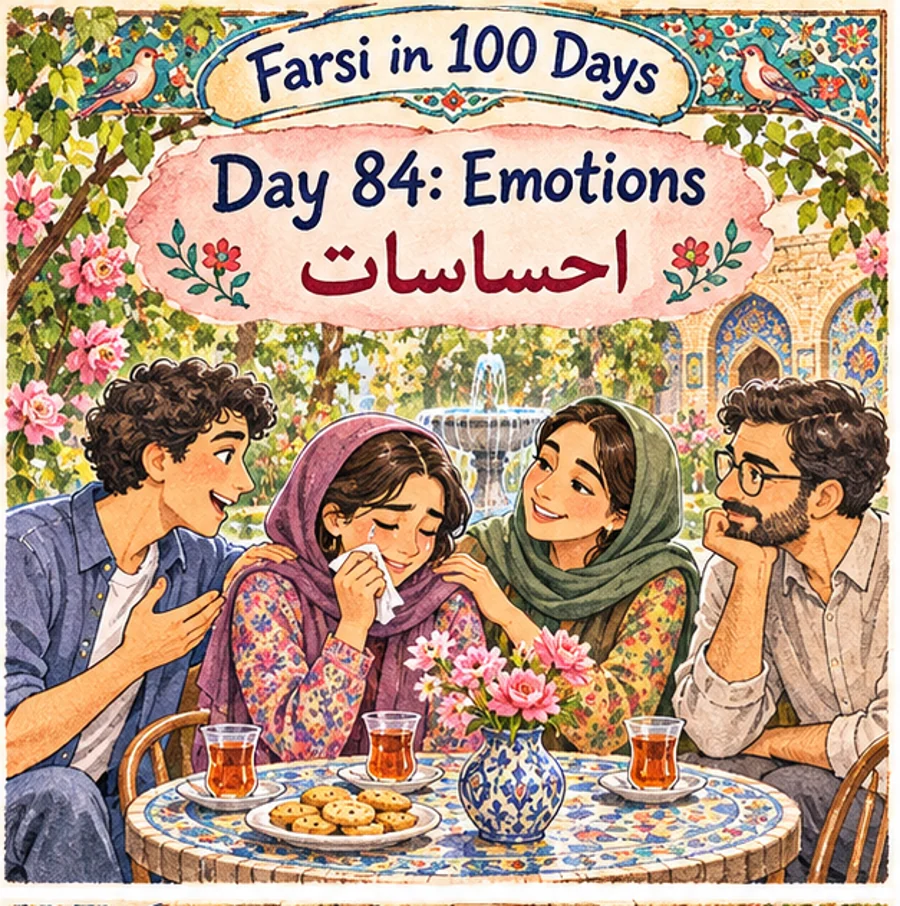
Day 84 of Learn Farsi in 100 Days, our free step-by-step Persian course: Emotions. The lesson has four parts, with every Persian word in Persian script, pronunciation and English, and each part ends with a quick check.
Part 1Conversation and joke
Day 84, Part 1 is a conversation about feelings: Mehraveh says she is یکم کسل و مضطرب (yekam kesel va moztareb, a bit bored and anxious), and Niousha is proud (افتخار میکنم, eftekhâr mikonam) of her child. It ends with a dark joke about a fortune-teller (فالگیر, fâlgir).
Conversation: how have you been feeling?
| Speaker | Persian | English and pronunciation |
|---|---|---|
| Niousha نیوشا | حالت این روزها چطور است؟ | How have you been these days? hâlat in ruz-hâ chetor ast? |
| Mehraveh مهراوه | نمیدانم، یکم کسل و مضطرب هستم. | I don’t know. I’m a bit bored and anxious. nemidânam, yekam kesel va moztareb hastam. |
| Niousha نیوشا | چرا؟ | Why? cherâ? |
| Mehraveh مهراوه | زمان زیادی است که در خانه هستم و کاری انجام نمیدهم. | I’ve been at home for a long time, not doing anything. zamân-e ziyâdi ast ke dar khâne hastam va kâri anjâm nemidaham. |
| Niousha نیوشا | چرا بیرون نمیروی و یک سرگرمی پیدا نمیکنی؟ | Why don’t you go out and find a hobby? cherâ birun nemiravi va yek sargarmi peydâ nemikoni? |
| Mehraveh مهراوه | دوست دارم این کار را انجام دهم، اما من باید مقداری پول پسانداز کنم. | I’d like to, but I need to save some money. dust dâram in kâr râ anjâm daham, ammâ man bâyad meghdâri pul pas-andâz konam. |
| Niousha نیوشا | سعی کن آرام باشی و یک کتاب خوب بخوانی. | Try to relax and read a good book. sa’y kon ârâm bâshi va yek ketâb-e khub bekhâni. |
| Mehraveh مهراوه | درست است. تو چطور؟ این روزها حالت چطور است؟ | You’re right. How about you? How have you been these days? dorost ast. to chetor? in ruz-hâ hâlat chetor ast? |
| Niousha نیوشا | من این روزها خیلی خوب هستم. بچهام مهدکودک را تمام کرده است. من به او خیلی افتخار میکنم. | I’m very well these days. My child has finished kindergarten. I’m very proud of him. man in ruz-hâ kheyli khub hastam. bachche-am mahd-e kudak râ tamâm karde ast. man be u kheyli eftekhâr mikonam. |
| Mehraveh مهراوه | خیلی از شنیدنش خوشحال شدم. او باید بزرگ شده باشد. یک سال از زمانی که او را دیدهام میگذرد. | I’m so glad to hear that. He must have grown up. It’s been a year since I saw him. kheyli az shenidanash khoshhâl shodam. u bâyad bozorg shode bâshad. yek sâl az zamâni ke u râ dide-am migozarad. |
| Niousha نیوشا | بله، او یک سال اخیر خیلی بزرگ شده است. | Yes, he’s grown a lot in the past year. bale, u yek sâl-e akhir kheyli bozorg shode ast. |
Joke: the fortune-teller
فالگیر: «خانم متأسفانه باید به شما بگویم که فردا شوهر شما میمیرد!»
Fortune-teller: “Madam, I’m sorry to tell you that your husband will die tomorrow!”
زن: «این را که خودم هم میدانم. لطفا بگو آیا پلیس من را دستگیر میکند یا نه؟»
Woman: “I know that already. Just tell me, will the police arrest me or not?”
Quick check
- How do you say “I’m a bit bored and anxious” in colloquial Persian?
Show answer
یکم کسل و مضطرب هستم. (yekam kesel va moztareb hastam.) - Why can’t Mehraveh go out and find a hobby?
Show answer
باید مقداری پول پسانداز کنم (bâyad meghdâri pul pas-andâz konam), she has to save some money - What does افتخار کردن (eftekhâr kardan) mean?
Show answer
to be proud (of)
Part 2Common phrases, poetry and word of the day
Day 84, Part 2 gives phrases about feelings, such as احساس راحتی داشتن (ehsâs-e râhati dâshtan, to feel at home) and خیلی خوشحالم کردی (kheyli khoshhâlam kardi, you made my day), a Khayyam quatrain about a drunken old man at a tavern, and the word of the day, کندو (kandu, hive).
Common phrases
| Persian | Pronunciation | English |
|---|---|---|
| احساس راحتی داشتن. | ehsâs-e râhati dâshtan. | to feel at home, to feel comfortable |
| در آرزو و حسرت چیزی بودن. | dar ârezu va hasrat-e chizi budan. | to have one’s heart set on something |
| کسی را خوشحال کردن، دلگرم کردن. | kasi râ khoshhâl kardan, delgarm kardan. | to cheer someone up |
| خیلی خوشحالم کردی! | kheyli khoshhâlam kardi! | You made my day! |
Poetry
A quatrain by Omar Khayyam (خیام, khayyâm). The book gives this English verse by Edward FitzGerald: “And lately, by the Tavern Door agape, / Came stealing through the Dusk an Angel Shape / Bearing a Vessel on his Shoulder; and / He bid me taste of it; and ’twas–the Grape!”
| Persian | Pronunciation | English |
|---|---|---|
| سرمست به میخانه گذر کردم دوش | sarmast be meykhâne gozar kardam dush | Last night, tipsy, I passed by the tavern; |
| پیری دیدم مست و سبویی بر دوش | piri didam mast va sabuyi bar dush | I saw a drunken old man with a wine jug on his shoulder. |
| گفتم ز خدا شرم نداری ای پیر؟ | goftam ze khodâ sharm nadâri ey pir? | I said, “Old man, have you no shame before God?” |
| گفتا کرم از خداست، می نوش خموش | goftâ karam az khodâst, mey nush khamush | He said, “Mercy comes from God; drink your wine and be quiet.” |
Word of the day: کندو (kandu)
Meaning: hive, beehive
We have a beehive at home.
Quick check
- How do you say “You made my day!” in Persian?
Show answer
خیلی خوشحالم کردی! (kheyli khoshhâlam kardi!) - What does کسی را دلگرم کردن (kasi râ delgarm kardan) mean?
Show answer
to cheer someone up, to encourage someone - What does کندو (kandu) mean?
Show answer
hive, beehive
Part 3Idiom of the day and conversation
Day 84, Part 3 explains the sayings صد رحمت به کفن دزد اولی (sad rahmat be kafan-dozd-e avvali, the new one is even worse) and سایهتان از سر ما کم نشود (a thank-you for someone’s kindness), a conversation about a grandmother’s death (فوت شده است, fowt shode ast), and the idiom دوری و دوستی.
Idiom of the day
صد رحمت به کفن دزد اولی.
sad rahmat be kafan-dozd-e avvali.
Word for word: A hundred blessings on the first shroud thief.
Meaning in Persian: این اصطلاح زمانی به کار میرود که جانشین شخص بد از خود او بدتر باشد.
Meaning: This expression is used when the person who replaces a bad person turns out to be even worse.
Idiom of the day
سایهتان از سر ما کم نشود.
sâye-tân az sar-e mâ kam nashavad.
Word for word: May your shadow never be taken from over our heads.
Meaning in Persian: این اصطلاح به معنی محبت و لطف یک شخص نسبت به دیگری است. برای مثال وقتی شخصی به یک نفر کمک میکند، طرف مقابل میگوید: سایهتان از سر ما کم نشود.
Meaning: This expression refers to one person’s kindness and care toward another. For example, when someone helps a person, the other person says, “May your shadow never leave us,” that is, may we always have your kindness and protection.
Conversation: sad news
| Speaker | Persian | English and pronunciation |
|---|---|---|
| Saman سمن | به نظر ناراحت میرسی. چه شده است؟ | You look upset. What’s happened? be nazar nârâhat miresi. che shode ast? |
| Mehrzad مهرزاد | مادربزرگم فوت شده است. | My grandmother has passed away. mâdarbozorgam fowt shode ast. |
| Saman سمن | از شنیدن آن خیلی ناراحت شدم. کی این اتفاق افتاده است؟ | I’m so sorry to hear that. When did it happen? az shenidan-e ân kheyli nârâhat shodam. key in ettefâgh oftâde ast? |
| Mehrzad مهرزاد | دو روز پیش. | Two days ago. do ruz pish. |
| Saman سمن | در بیمارستان فوت شده است؟ | Did she pass away in the hospital? dar bimârestân fowt shode ast? |
| Mehrzad مهرزاد | بله. او در خواب فوت کرده است. | Yes. She passed away in her sleep. bale. u dar khâb fowt karde ast. |
| Saman سمن | وقتی مادربزرگم فوت کرد، من مرتب به قبرستان میرفتم بر سر مزارش. | When my grandmother died, I used to go to the cemetery to visit her grave regularly. vaghti mâdarbozorgam fowt kard, man morattab be ghabrestân miraftam bar sar-e mazârash. |
| Mehrzad مهرزاد | احتمالا من هم این کار را انجام دهم. | I’ll probably do that too. ehtemâlan man ham in kâr râ anjâm daham. |
| Saman سمن | به نظر میرسد تمام روز چیزی نخوردهای. ما باید برویم چیزی بخوریم. | It looks like you haven’t eaten anything all day. We should go and get something to eat. be nazar miresad tamâm-e ruz chizi nakhorde-i. mâ bâyad beravim chizi bekhorim. |
Idiom of the day
دوری و دوستی.
duri va dusti.
Word for word: distance and friendship
Meaning in Persian: رفت و آمد زیاد از حد، به کدورت و دلآزردگی میانجامد.
Meaning: Visiting each other too often leads to bad feelings and resentment, so keeping some distance keeps a friendship healthy.
English equivalent: Absence makes the heart grow fonder.
Quick check
- When do people say صد رحمت به کفن دزد اولی?
Show answer
when someone’s replacement is even worse than the bad person before - How do you say “My grandmother has passed away” politely in Persian?
Show answer
مادربزرگم فوت شده است. (mâdarbozorgam fowt shode ast.) - What does the idiom دوری و دوستی (duri va dusti) suggest?
Show answer
that too much visiting spoils a friendship; some distance keeps it strong (“absence makes the heart grow fonder”)
Part 4Reading and new words
Day 84, Part 4 is a reading about Ferdowsi’s Shahnameh (شاهنامه, shâhnâme), a sixty-thousand-verse epic (حماسه, hamâse) that revived the Persian language, followed by a word list including شاهکار (shâhkâr, masterpiece) and اسطوره (osture, myth).
Reading: the Shahnameh
شاهنامه، اثر حکیم ابوالقاسم فردوسی طوسی که شامل حدود شصت هزار بیت شعر است، از بزرگترین و برجستهترین حماسههای جهان بهشمار میرود. فردوسی حدود سی سال برای سرودن آن وقت صرف کرد.
The Shahnameh, the work of the sage Abolghasem Ferdowsi of Tus, contains about sixty thousand verses and is considered one of the greatest and most outstanding epics in the world. Ferdowsi spent about thirty years composing it.
محتوای این شاهکار ادبی، اسطورهها، افسانهها و تاریخ ایران از ابتدا تا فتح ایران توسط اعراب است.
This literary masterpiece covers the myths, legends and history of Iran from the beginning until the conquest of Iran by the Arabs.
فردوسی زمانی شاهنامه را سرود که زبان پارسی دچار آشفتگی بود. زمانی که اعراب، زبان دانش و ادبیات در ایران را به زبان عربی تغییر داده بودند؛ فردوسی با سرودن شاهنامه موجب زنده شدن و احیای زبان فارسی شد.
Ferdowsi composed the Shahnameh at a time when the Persian language was in disarray, when the Arabs had changed the language of science and literature in Iran to Arabic. By composing the Shahnameh, Ferdowsi brought the Persian language back to life and revived it.
New words
| Persian | Pronunciation | English |
|---|---|---|
| جانشین | jâneshin | successor, substitute |
| مقابل | moghâbel | opposite; other (side) |
| برجستهترین | barjaste-tarin | most prominent |
| حماسه | hamâse | epic, saga |
| صرف کردن | sarf kardan | to spend |
| شاهکار | shâhkâr | masterpiece |
| اسطوره | osture | myth |
| دچار شدن | dochâr shodan | to suffer from, to be afflicted with |
| آشفتگی | âshoftegi | disorder, confusion |
| احیا | ehyâ | revival |
| فانوس | fânus | lantern |
| صوری | suri | nominal, for show (in form only) |
| حیران | heyrân | amazed, bewildered |
| بالیدن | bâlidan | to take pride (in); to grow |
| مثل اینکه | mesl-e inke | it seems like |
| مفاخر | mafâkher | notable figures, sources of pride |
| برآورد کردن | barâvord kardan | to estimate |
| ستارهشناسان | setâre-shenâsân | astronomers |
| نقش | naghsh | role |
| معادلات | mo’âdelât | equations |
| مطالعات | motâle’ât | studies |
| مبتکر | mobtaker | inventive; innovator |
| ظلمت | zolmat | darkness |
| ظرافت | zerâfat | elegance, delicacy |
| طاقت | tâghat | endurance, tolerance |
| شیاد | shayyâd | trickster, swindler |
| شکارگاه | shekârgâh | hunting ground |
Quick check
- About how many verses does the Shahnameh contain?
Show answer
حدود شصت هزار بیت (hodud-e shast hezâr beyt), about sixty thousand verses - How long did Ferdowsi spend composing the Shahnameh?
Show answer
حدود سی سال (hodud-e si sâl), about thirty years - What does شاهکار (shâhkâr) mean?
Show answer
masterpiece
Take this lesson further

Study with the book
Learn Farsi in 100 Days: The Ultimate Crash Course to Learning Farsi Fast
This free lesson is part of Learn Farsi in 100 Days. The book puts the whole series in one printable PDF you can study offline.
Serious about Persian? Get all 30 of our Persian learning books for $199.99 (55% less than buying them one by one).
Free Persian Starter Pack: Alphabet + 100 Core Words
Get the 14-page printable Starter Pack (all 32 letters, a 7-day reading plan, 100 core words and 20 survival phrases) and a short 5-email course. Free.
Free. Every morning: that day’s four videos and the full lessons, with every Persian word, its pronunciation and its English meaning. Stop or pause with one click.