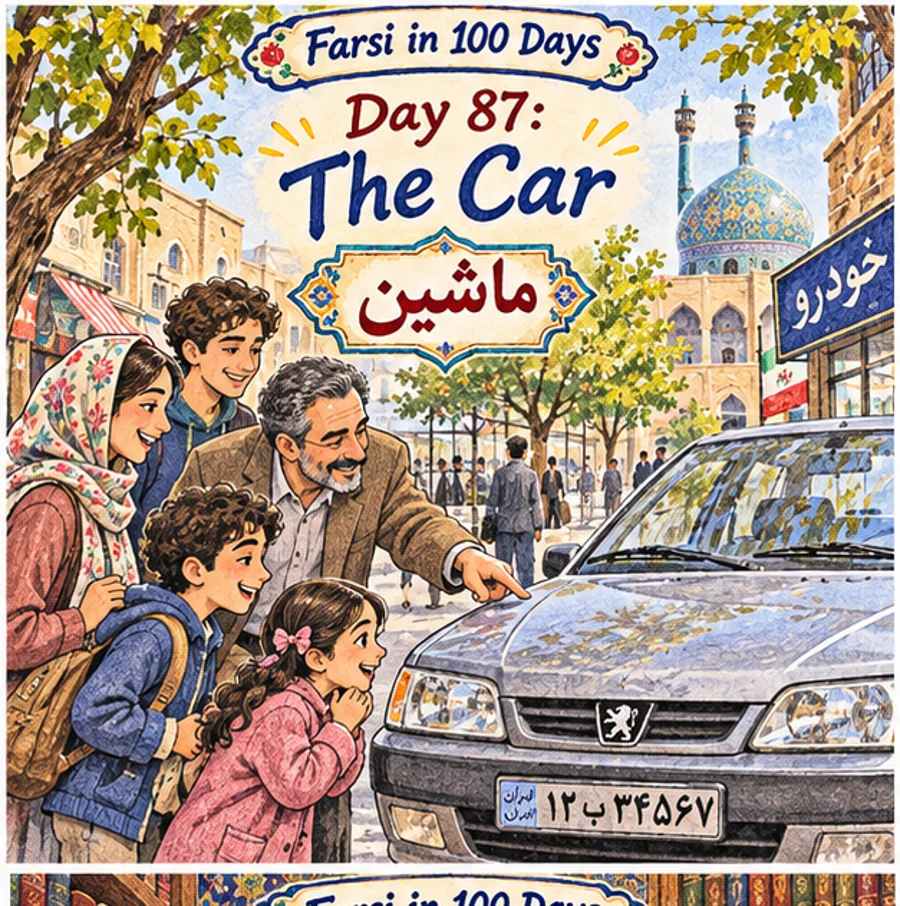
Day 87 of Learn Farsi in 100 Days, our free step-by-step Persian course: The Car. The lesson has four parts, with every Persian word in Persian script, pronunciation and English, and each part ends with a quick check.
Part 1Conversation and joke
Day 87, Part 1 is a conversation between Sohrab and Shahab about driving, with useful words like گواهینامه (govâhinâme, driver’s license), آموزشگاه رانندگی (âmuzeshgâh-e rânandegi, driving school) and ثبت نام کردن (sabt-e nâm kardan, to sign up), plus a Mulla joke about a stranger’s meal.
Conversation: no driver’s license
| Speaker | Persian | English and pronunciation |
|---|---|---|
| Sohrab سهراب | شهاب، من خسته شدم. ممکن است چند دقیقهای تو رانندگی کنی؟ | Shahab, I’m tired. Could you drive for a few minutes? shahâb, man khaste shodam. momken ast chand daghighe’i to rânandegi koni? |
| Shahab شهاب | متأسفم، دوست دارم اما بلد نیستم. | I’m sorry. I’d like to, but I don’t know how. mote’assefam, dust dâram ammâ balad nistam. |
| Sohrab سهراب | واقعا؟ گواهینامه نداری؟ من فکر میکردم این روزها همه دارند. | Really? You don’t have a driver’s license? I thought everyone had one these days. vâghe’an? govâhinâme nadâri? man fekr mikardam in ruzhâ hame dârand. |
| Shahab شهاب | نه، من معمولا از مترو و اتوبوس استفاده میکنم. | No, I usually take the metro and the bus. na, man ma’mulan az metro va otobus estefâde mikonam. |
| Sohrab سهراب | دوست داری گواهینامه بگیری؟ | Would you like to get a license? dust dâri govâhinâme begiri? |
| Shahab شهاب | بله، میخواهم سال آینده ماشین بخرم. | Yes, I want to buy a car next year. bale, mikhâham sâl-e âyande mâshin bekharam. |
| Sohrab سهراب | چطور میخواهی یاد بگیری؟ میخواهی به تو یاد بدهم؟ | How do you want to learn? Do you want me to teach you? chetor mikhâhi yâd begiri? mikhâhi be to yâd bedaham? |
| Shahab شهاب | نه ممنون، یک آموزشگاه رانندگی در نزدیکی خانهام است. آنجا ثبت نام میکنم. | No, thanks. There’s a driving school near my house. I’ll sign up there. na mamnun, yek âmuzeshgâh-e rânandegi dar nazdiki-ye khâne-am ast. ânjâ sabt-e nâm mikonam. |
Joke: the Mulla’s acquaintance
ملا در بیابانی در حال رفتن بود. عدهای را دید که در حال خوردن غذا بودند. ملا هم رفت و در کنار آنها شروع به خوردن غذا کرد.
The Mulla was walking through a desert. He saw a group of people who were eating. The Mulla went over too, sat beside them and started eating.
یکی از آنها از ملا پرسید: شما با کدام یک از ما آشنا هستی؟
One of them asked the Mulla, “Which one of us do you know?”
ملا غذا را نشان داد و گفت: با ایشان.
The Mulla pointed to the food and said, “This gentleman here.”
Quick check
- What does گواهینامه (govâhinâme) mean?
Show answer
driver’s license - How do you say “I usually take the metro and the bus” in Persian?
Show answer
من معمولا از مترو و اتوبوس استفاده میکنم. (man ma’mulan az metro va otobus estefâde mikonam.) - In the joke, who did the Mulla say he knew?
Show answer
The food: he pointed to it and said با ایشان (bâ ishân), “with him” (a polite word for a person).
Part 2Common phrases, poetry and word of the day
Day 87, Part 2 gives car phrases such as کارت ماشین و گواهینامه لطفا (kârt-e mâshin va govâhinâme lotfan, license and registration, please) and محدودیت سرعت (mahdudiyat-e sor’at, speed limit), a Khayyam quatrain about blaming the heavens, and the word of the day, سنگین (sangin, heavy).
Common phrases: cars and driving
| Persian | Pronunciation | English |
|---|---|---|
| ماشینت چه مدلی است؟ | mâshinet che modeli ast? | What kind of car do you have? |
| کارت ماشین و گواهینامه لطفا | kârt-e mâshin va govâhinâme lotfan | Your driver’s license and registration, please. |
| محدودیت سرعت ۶۵ کیلومتر در ساعت است. | mahdudiyat-e sor’at shast-o panj kilometr dar sâ’at ast. | The speed limit is 65 kilometers per hour. |
Poetry: Khayyam
A quatrain (rubâ’i) by Omar Khayyam (خیام, khayyâm): don’t blame the turning heavens (چرخ, charkh) for good and bad, joy and sorrow, because the heavens are a thousand times more helpless than you. The book gives Edward FitzGerald’s English verse on the same idea: “And that inverted Bowl they call the Sky, / Whereunder crawling coop’d we live and die, / Lift not your hands to It for help, for It / As impotently moves as you or I.”
| Persian | Pronunciation | English |
|---|---|---|
| نیکی و بدی که در نهاد بشر است | niki o badi ke dar nahâd-e bashar ast | The good and evil that lie in human nature, |
| شادی و غمی که در قضا و قدر است | shâdi o ghami ke dar ghazâ o ghadar ast | the joy and sorrow that lie in fate and destiny: |
| با چرخ مکن حواله کاندر ره عقل | bâ charkh makon havâle k-andar rah-e aghl | do not lay them on the turning heavens, for by reason |
| چرخ از تو هزار بار بیچارهتر است | charkh az to hezâr bâr bichâre-tar ast | the heavens are a thousand times more helpless than you. |
Word of the day: سنگین (sangin)
Meaning: heavy
The box was very heavy; I couldn’t lift it.
Quick check
- How does a police officer ask for your license and registration in Persian?
Show answer
کارت ماشین و گواهینامه لطفا (kârt-e mâshin va govâhinâme lotfan) - What does محدودیت سرعت (mahdudiyat-e sor’at) mean?
Show answer
speed limit - What does سنگین (sangin) mean?
Show answer
heavy
Part 3Idiom of the day and conversation
Day 87, Part 3 has two proverbs, آبشان از یک جوی نمیگذرد (âbeshân az yek juy nemigozarad, they can’t get along) and سر کیسه کردن (sar kise kardan, to fleece someone), a conversation about a new car and car insurance (بیمه, bime), and the idiom سخن را سنجیده بزن (think before you speak).
Idiom of the day
آبشان از یک جوی نمیگذرد
âbeshân az yek juy nemigozarad
Word for word: their water does not flow through one stream
Meaning in Persian: این عبارت هنگامی به کار میرود که بین دو یا چند نفر توافق و سازگاری وجود نداشته باشد.
Meaning: This expression is used when two or more people cannot agree or get along with each other.
English equivalent: They don’t see eye to eye.
Idiom of the day
سر کیسه کردن
sar kise kardan
Word for word: to open (someone’s) purse
Meaning in Persian: این عبارت به معنی این است که تمام موجودی و مال یک نفر را گرفته باشند. در این مواقع گفته میشود: او را سرکیسه کردهاند.
Meaning: This expression means that someone has been stripped of all their money and property. In such cases people say: او را سرکیسه کردهاند (u râ sarkise karde’and), “They have fleeced him.”
English equivalent: to fleece someone; to rip someone off
Conversation: a new car
| Speaker | Persian | English and pronunciation |
|---|---|---|
| Hasti هستی | فردا چه ساعتی کلاس داریم؟ | What time is our class tomorrow? fardâ che sâ’ati kelâs dârim? |
| Sahar سحر | ساعت ۱۰:۳۰ صبح. میخواهی باهم برویم؟ | At 10:30 in the morning. Do you want to go together? sâ’at-e dah-o nim-e sobh. mikhâhi bâham beravim? |
| Hasti هستی | تو ماشین داری؟ کی گواهینامه گرفتی؟ | You have a car? When did you get your driver’s license? to mâshin dâri? key govâhinâme gerefti? |
| Sahar سحر | بله، تازه یک ماشین خریدم اما حدود یک سال است گواهینامه گرفتم. | Yes, I just bought a car, but I got my license about a year ago. bale, tâze yek mâshin kharidam ammâ hodud-e yek sâl ast govâhinâme gereftam. |
| Hasti هستی | مبارک باشد! ماشین را بیمه کردهای؟ | Congratulations! Have you insured the car? mobârak bâshad! mâshin râ bime karde’i? |
| Sahar سحر | نه هنوز، فردا بعد از کلاس میروم دفتر بیمه برای بیمهی ماشینم. | Not yet. Tomorrow after class I’m going to the insurance office to insure my car. na hanuz, fardâ ba’d az kelâs miravam daftar-e bime barâ-ye bime-ye mâshinam. |
| Hasti هستی | خوب است. پس من فردا منتظر تو میمانم. | Good. Then I’ll wait for you tomorrow. khub ast. pas man fardâ montazer-e to mimânam. |
Idiom of the day
سخن را سنجیده بزن.
sokhan râ sanjide bezan.
Word for word: Speak your words weighed.
Meaning in Persian: قبل از حرف زدن فکر کن.
Meaning: Think before you talk.
English equivalent: Think before you speak.
Quick check
- What does آبشان از یک جوی نمیگذرد (âbeshân az yek juy nemigozarad) mean?
Show answer
They can’t agree or get along with each other. - How do you say “Have you insured the car?” in Persian?
Show answer
ماشین را بیمه کردهای؟ (mâshin râ bime karde’i?) - What does سنجیده (sanjide) mean in سخن را سنجیده بزن?
Show answer
weighed, carefully considered: “Think before you speak.”
Part 4Reading and new words
Day 87, Part 4 is a reading about Iran’s geography: the Alborz range and Mount Damavand (قلهی دماوند, gholle-ye damâvand), Ali-Sadr water cave and the Caspian coast, with new words such as غار (ghâr, cave), پهناور (pahnâvar, vast) and بیمه کردن (bime kardan, to insure).
Reading: the land of Iran
کشور ایران سرزمینی با طبیعت بسیار زیبا و متنوع است. بیشتر سرزمین این کشور پهناور را کوههای بلند و دشتهای وسیع پوشانده است. رشته کوههای البرز با قلهی دماوند که بلندترین قلهی ایران با ارتفاع ۵۶۷۱ متر است، در شمال ایران قرار دارد.
Iran is a land with very beautiful and varied nature. Most of this vast country is covered by high mountains and wide plains. The Alborz mountain range, with Mount Damavand, the highest peak in Iran at 5,671 meters, lies in the north of Iran.
در کوهها و دشتهای ایران غارهای فراوان و چشمههای آبگرم وجود دارد. غار علیصدر که بزرگترین غار آبی جهان است، از جملهی این مکانهای دیدنی است.
Iran’s mountains and plains have many caves and hot springs. Ali-Sadr Cave, the largest water cave in the world, is one of these sights.
شمال ایران با بیش از هفتصد کیلومتر ساحل دریای خزر (دریای کاسپین) مزارع چای و برنج، باغهای میوه، کوهها و جنگلهای سرسبز را در خود جای داده است.
Northern Iran, with more than seven hundred kilometers of coast on the Khazar Sea (the Caspian Sea), is home to tea and rice fields, orchards, mountains and lush green forests.
New words
| Persian | Pronunciation | English |
|---|---|---|
| قضا و قدر | ghazâ va ghadar | fate, destiny |
| حواله | havâle | draft, referral; حواله کردن: to lay (blame) on |
| توافق | tavâfogh | agreement |
| غار | ghâr | cave |
| مزارع | mazâre’ | farms, fields |
| جای دادن | jây dâdan | to place |
| بلند کردن | boland kardan | to pick up, to lift |
| پهناور | pahnâvar | vast |
| آبی | âbi | water (as an adjective), aquatic |
| از جمله | az jomle | including |
| سرسبز | sarsabz | green, lush |
| گواهینامه | govâhinâme | certificate; driver’s license |
| دفتر بیمه | daftar-e bime | insurance office |
| بیمه کردن | bime kardan | to insure |
| سازگاری | sâzgâri | compatibility |
| محدودیت | mahdudiyat | restriction, limit |
| رؤسا | ro’asâ | heads, bosses, presidents |
| دیدار | didâr | visit, meeting |
| جوانی | javâni | youth |
| دود | dud | smoke |
| دهقان | dehghân | farmer |
| دلواپسی | delvâpasi | worry |
| خوش باور | khosh bâvar | credulous, gullible |
| خزان | khazân | autumn |
| حنجره | hanjare | larynx |
| حدس زدن | hads zadan | to guess |
| حاکم | hâkem | governor, ruler |
| جای دادن | jây dâdan | to accommodate, to hold |
Quick check
- What is the highest peak in Iran, and how high is it?
Show answer
Damavand, قلهی دماوند (gholle-ye damâvand), 5,671 meters. - What is غار علیصدر (ghâr-e alisadr) famous for?
Show answer
It is the largest water cave in the world. - What does پهناور (pahnâvar) mean?
Show answer
vast
Take this lesson further

Study with the book
Learn Farsi in 100 Days: The Ultimate Crash Course to Learning Farsi Fast
This free lesson is part of Learn Farsi in 100 Days. The book puts the whole series in one printable PDF you can study offline.
Serious about Persian? Get all 30 of our Persian learning books for $199.99 (55% less than buying them one by one).
Free Persian Starter Pack: Alphabet + 100 Core Words
Get the 14-page printable Starter Pack (all 32 letters, a 7-day reading plan, 100 core words and 20 survival phrases) and a short 5-email course. Free.
Free. Every morning: that day’s four videos and the full lessons, with every Persian word, its pronunciation and its English meaning. Stop or pause with one click.