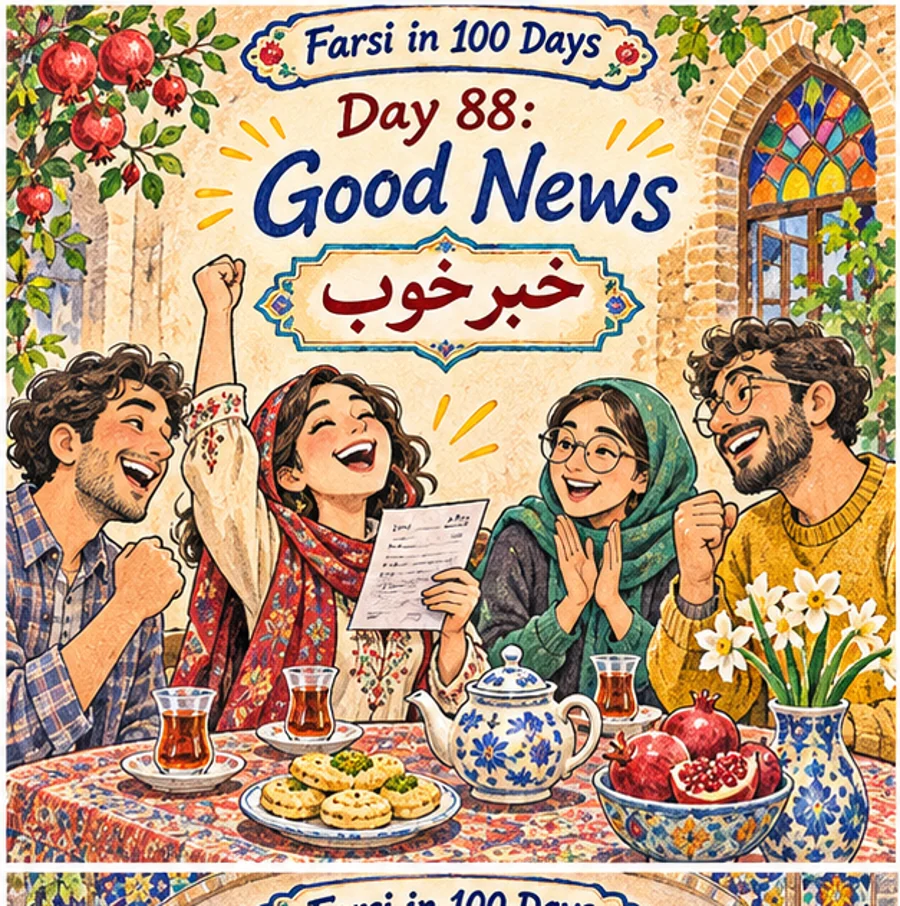
Day 88 of Learn Farsi in 100 Days, our free step-by-step Persian course: Good News. The lesson has four parts, with every Persian word in Persian script, pronunciation and English, and each part ends with a quick check.
Part 1Conversation and joke
Day 88, Part 1 is a conversation between Sahba and Pouria about a tour to تخت جمشید (takht-e jamshid, Persepolis) and Pasargadae, with phrases like چادر میزدیم (châdor mizadim, we pitched a tent) and همسفر (hamsafar, travel companion), plus a joke about the Mulla’s braying donkey.
Conversation: a trip to Persepolis
| Speaker | Persian | English and pronunciation |
|---|---|---|
| Sahba صهبا | هفتهی گذشته چطور بود؟ شنیدهام مسافرت بودی. | How was last week? I heard you were away on a trip. hafte-ye gozashte chetor bud? shenide’am mosâferat budi. |
| Pouria پوریا | عالی بود، با یک تور گردشگری به تخت جمشید و پاسارگاد رفتیم. | It was great. We went to Persepolis and Pasargadae with a sightseeing tour. âli bud, bâ yek tur-e gardeshgari be takht-e jamshid va pâsârgâd raftim. |
| Sahba صهبا | عالی است، آرامگاه کوروش هم رفتید؟ | Great! Did you also go to the Tomb of Cyrus? âli ast, ârâmgâh-e kurosh ham raftid? |
| Pouria پوریا | البته، بعضی شبها بیرون چادر میزدیم. هوا خیلی خوب بود. | Of course. Some nights we camped outside in tents. The weather was very nice. albatte, ba’zi shab-hâ birun châdor mizadim. havâ kheyli khub bud. |
| Sahba صهبا | با هواپیما رفتید یا اتوبوس؟ | Did you go by plane or by bus? bâ havâpeymâ raftid yâ otobus? |
| Pouria پوریا | تا شیراز با هواپیما رفتیم. ادامهی مسیر را با اتوبوس رفتیم. | We flew as far as Shiraz and went the rest of the way by bus. tâ shirâz bâ havâpeymâ raftim. edâme-ye masir râ bâ otobus raftim. |
| Sahba صهبا | خوب است، همسفرهایت چطور بودن؟ با دوستانت رفته بودی؟ | Good. How were your travel companions? Had you gone with your friends? khub ast, hamsafarhâyat chetor budan? bâ dustânat rafte budi? |
| Pouria پوریا | خوب بودن. نه فقط یکی از دوستانم آمده بود بقیه را نمیشناختم. اما در سفر دوستان خوبی پیدا کردم. | They were nice. No, only one of my friends had come; I didn’t know the rest. But I made some good friends on the trip. khub budan. na, faghat yeki az dustânam âmade bud, baghiye râ nemishenâkhtam. ammâ dar safar dustân-e khubi peydâ kardam. |
Joke: the Mulla’s donkey
روزی یکی از همسایههای ملا خواست خر ملا را امانت بگیرد. به همین خاطر به در خانهی ملا رفت.
One day one of the Mulla’s neighbors wanted to borrow the Mulla’s donkey, so he went to the Mulla’s door.
ملا نصرالدین گفت: خر ما در خانه نیست. در همان لحظه خر شروع کرد به سروصدا کردن. همسایه گفت: شما که گفتید خر خانه نیست.
Mulla Nasreddin said, “Our donkey isn’t home.” At that very moment the donkey started braying. The neighbor said, “But you said the donkey wasn’t home!”
ملا عصبانی شد و گفت: عجب آدمی هستی. حرف من را قبول نداری ولی صدای خر را قبول داری.
The Mulla got angry and said, “What kind of person are you? You don’t believe me, but you believe a donkey!”
Quick check
- How did Pouria travel to Shiraz?
Show answer
By plane: تا شیراز با هواپیما رفتیم (tâ shirâz bâ havâpeymâ raftim), and then by bus. - What does همسفر (hamsafar) mean?
Show answer
travel companion, fellow traveler - In the joke, what gave the Mulla away?
Show answer
The donkey started braying (سروصدا کردن, sarosedâ kardan).
Part 2Common phrases, poetry and word of the day
Day 88, Part 2 gives airport phrases such as محل تحویل بار (mahal-e tahvil-e bâr, baggage claim) and فرودگاه (forudgâh, airport), a Khayyam quatrain asking God for mercy rather than a trade for obedience, and the word of the day, داوطلب (dâvtalab, volunteer).
Common phrases: at the airport
| Persian | Pronunciation | English |
|---|---|---|
| محل تحویل بار بعد از پرواز کجاست؟ | mahal-e tahvil-e bâr ba’d az parvâz kojâst? | Where is the baggage claim area? |
| از فرودگاه تا شهر ۵ کیلومتر راه است. | az forudgâh tâ shahr panj kilometr râh ast. | The airport is five kilometers from the city. |
Poetry: Khayyam
A quatrain (rubâ’i) by Omar Khayyam (خیام, khayyâm) addressed to God: if paradise is only a reward for obedience, it is a trade, not grace. The book gives Edward FitzGerald’s English verse: “Oh Thou, who Man of baser Earth didst make, / And ev’n with Paradise devise the Snake: / For all the Sin wherewith the Face of Man / Is blacken’d, Man’s Forgiveness give, and take!”
| Persian | Pronunciation | English |
|---|---|---|
| من بندهی عاصیم رضای تو کجاست؟ | man bande-ye âsiyam, rezâ-ye to kojâst? | I am a rebellious servant; where is Your good pleasure? |
| تاریک دلم نور و صفای تو کجاست؟ | târik delam, nur o safâ-ye to kojâst? | My heart is dark; where are Your light and purity? |
| ما را تو بهشت اگر به طاعت بخشی | mâ râ to behesht agar be tâ’at bakhshi | If You grant us paradise in return for obedience, |
| این بیع بود، لطف و عطای تو کجاست؟ | in bey’ bovad, lotf o atâ-ye to kojâst? | that is a trade; where then are Your kindness and generosity? |
Word of the day: داوطلب (dâvtalab)
Meaning: volunteer
I volunteered and got movie tickets for everyone.
Quick check
- How do you ask “Where is the baggage claim area?” in Persian?
Show answer
محل تحویل بار بعد از پرواز کجاست؟ (mahal-e tahvil-e bâr ba’d az parvâz kojâst?) - What does فرودگاه (forudgâh) mean?
Show answer
airport - How do you say “I volunteered” in Persian?
Show answer
من داوطلب شدم (man dâvtalab shodam)
Part 3Idiom of the day and conversation
Day 88, Part 3 has two proverbs, سبیلش را چرب کرد (sabilash râ charb kard, he bribed him) and شمشیر از رو بستن (shamshir az ru bastan, to fight openly), a conversation about getting a promotion (ترفیع, tarfi’), and the idiom سرنا از ته نمیزنند (sornâ az tah nemizanand).
Idiom of the day
سبیلش را چرب کرد
sabilash râ charb kard
Word for word: he greased his mustache
Meaning in Persian: این اصطلاح برای رشوه دادن به کار میرود. وقتی به کسی رشوه میدهند میگویند: سبیلش را چرب کردهاند.
Meaning: This expression is used for bribery. When someone is given a bribe, people say: سبیلش را چرب کردهاند (sabilash râ charb karde’and), “They have greased his mustache.”
English equivalent: to grease someone’s palm
Idiom of the day
شمشیر از رو بستن
shamshir az ru bastan
Word for word: to wear one’s sword on the outside
Meaning in Persian: این عبارت به معنی با شخصی به صورت آشکار مبارزه کردن است.
Meaning: This expression means to fight or oppose someone openly.
English equivalent: to take the gloves off; to declare open war
Conversation: a promotion
| Speaker | Persian | English and pronunciation |
|---|---|---|
| Nasim نسیم | سلام، چطوری؟ خبرهای خوب را شنیدهای؟ | Hi, how are you? Have you heard the good news? salâm, chetori? khabar-hâ-ye khub râ shenide’i? |
| Erfan عرفان | سلام، خبرهای خوب در مورد چه کسی؟ | Hi. Good news about whom? salâm, khabar-hâ-ye khub dar mored-e che kasi? |
| Nasim نسیم | در مورد من! من دیروز در شرکت ترفیع گرفتهام. | About me! I got a promotion at the company yesterday. dar mored-e man! man diruz dar sherkat tarfi’ gerefte’am. |
| Erfan عرفان | عالی است! خیلی خوشحال شدم. | That’s great! I’m so happy for you. âli ast! kheyli khoshhâl shodam. |
| Nasim نسیم | قرار است از فردا من مدیر بخش مالی باشم. | Starting tomorrow I’m going to be the manager of the finance department. gharâr ast az fardâ man modir-e bakhsh-e mâli bâsham. |
| Erfan عرفان | تو در کارهایت خیلی پشتکار داری. من پشتکارت را تحسین میکنم. | You work very hard at everything you do. I admire your perseverance. to dar kârhâyat kheyli poshtkâr dâri. man poshtkârat râ tahsin mikonam. |
| Nasim نسیم | نظر لطف تو است. | That’s kind of you to say. nazar-e lotf-e to ast. |
Idiom of the day
سرنا از ته نمیزنند.
sornâ az tah nemizanand.
Word for word: You don’t play the surna (a Persian reed pipe) from the bottom end.
Meaning in Persian: کسی که میخواهد کاری را انجام دهد ولی بلد نیست.
Meaning: Said of someone who wants to do something but doesn’t know how, and so goes about it the wrong way round.
English equivalent: Don’t put the cart before the horse.
Quick check
- What does سبیلش را چرب کرد (sabilash râ charb kard) mean?
Show answer
He bribed him (literally “he greased his mustache”). - How do you say “I got a promotion” in Persian?
Show answer
ترفیع گرفتهام (tarfi’ gerefte’am) - What does پشتکار (poshtkâr) mean?
Show answer
perseverance, hard work
Part 4Reading and new words
Day 88, Part 4 is a reading about برج میلاد (borj-e milâd, Milad Tower), Iran’s tallest tower and a symbol of Tehran, with 26 new words such as مخابرات (mokhâberât, telecommunications), چندمنظوره (chandmanzure, multipurpose) and ترفیع گرفتن (tarfi’ gereftan, to get promoted).
Reading: Milad Tower
برج میلاد نام برج مخابراتی چندمنظوره است که در شمال غربی تهران قرار دارد. این برج با ارتفاع ۴۳۵ متر، بلندترین برج ایران، و ششمین برج بلند مخابراتی جهان و نوزدهمین سازهی بلند جهان است. این برج سیزده هزار متر زیربنا دارد.
Milad Tower is the name of a multipurpose telecommunications tower in northwest Tehran. At 435 meters, it is the tallest tower in Iran, the sixth tallest telecommunications tower in the world and the nineteenth tallest structure in the world. The tower has thirteen thousand square meters of floor space.
برج میلاد، میان تپهای با مساحت تقریبی شصت و دو هکتار در شمال محلهی قدیمی گیشا قرار دارد. این برج به دلیل بلندی بسیار و شکل ظاهری متفاوتش، تقریبا از همه جای تهران قابل دیدن است و از این رو، یکی از نمادهای پایتخت ایران به شمار میآید.
Milad Tower stands on a hill of about sixty-two hectares, north of the old Gisha neighborhood. Because of its great height and distinctive shape, it can be seen from almost everywhere in Tehran, and for this reason it is considered one of the symbols of Iran’s capital.
New words
| Persian | Pronunciation | English |
|---|---|---|
| مخابرات | mokhâberât | telecommunications |
| چندمنظوره | chandmanzure | multipurpose |
| سازه | sâze | structure |
| زیربنا | zirbanâ | foundation; floor area (of a building) |
| مساحت | masâhat | area |
| تقریبی | taghribi | approximate |
| نوزدهمین | nuzdahomin | nineteenth |
| نیت | niyyat | intention, purpose |
| میان | miyân | among, in the middle of |
| محله | mahalle | neighborhood |
| سرنا | sornâ | surna (a Persian reed pipe), hornpipe |
| مالی | mâli | financial |
| پشتکار | poshtkâr | perseverance |
| تحسین کردن | tahsin kardan | to admire |
| آشکار | âshkâr | open, obvious, revealed |
| عاصی | âsi | rebellious |
| ولایت | velâyat | province |
| ششمین | sheshomin | sixth |
| ترفیع گرفتن | tarfi’ gereftan | to get a promotion |
| رشوه دادن | reshve dâdan | to bribe |
| امانت گرفتن | amânat gereftan | to borrow |
| بیع | bey’ | sale, trade |
| عطا | atâ | gift, generosity |
| طاعت | tâ’at | obedience |
| ویژه | vizhe | special, particular |
| ویرایش | virâyesh | editing; edition |
Quick check
- How tall is برج میلاد (borj-e milâd)?
Show answer
435 meters; it is the tallest tower in Iran. - Why is Milad Tower a symbol of Tehran?
Show answer
Because of its great height and distinctive shape it can be seen from almost everywhere in Tehran (تقریبا از همه جای تهران قابل دیدن است). - What does رشوه دادن (reshve dâdan) mean?
Show answer
to bribe
Take this lesson further

Study with the book
Learn Farsi in 100 Days: The Ultimate Crash Course to Learning Farsi Fast
This free lesson is part of Learn Farsi in 100 Days. The book puts the whole series in one printable PDF you can study offline.
Serious about Persian? Get all 30 of our Persian learning books for $199.99 (55% less than buying them one by one).
Free Persian Starter Pack: Alphabet + 100 Core Words
Get the 14-page printable Starter Pack (all 32 letters, a 7-day reading plan, 100 core words and 20 survival phrases) and a short 5-email course. Free.
Free. Every morning: that day’s four videos and the full lessons, with every Persian word, its pronunciation and its English meaning. Stop or pause with one click.