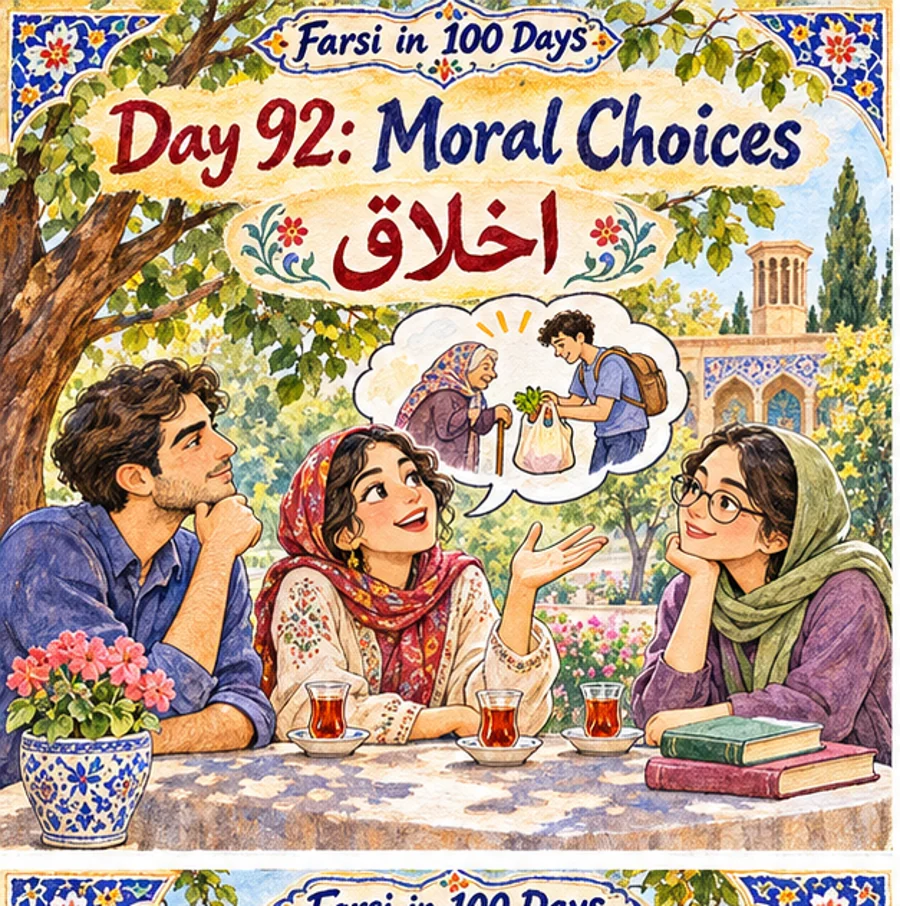
Day 92 of Learn Farsi in 100 Days, our free step-by-step Persian course: Morality. The lesson has four parts, with every Persian word in Persian script, pronunciation and English, and each part ends with a quick check.
Part 1Conversation and joke
Day 92, Part 1 has Parimah and Farzam noticing that the cake is missing from their bill (صورتحساب, surat-hesâb), with phrases like حق با تو است (haghgh bâ to ast, you’re right), and a Mulla joke about a thief and a rooster’s tail (دم خروس, dom-e khorus).
Conversation: a mistake on the bill
| Speaker | Persian | English and pronunciation |
|---|---|---|
| Parimah پریماه | صورتحساب را نگاه کن، ببین اینجا کیک را حساب نکردهاند. | Look at the bill. See, they haven’t charged us for the cake here. surat-hesâb râ negâh kon, bebin injâ keyk râ hesâb nakarde-and. |
| Farzam فرزام | بله، کیک نوشته نشده است، مهم نیست. | Yes, the cake isn’t on it. It doesn’t matter. bale, keyk neveshte nashode ast, mohem nist. |
| Parimah پریماه | باید به صندوقدار بگوییم که کیک را حساب کند. | We should tell the cashier to charge us for the cake. bâyad be sandughdâr beguyim ke keyk râ hesâb konad. |
| Farzam فرزام | چه لزومی دارد، خودشان اشتباه کردهاند. این شانس ما بود. | What for? They made the mistake themselves. That was our luck. che lozumi dârad, khodeshân eshtebâh karde-and. in shâns-e mâ bud. |
| Parimah پریماه | نه! این اصلا درست نیست، ما باید حتما به آنها بگوییم. | No! That’s not right at all. We definitely have to tell them. na! in aslan dorost nist, mâ bâyad hatman be ânhâ beguyim. |
| Farzam فرزام | بسیار خوب، قبول! حق با تو است. | All right, agreed! You’re right. besyâr khub, ghabul! haghgh bâ to ast. |
Joke: the rooster’s tail
یک روز شخصی خروس ملا را دزدید و در کیسه گذاشت.
One day someone stole the Mulla’s rooster and put it in a sack.
ملا که دزد را دیده بود او را تعقیب کرد. بعد از چند دقیقه نزد او رفت و گفت: خروس من را بده! دزد گفت: من خروس تو را ندیدهام.
The Mulla, who had seen the thief, followed him. After a few minutes he went up to him and said, “Give me my rooster!” The thief said, “I haven’t seen your rooster.”
ملا دید دم خروس از کیسه بیرون آمده است. به همین جهت به دزد گفت: حرف تو را باور کنم یا دم خروس که بیرون آمده است را؟
The Mulla saw that the rooster’s tail was sticking out of the sack. So he said to the thief, “Should I believe your words, or the rooster’s tail that’s sticking out?”
Quick check
- What is missing from the bill?
Show answer
The cake: کیک را حساب نکردهاند (keyk râ hesâb nakarde-and), “they haven’t charged for the cake.” - How do you say “You’re right” in Persian?
Show answer
حق با تو است. (haghgh bâ to ast.) - What does صندوقدار (sandughdâr) mean?
Show answer
cashier
Part 2Common phrases, poetry and word of the day
Day 92, Part 2 gives two phrases for asking the way, such as چطور میتوانم به این محل بروم؟ (chetor mitavânam be in mahal beravam?, how can I get to this place?), a quatrain by Hafez (حافظ) asking a Sufi not to judge, and the word of the day, اقلیت (aghalliyat, minority).
Common phrases
| Persian | Pronunciation | English |
|---|---|---|
| ببخشید چطور میتوانم به این محل بروم؟ | bebakhshid, chetor mitavânam be in mahal beravam? | Excuse me! How can I get to this place? |
| ممکن است به من بگویید چطور به این هتل بروم؟ | momken ast be man beguyid chetor be in hotel beravam? | Would you tell me how to get to this hotel? |
Poetry: a quatrain by Hafez
A quatrain (rubâ’i) by Hafez (حافظ, hâfez). The book gives this English verse translation (H. Wilberforce Clarke): “Against me, love for the beloved’s face plaint take not / Against those shattered of heart, censure altogether, take not. / Sufi! since the way of the way-farers, thou knowest, / Against the man-profligate, much carping take not.”
| Persian | Pronunciation | English |
|---|---|---|
| عشق رخ یار بر من زار مگیر | eshgh-e rokh-e yâr bar man-e zâr magir | Do not blame poor me for loving my beloved’s face; |
| بر خستهدلان رند خمار مگیر | bar khaste-delân-e rend-e khammâr magir | do not find fault with the weary-hearted, hung-over free spirits. |
| صوفی چو تو رسم رهروان میدانی | sufi cho to rasm-e rahrovân midâni | Sufi, since you know the ways of those who walk the path, |
| بر مردم رند نکته بسیار مگیر | bar mardom-e rend nokte besyâr magir | do not keep picking faults with free-spirited people. |
Word of the day: اقلیت (aghalliyat)
Meaning: minority
A minority of the country’s people were against the president.
Quick check
- How do you ask “Would you tell me how to get to this hotel?” in Persian?
Show answer
ممکن است به من بگویید چطور به این هتل بروم؟ (momken ast be man beguyid chetor be in hotel beravam?) - What does اقلیت (aghalliyat) mean?
Show answer
minority - In the quatrain, what does مگیر (magir) mean?
Show answer
“do not take”; here, “do not blame” or “do not find fault” (بر … مگیر).
Part 3Idiom of the day and conversation
Day 92, Part 3 explains the proverb اشک تمساح میریزد (ashk-e temsâh mirizad, he sheds crocodile tears), has Parviz and Giti talking about an online order that came with two bags (کیف, kif) instead of one, and gives the idiom “paddle your own canoe” in Persian.
Idiom of the day
اشک تمساح میریزد.
ashk-e temsâh mirizad.
Word for word: He sheds crocodile tears.
Meaning in Persian: این اصطلاح در مورد گریهی دروغین به کار میرود. به شخصی که برای تحت تأثیر قراردادن دیگران اشک میریزد میگویند: اشک تمساح میریزد. داستان ضربالمثل: در گذشته مردم اعتقاد داشتند که خوراک تمساح بهوسیلهی اشک چشمانش تأمین میشود. به این ترتیب که تمساح هنگام گرسنگی به ساحل میرود و اشک میریزد. این اشکها مسموم هستند و هر حشرهای که روی آن بنشیند میمیرد. بنابراین تمساح از آن حشرهها غذای خود را تأمین میکرده است.
Meaning: This expression is used for fake crying. Of someone who cries to impress or move others, people say, “He’s shedding crocodile tears.” The story behind it: people used to believe that a crocodile got its food from the tears of its eyes. When hungry, the crocodile would go to the shore and weep. The tears were poisonous, and any insect that landed on them died, so the crocodile fed itself on those insects.
English equivalent: To shed crocodile tears.
Conversation: an extra bag
| Speaker | Persian | English and pronunciation |
|---|---|---|
| Parviz پرویز | خریدهایی که از طریق اینترنت انجام داده بودم رسیدند. | The things I bought online have arrived. kharid-hâyi ke az tarigh-e internet anjâm dâde budam residand. |
| Giti گیتی | واقعا؟ بستهها را باز کن. | Really? Open the packages. vâghe’an? baste-hâ râ bâz kon. |
| Parviz پرویز | اینجا را نگاه کن دوتا کیف فرستادهاند اما من فقط یک کیف سفارش داده بودم. | Look here, they’ve sent two bags, but I only ordered one. injâ râ negâh kon, do-tâ kif ferestâde-and ammâ man faghat yek kif sefâresh dâde budam. |
| Giti گیتی | حتما اشتباه کردهاند. باید با آنها تماس بگیری و این را بگویی. | They must have made a mistake. You should contact them and tell them. hatman eshtebâh karde-and. bâyad bâ ânhâ tamâs begiri va in râ beguyi. |
| Parviz پرویز | حالا شمارهی شرکت را پیدا میکنم و تماس میگیرم. | I’ll find the company’s number now and call them. hâlâ shomâre-ye sherkat râ peydâ mikonam va tamâs migiram. |
Idiom of the day
آدم باید دستش را به زانوی خودش بگیرد و “یاعلی” بگوید.
âdam bâyad dastash râ be zânu-ye khodash begirad va “yâ ali” beguyad.
Word for word: One must put one’s hand on one’s own knee and say “Ya Ali.”
Meaning in Persian: آدم باید به توانایی خودش تکیه کند و کارش را آغاز کند.
Meaning: You have to rely on your own abilities and get started on your work. (“Ya Ali” is said when getting up or starting an effort.)
English equivalent: Paddle your own canoe.
Quick check
- What does اشک تمساح ریختن (ashk-e temsâh rikhtan) mean?
Show answer
to shed crocodile tears, to cry falsely - How many bags did Parviz order, and how many came?
Show answer
He ordered one (یک کیف, yek kif) but two came (دوتا کیف, do-tâ kif). - What is the English equivalent of آدم باید دستش را به زانوی خودش بگیرد و “یاعلی” بگوید?
Show answer
Paddle your own canoe.
Part 4Reading and new words
Day 92, Part 4 is a reading about Saadieh (سعدیه, sa’diye), the tomb of the poet Saadi in Shiraz, and a word list on honesty and money, including بدهکار (bedehkâr, debtor), وجدان (vejdân, conscience) and صادق (sâdegh, honest).
Reading: Saadieh, the tomb of Saadi
آرامگاه سعدی در شیراز، به سعدیه معروف است. این آرامگاه زیبا در کنار باغی به نام باغ دلگشا قرار دارد. آرامگاه برخی از بزرگان ایرانی نیز در این محوطه وجود دارد.
Saadi’s tomb in Shiraz is known as Saadieh. This beautiful tomb stands next to a garden called the Delgosha Garden. Some other great Iranian figures are also buried on these grounds.
این محل در ابتدا خانقاه سعدی بوده که در اواخر عمر خود در آن زندگی میکرده است. و بعد از مرگ نیز در آنجا او را دفن کردهاند.
The site was originally Saadi’s khanqah (Sufi lodge), where he lived in the last years of his life, and after his death he was buried there.
در سال ۱۳۳۰ بنای کنونی توسط محسن فروغی طراحی شده است. این بنا تلفیقی از معماری سنتی و جدید ایرانی است. محوطهی باغ سعدیه به شیوهی ایرانی، گلکاری و درختکاری شده است و در وسط حیاط دو حوض واقع شده است.
In 1330 (1951), the present building was designed by Mohsen Foroughi. It is a blend of traditional and modern Iranian architecture. The grounds of the Saadieh garden have been planted with flowers and trees in the Persian style, and there are two pools in the middle of the courtyard.
New words
| Persian | Pronunciation | English |
|---|---|---|
| دفن کردن | dafn kardan | to bury |
| خیانت کردن | khiyânat kardan | to betray |
| تلفیقی | talfighi | combined, blended |
| بدهکار | bedehkâr | debtor |
| اواخر | avâkher | the end, the last part (of) |
| اشک ریختن | ashk rikhtan | to weep, shed tears |
| درختکاری | derakht-kâri | planting trees |
| اکثریت | aksariyat | majority |
| دروغین | dorughin | false, fake |
| به کار بردن | be kâr bordan | to use |
| تمساح | temsâh | crocodile |
| اوایل | avâyel | the beginning, the early part (of) |
| بستانکار | bestânkâr | creditor |
| مسموم | masmum | poisoned, poisonous |
| صندوقدار | sandughdâr | cashier |
| با تربیت | bâ tarbiyat | well-mannered, polite |
| امانتداری | amânatdâri | trustworthiness |
| طلبکار | talabkâr | creditor |
| انگشت نما | angosht-namâ | conspicuous, talked about by everyone |
| مفقود شدن | mafghud shodan | to go missing, be lost |
| بهتان | bohtân | slander, false accusation |
| صادق | sâdegh | honest |
| گاوصندوق | gâv-sandugh | safe (strongbox) |
| نیکوکار | nikukâr | righteous, charitable |
| باشرافت | bâ-sherâfat | honorable, with integrity |
| وجدان | vejdân | conscience |
| رمز | ramz | code, password |
| برتری | bartari | superiority, advantage |
| باطل | bâtel | invalid, void |
| تأمین کردن | ta’min kardan | to supply, provide |
Quick check
- What is Saadi’s tomb in Shiraz known as?
Show answer
سعدیه (sa’diye), Saadieh - What is the difference between بدهکار (bedehkâr) and طلبکار (talabkâr)?
Show answer
بدهکار is a debtor (someone who owes); طلبکار is a creditor (someone who is owed). - What does وجدان (vejdân) mean?
Show answer
conscience
Take this lesson further

Study with the book
Learn Farsi in 100 Days: The Ultimate Crash Course to Learning Farsi Fast
This free lesson is part of Learn Farsi in 100 Days. The book puts the whole series in one printable PDF you can study offline.
Serious about Persian? Get all 30 of our Persian learning books for $199.99 (55% less than buying them one by one).
Free Persian Starter Pack: Alphabet + 100 Core Words
Get the 14-page printable Starter Pack (all 32 letters, a 7-day reading plan, 100 core words and 20 survival phrases) and a short 5-email course. Free.
Free. Every morning: that day’s four videos and the full lessons, with every Persian word, its pronunciation and its English meaning. Stop or pause with one click.