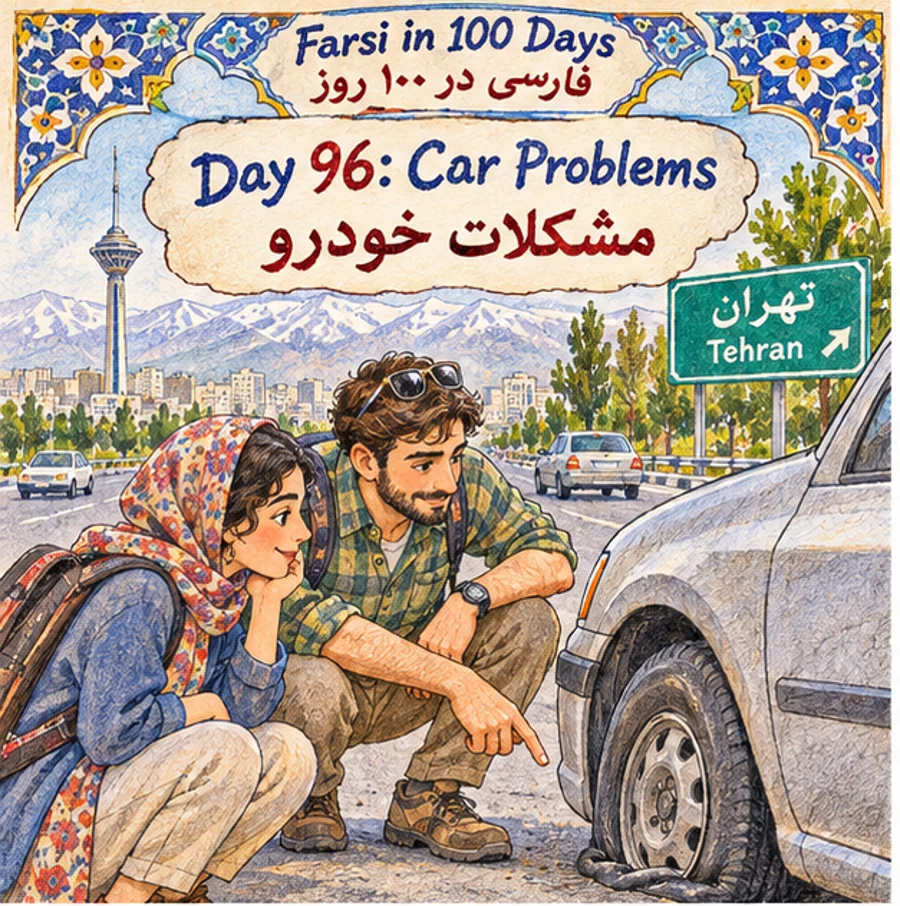
Day 96 of Learn Farsi in 100 Days, our free step-by-step Persian course: Car Problems. The lesson has four parts, with every Persian word in Persian script, pronunciation and English, and each part ends with a quick check.
Part 1Conversation and joke
Day 96, Part 1 has a phone conversation between Ramtin and Behnoush about a car that won’t start (ماشینم روشن نمیشود, mâshinam roshan nemishavad), with useful words like تعمیرکار (ta’mirkâr, mechanic) and باتری (bâtri, battery), plus a Mulla joke about what the village headman is worth.
Conversation: the car won’t start
| Speaker | Persian | English and pronunciation |
|---|---|---|
| Ramtin رامتین | کجا هستی بهنوش؟ | Where are you, Behnoush? kojâ hasti behnush? |
| Behnoush بهنوش | خانه هستم، نمیدانم چرا ماشینم روشن نمیشود. | I’m at home. I don’t know why my car won’t start. khâne hastam, nemidânam cherâ mâshinam roshan nemishavad. |
| Ramtin رامتین | قبلا این مشکل برایم پیش آمده است؛ باتری ماشین را چک کردهای؟ | I’ve had this problem before. Have you checked the car battery? ghablan in moshkel barâyam pish âmade ast; bâtri-ye mâshin râ chek karde’i? |
| Behnoush بهنوش | بله نگاه کردم، باتری روشن نمیشود. | Yes, I looked. The battery is dead. bale negâh kardam, bâtri roshan nemishavad. |
| Ramtin رامتین | خوب یک تعمیرکار خبر کن. | Well, call a mechanic. khob yek ta’mirkâr khabar kon. |
| Behnoush بهنوش | با یک تعمیرکار تماس گرفتهام؛ اما او گفت حدود دو ساعت دیگر میآید. | I’ve called a mechanic, but he said he’ll come in about two hours. bâ yek ta’mirkâr tamâs gerefte’am; ammâ u goft hodud-e do sâ’at-e digar miâyad. |
| Ramtin رامتین | چه بد! پس تو نمیتوانی با من به مهمانی بیایی؟! | That’s too bad! So you can’t come to the party with me?! che bad! pas to nemitavâni bâ man be mehmâni biyâyi?! |
| Behnoush بهنوش | ماشین را فردا تعمیر میکنم و خودم با تاکسی میآیم. | I’ll fix the car tomorrow, and I’ll come by taxi myself. mâshin râ fardâ ta’mir mikonam va khodam bâ tâksi miâyam. |
| Ramtin رامتین | خوب است. | Good. khub ast. |
Joke: what the headman is worth
یک روز ملا با کدخدا به حمام رفته بود. وقتی کدخدا بدن خود را میشست از ملا پرسید: اگر من کدخدا نبودم و فقط یک خدمتکار بودم چه ارزشی داشتم.
One day Mulla had gone to the bathhouse with the village headman. While the headman was washing himself, he asked Mulla, “If I weren’t the headman and were just a servant, what would I be worth?”
ملا کمی فکر کرد و گفت: ده تومان. کدخدا عصبانی شد و گفت: احمق، فقط پارچه که به تن دارم ده تومان قیمت دارد. ملا گفت: خوب من هم قیمت پارچه را گفتم وگرنه خودت که ارزشی نداری!
Mulla thought for a moment and said, “Ten tomans.” The headman got angry and said, “You fool, the cloth I’m wearing alone costs ten tomans!” Mulla said, “Well, I was giving the price of the cloth. You yourself aren’t worth anything!”
Quick check
- How do you say “My car won’t start” in Persian?
Show answer
ماشینم روشن نمیشود. (mâshinam roshan nemishavad.) - What does تعمیرکار (ta’mirkâr) mean?
Show answer
mechanic, repairman - In the joke, what did Mulla say the ten tomans were for?
Show answer
the price of the headman’s cloth (قیمت پارچه, gheymat-e pârche), not the headman himself
Part 2Common phrases, poetry, words in the poem and word of the day
Day 96, Part 2 gives polite requests with میتوانم (mitavânam, may I), such as میتوانم از خودکار شما استفاده کنم؟ (may I borrow your pen?), a quatrain by Khayyam about a wine jug, and the word of the day, حرص (hers, greed).
Common phrases
| Persian | Pronunciation | English |
|---|---|---|
| میتوانم به این نگاهی بیندازم؟ | mitavânam be in negâhi biyandâzam? | Could I take a look at this? |
| میتوانم از خودکار شما استفاده کنم؟ | mitavânam az khodkâr-e shomâ estefâde konam? | May I use your pen? |
| میتوانم مجلهی شما را قرض بگیرم؟ | mitavânam majalle-ye shomâ râ gharz begiram? | May I borrow your magazine? |
Poetry: a quatrain by Khayyam
A quatrain (robâ’i) by Omar Khayyam (خیام). The book gives this English verse translation: “Then to this earthen Bowl did I adjourn / My Lip the secret Well of Life to learn: / And Lip to Lip it murmur’d–‘While you live, / Drink! for once dead you never shall return.'”
| Persian | Pronunciation | English |
|---|---|---|
| لب بر لب کوزه بردم از غایت آز | lab bar lab-e kuze bordam az ghâyat-e âz | In utmost greed I put my lips to the lip of the jug, |
| تا زو طلبم واسطهی عمر دراز | tâ zu talabam vâsete-ye ‘omr-e derâz | to ask it for the secret of a long life. |
| لب بر لب من نهاد و میگفت به راز | lab bar lab-e man nahâd o migoft be râz | It put its lips on mine and whispered in secret: |
| می خور که بدین جهان نمیآیی باز | mey khor ke bedin jahân nemiâyi bâz | “Drink wine, for you will not come back to this world.” |
Words in the poem
| Persian | Pronunciation | English |
|---|---|---|
| غایت: نهایت | ghâyat: nahâyat | utmost, extreme |
| آز: حرص | âz: hers | greed |
| طلبم: بخواهم | talabam: bekhâham | (that) I ask for, I seek |
| نهاد: گذاشت | nahâd: gozâsht | (he/she/it) put, placed |
| خور: بخور | khor: bokhor | drink! eat! |
| بدین: به این | bedin: be in | to this |
Word of the day: حرص (hers)
Meaning: greed
The employee stole from the company out of great greed.
Quick check
- How do you ask “May I use your pen?” in Persian?
Show answer
میتوانم از خودکار شما استفاده کنم؟ (mitavânam az khodkâr-e shomâ estefâde konam?) - In Khayyam’s poem, what is the older word آز (âz) the same as?
Show answer
حرص (hers), “greed” - What does حرص (hers) mean?
Show answer
greed
Part 3Idiom of the day and conversation
Day 96, Part 3 explains the proverb دست کسی را توی حنا گذاشتن (dast-e kasi râ tu-ye hanâ gozâshtan, to leave someone in the lurch), has Bahman complain that his new car is افتضاح (eftezâh, terrible), and gives the idiom اصل بد نیکو نگردد (a bad nature never turns good).
Idiom of the day
دست کسی را توی حنا گذاشتن
dast-e kasi râ tu-ye hanâ gozâshtan
Word for word: to put someone’s hand in henna
Meaning in Persian: این ضربالمثل هنگامی به کار میرود که شخصی دوستش را در کاری تنها میگذارد. در چنین مواردی شخص نه میتواند پیش برود و نه میتواند بازگردد. مانند کسی که دستانش را در حنا گذاشتهاند. در گذشته چون وسایل آرایشی و زیبایی وجود نداشت، مردان و زنان از حنا استفاده میکردند. آنها بر روی دست، پا، ریش و موهایشان حنا میگذاشتند. معمولا حنا را در آب میریختند و آن را به روی دست، پا و موهایشان میگذاشتند و چند ساعت به همان حالت مینشستند تا حنا رنگ بدهد. بنابراین اگر کسی دستش در حنا بود نمیتوانست کاری انجام دهد.
Meaning: This proverb is used when someone leaves a friend alone in the middle of a task. In such cases the person can neither go forward nor turn back, like someone whose hands have been put in henna. In the past, since there were no cosmetics, men and women used henna. They put henna on their hands, feet, beards and hair. They usually mixed henna with water, put it on their hands, feet and hair, and sat still for a few hours so the henna could take color. So if someone had their hands in henna, they couldn’t do anything.
English equivalent: to leave someone in the lurch
Conversation: a bad new car
| Speaker | Persian | English and pronunciation |
|---|---|---|
| Fariborz فریبرز | از ماشین جدیدت راضی هستی؟ | Are you happy with your new car? az mâshin-e jadidat râzi hasti? |
| Bahman بهمن | متأسفانه نه! خیلی افتضاح است. از دیروز خراب شده است. | Unfortunately not! It’s terrible. It’s been broken down since yesterday. mote’assefâne na! kheyli eftezâh ast. az diruz kharâb shode ast. |
| Fariborz فریبرز | قبل از خرید به یک تعمیرکار ماشین نشان ندادی؟ | Didn’t you show it to a mechanic before buying it? ghabl az kharid be yek ta’mirkâr-e mâshin neshân nadâdi? |
| Bahman بهمن | نه! اشتباه کردم، من به فروشنده اعتماد کردم. | No! I made a mistake. I trusted the seller. na! eshtebâh kardam, man be forushande e’temâd kardam. |
| Fariborz فریبرز | خوب با فروشنده تماس بگیر و مشکل ماشین را بگو. | Well, call the seller and tell him about the car’s problem. khob bâ forushande tamâs begir va moshkel-e mâshin râ begu. |
| Bahman بهمن | از دیروز هرچه با او تماس میگیرم موبایلش خاموش است. | Since yesterday, every time I call him, his cell phone is off. az diruz harche bâ u tamâs migiram mobâyelash khâmush ast. |
| Fariborz فریبرز | باید بگویم که او تو را فریب داده است! | I have to say he has cheated you! bâyad beguyam ke u to râ farib dâde ast! |
Idiom of the day
اصل بد نیکو نگردد هر که بنیادش بد است.
asl-e bad niku nagardad har ke bonyâdash bad ast.
Word for word: A bad origin does not become good; whoever’s foundation is bad (stays bad).
Meaning in Persian: کسی که ذات بد دارد تغییر نمیکند.
Meaning: Someone who is bad by nature does not change.
English equivalent: What is bred in the bone will never come out of the flesh.
Quick check
- What does the proverb دست کسی را توی حنا گذاشتن describe?
Show answer
leaving a friend alone in the middle of a task, so they can neither go on nor turn back - How do you say “Are you happy with your new car?” in Persian?
Show answer
از ماشین جدیدت راضی هستی؟ (az mâshin-e jadidat râzi hasti?) - What is the English equivalent of اصل بد نیکو نگردد هر که بنیادش بد است?
Show answer
What is bred in the bone will never come out of the flesh.
Part 4Reading and vocabulary
Day 96, Part 4 is a reading about the Vakil Bath (حمام وکیل, hammâm-e vakil) in Shiraz, built by order of Karim Khan Zand and now a museum, followed by the day’s vocabulary, including تعمیرکار (ta’mirkâr, mechanic), باستانشناس (bâstânshenâs, archaeologist) and حنا (hanâ, henna).
Reading: the Vakil Bath in Shiraz
حمام وکیل در شهر شیراز قرار دارد. این حمام تاریخی در دوران زندیه به دستور کریمخان زند بنا شده است. این حمام در فهرست آثار ملی ایران ثبت شده است. معماری این حمام در زمان گذشته بسیار پیشرفته بوده است.
The Vakil Bath is in the city of Shiraz. This historic bathhouse was built in the Zand era by order of Karim Khan Zand. It is registered on the list of Iran’s National Heritage sites. Its architecture was very advanced for its time.
کف حمام سنگفرش شده است و سقف آن نقشهای زیبایی دارد که از آداب و رسوم و علایق مردم این شهر حکایت دارد. حمام وکیل نسبت به حالت اولیهی خود تغییر کرده بود، به همین دلیل توسط باستانشناسان، بازسازی شده است.
The floor of the bath is paved with stone, and its ceiling has beautiful paintings that tell of the customs, traditions and interests of the people of this city. The Vakil Bath had changed from its original state, so it was restored by archaeologists.
این حمام مدتی سفرهخانه و مدتی موزهی فرش بوده است. در اثر بیاحتیاطی صدمات زیادی به این بنای تاریخی رسیده است. هماکنون نیز این حمام به موزه تبدیل شده است و برای بازدید عموم آزاد است.
For a time the bath was a traditional restaurant, and for a time a carpet museum. Through carelessness, this historic building suffered a lot of damage. Today the bath has been turned into a museum and is open to the public.
Vocabulary
| Persian | Pronunciation | English |
|---|---|---|
| کف | kaf | floor |
| حکایت | hekâyat | story, tale |
| تغییر کردن | taghyir kardan | to change |
| کارواش | kârvâsh | car wash |
| ارزش داشتن | arzesh dâshtan | to be worth |
| روشن شدن | roshan shodan | to start, to turn on (of a car or machine) |
| بازسازی | bâzsâzi | rebuilding, restoration |
| طلبیدن | talabidan | to ask for, to seek |
| پیشرفته | pishrafte | advanced |
| طلب کردن | talab kardan | to ask for, to demand |
| سفرهخانه | sofrekhâne | traditional restaurant |
| بیاحتیاطی | bi-ehtiyâti | carelessness |
| صدمات | sadamât | damage, injuries |
| علایق | ‘alâyegh | interests, likes |
| باستانشناس | bâstânshenâs | archaeologist |
| بنیاد | bonyâd | foundation |
| آرایشی | ârâyeshi | cosmetic |
| حنا | hanâ | henna |
| وگرنه | vagarna | otherwise |
| طمع | tama’ | greed |
| نهایت | nahâyat | end, utmost |
| قرض | gharz | loan, debt |
| کدخدا | kadkhodâ | village headman |
| ریختن | rikhtan | to pour |
| پارچه | pârche | cloth, fabric |
| اعتماد کردن | e’temâd kardan | to trust, to rely on |
| تعمیرکار | ta’mirkâr | repairman, mechanic |
Quick check
- Who ordered the Vakil Bath to be built?
Show answer
Karim Khan Zand, کریمخان زند (karimkhân-e zand) - What is the Vakil Bath today?
Show answer
a museum, موزه (muze), open to the public - What does باستانشناس (bâstânshenâs) mean?
Show answer
archaeologist
Take this lesson further

Study with the book
Learn Farsi in 100 Days: The Ultimate Crash Course to Learning Farsi Fast
This free lesson is part of Learn Farsi in 100 Days. The book puts the whole series in one printable PDF you can study offline.
Serious about Persian? Get all 30 of our Persian learning books for $199.99 (55% less than buying them one by one).
Free Persian Starter Pack: Alphabet + 100 Core Words
Get the 14-page printable Starter Pack (all 32 letters, a 7-day reading plan, 100 core words and 20 survival phrases) and a short 5-email course. Free.
Free. Every morning: that day’s four videos and the full lessons, with every Persian word, its pronunciation and its English meaning. Stop or pause with one click.