200 Most Common Persian Verbs
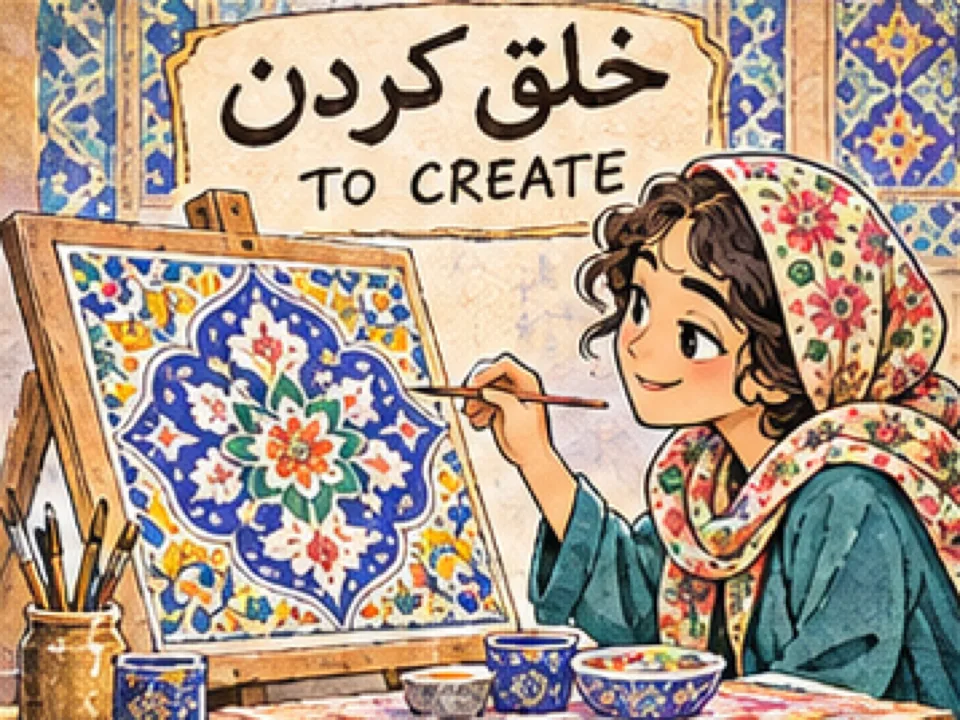
خَلق کَردَن
Watch and listen to Reza Nazari explain this verb. More in the free 200 Persian Verbs video course.
Make – Create
مُتَرادِفِ فارسی: ایجاد کَردَن – اِبداع کَردَن
مُتَضادِ فارسی: اَز بین بُردَن – خَراب کَردَن
:صَرف
گُذَشتِه: خَلق کَردَم – خَلق کَردی – خَلق کَرد – خَلق کَردیم – خَلق کَردید – خَلق کَردَند
حال: خَلق می کُنَم – خَلق می کُنی – خَلق می کُنَد – خَلق می کَنیم – خَلق می کُنید – خَلق می کُنَند
:مِثال
.او یِک وَسیلِه بَرقی خَلق کَرد
.مَن یِک راهحَلِ جَدید بَرای مُشکِلاتِ شِرکَت خَلق می کُنَم
.دُکتُر راهِ جَدیدی بَرایِ دَرمانِ بیماری خَلق کَرد
خلق کردن (khalgh kardan) means "to create" in Persian. Below you will find its stems, a full conjugation table, translated examples, common phrases and a short quiz.
How to use خلق کردن (khalgh kardan)
خلق کردن is a compound verb: the Arabic-origin noun خلق (khalgh, "creation") is joined with the light verb کردن (kardan, "to do"). Only کردن changes when you conjugate, so if you can conjugate کردن, you can conjugate خلق کردن.
The verb sounds a little formal. You will meet it in writing about art, science, business and religion, for example when someone creates a work of art, a new idea or a character in a story. For everyday "make" or "build", Persian speakers more often use ساختن (sâkhtan) or درست کردن (dorost kardan).
Verb stems
| Infinitive | خلق کردن | /khalgh kardan/ | to create, to make |
|---|---|---|---|
| Past stem | خلق کرد | /khalgh kard/ | used for past tenses |
| Present stem | خلق کن | /khalgh kon/ | used for present, subjunctive and imperative |
Conjugation of خلق کردن
| Person | Simple past | Present | Future | Subjunctive |
|---|---|---|---|---|
| من I |
خلق کردم /khalgh kardam/ |
خلق میکنم /khalgh mikonam/ |
خلق خواهم کرد /khalgh khâham kard/ |
خلق کنم /khalgh konam/ |
| تو you (sg.) |
خلق کردی /khalgh kardi/ |
خلق میکنی /khalgh mikoni/ |
خلق خواهی کرد /khalgh khâhi kard/ |
خلق کنی /khalgh koni/ |
| او he / she |
خلق کرد /khalgh kard/ |
خلق میکند /khalgh mikonad/ |
خلق خواهد کرد /khalgh khâhad kard/ |
خلق کند /khalgh konad/ |
| ما we |
خلق کردیم /khalgh kardim/ |
خلق میکنیم /khalgh mikonim/ |
خلق خواهیم کرد /khalgh khâhim kard/ |
خلق کنیم /khalgh konim/ |
| شما you (pl./polite) |
خلق کردید /khalgh kardid/ |
خلق میکنید /khalgh mikonid/ |
خلق خواهید کرد /khalgh khâhid kard/ |
خلق کنید /khalgh konid/ |
| آنها they |
خلق کردند /khalgh kardand/ |
خلق میکنند /khalgh mikonand/ |
خلق خواهند کرد /khalgh khâhand kard/ |
خلق کنند /khalgh konand/ |
Negative and imperative
| Persian | Pronunciation | English |
|---|---|---|
| خلق نکردم | /khalgh nakardam/ | I did not create |
| خلق نمیکنم | /khalgh nemikonam/ | I do not create / I am not creating |
| خلق کن! | /khalgh kon!/ | Create! (to one person) |
| خلق کنید! | /khalgh konid!/ | Create! (to several people, or politely) |
| خلق نکن! | /khalgh nakon!/ | Don't create! |
The examples above, translated
| Persian | Pronunciation | English |
|---|---|---|
| او یک وسیلهی برقی خلق کرد. | /u yek vasile-ye barghi khalgh kard/ | He created an electrical device. |
| من یک راهحل جدید برای مشکلات شرکت خلق میکنم. | /man yek râh-hal-e jadid barâye moshkelât-e sherkat khalgh mikonam/ | I am creating a new solution for the company's problems. |
| دکتر راه جدیدی برای درمان بیماری خلق کرد. | /doktor râh-e jadidi barâye darmân-e bimâri khalgh kard/ | The doctor created a new way to treat the disease. |
More example sentences
| Persian | Pronunciation | English |
|---|---|---|
| حافظ شعرهای زیبایی خلق کرد. | /hâfez she'r-hâ-ye zibâyi khalgh kard/ | Hafez created beautiful poems. |
| این نقاش هر سال چند اثر تازه خلق میکند. | /in naghghâsh har sâl chand asar-e tâze khalgh mikonad/ | This painter creates a few new works every year. |
| ما با هم یک داستان کوتاه خلق خواهیم کرد. | /mâ bâ ham yek dâstân-e kutâh khalgh khâhim kard/ | We will create a short story together. |
| نویسنده میخواهد شخصیتی تازه خلق کند. | /nevisande mikhâhad shakhsiyati tâze khalgh konad/ | The writer wants to create a new character. |
Common phrases
| Persian | Pronunciation | English |
|---|---|---|
| اثر هنری خلق کردن | /asar-e honari khalgh kardan/ | to create a work of art |
| فرصت خلق کردن | /forsat khalgh kardan/ | to create an opportunity |
| خلاقیت | /khallâghiyat/ | creativity (from the same root) |
| خالق | /khâlegh/ | creator (often used for God) |
In spoken Persian
In everyday speech خلق کردن is rare, but when it is used the endings are shortened in the usual way: خلق میکنه (khalgh mikone) instead of خلق میکند (khalgh mikonad), and خلق میکنن (khalgh mikonan) instead of خلق میکنند.
Watch out for
- The present stem of کردن is کن (kon), so the present tense is میکنیم (mikonim), with an o sound, never "mikanim".
- In compound verbs the negative prefix goes on کردن, not on the noun: خلق نکرد (khalgh nakard), "he did not create".
Practice
-
Translate into Persian: "We created a new game."
Show answer
mâ yek bâzi-ye jadid khalgh kardim. ما یک بازی جدید خلق کردیم.
-
What is the present-tense form for "they"?
Show answer
khalgh mikonand خلق میکنند
-
Make this sentence negative: او این شخصیت را خلق کرد.
Show answer
u in shakhsiyat râ khalgh nakard. او این شخصیت را خلق نکرد.
This is lesson 102 of 200 Most Common Persian Verbs. For the sounds used in the pronunciation guide, see Persian pronunciation.


Take this lesson further

Study with the book
200 Absolutely Essential Persian Verbs
This free lesson is part of 200 Most Common Persian Verbs. The book puts the whole series in one printable PDF you can study offline.
Serious about Persian? Get all 30 of our Persian learning books for $199.99 (55% less than buying them one by one).
Free Persian Starter Kit (PDF)
The Persian alphabet chart and the 101 most common Persian words with pronunciation, in one printable PDF. You also get a one-time 15% code for any of our books.
We will email you new lessons and book news from Learn Persian Online. Unsubscribe any time.Free: 100 Core Persian Words + 20 Survival Phrases
Get the 14-page printable Starter Pack (all 32 letters, a 7-day reading plan, 100 core words and 20 survival phrases) and a short 5-email course. Free.
Practise with free Persian games