200 Most Common Persian Verbs
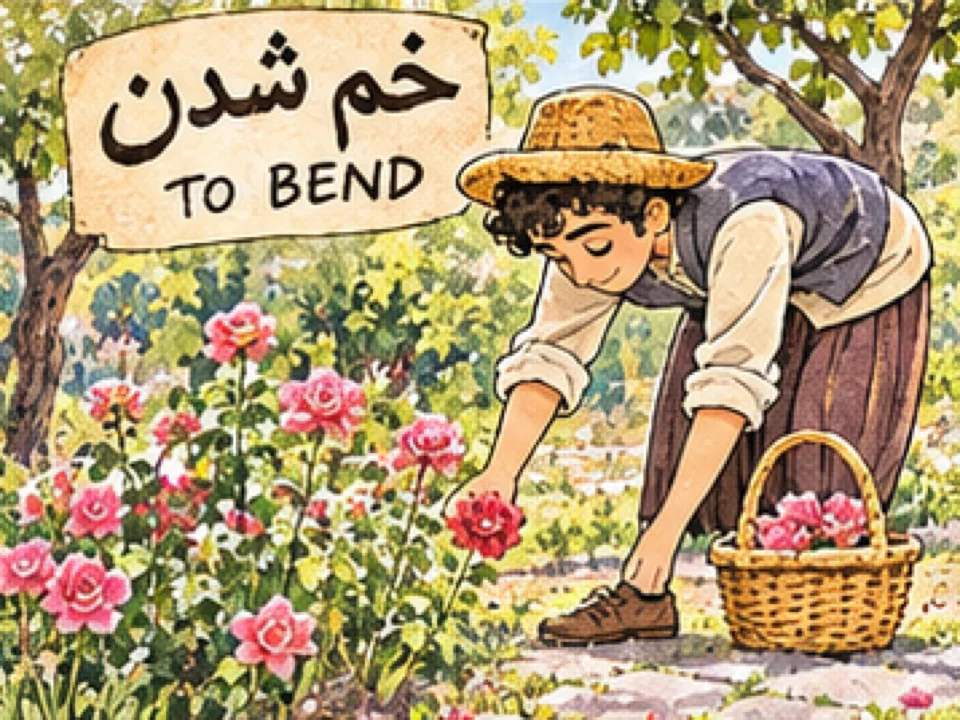
خَم شُدَن
Watch and listen to Reza Nazari explain this verb. More in the free 200 Persian Verbs video course.
Bow – Lean
مُتَرادِفِ فارسی: دولا شُدَن – خَمیدَن
مُتَضادِ فارسی: راست شُدَن – ایستادَن
:صَرف
گُذَشتِه: خَم شُدَم – خَم شُدی – خَم شُد – خَم شُدیم – خَم شُدید – خَم شُدَند
حال: خَم می شَوَم – خَم می شَوی – خَم می شَوَد – خَم می شَویم – خَم می شَوید – خَم می شَوَند
:مِثال
.او خَم شُد وَ کِتاب را اَز رویِ زَمین بَرداشت
.موقِع نِشَستَن شانِه هایَش خَم می شَوَند
خم شدن (kham shodan) means "to bend over" or "to bend" in Persian. See its stems, conjugation, examples, phrases and a quiz.
How to use خم شدن (kham shodan)
خم شدن is a compound verb: the adjective خم (kham, "bent, curved") plus شدن (shodan, "to become"). It means "to bend over" or "to bend", for a person or a thing. It is intransitive: خم شد (kham shod, "he bent down"). Only شدن is conjugated, with its present stem شو (shav): خم میشوم (kham mishavam).
The transitive partner is خم کردن (kham kardan, "to bend something"): سرش را خم کرد ("he bowed his head"), میله را خم کرد ("he bent the rod"). The verb is neutral and common. Straightening up again is صاف شدن (sâf shodan), and a deep, respectful bow is تعظیم کردن (ta'zim kardan).
Verb stems
| Infinitive | خم شدن | /kham shodan/ | to bend over, to bend, to lean |
|---|---|---|---|
| Past stem | خم شد | /kham shod/ | used for past tenses |
| Present stem | خم شو | /kham shav/ | used for present, subjunctive and imperative |
Conjugation of خم شدن
| Person | Simple past | Present | Future | Subjunctive |
|---|---|---|---|---|
| من I |
خم شدم /kham shodam/ |
خم میشوم /kham mishavam/ |
خم خواهم شد /kham khâham shod/ |
خم شوم /kham shavam/ |
| تو you (sg.) |
خم شدی /kham shodi/ |
خم میشوی /kham mishavi/ |
خم خواهی شد /kham khâhi shod/ |
خم شوی /kham shavi/ |
| او he / she |
خم شد /kham shod/ |
خم میشود /kham mishavad/ |
خم خواهد شد /kham khâhad shod/ |
خم شود /kham shavad/ |
| ما we |
خم شدیم /kham shodim/ |
خم میشویم /kham mishavim/ |
خم خواهیم شد /kham khâhim shod/ |
خم شویم /kham shavim/ |
| شما you (pl./polite) |
خم شدید /kham shodid/ |
خم میشوید /kham mishavid/ |
خم خواهید شد /kham khâhid shod/ |
خم شوید /kham shavid/ |
| آنها they |
خم شدند /kham shodand/ |
خم میشوند /kham mishavand/ |
خم خواهند شد /kham khâhand shod/ |
خم شوند /kham shavand/ |
Negative and imperative
| Persian | Pronunciation | English |
|---|---|---|
| خم نشدم | /kham nashodam/ | I did not bend down |
| خم نمیشوم | /kham nemishavam/ | I do not bend down / I am not bending down |
| خم شو! | /kham sho!/ | Bend down! (to one person) |
| خم شوید! | /kham shavid!/ | Bend down! (to several people, or politely) |
| خم نشو! | /kham nasho!/ | Don't bend down! |
The examples above, translated
| Persian | Pronunciation | English |
|---|---|---|
| او خم شد و کتاب را از روی زمین برداشت. | /u kham shod va ketâb râ az ru-ye zamin bardâsht./ | She bent down and picked the book up off the floor. |
| موقع نشستن شانههایش خم میشوند. | /moghe'-e neshastan shâne-hâyash kham mishavand./ | When he sits, his shoulders slump. |
| خم کردن آهن کار سختی است. | /kham kardan-e âhan kâr-e sakhti ast./ | Bending iron is hard work. |
More example sentences
| Persian | Pronunciation | English |
|---|---|---|
| او خم شد تا بند کفشش را ببندد. | /u kham shod tâ band-e kafshash râ bebandad./ | He bent down to tie his shoelace. |
| درخت زیر برف خم شده است. | /derakht zir-e barf kham shode ast./ | The tree is bent under the snow. |
| پدربزرگم وقتی راه میرود کمی خم میشود. | /pedarbozorgam vaghti râh miravad kami kham mishavad./ | My grandfather stoops a little when he walks. |
| از پنجره خم نشو، خطرناک است. | /az panjare kham nasho, khatarnâk ast./ | Don't lean out of the window, it's dangerous. |
Common phrases
| Persian | Pronunciation | English |
|---|---|---|
| خم کردن | /kham kardan/ | to bend (something) |
| سر خم کردن | /sar kham kardan/ | to bow your head; to give in |
| خمیده | /khamide/ | bent, stooped |
| تعظیم کردن | /ta'zim kardan/ | to bow (out of respect) |
In spoken Persian
In speech میشود becomes میشه (mishe): خم میشه (kham mishe), خم میشم (kham misham). یه کم خم شو (ye kam kham sho) means "bend down a little".
Watch out for
- Note: the third example on the page, خم کردن آهن کار سختی است, uses خم کردن (to bend something), not خم شدن. Use شدن when the subject itself bends and کردن when someone bends something else.
- The imperative is خم شو (kham sho), and the negative is خم نشو (kham nasho).
Practice
-
Translate into Persian: "I bent down and picked up the pen."
Show answer
kham shodam va khodkâr râ bardâshtam. خم شدم و خودکار را برداشتم.
-
Give the present tense form for "they".
Show answer
kham mishavand خم میشوند
-
What does this sentence mean? او سرش را خم کرد.
Show answer
He bowed his head.
Related verbs in this course
This is lesson 103 of 200 Most Common Persian Verbs. For the sounds used in the pronunciation guide, see Persian pronunciation.
.خَم کَردَنِ آهَن کارِ سَختی اَست


Take this lesson further

Study with the book
200 Absolutely Essential Persian Verbs
This free lesson is part of 200 Most Common Persian Verbs. The book puts the whole series in one printable PDF you can study offline.
Serious about Persian? Get all 30 of our Persian learning books for $199.99 (55% less than buying them one by one).
Free Persian Starter Kit (PDF)
The Persian alphabet chart and the 101 most common Persian words with pronunciation, in one printable PDF. You also get a one-time 15% code for any of our books.
We will email you new lessons and book news from Learn Persian Online. Unsubscribe any time.Free: 100 Core Persian Words + 20 Survival Phrases
Get the 14-page printable Starter Pack (all 32 letters, a 7-day reading plan, 100 core words and 20 survival phrases) and a short 5-email course. Free.
Practise with free Persian games