200 Most Common Persian Verbs
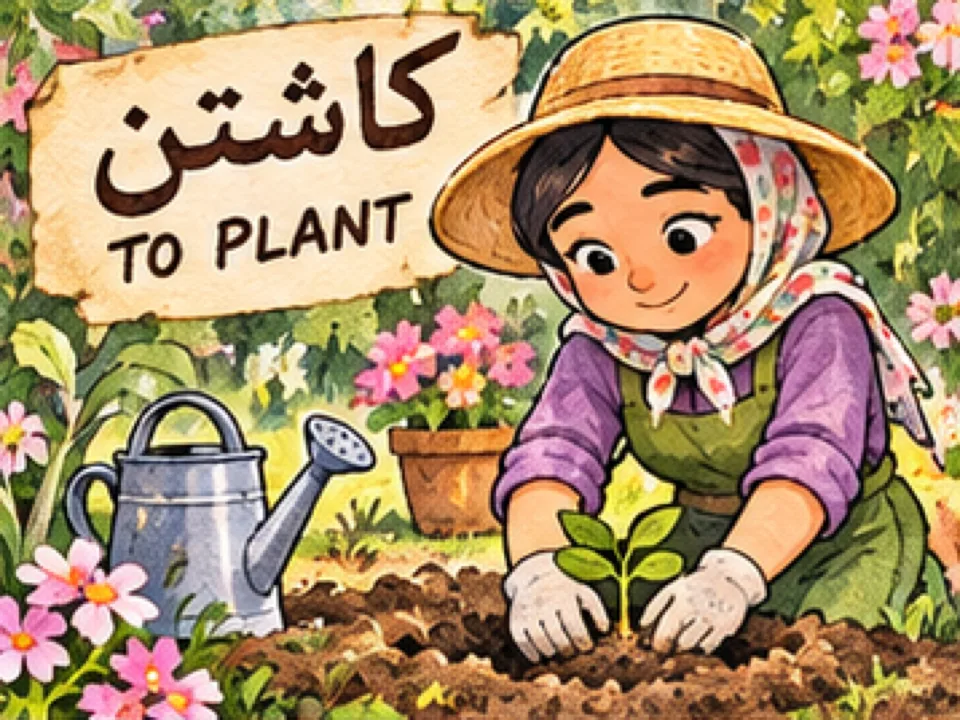
کاشتَن
Watch and listen to Reza Nazari explain this verb. More in the free 200 Persian Verbs video course.
Plant – Implant
مُتَرادِفِ فارسی: پَروَرِش دادَن – قَرار دادَن
مُتَضادِ فارسی: اَز ریشِه دَر آوَردَن
:صَرف
گُذَشتِه: کاشتَم – کاشتی – کاشت – کاشتیم – کاشتید – کاشتَند
حال: می کارَم – می کاری – می کارَد – می کاریم – می کارید – می کارَند
:مِثال
.مَن دَرباغچِه گُل کاشتَم
.آنها دَر باغِشان گیلاس می کارَند
.آن کِشاوَرز دَر زَمینَش گَنُدم می کارَد
کاشتن (kâshtan) means "to plant" or "to sow" in Persian. See its irregular present stem, full conjugation, examples, phrases and a quiz.
How to use کاشتن (kâshtan)
کاشتن is a simple, transitive verb meaning "to plant" or "to sow". Its present stem is irregular: past کاشت (kâsht), present کار (kâr). So "I planted" is کاشتم (kâshtam), but "I plant" is میکارم (mikâram). The present stem looks exactly like the noun کار ("work"), which can confuse beginners.
The verb is neutral and used for trees, flowers, seeds and crops: درخت کاشتن ("to plant a tree"), گندم کاشتن ("to sow wheat"). In modern usage it also appears in medical terms such as کاشت مو ("hair transplant") and کاشت دندان ("dental implant"). Its natural opposite is درو کردن (derow kardan, "to harvest") or pulling something up by the roots.
Verb stems
| Infinitive | کاشتن | /kâshtan/ | to plant, to sow |
|---|---|---|---|
| Past stem | کاشت | /kâsht/ | used for past tenses |
| Present stem | کار | /kâr/ | used for present, subjunctive and imperative |
Conjugation of کاشتن
| Person | Simple past | Present | Future | Subjunctive |
|---|---|---|---|---|
| من I |
کاشتم /kâshtam/ |
میکارم /mikâram/ |
خواهم کاشت /khâham kâsht/ |
بکارم /bekâram/ |
| تو you (sg.) |
کاشتی /kâshti/ |
میکاری /mikâri/ |
خواهی کاشت /khâhi kâsht/ |
بکاری /bekâri/ |
| او he / she |
کاشت /kâsht/ |
میکارد /mikârad/ |
خواهد کاشت /khâhad kâsht/ |
بکارد /bekârad/ |
| ما we |
کاشتیم /kâshtim/ |
میکاریم /mikârim/ |
خواهیم کاشت /khâhim kâsht/ |
بکاریم /bekârim/ |
| شما you (pl./polite) |
کاشتید /kâshtid/ |
میکارید /mikârid/ |
خواهید کاشت /khâhid kâsht/ |
بکارید /bekârid/ |
| آنها they |
کاشتند /kâshtand/ |
میکارند /mikârand/ |
خواهند کاشت /khâhand kâsht/ |
بکارند /bekârand/ |
Negative and imperative
| Persian | Pronunciation | English |
|---|---|---|
| نکاشتم | /nakâshtam/ | I did not plant |
| نمیکارم | /nemikâram/ | I do not plant / I am not planting |
| بکار! | /bekâr!/ | Plant! (to one person) |
| بکارید! | /bekârid!/ | Plant! (to several people, or politely) |
| نکار! | /nakâr!/ | Don't plant! |
The examples above, translated
| Persian | Pronunciation | English |
|---|---|---|
| من در باغچه گل کاشتم. | /man dar bâghche gol kâshtam/ | I planted flowers in the flower bed. |
| آنها در باغشان گیلاس میکارند. | /ân-hâ dar bâghashân gilâs mikârand/ | They grow cherries in their orchard. |
| آن کشاورز در زمینش گندم میکارد. | /ân keshâvarz dar zaminash gandom mikârad/ | That farmer sows wheat in his field. |
More example sentences
| Persian | Pronunciation | English |
|---|---|---|
| هر سال یک درخت میکاریم. | /har sâl yek derakht mikârim/ | We plant a tree every year. |
| پدربزرگم این درخت را پنجاه سال پیش کاشت. | /pedarbozorgam in derakht râ panjâh sâl pish kâsht/ | My grandfather planted this tree fifty years ago. |
| بهار بهترین وقت برای کاشتن گل است. | /bahâr behtarin vaght barâ-ye kâshtan-e gol ast/ | Spring is the best time to plant flowers. |
| این دانهها را عمیق نکارید. | /in dâne-hâ râ amigh nakârid/ | Don't plant these seeds deep. |
Common phrases
| Persian | Pronunciation | English |
|---|---|---|
| درخت کاشتن | /derakht kâshtan/ | to plant a tree |
| بذر کاشتن | /bazr kâshtan/ | to sow seeds |
| کاشت | /kâsht/ | planting, sowing |
| کاشت مو | /kâsht-e mu/ | hair transplant |
In spoken Persian
In speech the endings shorten: میکاره (mikâre) for میکارد, میکارن (mikâran) for میکارند. The imperative is بکار (bekâr, "plant"). You will hear the verb a lot around Iran's Tree Planting Day, روز درختکاری (ruz-e derakhtkâri), when schools and families plant trees together.
Watch out for
- The present stem is کار, not کاش: میکارم ("I plant"). Don't confuse it with کار میکنم (kâr mikonam, "I work").
- Note: the page writes درباغچه without a space and marks گندم with the wrong vowels; it should be در باغچه and gandom.
Practice
-
Translate into Persian: "We planted a tree."
Show answer
mâ yek derakht kâshtim. ما یک درخت کاشتیم.
-
What is the present-tense form for "I"?
Show answer
mikâram میکارم
-
What does this sentence mean? کشاورزان در پاییز گندم میکارند.
Show answer
Farmers sow wheat in the fall.
Related verbs in this course
This is lesson 172 of 200 Most Common Persian Verbs. For the sounds used in the pronunciation guide, see Persian pronunciation.


Take this lesson further

Study with the book
200 Absolutely Essential Persian Verbs
This free lesson is part of 200 Most Common Persian Verbs. The book puts the whole series in one printable PDF you can study offline.
Serious about Persian? Get all 30 of our Persian learning books for $199.99 (55% less than buying them one by one).
Free Persian Starter Kit (PDF)
The Persian alphabet chart and the 101 most common Persian words with pronunciation, in one printable PDF. You also get a one-time 15% code for any of our books.
We will email you new lessons and book news from Learn Persian Online. Unsubscribe any time.Free: 100 Core Persian Words + 20 Survival Phrases
Get the 14-page printable Starter Pack (all 32 letters, a 7-day reading plan, 100 core words and 20 survival phrases) and a short 5-email course. Free.
Practise with free Persian games