200 Most Common Persian Verbs
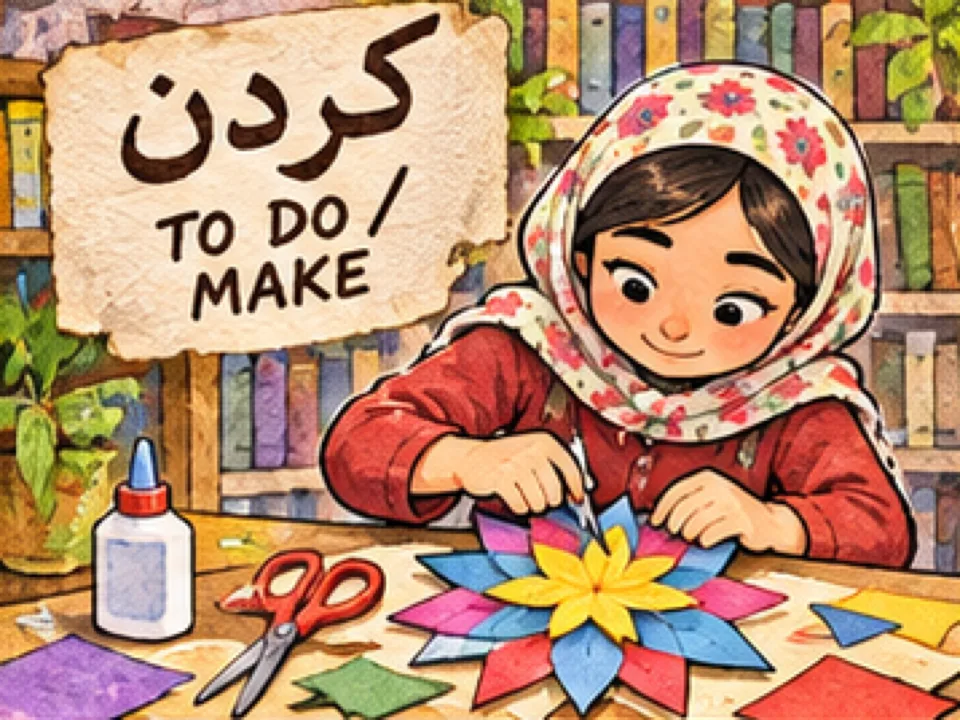
کَردَن
Watch and listen to Reza Nazari explain this verb. More in the free 200 Persian Verbs video course.
Do – Perform
مُتَرادِفِ فارسی: اَنجام دادَن
مُتَضادِ فارسی: خَراب کَردَن – رَها کَردَن
:صَرف
گُذَشتِه: کَردَم – کَردی – کَرد – کَردیم – کَردید – کَردَند
حال: می کُنَم – می کُنی – می کُنَد – می کُنیم – می کُنید – می کُنَند
:مِثال
.او دَر این شِرکَت کار می کُنَد
.مَن دَر ایران زِندِگی می کُنَم
.ما یِک خانِه اِجارِه کَردیم
کردن (kardan) means "to do" or "to make" and builds hundreds of compound verbs. See its stems, full conjugation, examples and a quiz.
How to use کردن (kardan)
کردن is a simple, transitive verb with an irregular present stem: past کرد (kard), present کن (kon). So "I did" is کردم (kardam) and "I do" is میکنم (mikonam). On its own it means "to do" or "to make", but you will meet it far more often as the light verb in compounds such as کار کردن ("to work"), زندگی کردن ("to live") and فکر کردن ("to think").
In those compounds the meaning comes from the noun or adjective, and کردن only carries tense and person. The verb is neutral in every register; formal writing sometimes replaces it with نمودن (nemudan). For "to do a task", Persian often prefers انجام دادن (anjâm dâdan): کارهایم را انجام دادم ("I did my tasks"). Standalone کردن takes ب in the subjunctive: بکنم (bokonam).
Verb stems
| Infinitive | کردن | /kardan/ | to do, to make |
|---|---|---|---|
| Past stem | کرد | /kard/ | used for past tenses |
| Present stem | کن | /kon/ | used for present, subjunctive and imperative |
Conjugation of کردن
| Person | Simple past | Present | Future | Subjunctive |
|---|---|---|---|---|
| من I |
کردم /kardam/ |
میکنم /mikonam/ |
خواهم کرد /khâham kard/ |
بکنم /bokonam/ |
| تو you (sg.) |
کردی /kardi/ |
میکنی /mikoni/ |
خواهی کرد /khâhi kard/ |
بکنی /bokoni/ |
| او he / she |
کرد /kard/ |
میکند /mikonad/ |
خواهد کرد /khâhad kard/ |
بکند /bokonad/ |
| ما we |
کردیم /kardim/ |
میکنیم /mikonim/ |
خواهیم کرد /khâhim kard/ |
بکنیم /bokonim/ |
| شما you (pl./polite) |
کردید /kardid/ |
میکنید /mikonid/ |
خواهید کرد /khâhid kard/ |
بکنید /bokonid/ |
| آنها they |
کردند /kardand/ |
میکنند /mikonand/ |
خواهند کرد /khâhand kard/ |
بکنند /bokonand/ |
Negative and imperative
| Persian | Pronunciation | English |
|---|---|---|
| نکردم | /nakardam/ | I did not do |
| نمیکنم | /nemikonam/ | I do not do / I am not doing |
| بکن! | /bokon!/ | Do (it)! (to one person) |
| بکنید! | /bokonid!/ | Do (it)! (to several people, or politely) |
| نکن! | /nakon!/ | Don't do (it)! |
The examples above, translated
| Persian | Pronunciation | English |
|---|---|---|
| او در این شرکت کار میکند. | /u dar in sherkat kâr mikonad/ | He works at this company. |
| من در ایران زندگی میکنم. | /man dar irân zendegi mikonam/ | I live in Iran. |
| ما یک خانه اجاره کردیم. | /mâ yek khâne ejâre kardim/ | We rented a house. |
More example sentences
| Persian | Pronunciation | English |
|---|---|---|
| امروز چه کار کردی؟ | /emruz che kâr kardi?/ | What did you do today? |
| این کار را نکن. | /in kâr râ nakon/ | Don't do that. |
| نمیدانم با این پول چه کنم. | /nemidânam bâ in pul che konam/ | I don't know what to do with this money. |
| او در را باز کرد. | /u dar râ bâz kard/ | She opened the door. |
Common phrases
| Persian | Pronunciation | English |
|---|---|---|
| چه کار کردن | /che kâr kardan/ | to do what (as in "what are you doing?") |
| باز کردن | /bâz kardan/ | to open |
| فکر کردن | /fekr kardan/ | to think |
| درست کردن | /dorost kardan/ | to make; to fix |
In spoken Persian
In Tehran speech the present endings shorten: میکنه (mikone), میکنین (mikonin), میکنن (mikonan). Probably the most common question in the language is چی کار میکنی؟ (chi kâr mikoni?, "what are you doing?"). The imperative بکن (bokon) is used alone, but inside a compound it is just کن: باز کن (bâz kon, "open").
Watch out for
- Standalone کردن takes ب in the subjunctive and imperative (بکنم, بکن), but compounds usually don't: کار کنم, باز کن.
- The present stem is pronounced kon, so the present is mikonam, mikoni, mikonad, never "mikanam" (that is the verb کندن, "to dig").
Practice
-
Translate into Persian: "What are you doing?"
Show answer
che kâr mikoni? چه کار میکنی؟
-
What is the subjunctive form for "we" (standalone verb)?
Show answer
bokonim بکنیم
-
What does this sentence mean? او هیچ کاری نکرد.
Show answer
He didn't do anything.
Related verbs in this course
- ساختن (sâkhtan): to build, to make
- خراب کردن (kharâb kardan): to ruin, to destroy, to break; to tear down
This is lesson 173 of 200 Most Common Persian Verbs. For the sounds used in the pronunciation guide, see Persian pronunciation.


Take this lesson further

Study with the book
200 Absolutely Essential Persian Verbs
This free lesson is part of 200 Most Common Persian Verbs. The book puts the whole series in one printable PDF you can study offline.
Serious about Persian? Get all 30 of our Persian learning books for $199.99 (55% less than buying them one by one).
Free Persian Starter Kit (PDF)
The Persian alphabet chart and the 101 most common Persian words with pronunciation, in one printable PDF. You also get a one-time 15% code for any of our books.
We will email you new lessons and book news from Learn Persian Online. Unsubscribe any time.Free: 100 Core Persian Words + 20 Survival Phrases
Get the 14-page printable Starter Pack (all 32 letters, a 7-day reading plan, 100 core words and 20 survival phrases) and a short 5-email course. Free.
Practise with free Persian games