200 Most Common Persian Verbs
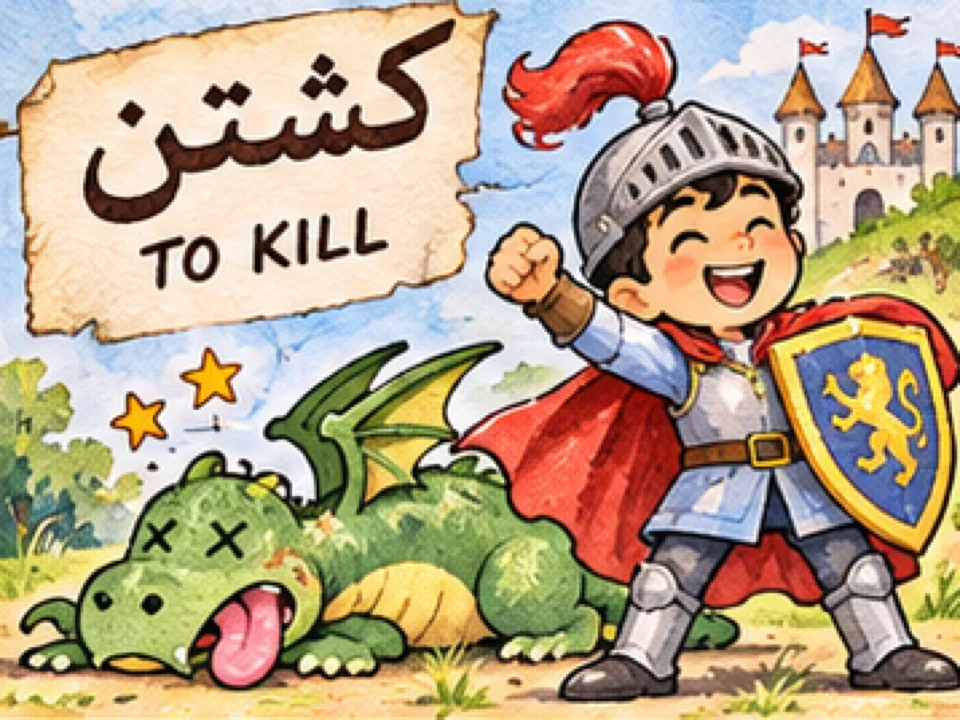
کُشتَن
Watch and listen to Reza Nazari explain this verb. More in the free 200 Persian Verbs video course.
Kill- Assassinate
مُتَرادِفِ فارسی: بِه قَتل رِساندَن
مُتَضادِ فارسی: حِمایَت کَردَن
:صَرف
گُذَشتِه: کُشتَم – کُشتی – کُشت – کُشتیم – کُشتید – کُشتَند
حال: می کُشَم – می کُشی – می کُشَد – می کُشیم – می کُشید – می کُشنَد
:مِثال
.دَر جَنگ چَند سَرباز را کُشتَند
.پُلیس دُزدِ مُسَلَح را کُشت
.دُختَر دَر آشپَزخانِه یک سوسک کُشت
کشتن (koshtan) means "to kill" in Persian. See its stems, full conjugation, examples, common phrases and everyday exaggerations.
How to use کشتن (koshtan)
کشتن is a simple, transitive verb: past stem کشت (kosht), present stem کش (kosh). So "I killed" is کشتم (koshtam) and "I kill" is میکشم (mikosham). The victim is the object, with را when definite: مار را کشت ("he killed the snake"). The passive is کشته شدن (koshte shodan, "to be killed").
The verb is neutral and is also used in everyday exaggerations: این گرما مرا کشت ("this heat is killing me"). In news and formal texts, killing a person is often به قتل رساندن (be ghatl resândan). Be careful: کشتن has the same written present stem as کشیدن ("to pull"), so میکشد can be mikoshad ("kills") or mikeshad ("pulls").
Verb stems
| Infinitive | کشتن | /koshtan/ | to kill |
|---|---|---|---|
| Past stem | کشت | /kosht/ | used for past tenses |
| Present stem | کش | /kosh/ | used for present, subjunctive and imperative |
Conjugation of کشتن
| Person | Simple past | Present | Future | Subjunctive |
|---|---|---|---|---|
| من I |
کشتم /koshtam/ |
میکشم /mikosham/ |
خواهم کشت /khâham kosht/ |
بکشم /bokosham/ |
| تو you (sg.) |
کشتی /koshti/ |
میکشی /mikoshi/ |
خواهی کشت /khâhi kosht/ |
بکشی /bokoshi/ |
| او he / she |
کشت /kosht/ |
میکشد /mikoshad/ |
خواهد کشت /khâhad kosht/ |
بکشد /bokoshad/ |
| ما we |
کشتیم /koshtim/ |
میکشیم /mikoshim/ |
خواهیم کشت /khâhim kosht/ |
بکشیم /bokoshim/ |
| شما you (pl./polite) |
کشتید /koshtid/ |
میکشید /mikoshid/ |
خواهید کشت /khâhid kosht/ |
بکشید /bokoshid/ |
| آنها they |
کشتند /koshtand/ |
میکشند /mikoshand/ |
خواهند کشت /khâhand kosht/ |
بکشند /bokoshand/ |
Negative and imperative
| Persian | Pronunciation | English |
|---|---|---|
| نکشتم | /nakoshtam/ | I did not kill |
| نمیکشم | /nemikosham/ | I do not kill / I am not killing |
| بکش! | /bokosh!/ | Kill! (to one person) |
| بکشید! | /bokoshid!/ | Kill! (to several people, or politely) |
| نکش! | /nakosh!/ | Don't kill! |
The examples above, translated
| Persian | Pronunciation | English |
|---|---|---|
| در جنگ چند سرباز را کشتند. | /dar jang chand sarbâz râ koshtand/ | Several soldiers were killed in the war. |
| پلیس دزد مسلح را کشت. | /polis dozd-e mosallah râ kosht/ | The police killed the armed robber. |
| دختر در آشپزخانه یک سوسک کشت. | /dokhtar dar âshpazkhâne yek susk kosht/ | The girl killed a cockroach in the kitchen. |
More example sentences
| Persian | Pronunciation | English |
|---|---|---|
| پشه را کشتم. | /pashe râ koshtam/ | I killed the mosquito. |
| گربه موش را نکشت. | /gorbe mush râ nakosht/ | The cat didn't kill the mouse. |
| این سم حشرات را میکشد. | /in sam hasharât râ mikoshad/ | This poison kills insects. |
| در این تصادف دو نفر کشته شدند. | /dar in tasâdof do nafar koshte shodand/ | Two people were killed in this accident. |
Common phrases
| Persian | Pronunciation | English |
|---|---|---|
| کشته شدن | /koshte shodan/ | to be killed |
| آدمکش | /âdamkosh/ | killer |
| وقتکشی | /vaghtkoshi/ | killing time, wasting time |
| به قتل رساندن | /be ghatl resândan/ | to murder (formal) |
In spoken Persian
In speech the endings shorten: میکشه (mikoshe) for میکشد, میکشن (mikoshan) for میکشند. Exaggeration is very common: منو کشت (mano kosht, literally "he killed me") means "he wore me out" or "he drove me crazy", and a tired parent might say این بچه منو کشت (in bachche mano kosht).
Watch out for
- کشتن and کشیدن share the written stem کش. Pronounce it kosh for "kill" and kesh for "pull": میکشم is mikosham or mikesham depending on the verb.
- Note: the page puts the vowel of the third-person plural present in the wrong place (میکُشنَد); it is mikoshand. Its antonym حمایت کردن ("to support") is loose; نجات دادن ("to save") fits better.
Practice
-
Translate into Persian: "I killed the spider."
Show answer
ankabut râ koshtam. عنکبوت را کشتم.
-
What is the past-tense form for "they"?
Show answer
koshtand کشتند
-
What does this sentence mean? این گرما مرا کشت.
Show answer
This heat is killing me.
Related verbs in this course
This is lesson 175 of 200 Most Common Persian Verbs. For the sounds used in the pronunciation guide, see Persian pronunciation.


Take this lesson further

Study with the book
200 Absolutely Essential Persian Verbs
This free lesson is part of 200 Most Common Persian Verbs. The book puts the whole series in one printable PDF you can study offline.
Serious about Persian? Get all 30 of our Persian learning books for $199.99 (55% less than buying them one by one).
Free Persian Starter Kit (PDF)
The Persian alphabet chart and the 101 most common Persian words with pronunciation, in one printable PDF. You also get a one-time 15% code for any of our books.
We will email you new lessons and book news from Learn Persian Online. Unsubscribe any time.Free: 100 Core Persian Words + 20 Survival Phrases
Get the 14-page printable Starter Pack (all 32 letters, a 7-day reading plan, 100 core words and 20 survival phrases) and a short 5-email course. Free.
Practise with free Persian games