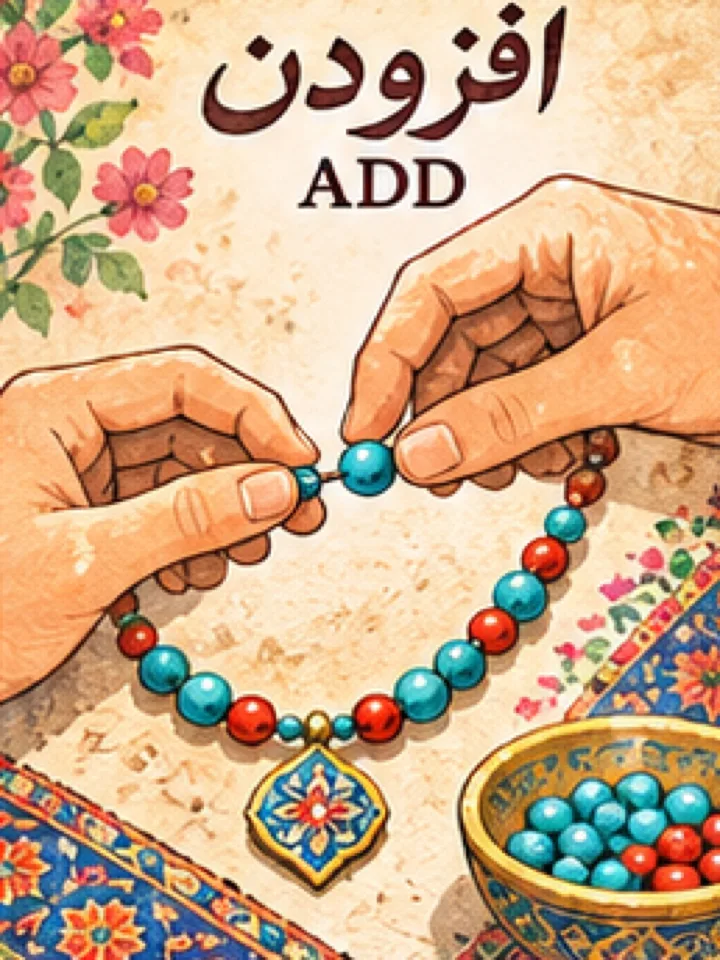
200 Most Common Persian Verbs
اَفزودَن
Watch and listen to Reza Nazari explain this verb. More in the free 200 Persian Verbs video course.
English: Add – Increase
مُتَرادِفِ فارسی: اِضافِه کَردَن – بالا بُردَن
مُتَضادِ فارسی: کَم کَردَن – کاهِش دادَن
:صَرف
گُذَشتِه: اَفزودَم – اَفزودی – اَفزود – اَفزودیم – اَفزودید – اَفزودَند
حال: می اَفزایَم – می اَفزایی – می اَفزایَد – می اَفزاییم – می اَفزایید – می اَفزایَند
:مِثال
.او با خواندَنِ کِتاب بِه دانِشِ خُود می اَفزایَد –
.آشپَز شیر را بِه آرد اَفزُود –
.مَن شِکَر را بِه قَهوِه اَفزُودَم –
افزودن (afzudan) means "to add" or "to increase" in Persian. Learn its stems, full conjugation, examples, related words and a short quiz.
How to use افزودن (afzudan)
افزودن is a simple transitive verb meaning "to add" (one thing to another) and "to increase". Its past stem is افزود (afzud) and its present stem is افزا (afzâ), which takes a ی before endings: میافزاید (miafzâyad). The thing you add to takes به: شکر را به چای افزود, "he added sugar to the tea".
افزودن is formal and literary. You meet it in the news, in books and in written instructions. In everyday speech Iranians say اضافه کردن (ezâfe kardan) instead. Related words are common, though: افزایش (afzâyesh, "increase") and افزودنی (afzudani, "additive"). In news reports, او افزود (u afzud) means "he added", that is, he said further.
Verb stems
| Infinitive | افزودن | /afzudan/ | to add, to increase |
|---|---|---|---|
| Past stem | افزود | /afzud/ | used for past tenses |
| Present stem | افزا | /afzâ/ | used for present, subjunctive and imperative |
Conjugation of افزودن
| Person | Simple past | Present | Future | Subjunctive |
|---|---|---|---|---|
| من I |
افزودم /afzudam/ |
میافزایم /miafzâyam/ |
خواهم افزود /khâham afzud/ |
بیفزایم /biyafzâyam/ |
| تو you (sg.) |
افزودی /afzudi/ |
میافزایی /miafzâyi/ |
خواهی افزود /khâhi afzud/ |
بیفزایی /biyafzâyi/ |
| او he / she |
افزود /afzud/ |
میافزاید /miafzâyad/ |
خواهد افزود /khâhad afzud/ |
بیفزاید /biyafzâyad/ |
| ما we |
افزودیم /afzudim/ |
میافزاییم /miafzâyim/ |
خواهیم افزود /khâhim afzud/ |
بیفزاییم /biyafzâyim/ |
| شما you (pl./polite) |
افزودید /afzudid/ |
میافزایید /miafzâyid/ |
خواهید افزود /khâhid afzud/ |
بیفزایید /biyafzâyid/ |
| آنها they |
افزودند /afzudand/ |
میافزایند /miafzâyand/ |
خواهند افزود /khâhand afzud/ |
بیفزایند /biyafzâyand/ |
Negative and imperative
| Persian | Pronunciation | English |
|---|---|---|
| نیفزودم | /nayafzudam/ | I did not add |
| نمیافزایم | /nemiafzâyam/ | I do not add / I am not adding |
| بیفزا! | /biyafzâ!/ | Add! (to one person) |
| بیفزایید! | /biyafzâyid!/ | Add! (to several people, or politely) |
| نیفزا! | /nayafzâ!/ | Don't add! |
The examples above, translated
| Persian | Pronunciation | English |
|---|---|---|
| او با خواندن کتاب به دانش خود میافزاید. | /u bâ khândan-e ketâb be dânesh-e khod miafzâyad./ | He adds to his knowledge by reading books. |
| آشپز شیر را به آرد افزود. | /âshpaz shir râ be ârd afzud./ | The cook added milk to the flour. |
| من شکر را به قهوه افزودم. | /man shekar râ be ghahve afzudam./ | I added sugar to the coffee. |
More example sentences
| Persian | Pronunciation | English |
|---|---|---|
| نمک را در آخر به سوپ بیفزایید. | /namak râ dar âkhar be sup biyafzâyid./ | Add the salt to the soup at the end. |
| این خبر بر نگرانی مردم افزود. | /in khabar bar negarâni-ye mardom afzud./ | This news added to people's worries. |
| وزیر افزود که قیمتها کاهش خواهد یافت. | /vazir afzud ke gheymat-hâ kâhesh khâhad yâft./ | The minister added that prices would fall. |
| معلم چند تمرین تازه به کتاب افزود. | /mo'allem chand tamrin-e tâze be ketâb afzud./ | The teacher added a few new exercises to the book. |
Common phrases
| Persian | Pronunciation | English |
|---|---|---|
| افزایش | /afzâyesh/ | increase |
| افزایش دادن | /afzâyesh dâdan/ | to increase (something) |
| افزودنی | /afzudani/ | additive |
| بر … افزودن | /bar … afzudan/ | to add to (worries, problems, beauty) |
In spoken Persian
افزودن is almost never used in conversation. In Tehran speech people say اضافه کردن, with the usual short endings: اضافه میکنه (ezâfe mikone), "he adds", یه کم نمک اضافه کن (ye kam namak ezâfe kon), "add a little salt".
Watch out for
- Use افزودن in writing; in conversation it sounds bookish. Say اضافه کردن instead: شکر اضافه کردم, "I added sugar".
- Do not build the present from the past stem: it is میافزایم (miafzâyam), not "miafzudam".
Practice
-
Translate into Persian: "I added some water to the soup."
Show answer
man kami âb be sup afzudam. من کمی آب به سوپ افزودم.
-
What does this phrase mean in a news report? او افزود
Show answer
He added (he said further).
-
What is the present-tense form for "he"?
Show answer
miafzâyad میافزاید
This is lesson 18 of 200 Most Common Persian Verbs. For the sounds used in the pronunciation guide, see Persian pronunciation.


Take this lesson further

Study with the book
200 Absolutely Essential Persian Verbs
This free lesson is part of 200 Most Common Persian Verbs. The book puts the whole series in one printable PDF you can study offline.
Serious about Persian? Get all 30 of our Persian learning books for $199.99 (55% less than buying them one by one).
Free Persian Starter Kit (PDF)
The Persian alphabet chart and the 101 most common Persian words with pronunciation, in one printable PDF. You also get a one-time 15% code for any of our books.
We will email you new lessons and book news from Learn Persian Online. Unsubscribe any time.Free: 100 Core Persian Words + 20 Survival Phrases
Get the 14-page printable Starter Pack (all 32 letters, a 7-day reading plan, 100 core words and 20 survival phrases) and a short 5-email course. Free.
Practise with free Persian games