200 Most Common Persian Verbs
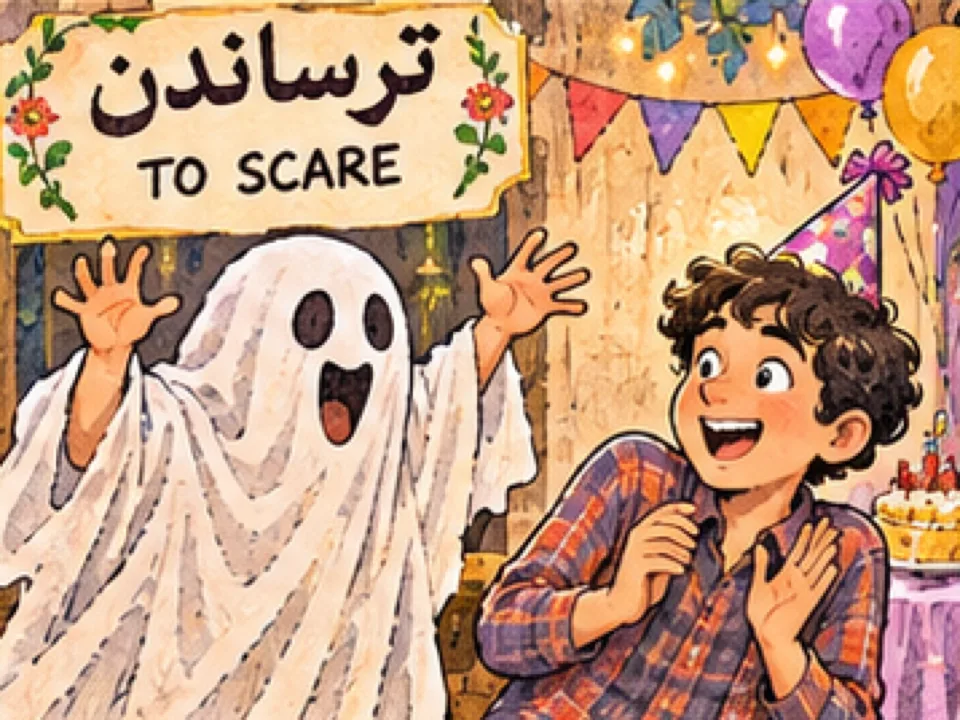
تَرساندَن
Watch and listen to Reza Nazari explain this verb. More in the free 200 Persian Verbs video course.
Threat – Scare
مُتَرادِفِ فارسی: هَراساندَن
مُتَضادِ فارسی: آرامِش دادَن
:صَرف
گُذَشتِه: تَرساندَم – تَرساندی – تَرساند – تَرساندیم – تَرساندید – تَرساندَند
حال: می تَرسانَم – می تَرسانی – می تَرسانَد – می تَرسانیم – می تَرسانید – می تَرسانَند
:مِثال
.دُزد مَن را با چاقو تَرساند
.سُکُوت او مَن را تَرساند
.تاریکی مَن را می تَرسانَد
ترساندن (tarsândan) means "to scare" or "to frighten" in Persian. Learn its stems, full conjugation, examples, common phrases and a quiz.
How to use ترساندن (tarsândan)
ترساندن is a simple transitive verb that means "to scare" or "to frighten" someone. It is the causative form of ترسیدن (tarsidan, "to be afraid"): Persian makes many causatives by adding -اندن (-ândan) to a present stem, so ترس (tars, "fear") becomes "to make someone afraid". The person who gets scared is the direct object and usually takes را (râ).
The verb is neutral and is used in both speech and writing. Learners often mix it up with ترسیدن: من ترسیدم (man tarsidam) means "I got scared", while من او را ترساندم (man u râ tarsândam) means "I scared him". To say what someone is afraid of, use ترسیدن with از (az), not ترساندن.
Verb stems
| Infinitive | ترساندن | /tarsândan/ | to scare, to frighten |
|---|---|---|---|
| Past stem | ترساند | /tarsând/ | used for past tenses |
| Present stem | ترسان | /tarsân/ | used for present, subjunctive and imperative |
Conjugation of ترساندن
| Person | Simple past | Present | Future | Subjunctive |
|---|---|---|---|---|
| من I |
ترساندم /tarsândam/ |
میترسانم /mitarsânam/ |
خواهم ترساند /khâham tarsând/ |
بترسانم /betarsânam/ |
| تو you (sg.) |
ترساندی /tarsândi/ |
میترسانی /mitarsâni/ |
خواهی ترساند /khâhi tarsând/ |
بترسانی /betarsâni/ |
| او he / she |
ترساند /tarsând/ |
میترساند /mitarsânad/ |
خواهد ترساند /khâhad tarsând/ |
بترساند /betarsânad/ |
| ما we |
ترساندیم /tarsândim/ |
میترسانیم /mitarsânim/ |
خواهیم ترساند /khâhim tarsând/ |
بترسانیم /betarsânim/ |
| شما you (pl./polite) |
ترساندید /tarsândid/ |
میترسانید /mitarsânid/ |
خواهید ترساند /khâhid tarsând/ |
بترسانید /betarsânid/ |
| آنها they |
ترساندند /tarsândand/ |
میترسانند /mitarsânand/ |
خواهند ترساند /khâhand tarsând/ |
بترسانند /betarsânand/ |
Negative and imperative
| Persian | Pronunciation | English |
|---|---|---|
| نترساندم | /natarsândam/ | I did not scare (anyone) |
| نمیترسانم | /nemitarsânam/ | I do not scare / I am not scaring |
| بترسان! | /betarsân!/ | Scare (him/her)! (to one person) |
| بترسانید! | /betarsânid!/ | Scare (him/her)! (to several people, or politely) |
| نترسان! | /natarsân!/ | Don't scare (him/her)! |
The examples above, translated
| Persian | Pronunciation | English |
|---|---|---|
| دزد من را با چاقو ترساند. | /dozd man râ bâ châghu tarsând/ | The thief scared me with a knife. |
| سکوت او من را ترساند. | /sokut-e u man râ tarsând/ | His silence scared me. |
| تاریکی من را میترساند. | /târiki man râ mitarsânad/ | The dark scares me. |
More example sentences
| Persian | Pronunciation | English |
|---|---|---|
| صدای رعد و برق بچهها را ترساند. | /sedâ-ye ra'd-o bargh bachche-hâ râ tarsând/ | The sound of the thunderstorm scared the children. |
| لطفاً با این داستانها بچه را نترسان. | /lotfan bâ in dâstân-hâ bachche râ natarsân/ | Please don't scare the child with these stories. |
| این فیلم ترسناک همه را میترساند. | /in film-e tarsnâk hame râ mitarsânad/ | This horror film scares everyone. |
| نمیخواستم تو را بترسانم. | /nemikhâstam to râ betarsânam/ | I didn't want to scare you. |
Common phrases
| Persian | Pronunciation | English |
|---|---|---|
| ترسیدن | /tarsidan/ | to be afraid, to get scared |
| ترسناک | /tarsnâk/ | scary, frightening |
| ترسو | /tarsu/ | cowardly; a coward |
| از چیزی ترسیدن | /az chizi tarsidan/ | to be afraid of something |
In spoken Persian
In Tehran speech the â before n usually turns into u, as in نان → نون (nân → nun). So میترساند (mitarsânad) becomes میترسونه (mitarsune), and ترساندم (tarsândam) becomes ترسوندم (tarsundam). You will often hear منو ترسوندی (mano tarsundi), "you scared me".
Watch out for
- Do not confuse ترساندن (to scare someone) with ترسیدن (to be scared). سگ من را ترساند means "The dog scared me", but من از سگ ترسیدم means "I was scared of the dog".
- Note: the source page translates the verb as "Threat – Scare". "Threat" is a noun and not the meaning here; the verb means "to scare, to frighten". "To threaten" is تهدید کردن (tahdid kardan).
Practice
-
Translate into Persian: "The noise scared the cat."
Show answer
sedâ gorbe râ tarsând. صدا گربه را ترساند.
-
What does this sentence mean? تاریکی بچه را میترساند.
Show answer
The dark scares the child.
-
Give the negative imperative ("Don't scare!") of ترساندن.
Show answer
natarsân! نترسان!
Related verbs in this course
This is lesson 67 of 200 Most Common Persian Verbs. For the sounds used in the pronunciation guide, see Persian pronunciation.


Take this lesson further

Study with the book
200 Absolutely Essential Persian Verbs
This free lesson is part of 200 Most Common Persian Verbs. The book puts the whole series in one printable PDF you can study offline.
Serious about Persian? Get all 30 of our Persian learning books for $199.99 (55% less than buying them one by one).
Free Persian Starter Kit (PDF)
The Persian alphabet chart and the 101 most common Persian words with pronunciation, in one printable PDF. You also get a one-time 15% code for any of our books.
We will email you new lessons and book news from Learn Persian Online. Unsubscribe any time.Free: 100 Core Persian Words + 20 Survival Phrases
Get the 14-page printable Starter Pack (all 32 letters, a 7-day reading plan, 100 core words and 20 survival phrases) and a short 5-email course. Free.
Practise with free Persian games