200 Most Common Persian Verbs
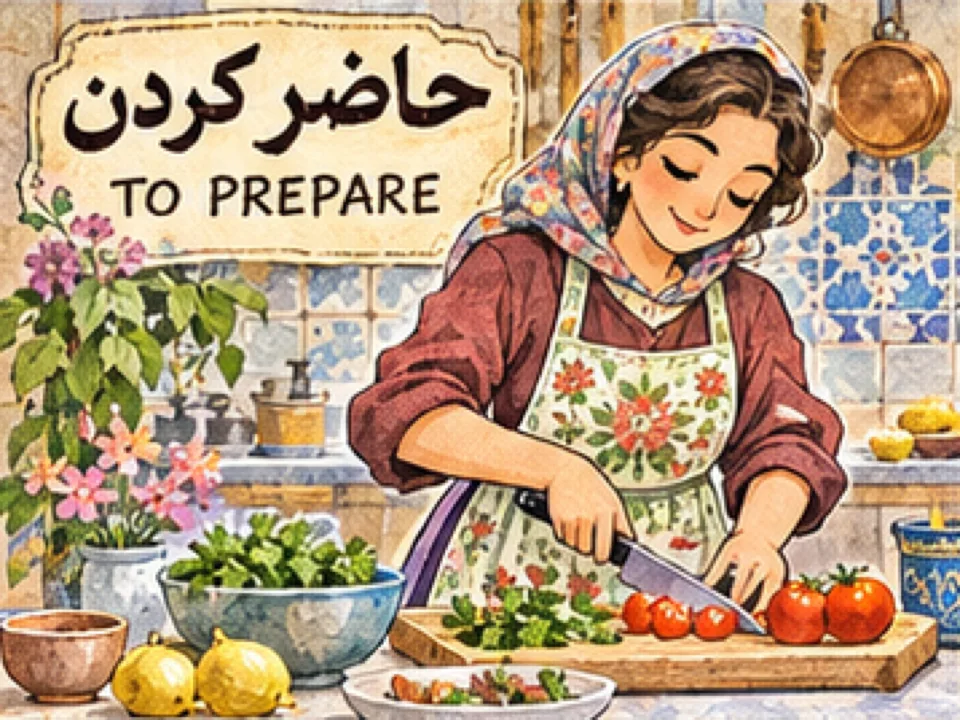
حاضِر کَردَن
Watch and listen to Reza Nazari explain this verb. More in the free 200 Persian Verbs video course.
Ready
مُتَرادِفِ فارسی: آمادِه کَردَن – مُهَیّا کَردَن
-:مُتَضادِ فارسی
:صَرف
گُذَشتِه: حاضِر کَردَم – حاضِر کَردی – حاضِر کَرد – حاضِر کَردیم – حاضِر کَردید – حاضِر کَردَند
حال: حاضِر می کُنَم – حاضِر می کُنی – حاضِر می کُنَد – حاضِر می کُنیم – حاضِر می کُنید – حاضِر میکُنَند
:مِثال
.مَن غَذا را حاضِر کَردَم
.مادَر بَچِه را حاضِر کَرد تا بِه مَدرِسِه بِرَوَد
حاضر کردن (hâzer kardan) means "to prepare, to get ready" in Persian. Learn its stems, full conjugation, examples, common phrases and a short quiz.
How to use حاضر کردن (hâzer kardan)
حاضر کردن is a compound verb: the adjective حاضر (hâzer, "ready; present") plus کردن. It is transitive, so you prepare something or get someone ready: شام را حاضر کردم, "I got dinner ready." When you get yourself ready, use the intransitive حاضر شدن (hâzer shodan): حاضر شدی؟, "Are you ready?"
The verb is everyday and especially common at home: preparing food, packing for a trip, getting children ready for school. Its close synonym آماده کردن (âmâde kardan) is slightly more neutral, and مهیا کردن (mohayyâ kardan) is formal. Remember that حاضر also means "present" in a class roll call, and that "to attend" is حاضر شدن or شرکت کردن, not حاضر کردن.
Verb stems
| Infinitive | حاضر کردن | /hâzer kardan/ | to prepare, to get (something or someone) ready |
|---|---|---|---|
| Past stem | حاضر کرد | /hâzer kard/ | used for past tenses |
| Present stem | حاضر کن | /hâzer kon/ | used for present, subjunctive and imperative |
Conjugation of حاضر کردن
| Person | Simple past | Present | Future | Subjunctive |
|---|---|---|---|---|
| من I |
حاضر کردم /hâzer kardam/ |
حاضر میکنم /hâzer mikonam/ |
حاضر خواهم کرد /hâzer khâham kard/ |
حاضر کنم /hâzer konam/ |
| تو you (sg.) |
حاضر کردی /hâzer kardi/ |
حاضر میکنی /hâzer mikoni/ |
حاضر خواهی کرد /hâzer khâhi kard/ |
حاضر کنی /hâzer koni/ |
| او he / she |
حاضر کرد /hâzer kard/ |
حاضر میکند /hâzer mikonad/ |
حاضر خواهد کرد /hâzer khâhad kard/ |
حاضر کند /hâzer konad/ |
| ما we |
حاضر کردیم /hâzer kardim/ |
حاضر میکنیم /hâzer mikonim/ |
حاضر خواهیم کرد /hâzer khâhim kard/ |
حاضر کنیم /hâzer konim/ |
| شما you (pl./polite) |
حاضر کردید /hâzer kardid/ |
حاضر میکنید /hâzer mikonid/ |
حاضر خواهید کرد /hâzer khâhid kard/ |
حاضر کنید /hâzer konid/ |
| آنها they |
حاضر کردند /hâzer kardand/ |
حاضر میکنند /hâzer mikonand/ |
حاضر خواهند کرد /hâzer khâhand kard/ |
حاضر کنند /hâzer konand/ |
Negative and imperative
| Persian | Pronunciation | English |
|---|---|---|
| حاضر نکردم | /hâzer nakardam/ | I did not prepare |
| حاضر نمیکنم | /hâzer nemikonam/ | I do not prepare / I am not preparing |
| حاضر کن! | /hâzer kon!/ | Prepare! (to one person) |
| حاضر کنید! | /hâzer konid!/ | Prepare! (to several people, or politely) |
| حاضر نکن! | /hâzer nakon!/ | Don't prepare! |
The examples above, translated
| Persian | Pronunciation | English |
|---|---|---|
| من غذا را حاضر کردم. | /man ghazâ râ hâzer kardam./ | I got the food ready. |
| مادر بچه را حاضر کرد تا به مدرسه برود. | /mâdar bachche râ hâzer kard tâ be madrese beravad./ | The mother got the child ready to go to school. |
| آنها وسایل سفر را حاضر کردند. | /ânhâ vasâyel-e safar râ hâzer kardand./ | They got their things ready for the trip. |
More example sentences
| Persian | Pronunciation | English |
|---|---|---|
| شام را تا ساعت هشت حاضر میکنم. | /shâm râ tâ sâ'at-e hasht hâzer mikonam./ | I'll have dinner ready by eight. |
| چمدانت را حاضر کردی؟ | /chamedânat râ hâzer kardi?/ | Did you get your suitcase ready? |
| باید گزارش را برای جلسه حاضر کنیم. | /bâyad gozâresh râ barâye jalase hâzer konim./ | We have to prepare the report for the meeting. |
| پدر بچهها را برای مهمانی حاضر کرد. | /pedar bachche-hâ râ barâye mehmâni hâzer kard./ | Dad got the kids ready for the party. |
Common phrases
| Persian | Pronunciation | English |
|---|---|---|
| حاضر شدن | /hâzer shodan/ | to get ready; to show up |
| حاضر و آماده | /hâzer-o âmâde/ | all set, fully ready |
| غذای حاضری | /ghazâ-ye hâzeri/ | ready-made food, a quick meal |
| حاضرجواب | /hâzerjavâb/ | quick-witted |
In spoken Persian
In speech the endings shorten: حاضر میکنم (hâzer mikonam), حاضر میکنه (hâzer mikone), حاضر میکنن (hâzer mikonan). A line every Iranian child hears: زود باش حاضر شو (zud bâsh hâzer sho), "Hurry up and get ready."
Watch out for
- حاضر کردن prepares something or someone; حاضر شدن is getting yourself ready: من حاضرم (man hâzeram), "I'm ready."
- Note: the page gives the English as "Ready," which is an adjective; the verb means "to prepare" or "to get ready."
Practice
-
Translate into Persian: "I prepared the tea."
Show answer
man châi râ hâzer kardam. من چای را حاضر کردم.
-
Give the negative present form for "I".
Show answer
hâzer nemikonam حاضر نمیکنم
-
What does this sentence mean? غذا حاضر است.
Show answer
The food is ready.
This is lesson 90 of 200 Most Common Persian Verbs. For the sounds used in the pronunciation guide, see Persian pronunciation.
.آنها وَسایِلِ سَفَر را حاضِر کَردَند


Take this lesson further

Study with the book
200 Absolutely Essential Persian Verbs
This free lesson is part of 200 Most Common Persian Verbs. The book puts the whole series in one printable PDF you can study offline.
Serious about Persian? Get all 30 of our Persian learning books for $199.99 (55% less than buying them one by one).
Free Persian Starter Kit (PDF)
The Persian alphabet chart and the 101 most common Persian words with pronunciation, in one printable PDF. You also get a one-time 15% code for any of our books.
We will email you new lessons and book news from Learn Persian Online. Unsubscribe any time.Free: 100 Core Persian Words + 20 Survival Phrases
Get the 14-page printable Starter Pack (all 32 letters, a 7-day reading plan, 100 core words and 20 survival phrases) and a short 5-email course. Free.
Practise with free Persian games