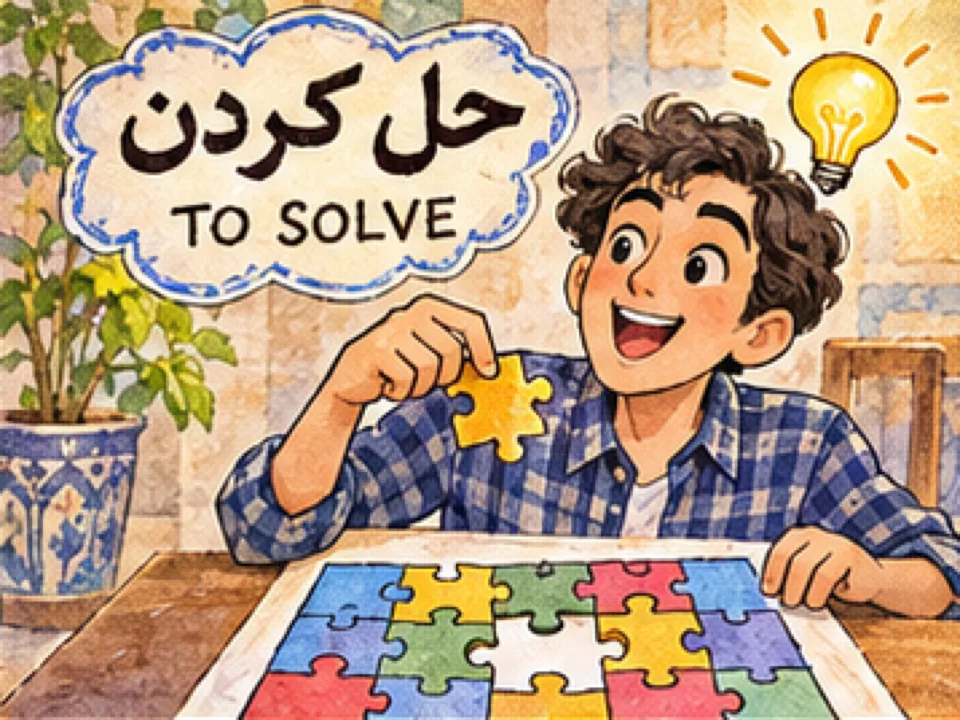
200 Most Common Persian Verbs
حَل کَردَن
Watch and listen to Reza Nazari explain this verb. More in the free 200 Persian Verbs video course.
Solve
مُتَرادِفِ فارسی: دُرُست کَردَن – اَنجام دادَن
مُتَضادِ فارسی: دُشوار ساختَن – پیچیدِه کَردَن
:صَرف
گُذَشتِه: حَل کَردَم – حَل کَردی – حَل کَرد – حَل کَردیم – حَل کَردید – حَل کَردَند
حال: حَل می کُنَم – حَل می کُنی – حَل می کُنَد – حَل می کُنیم – حَل می کُنید
حَل می کُنَند
:مِثال
.مَن مَساَلِه را حَل کَردَم
.او بِه تَنهایی مُشکِلاتَش را حَل کَرد
حل کردن (hal kardan) means "to solve; to dissolve" in Persian. Learn its stems, full conjugation, examples, common phrases and a short quiz.
How to use حل کردن (hal kardan)
حل کردن is a compound verb: the Arabic-origin noun حل (hal, "solving, dissolving") plus کردن. It is transitive and takes را with a definite object: مشکل را حل کردم, "I solved the problem." Its intransitive partner is حل شدن (hal shodan), "to be solved" or "to dissolve." A solution is راهحل (râh-hal), literally "way of solving."
The verb has two meanings. The first is solving a problem, puzzle, exercise or conflict, and it is used at school, at work and in daily life. The second is dissolving something in a liquid, as in شکر را در آب حل کن, "dissolve the sugar in water." For math or logic problems the noun is usually مسئله (mas'ale); for life's troubles it is مشکل (moshkel). Both go with حل کردن.
Verb stems
| Infinitive | حل کردن | /hal kardan/ | to solve; to dissolve |
|---|---|---|---|
| Past stem | حل کرد | /hal kard/ | used for past tenses |
| Present stem | حل کن | /hal kon/ | used for present, subjunctive and imperative |
Conjugation of حل کردن
| Person | Simple past | Present | Future | Subjunctive |
|---|---|---|---|---|
| من I |
حل کردم /hal kardam/ |
حل میکنم /hal mikonam/ |
حل خواهم کرد /hal khâham kard/ |
حل کنم /hal konam/ |
| تو you (sg.) |
حل کردی /hal kardi/ |
حل میکنی /hal mikoni/ |
حل خواهی کرد /hal khâhi kard/ |
حل کنی /hal koni/ |
| او he / she |
حل کرد /hal kard/ |
حل میکند /hal mikonad/ |
حل خواهد کرد /hal khâhad kard/ |
حل کند /hal konad/ |
| ما we |
حل کردیم /hal kardim/ |
حل میکنیم /hal mikonim/ |
حل خواهیم کرد /hal khâhim kard/ |
حل کنیم /hal konim/ |
| شما you (pl./polite) |
حل کردید /hal kardid/ |
حل میکنید /hal mikonid/ |
حل خواهید کرد /hal khâhid kard/ |
حل کنید /hal konid/ |
| آنها they |
حل کردند /hal kardand/ |
حل میکنند /hal mikonand/ |
حل خواهند کرد /hal khâhand kard/ |
حل کنند /hal konand/ |
Negative and imperative
| Persian | Pronunciation | English |
|---|---|---|
| حل نکردم | /hal nakardam/ | I did not solve |
| حل نمیکنم | /hal nemikonam/ | I do not solve / I am not solving |
| حل کن! | /hal kon!/ | Solve! (to one person) |
| حل کنید! | /hal konid!/ | Solve! (to several people, or politely) |
| حل نکن! | /hal nakon!/ | Don't solve! |
The examples above, translated
| Persian | Pronunciation | English |
|---|---|---|
| من مسئله را حل کردم. | /man mas'ale râ hal kardam./ | I solved the problem. |
| او به تنهایی مشکلاتش را حل کرد. | /u be tanhâyi moshkelâtash râ hal kard./ | He solved his problems on his own. |
| وزیر مسائل کشور را حل کرد. | /vazir masâ'el-e keshvar râ hal kard./ | The minister solved the country's problems. |
More example sentences
| Persian | Pronunciation | English |
|---|---|---|
| شکر را در آب گرم حل کن. | /shekar râ dar âb-e garm hal kon./ | Dissolve the sugar in warm water. |
| این جدول را در ده دقیقه حل کردم. | /in jadval râ dar dah daghighe hal kardam./ | I solved this crossword in ten minutes. |
| معلم کمک میکند تمرینها را حل کنیم. | /mo'allem komak mikonad tamrin-hâ râ hal konim./ | The teacher helps us solve the exercises. |
| با حرف زدن همه چیز حل میشود. | /bâ harf zadan hame chiz hal mishavad./ | Everything gets solved by talking. |
Common phrases
| Persian | Pronunciation | English |
|---|---|---|
| حل شدن | /hal shodan/ | to be solved; to dissolve |
| راهحل | /râh-hal/ | solution |
| حل و فصل کردن | /hal-o fasl kardan/ | to settle (a dispute) |
| حلشدنی | /halshodani/ | solvable |
In spoken Persian
In speech the endings shorten: حل میکنم (hal mikonam), حل میکنه (hal mikone), حل میکنن (hal mikonan). A very handy spoken word is حله (halle), "It's sorted" or "Okay, done," from حل است.
Watch out for
- Note: the page's first example spells the word مساله with a stray mark; the standard spelling is مسئله (mas'ale), "problem." Its plural is مسائل (masâ'el), as in the third example.
- Use حل کردن when someone solves or dissolves something, and حل شدن when it happens by itself: نمک در آب حل شد, "the salt dissolved in the water."
Practice
-
Translate into Persian: "Did you solve the problem?"
Show answer
moshkel râ hal kardi? مشکل را حل کردی؟
-
Give the future form for "I".
Show answer
hal khâham kard حل خواهم کرد
-
What does this sentence mean? نمک در آب حل میشود.
Show answer
Salt dissolves in water.
This is lesson 94 of 200 Most Common Persian Verbs. For the sounds used in the pronunciation guide, see Persian pronunciation.
.وَزیر مَسائِل کِشوَر را حَل کَرد


Take this lesson further

Study with the book
200 Absolutely Essential Persian Verbs
This free lesson is part of 200 Most Common Persian Verbs. The book puts the whole series in one printable PDF you can study offline.
Serious about Persian? Get all 30 of our Persian learning books for $199.99 (55% less than buying them one by one).
Free Persian Starter Kit (PDF)
The Persian alphabet chart and the 101 most common Persian words with pronunciation, in one printable PDF. You also get a one-time 15% code for any of our books.
We will email you new lessons and book news from Learn Persian Online. Unsubscribe any time.Free: 100 Core Persian Words + 20 Survival Phrases
Get the 14-page printable Starter Pack (all 32 letters, a 7-day reading plan, 100 core words and 20 survival phrases) and a short 5-email course. Free.
Practise with free Persian games