200 Most Common Persian Verbs
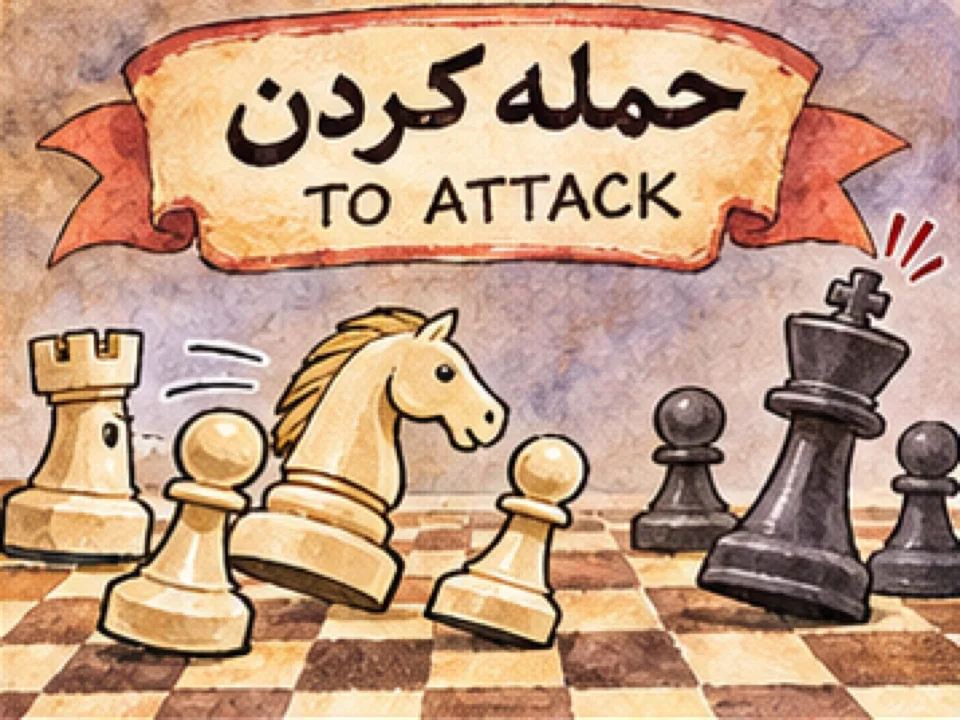
حَملِه کَردَن
Watch and listen to Reza Nazari explain this verb. More in the free 200 Persian Verbs video course.
Assail
مُتَرادِفِ فارسی: یورِش بُردَن – تَعَرُض کَردَن
مُتَضادِ فارسی: صُلح کَردَن
:صَرف
گُذَشتِه: حَملِه کَردَم – حَملِه کَردی – حَملِه کَرد – حَملِه کَردیم – حَملِه کَردید – حَملِه کَردَند
حال: حَملِه می کُنَم – حَملِه می کُنی – حَملِه می کُنَد – حَملِه می کُنیم – حَملِه می کُنید – حَملِه می کُنَند
:مِثال
.آن کِشوَر بِه ما حَملِه کَرد
.دُزد بِه فُروشَندِه حَملِه کَرد
حمله کردن (hamle kardan) means "to attack" in Persian. Learn its stems, full conjugation, examples, common phrases and a short quiz.
How to use حمله کردن (hamle kardan)
حمله کردن is a compound verb: the Arabic-origin noun حمله (hamle, "attack") plus کردن. The target is not a direct object with را; it takes به (be, "to"): سگ به او حمله کرد, "the dog attacked him." When someone is attacked, formal Persian says مورد حمله قرار گرفت (mored-e hamle gharâr gereft), "came under attack."
The verb is neutral and very common. It is used for armies and countries, criminals, animals, and also for sports, where a team attacks the other side's goal. The noun appears in medical phrases too, such as حملهی قلبی (hamle-ye ghalbi), "heart attack." The English gloss "assail" on the page is rare; "to attack" is the natural translation. Formal synonyms are یورش بردن (yuresh bordan) and هجوم آوردن (hojum âvardan).
Verb stems
| Infinitive | حمله کردن | /hamle kardan/ | to attack |
|---|---|---|---|
| Past stem | حمله کرد | /hamle kard/ | used for past tenses |
| Present stem | حمله کن | /hamle kon/ | used for present, subjunctive and imperative |
Conjugation of حمله کردن
| Person | Simple past | Present | Future | Subjunctive |
|---|---|---|---|---|
| من I |
حمله کردم /hamle kardam/ |
حمله میکنم /hamle mikonam/ |
حمله خواهم کرد /hamle khâham kard/ |
حمله کنم /hamle konam/ |
| تو you (sg.) |
حمله کردی /hamle kardi/ |
حمله میکنی /hamle mikoni/ |
حمله خواهی کرد /hamle khâhi kard/ |
حمله کنی /hamle koni/ |
| او he / she |
حمله کرد /hamle kard/ |
حمله میکند /hamle mikonad/ |
حمله خواهد کرد /hamle khâhad kard/ |
حمله کند /hamle konad/ |
| ما we |
حمله کردیم /hamle kardim/ |
حمله میکنیم /hamle mikonim/ |
حمله خواهیم کرد /hamle khâhim kard/ |
حمله کنیم /hamle konim/ |
| شما you (pl./polite) |
حمله کردید /hamle kardid/ |
حمله میکنید /hamle mikonid/ |
حمله خواهید کرد /hamle khâhid kard/ |
حمله کنید /hamle konid/ |
| آنها they |
حمله کردند /hamle kardand/ |
حمله میکنند /hamle mikonand/ |
حمله خواهند کرد /hamle khâhand kard/ |
حمله کنند /hamle konand/ |
Negative and imperative
| Persian | Pronunciation | English |
|---|---|---|
| حمله نکردم | /hamle nakardam/ | I did not attack |
| حمله نمیکنم | /hamle nemikonam/ | I do not attack / I am not attacking |
| حمله کن! | /hamle kon!/ | Attack! (to one person) |
| حمله کنید! | /hamle konid!/ | Attack! (to several people, or politely) |
| حمله نکن! | /hamle nakon!/ | Don't attack! |
The examples above, translated
| Persian | Pronunciation | English |
|---|---|---|
| آن کشور به ما حمله کرد. | /ân keshvar be mâ hamle kard./ | That country attacked us. |
| دزد به فروشنده حمله کرد. | /dozd be forushande hamle kard./ | The thief attacked the shopkeeper. |
| پلیس به دزدان حمله کرد و آنها را دستگیر کرد. | /polis be dozdân hamle kard va ânhâ râ dastgir kard./ | The police moved in on the thieves and arrested them. |
More example sentences
| Persian | Pronunciation | English |
|---|---|---|
| سگ به پستچی حمله کرد. | /sag be postchi hamle kard./ | The dog attacked the mail carrier. |
| تیم ما در نیمهی دوم بیشتر حمله کرد. | /tim-e mâ dar nime-ye dovvom bishtar hamle kard./ | Our team attacked more in the second half. |
| این حیوان فقط وقتی میترسد حمله میکند. | /in heyvân faghat vaghti mitarsad hamle mikonad./ | This animal attacks only when it is afraid. |
| دشمن شب به شهر حمله خواهد کرد. | /doshman shab be shahr hamle khâhad kard./ | The enemy will attack the city at night. |
Common phrases
| Persian | Pronunciation | English |
|---|---|---|
| حملهی قلبی | /hamle-ye ghalbi/ | heart attack |
| حملهی هوایی | /hamle-ye havâyi/ | air strike |
| مورد حمله قرار گرفتن | /mored-e hamle gharâr gereftan/ | to come under attack |
| مهاجم | /mohâjem/ | attacker; (in soccer) forward |
In spoken Persian
In speech کردن shortens: حمله میکنه (hamle mikone), حمله میکنن (hamle mikonan). The به often joins a pronoun: سگه بهم حمله کرد (sage behem hamle kard), "The dog attacked me."
Watch out for
- The target takes به, not را: به ما حمله کردند (be mâ hamle kardand), "they attacked us." Saying "mâ râ hamle kardand" is a common learner mistake.
Practice
-
Translate into Persian: "The cat attacked the bird."
Show answer
gorbe be parande hamle kard. گربه به پرنده حمله کرد.
-
Give the negative imperative ("Don't attack!").
Show answer
hamle nakon! حمله نکن!
-
What does this sentence mean? پدربزرگم حملهی قلبی داشت.
Show answer
My grandfather had a heart attack.
Related verbs in this course
This is lesson 95 of 200 Most Common Persian Verbs. For the sounds used in the pronunciation guide, see Persian pronunciation.
.پُلیس بِه دُزدان حَملِه کَرد وَ آنها را دَستگیر کَرد


Take this lesson further

Study with the book
200 Absolutely Essential Persian Verbs
This free lesson is part of 200 Most Common Persian Verbs. The book puts the whole series in one printable PDF you can study offline.
Serious about Persian? Get all 30 of our Persian learning books for $199.99 (55% less than buying them one by one).
Free Persian Starter Kit (PDF)
The Persian alphabet chart and the 101 most common Persian words with pronunciation, in one printable PDF. You also get a one-time 15% code for any of our books.
We will email you new lessons and book news from Learn Persian Online. Unsubscribe any time.Free: 100 Core Persian Words + 20 Survival Phrases
Get the 14-page printable Starter Pack (all 32 letters, a 7-day reading plan, 100 core words and 20 survival phrases) and a short 5-email course. Free.
Practise with free Persian games