Persian Prepositions: A Complete Guide with Spoken Forms and Examples

The most common Persian prepositions are به (be, to), از (az, from), با (bâ, with), در (dar, in) and برای (barâ-ye, for). Like English, Persian puts them before the noun: از تهران (az Tehrân, from Tehran). Many others, such as روی (ru-ye, on) and زیر (zir-e, under), link to their noun with the ezâfe sound -e or -ye.
This guide gives you every preposition you need for everyday Persian, in two groups that behave differently: simple prepositions and ezâfe prepositions. For each one you get Persian script, pronunciation, example sentences, and how people actually say it in conversation, which is often shorter than the textbook form. After that come prepositions with pronouns (بهت, باهاش, برام), time expressions, the verbs that take a fixed preposition, and the mistakes English speakers make most often.
Two kinds of Persian prepositions
Persian prepositions fall into two groups, and the difference is easy to hear:
- Simple prepositions connect directly to the noun, with nothing in between: با دوستم (bâ dustam, with my friend), به خانه (be khâne, to the house).
- Ezâfe prepositions are really nouns or adverbs (top, bottom, back, side) joined to the next word with the ezâfe: زیر میز (zir-e miz, under the table, literally “the underside of the table”), روی میز (ru-ye miz, on the table).
The ezâfe is the same linking -e you use between a noun and its adjective (ketâb-e khub, a good book). If it is new to you, read our guide to the ezâfe in Persian first; it makes the second group very easy. After a vowel the ezâfe becomes -ye, and in writing that is the ی you see at the end of روی، جلوی and برای. After a consonant it is not written at all: زیر is pronounced zir-e when a noun follows.
Persian also has one postposition, a word that comes after the noun: را (râ, spoken -o or -ro), which marks a definite direct object. It is not a preposition in the English sense, and it has its own lesson: the object marker râ.
Simple prepositions
| Persian | Pronunciation | English | When to use |
|---|---|---|---|
| به | be | to, at, into, in (a language) | Direction, giving something to someone, the person you speak to |
| از | az | from, of, than, through, since | Starting point, comparison, “since” a time, route |
| با | bâ | with, by (transport) | Company, tool, means of transport |
| در | dar | in, at, on | Location and time; mostly written or formal |
| تا | tâ | until, up to, as far as | End point in time or space |
| بی | bi | without | Mostly in fixed words; in speech بدون is more common |
| جز | joz | except | Usually as به جز (be joz) or غیر از (gheyr az) |
| بر | bar | on, upon | Literary and formal; fixed phrases like بر اساس (bar asâs-e, based on) |
به (be): to, at
به marks where you are going and who receives something. It is always written as a separate word.
- به مدرسه میروم. (be madrese miravam.) I go to school.
- این کتاب را به علی دادم. (in ketâb râ be Ali dâdam.) I gave this book to Ali.
- به فارسی بگو. (be fârsi begu.) Say it in Persian.
- به نظر من (be nazar-e man) in my opinion
Spoken: after verbs of going and arriving, به usually disappears and the place moves after the verb: میرم مدرسه. (miram madrese, I’m going to school) . Saying “be madrese miram” in a café sounds like reading from a book.
از (az): from, than, since
از is the busiest preposition in Persian. Learn its four main jobs:
- From: از تهران آمدم. (az Tehrân âmadam; spoken از تهران اومدم, az Tehrân umadam.) I came from Tehran.
- Than: علی از من بزرگتر است. (Ali az man bozorg-tar ast.) Ali is older than me.
- Since: از دیروز مریضم. (az diruz marizam.) I’ve been sick since yesterday. Notice that Persian uses the present here, where English uses “have been”.
- Through, by way of: از این خیابان برو. (az in khiyâbân boro.) Go this way, down this street.
با (bâ): with, by
با covers both “with” (company, tools) and “by” for transport.
- با دوستم به سینما رفتم. (bâ dustam be sinamâ raftam.) I went to the cinema with my friend.
- با اتوبوس میام. (bâ otobus miâm, spoken.) I’ll come by bus.
- با مداد بنویس. (bâ medâd benevis.) Write with a pencil.
در (dar) and تو (tu): in
در (dar) is the “in” of books, news and signs: در تهران زندگی میکنم. (dar Tehrân zendegi mikonam, I live in Tehran). In conversation Iranians rarely say در. They either drop it or use تو (tu, inside):
- تهران زندگی میکنم. (Tehrân zendegi mikonam.) I live in Tehran. (spoken, no preposition)
- کلید تو کیفه. (kelid tu kife.) The key is in the bag. (spoken; written کلید در کیف است)
Rule of thumb: for a city, country, or home, drop it in speech; for something physically inside a container, room or car, use تو.
تا (tâ): until, as far as
- تا فردا (tâ fardâ) until tomorrow, also a common “see you tomorrow”
- تا ایستگاه پیاده رفتم. (tâ istgâh piyâde raftam.) I walked as far as the station.
تا also works as a conjunction (“so that”, “as soon as”). See Grammar Lesson 27: tâ as a preposition for more examples.
بی (bi) and جز (joz): without, except
بی lives mainly inside words, joined with a zero-width non-joiner: بیکار (bikâr, unemployed), بیمزه (bimaze, tasteless, also “not funny”). For “without” in a sentence, everyday Persian uses بدون (bedun-e): قهوه بدون شکر میخورم. (ghahve bedun-e shekar mikhoram.) I drink coffee without sugar.
جز (joz, except) is formal on its own. In speech you hear به جز or غیر از: همه به جز علی اومدن. (hame be joz Ali umadan.) Everyone came except Ali.
Ezâfe prepositions: on, under, behind, next to
These prepositions need the ezâfe before their noun. Most of them describe position, so they are the words you use to answer کجاست؟ (kojâst?, where is it?).
| Persian | Pronunciation | English | Spoken form / note |
|---|---|---|---|
| برای | barâ-ye | for | spoken برا (barâ) |
| روی | ru-ye | on | spoken رو (ru) |
| توی | tu-ye | in, inside | spoken تو (tu) |
| زیر | zir-e | under | keeps -e in speech |
| پشت | posht-e | behind | keeps -e |
| جلوی | jelo-ye | in front of | spoken often جلو (jelo) |
| کنار | kenâr-e | next to, beside | keeps -e |
| نزدیک | nazdik-e | near | keeps -e |
| بین | beyn-e | between, among | keeps -e |
| بالای | bâlâ-ye | above, on top of | spoken often بالا (bâlâ) |
| روبهروی | ruberu-ye | opposite, across from | spoken often روبهرو |
| داخل | dâkhel-e | inside | a little more formal than tu |
| بیرون | birun-e | outside | keeps -e |
| دور | dowr-e | around | keeps -e |
| پیش | pish-e | with, at someone’s place | keeps -e |
| در مورد | dar mored-e | about, regarding | very common in speech |
| دربارهی | darbâre-ye | about | a little more written |
| مثل | mesl-e | like | keeps -e |
| بدون | bedun-e | without | keeps -e |
| به جای | be jâ-ye | instead of | spoken often به جا |
| به خاطر | be khâter-e | because of, for the sake of | keeps -e |
The pattern behind the “spoken form” column: words that end in a vowel (رو، تو، جلو، برا) tend to drop the -ye in conversation, while words that end in a consonant (زیر، پشت، کنار) keep their -e. You will still hear the full forms from careful speakers, so both are correct.
Examples you can reuse
- کتاب روی میز است. (ketâb ru-ye miz ast.) The book is on the table. Spoken: کتاب رو میزه. (ketâb ru mize.)
- گربه زیر میز است. (gorbe zir-e miz ast.) The cat is under the table.
- یکی پشت دره. (yeki posht-e dar-e, spoken.) Someone’s at the door. Literally “someone is behind the door”, which is exactly how Iranians say it.
- جلوی سینما منتظرتم. (jelo-ye sinamâ montazeretam, spoken.) I’ll wait for you in front of the cinema.
- کنار من بشین. (kenâr-e man beshin, spoken.) Sit next to me.
- خانهی ما نزدیک دانشگاه است. (khâne-ye mâ nazdik-e dâneshgâh ast.) Our house is near the university.
- بین من و تو (beyn-e man va to) between you and me
- این گل برای مادرم است. (in gol barâ-ye mâdaram ast.) This flower is for my mother.
- امشب پیش مادرم هستم. (emshab pish-e mâdaram hastam.) I’m at my mother’s tonight. English has no single word for this پیش; it means “with” or “at the place of” a person.
- در مورد چی حرف میزنید؟ (dar mored-e chi harf mizanid?) What are you talking about?
Asking for directions uses these words constantly. Practice them in context with Persian Conversation 41: Asking for Directions.
Flashcards: tap to flip
to, at
from, than, since
with, by (bus, car)
for (spoken barâ)
on (spoken ru)
under
behind
in front of
next to
between
about
without
Prepositions with pronouns: behet, bâhâsh, barâm
In writing, a preposition followed by a pronoun is simple: به من (be man, to me), با او (bâ u, with him or her), برای تو (barâ-ye to, for you). In conversation, Iranians almost always attach a short pronoun ending instead. These forms are everywhere in spoken Persian, texts and songs, so learn to recognize them early.
| Person | to (be) | from (az) | with (bâ) | for (barâ-ye) |
|---|---|---|---|---|
| me | بهم behem | ازم azam | باهام bâhâm | برام barâm |
| you (informal) | بهت behet | ازت azat | باهات bâhât | برات barât |
| him, her, it | بهش behesh | ازش azash | باهاش bâhâsh | براش barâsh |
| us | بهمون behemun | ازمون azemun | باهامون bâhâmun | برامون barâmun |
| you (plural, polite) | بهتون behetun | ازتون azetun | باهاتون bâhâtun | براتون barâtun |
| them | بهشون beheshun | ازشون azeshun | باهاشون bâhâshun | براشون barâshun |
Two details: به picks up an h sound before the ending (behem, behet, behesh), and با becomes باها (bâhâ-). Ezâfe prepositions take the same endings: روش (rush, on it), زیرش (zirash, under it), کنارم (kenâram, next to me). The formal written equivalents use the standard possessive endings, as in برایم (barâyam, for me) and برایش (barâyash, for him or her).
- فردا بهت زنگ میزنم. (fardâ behet zang mizanam.) I’ll call you tomorrow.
- باهاش حرف زدم. (bâhâsh harf zadam.) I talked to him (or her).
- اینو برات خریدم. (ino barât kharidam.) I bought this for you.
Prepositions of time
Time is where Persian differs most from English, because Persian often uses no preposition at all.
- Clock times and days: no preposition. ساعت پنج میام. (sâ’at-e panj miâm, spoken.) I’ll come at five. شنبه میبینمت. (shanbe mibinamet, spoken.) See you on Saturday. For more, see telling time in Persian.
- Seasons, months, years: در in writing, usually dropped in speech: در تابستان (dar tâbestân, in summer), spoken just تابستون (tâbestun).
- From … to: از … تا: از ساعت نه تا پنج کار میکنم. (az sâ’at-e noh tâ panj kâr mikonam.) I work from nine to five.
- Before and after: قبل از (ghabl az) and بعد از (ba’d az). These use az, not the ezâfe: بعد از کلاس (ba’d az kelâs, after class), قبل از شام (ghabl az shâm, before dinner). Formal writing also uses پیش از (pish az) and پس از (pas az).
- Since: از: از دیروز (az diruz, since yesterday).
- For a period: برای: برای دو هفته میرم شیراز. (barâ-ye do hafte miram Shirâz.) I’m going to Shiraz for two weeks.
- During: در طول (dar tul-e): در طول سفر (dar tul-e safar, during the trip).
Practice: choose the right preposition
The book is on the table: کتاب میز است.روی (ru-ye) means “on”. زیر would mean “under”.
I came from Shiraz: شیراز آمدم.از (az) marks the starting point: az Shirâz âmadam.
I went with my brother: برادرم رفتم.با (bâ) is “with”: bâ barâdaram raftam.
Ali is taller than me: علی من بلندتر است.Comparisons use از: Ali az man boland-tar ast.
I think about you (spoken): فکر میکنم.The verb is fekr kardan be, so “about you” is be to, spoken بهت (behet).
I’m afraid of dogs: سگ میترسم.tarsidan takes از: az sag mitarsam.
I work until six: ساعت شش کار میکنم.تا (tâ) means “until”: tâ sâ’at-e shesh kâr mikonam.
Verbs that take a fixed preposition
Many Persian verbs come with a preposition attached, just as English has “listen to” and “afraid of”. The trouble is that the Persian choice often does not match the English one. Learn each verb together with its preposition, as one unit. Our Grammar Lesson 38: verbs and their prepositions has more practice.
| Persian | Pronunciation | English | Example |
|---|---|---|---|
| فکر کردن به | fekr kardan be | to think about | به تو فکر میکنم. (be to fekr mikonam) I think about you. |
| گوش دادن به | gush dâdan be | to listen to | به حرف من گوش کن. (be harf-e man gush kon) Listen to me. |
| نگاه کردن به | negâh kardan be | to look at | به من نگاه کن. (be man negâh kon) Look at me. |
| زنگ زدن به | zang zadan be | to call (phone) | به مادرم زنگ زدم. (be mâdaram zang zadam) I called my mother. |
| کمک کردن به | komak kardan be | to help | به پدرم کمک کردم. (be pedaram komak kardam) I helped my father. |
| علاقه داشتن به | alâghe dâshtan be | to be interested in | به تاریخ علاقه دارم. (be târikh alâghe dâram) I’m interested in history. |
| پرسیدن از | porsidan az | to ask (someone) | از معلم پرسیدم. (az mo’allem porsidam) I asked the teacher. |
| ترسیدن از | tarsidan az | to be afraid of | از سگ میترسم. (az sag mitarsam) I’m afraid of dogs. |
| خوش آمدن از | khosh âmadan az | to like | از این فیلم خوشم اومد. (az in film khosham umad, spoken) I liked this film. |
| تشکر کردن از | tashakkor kardan az | to thank | از شما تشکر میکنم. (az shomâ tashakkor mikonam) I thank you. |
| خسته شدن از | khaste shodan az | to get tired of | از این کار خسته شدم. (az in kâr khaste shodam) I’m tired of this job. |
| حرف زدن با | harf zadan bâ | to talk to | با مدیر حرف زدم. (bâ modir harf zadam) I talked to the manager. |
| ازدواج کردن با | ezdevâj kardan bâ | to marry | با او ازدواج کرد. (bâ u ezdevâj kard) He (or she) married him (or her). |
| آشنا شدن با | âshnâ shodan bâ | to meet, get to know | با علی در دانشگاه آشنا شدم. (bâ Ali dar dâneshgâh âshnâ shodam) I met Ali at university. |
| موافق بودن با | movâfegh budan bâ | to agree with | با تو موافقم. (bâ to movâfegham) I agree with you. |
Two contrasts worth noticing. “To love” takes no preposition, only the object marker: تو را دوست دارم (to râ dust dâram, I love you). And “to wait for” uses the ezâfe, not a preposition: منتظر تو هستم (montazer-e to hastam, I’m waiting for you), spoken منتظرتم (montazeretam).
Try it: say these in Persian
Say each one out loud first, then check: (1) I’m going home. (spoken) (2) I’ll call you tonight. (spoken) (3) I agree with you.
(1) میرم خونه. (miram khune.) No به in speech.
(2) امشب بهت زنگ میزنم. (emshab behet zang mizanam.) zang zadan takes be, and be + to becomes behet.
(3) با تو موافقم. (bâ to movâfegham.) To a stranger or elder: با شما موافقم (bâ shomâ movâfegham).
Prepositions with question words
Persian keeps the preposition in front of the question word, never at the end of the sentence as English does (“Who did you go with?”).
- با کی رفتی؟ (bâ ki rafti?) Who did you go with?
- از کجا اومدی؟ (az kojâ umadi?) Where did you come from?
- برای چی؟ (barâ-ye chi?, spoken barâ chi?) What for? Why?
- تا کی؟ (tâ key?) Until when?
- از کی؟ Can be “az ki?” (from whom?) or “az key?” (since when?). Both are written کی; context decides.
“Where are you going?” in speech is just کجا میری؟ (kojâ miri?), with no به, following the same rule as میرم مدرسه. See Grammar Lesson 39: prepositions with question words and our guide to Persian question words.
Common mistakes English speakers make
- Translating “on Monday” or “at 5”. Persian uses no preposition: دوشنبه (doshanbe), ساعت پنج (sâ’at-e panj).
- Forgetting the ezâfe. In writing and careful speech it is zir-e miz, not “zir miz”; barâ-ye man, not “barâ man” (the short form is spoken only).
- Using در in conversation. “Dar khâne hastam” is correct but bookish. Say خونهام (khune-am, I’m home).
- Copying English verb + preposition pairs. “Afraid of” is az, but “think of” is be, and “marry” needs bâ. Check the verb table above.
- “By bus” with به. Transport always takes با: با تاکسی (bâ tâksi).
- Putting the preposition at the end. “Who are you talking to?” is با کی حرف میزنی؟ (bâ ki harf mizani?).
Word order matters here too: the prepositional phrase usually comes before the verb, in the middle of the sentence. Our step-by-step guide to Persian sentence structure shows where it goes. For a short classroom-style review, see Grammar Lesson 31: prepositions, and for a full course on these and other intermediate structures, Farsi Grammar in Use: For Intermediate Students covers them with exercises.
Quick quiz: Persian prepositions
1. Which preposition means “with” and is also used for transport (“by bus”)?
- به (be)
- از (az)
- با (bâ)
- تا (tâ)
Why
با covers company, tools and transport: bâ otobus, by bus.
2. How do you say “under the table”?
- روی میز (ru-ye miz)
- زیر میز (zir-e miz)
- پشت میز (posht-e miz)
- کنار میز (kenâr-e miz)
Why
زیر (zir-e) is “under”. روی is on, پشت is behind, کنار is next to.
3. In “Ali az man bozorg-tar ast”, what does از mean?
- than
- from
- with
- since
Why
In comparisons, از means “than”: Ali is older than me.
4. What is the natural spoken way to say “I’m going to school”?
- به مدرسه میروم
- در مدرسه میرم
- از مدرسه میرم
- میرم مدرسه
Why
In speech به drops after verbs of motion and the place follows the verb: miram madrese.
5. Which spoken form means “for me”?
- بهم (behem)
- برام (barâm)
- ازم (azam)
- باهام (bâhâm)
Why
برام is spoken barâ-ye man. بهم is “to me”, ازم “from me”, باهام “with me”.
6. Which preposition goes with ترسیدن (to be afraid)?
- به
- با
- از
- برای
Why
tarsidan az: az sag mitarsam, I’m afraid of dogs.
7. How do you say “I’ll come at five”?
- ساعت پنج میام (sâ’at-e panj miâm)
- به ساعت پنج میام
- در ساعت پنج میام
- از ساعت پنج میام
Why
Clock times take no preposition in Persian.
8. Which of these is an ezâfe preposition (it needs -e or -ye before its noun)?
- از (az)
- برای (barâ-ye)
- با (bâ)
- به (be)
Why
برای is followed by the ezâfe: barâ-ye mâdaram. The other three are simple prepositions.
Want more practice? Take the Persian grammar quiz, and look up any word from this page in the online Persian dictionary.
Common questions
What are the most common prepositions in Persian?
The five you will hear most are به (be, to), از (az, from), با (bâ, with), در (dar, in; mostly written) and برای (barâ-ye, for). For position, add روی (on), زیر (under), تو (in), پشت (behind), جلوی (in front of) and کنار (next to).
Does Persian have prepositions or postpositions?
Mainly prepositions, which come before the noun as in English. The one common postposition is را (râ), which follows a definite direct object: کتاب را خواندم (ketâb râ khândam, I read the book).
What is the difference between در and تو?
Both can mean “in”. در (dar) is the written and formal word. تو (tu, short for توی, tu-ye) is what people say for “inside” something: تو ماشین (tu mâshin, in the car). For cities and countries, spoken Persian usually uses neither: تهران زندگی میکنم.
Why do some Persian prepositions end in -e or -ye?
Words like زیر، روی and برای were originally nouns (underside, surface, sake), so they connect to the next word with the ezâfe, the same link used in ketâb-e khub. After a vowel the link is -ye; after a consonant it is -e.
How do you say “with me” or “to you” in spoken Persian?
Attach a short ending: باهام (bâhâm, with me), بهت (behet, to you), ازش (azash, from him or her), برات (barât, for you). The full forms با من and به تو are also correct, but sound more formal or emphatic.
Learn Persian with our bestseller
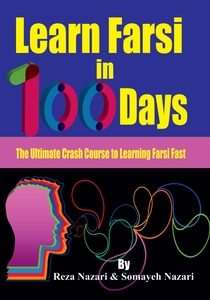
Serious about Persian? Get all 30 of our Persian learning books for $199.99 (55% less than buying them one by one).
Free Persian Starter Kit (PDF)
The Persian alphabet chart and the 101 most common Persian words with pronunciation, in one printable PDF. You also get a one-time 15% code for any of our books.
We will email you new lessons and book news from Learn Persian Online. Unsubscribe any time.Free Persian Starter Pack: Alphabet + 100 Core Words
Get the 14-page printable Starter Pack (all 32 letters, a 7-day reading plan, 100 core words and 20 survival phrases) and a short 5-email course. Free.
by: Learn Persian Online Team about (category: Blog)




What people say about "Persian Prepositions: A Complete Guide with Spoken Forms and Examples"?
No one replied yet.