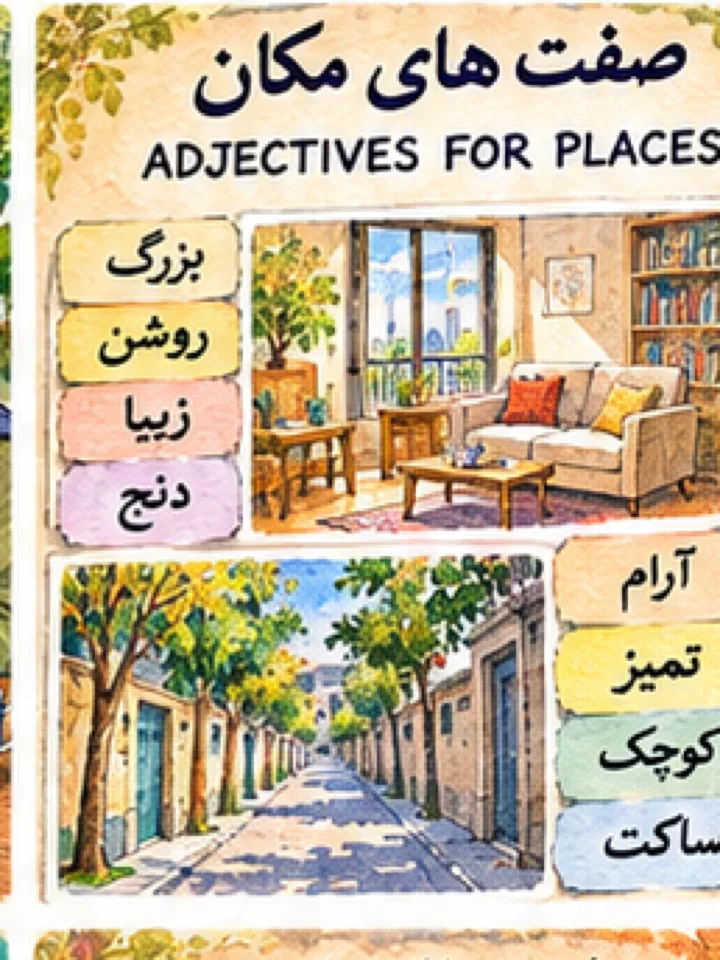
Lesson 4 of Learn to Speak Persian Fast, our free video course: Describing Places. Watch the video for each part, then read the notes, with every Persian word in Persian script, pronunciation and English, and try the practice questions at the end of each part.
New words for lesson 4: describing places and people
Study notes for lesson 4: 18 Persian words for describing rooms, places and how you feel, such as jadid, garm and khaste, with examples.
Study notes for this lesson. Lesson 4 continues with the simple present of "to be" and uses it to describe things: is the room big or small, is the apartment new or old, are you tired or hungry. The words below are the vocabulary for all four pages of the lesson, where Reza visits his friend Sara in her new apartment near the university.
Word list
| Persian | Pronunciation | English |
|---|---|---|
| اتاق | /otâgh/ | room |
| آپارتمان | /âpârtemân/ | apartment |
| آشپزخانه | /âshpazkhâne/ | kitchen |
| جدید | /jadid/ | new |
| قدیمی | /ghadimi/ | old (for things) |
| پیر | /pir/ | old (for people) |
| جوان | /javân/ | young |
| گرم | /garm/ | warm, hot |
| سرد | /sard/ | cold |
| خسته | /khaste/ | tired |
| گرسنه | /gorosne/ | hungry |
| تمیز | /tamiz/ | clean |
| کثیف | /kasif/ | dirty |
| قشنگ | /ghashang/ | pretty, nice |
| ارزان | /arzân/ | cheap |
| گران | /gerân/ | expensive |
| نزدیک | /nazdik/ | near, close |
| دور | /dur/ | far |
Notes on the words
- English "old" has two Persian words: قدیمی for things and places, پیر for people. An old building is ساختمان قدیمی; an old man is مرد پیر.
- Most of the adjectives come in opposite pairs: جدید / قدیمی, گرم / سرد, تمیز / کثیف, ارزان / گران, نزدیک / دور. Learn them as pairs.
- In speech, گران sounds like گرون (gerun) and آشپزخانه like آشپزخونه (âshpazkhune). The written ân often becomes un in Tehran speech.
- نزدیک and دور take به (be) or از (az): نزدیک به دانشگاه, "close to the university"; دور از شهر, "far from the city".
Example sentences
| Persian | Pronunciation | English |
|---|---|---|
| اتاق من کوچک است. | /otâgh-e man kuchek ast./ | My room is small. |
| این آپارتمان جدید است. | /in âpârtemân jadid ast./ | This apartment is new. |
| آشپزخانه تمیز و قشنگ است. | /âshpazkhâne tamiz va ghashang ast./ | The kitchen is clean and nice. |
| آپارتمان گران نیست. | /âpârtemân gerân nist./ | The apartment is not expensive. |
| من خسته و گرسنه هستم. | /man khaste va gorosne hastam./ | I am tired and hungry. |
| دانشگاه نزدیک است؟ | /dâneshgâh nazdik ast?/ | Is the university close? |
An adjective normally follows the noun with ezâfe: اتاق گرم (otâgh-e garm), "a warm room". When it comes after the noun as a description with "to be", there is no ezâfe: اتاق گرم است (otâgh garm ast), "the room is warm". The grammar page of this lesson shows how to make these sentences negative and how to ask questions.
How to learn these words
Walk through your home and describe each room out loud with one or two adjectives: اتاق من کوچک است, آشپزخانه تمیز است. Then describe how you feel right now with خسته, گرسنه or خوشحال from lesson 3. Saying true sentences about your own surroundings makes the words stick much faster than reading a list, and it also trains you to put the verb at the end of the sentence. Once you have done the grammar page, repeat the exercise with the negative: اتاق من بزرگ نیست.
Other pages in this lesson
Practice
What is the opposite of jadid (new) for a building?
Show answer
ghadimi قدیمی
What does this word mean? گرسنه
Show answer
hungry (gorosne)
Which word means "old" for a person?
Show answer
pir پیر
Translate: The kitchen is clean.
Show answer
âshpazkhâne tamiz ast. آشپزخانه تمیز است.
How do you say "a warm room"?
Show answer
otâgh-e garm اتاق گرم
Grammar: Negative and questions with "to be" in Persian
Study notes for lesson 4 grammar: the negative of 'to be' in Persian (nistam, nist), yes/no questions and where-questions, with examples.
Study notes for this lesson. The lesson 4 grammar video returns to the simple present of "to be". Lesson 3 covered the positive forms (هستم, است). This page adds what you need for real conversations: how to say "I am not", how to ask yes/no questions, and how to ask where something is.
The negative: نیستم
The negative of "to be" is one word for each person. There is no separate word for "not": you replace هستم with نیستم, and so on. Unlike the positive, the negative has no short ending; it is always written as a separate word.
| Form | Pronunciation | Meaning |
|---|---|---|
| من نیستم | /man nistam/ | I am not |
| تو نیستی | /to nisti/ | you are not (informal) |
| او نیست | /u nist/ | he, she, it is not |
| ما نیستیم | /mâ nistim/ | we are not |
| شما نیستید | /shomâ nistid/ | you are not (plural or polite) |
| آنها نیستند | /ânhâ nistand/ | they are not |
In everyday speech these forms barely change. The main difference is in the plural: نیستید often sounds like nistin and نیستند like nistan.
Positive and negative side by side
| Persian | Pronunciation | English |
|---|---|---|
| اتاق گرم است. / اتاق گرم نیست. | /otâgh garm ast. / otâgh garm nist./ | The room is warm. / The room is not warm. |
| من خستهام. / من خسته نیستم. | /man khaste-am. / man khaste nistam./ | I am tired. / I am not tired. |
| ما گرسنهایم. / ما گرسنه نیستیم. | /mâ gorosne-im. / mâ gorosne nistim./ | We are hungry. / We are not hungry. |
Yes/no questions
A yes/no question keeps the word order of a statement. In speech, the voice rises at the end. In formal writing, you can put آیا (âyâ) at the start of the sentence, but in conversation it is rarely used.
| Persian | Pronunciation | English |
|---|---|---|
| آپارتمان گران است؟ | /âpârtemân gerân ast?/ | Is the apartment expensive? |
| آیا آپارتمان گران است؟ | /âyâ âpârtemân gerân ast?/ | Is the apartment expensive? (formal) |
| تو خسته نیستی؟ | /to khaste nisti?/ | Aren't you tired? |
| بله، خستهام. / نه، خسته نیستم. | /bale, khaste-am. / na, khaste nistam./ | Yes, I'm tired. / No, I'm not tired. |
Asking "where?"
کجا (kojâ) means "where". With است it becomes کجاست (kojâst), "where is". The answer often uses اینجا (injâ), "here", or آنجا (ânjâ), "there", which combine with است in the same way.
| Persian | Pronunciation | English |
|---|---|---|
| آشپزخانه کجاست؟ | /âshpazkhâne kojâst?/ | Where is the kitchen? |
| آشپزخانه آنجاست. | /âshpazkhâne ânjâst./ | The kitchen is there. |
| رضا اینجاست. | /rezâ injâst./ | Reza is here. |
| سارا اینجا نیست. | /sârâ injâ nist./ | Sara is not here. |
Common mistakes
- Writing the negative as an ending, as in خستهنیستم joined together. نیستم is a separate word.
- Using نه for "not" inside a sentence: من نه خسته هستم is wrong. نه only answers a question; inside the sentence use نیستم.
- Changing the word order for a question. Persian has no inversion and no helper like "do": آپارتمان گران است؟ is the question, with rising intonation.
- Forgetting that نیست also means "there isn't": چای نیست, "there is no tea".
Short answers
Persian short answers repeat the adjective rather than the verb alone. To آپارتمان گران است؟ a natural reply is نه، گران نیست or simply نه، نیست. To تو گرسنهای؟ you answer بله، گرسنهام or نه، گرسنه نیستم. Avoid answering with بله or نه alone to a teacher or an older person; the full sentence sounds more polite.
Other pages in this lesson
Practice
Say "I am not hungry".
Show answer
man gorosne nistam. من گرسنه نیستم.
Make this sentence negative. آپارتمان گران است.
Show answer
âpârtemân gerân nist. آپارتمان گران نیست.
How do you ask "Where is the room?"
Show answer
otâgh kojâst? اتاق کجاست؟
What is the formal word that can start a yes/no question?
Show answer
âyâ آیا
Correct the mistake. ما خسته نیستند.
Show answer
mâ khaste nistim. ما خسته نیستیم.
Speaking practice: visiting a friend's new apartment
Study notes for lesson 4 speaking: a spoken Persian dialogue where Reza visits Sara's new apartment, with colloquial phrases and a role-play.
Study notes for this lesson. This original dialogue practices the positive and negative of "to be" with the adjectives from lesson 4. Reza visits his friend Sara, who has just moved into a small apartment near the university. They speak casual Tehran Persian, so many words look a little different from the written forms; the phrases table shows both.
Dialogue
| Speaker | Persian | Pronunciation | English |
|---|---|---|---|
| Sara | سلام رضا، خوش اومدی. | /salâm rezâ, khosh umadi./ | Hi Reza, welcome. |
| Reza | سلام. اینجا خیلی قشنگه. | /salâm. injâ kheyli ghashange./ | Hi. It's really nice here. |
| Sara | مرسی. کوچیکه، ولی تمیزه. | /mersi. kuchike, vali tamize./ | Thanks. It's small, but it's clean. |
| Reza | گرونه؟ | /gerune?/ | Is it expensive? |
| Sara | نه، گرون نیست. به دانشگاه هم نزدیکه. | /na, gerun nist. be dâneshgâh ham nazdike./ | No, it's not expensive. And it's close to the university. |
| Reza | عالیه. | /âliye./ | That's great. |
| Sara | خستهای؟ | /khaste-i?/ | Are you tired? |
| Reza | نه، خسته نیستم، ولی خیلی گرسنهم. | /na, khaste nistam, vali kheyli gorosname./ | No, I'm not tired, but I'm very hungry. |
| Sara | آشپزخونه اونجاست. چای میخوای؟ | /âshpazkhune unjâst. chây mikhây?/ | The kitchen is over there. Do you want some tea? |
| Reza | آره، مرسی. اینجا سرد نیست؟ | /âre, mersi. injâ sard nist?/ | Yes, thanks. Isn't it cold in here? |
| Sara | نه، اینجا همیشه گرمه. | /na, injâ hamishe garme./ | No, it's always warm here. |
Spoken and written forms
| Persian | Pronunciation | English |
|---|---|---|
| قشنگه | /ghashange/ | it's nice; written ghashang ast |
| کوچیکه | /kuchike/ | it's small; written kuchek ast |
| گرون نیست | /gerun nist/ | it's not expensive; written gerân nist |
| نزدیکه | /nazdike/ | it's close; written nazdik ast |
| خستهای؟ | /khaste-i?/ | are you tired? written khaste hasti? |
| گرسنهم | /gorosname/ | I'm hungry; written gorosne-am |
| اونجاست | /unjâst/ | it's there; written ânjâst |
| خوش اومدی | /khosh umadi/ | welcome (to a friend); written khosh âmadi |
The pattern to notice: spoken Persian replaces است with a short -e on the adjective (گرمه, garme), but the negative نیست stays the same. Also note آره (âre), the casual "yes"; بله is more polite.
Pronunciation tips
The spoken -e ending is unstressed and short: say ghaSHANG-e, not ghashan-GE. In خستهای (khaste-i) the two vowels are pronounced separately, with a light break between them. Keep نیست clear and strong: in a negative answer it carries the main stress of the sentence.
Role-play
Imagine a friend is visiting your home for the first time. Your friend asks three questions with an adjective: گرونه؟, نزدیکه؟, سرد نیست؟. Answer each with آره or نه and a full sentence, using the negative at least twice. Then offer something with چای میخوای؟ and swap roles. You can also describe your real room using five adjectives from this lesson.
Other pages in this lesson
Practice
Is Sara's apartment expensive?
Show answer
No, it's not expensive. نه، گرون نیست.
Why is the location good?
Show answer
It's close to the university. به دانشگاه نزدیکه.
How does Reza feel?
Show answer
He is not tired, but he is very hungry. خسته نیستم، ولی خیلی گرسنهم.
Say "It's always warm here" in spoken Persian.
Show answer
injâ hamishe garme. اینجا همیشه گرمه.
Reading: Sara's new apartment
Study notes for lesson 4 reading: a short Persian text about Sara's new apartment using ast and nist, with translation, key words and a quiz.
Study notes for this lesson. This original text describes Sara's apartment in standard written Persian. It is the written version of the visit in the speaking dialogue, so you can compare how the same ideas look in writing. Watch for است and نیست: together they appear in almost every sentence.
Reading text
| Persian | Pronunciation | English |
|---|---|---|
| این آپارتمان جدید ساراست. | /in âpârtemân-e jadid-e sârâst./ | This is Sara's new apartment. |
| آپارتمان کوچک است، اما خیلی قشنگ است. | /âpârtemân kuchek ast, ammâ kheyli ghashang ast./ | The apartment is small, but it is very nice. |
| ساختمان قدیمی است، اما آپارتمان تمیز است. | /sâkhtemân ghadimi ast, ammâ âpârtemân tamiz ast./ | The building is old, but the apartment is clean. |
| اتاق سارا گرم و روشن است. | /otâgh-e sârâ garm va roshan ast./ | Sara's room is warm and bright. |
| آشپزخانه بزرگ نیست. | /âshpazkhâne bozorg nist./ | The kitchen is not big. |
| آپارتمان گران نیست. ارزان هم نیست. | /âpârtemân gerân nist. arzân ham nist./ | The apartment is not expensive. It isn't cheap either. |
| آپارتمان به دانشگاه نزدیک است. | /âpârtemân be dâneshgâh nazdik ast./ | The apartment is close to the university. |
| رضا دوست ساراست. | /rezâ dust-e sârâst./ | Reza is Sara's friend. |
| امروز رضا اینجاست. | /emruz rezâ injâst./ | Today Reza is here. |
| او خسته نیست، اما گرسنه است. | /u khaste nist, ammâ gorosne ast./ | He is not tired, but he is hungry. |
| رضا میگوید: «آپارتمان تو خیلی قشنگ است.» | /rezâ miguyad: "âpârtemân-e to kheyli ghashang ast."/ | Reza says, "Your apartment is very nice." |
Key words
- ساختمان (sâkhtemân): building
- روشن (roshan): bright, light
- اما (ammâ): but; in speech often ولی (vali)
- هم (ham): also; with a negative, "either"
- به … نزدیک (be … nazdik): close to
- ساراست (sârâst): is Sara's, سارا + است
- اینجاست (injâst): is here
Notes on the text
Sentence 1 has two ezâfe links in a row: آپارتمان جدید سارا is âpârtemân-e jadid-e sârâ, "the new apartment of Sara". Each -e joins one word to the next. In sentence 6, هم after a negative works like English "either": ارزان هم نیست, "it isn't cheap either".
Compare the text with the speaking dialogue of this lesson. In writing Sara's apartment is کوچک است; in speech Sara says کوچیکه. Reading both helps you recognize the two styles.
Write your own version
Write six to eight sentences about your own home in the same style. Use at least three opposite pairs from the word list and at least two negative sentences with نیست. Finish with a sentence about where your home is: خانهی من به … نزدیک است. Read your text aloud, then rewrite two sentences in the spoken style of the dialogue.
Other pages in this lesson
Practice
Is the building new?
Show answer
No, it is old. ساختمان قدیمی است.
Describe Sara's room.
Show answer
It is warm and bright. گرم و روشن است.
Is the kitchen big?
Show answer
No, it is not big. آشپزخانه بزرگ نیست.
Is the apartment cheap?
Show answer
It is neither expensive nor cheap. گران نیست. ارزان هم نیست.
How is Reza today?
Show answer
He is not tired, but he is hungry. خسته نیست، اما گرسنه است.
Take this lesson further

Study with the book
Learn to Speak Persian Fast: For Beginners
This free lesson is part of Learn to Speak Persian Fast. The book puts the whole series in one printable PDF you can study offline.
Serious about Persian? Get all 30 of our Persian learning books for $199.99 (55% less than buying them one by one).
Free Persian Starter Kit (PDF)
The Persian alphabet chart and the 101 most common Persian words with pronunciation, in one printable PDF. You also get a one-time 15% code for any of our books.
We will email you new lessons and book news from Learn Persian Online. Unsubscribe any time.Free Persian Starter Pack: Alphabet + 100 Core Words
Get the 14-page printable Starter Pack (all 32 letters, a 7-day reading plan, 100 core words and 20 survival phrases) and a short 5-email course. Free.