200 Most Common Persian Verbs
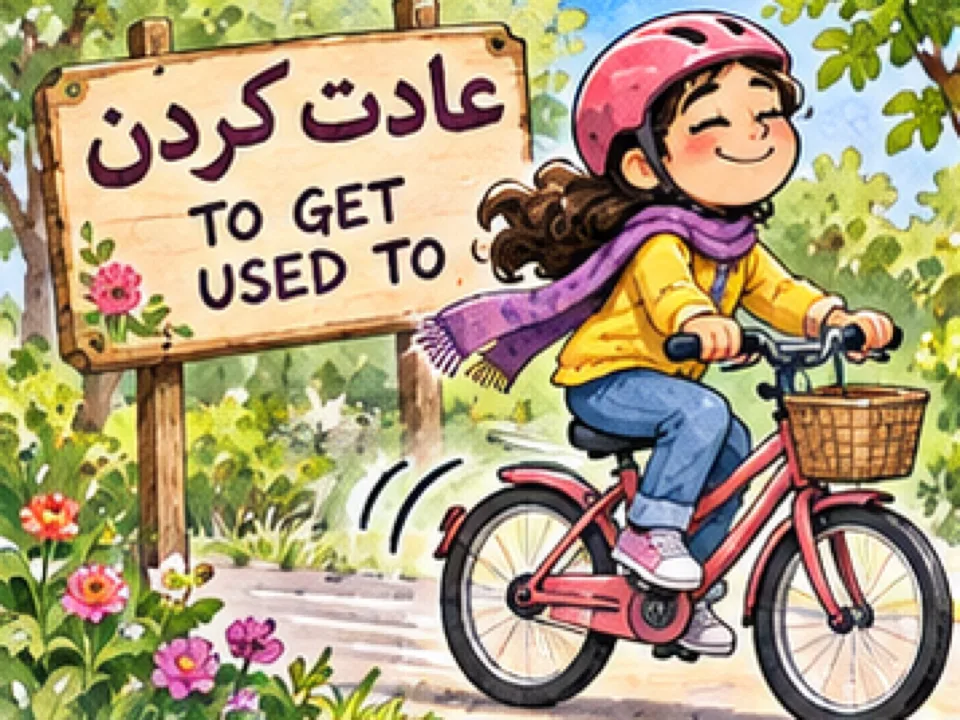
عادَت کَردَن
Watch and listen to Reza Nazari explain this verb. More in the free 200 Persian Verbs video course.
Get
مُتَرادِفِ فارسی: خو گِرفتَن
مُتَضادِ فارسی: بَلَد نبودَن – اَنجام نَدادَن
:صَرف
گُذَشتِه: عادَت کَردَم – عادَت کَردی – عادَت کَرد – عادَت کَردیم – عادَت کَردید – عادَت کَردَند
حال: عادَت می کُنَم – عادَت می کُنی – عادَت می کُنَد – عادَت می کُنیم – عادَت می کُنید – عادَت می کُنَند
:مِثال
.مَن بِه این شَهر عادَت کَردِه اَم
.او عادَت کَردِه اَست صُبح ها دیر بیدار شَوَد
عادت کردن (âdat kardan) means "to get used to" in Persian. Here are its stems, full conjugation, examples with English, common phrases and a short quiz.
How to use عادت کردن (âdat kardan)
عادت کردن is a compound verb: عادت (âdat, "habit") plus کردن. It means "to get used to" something. The thing you get used to takes به: به هوای سرد عادت کردم, "I got used to the cold weather". It can also be followed by a subjunctive verb: عادت کردهام زود بیدار شوم, "I have gotten used to waking up early".
The verb describes a change, so Persians often use the present perfect for the resulting state: عادت کردهام (âdat karde'am) means "I am used to it". The simple present عادت میکنم means "I am getting used to it" or "I will get used to it". To say you have a habit, use عادت داشتن (âdat dâshtan): عادت دارم صبح چای بخورم.
Verb stems
| Infinitive | عادت کردن | /âdat kardan/ | to get used to, to become accustomed to |
|---|---|---|---|
| Past stem | عادت کرد | /âdat kard/ | used for past tenses |
| Present stem | عادت کن | /âdat kon/ | used for present, subjunctive and imperative |
Conjugation of عادت کردن
| Person | Simple past | Present | Future | Subjunctive |
|---|---|---|---|---|
| من I |
عادت کردم /âdat kardam/ |
عادت میکنم /âdat mikonam/ |
عادت خواهم کرد /âdat khâham kard/ |
عادت کنم /âdat konam/ |
| تو you (sg.) |
عادت کردی /âdat kardi/ |
عادت میکنی /âdat mikoni/ |
عادت خواهی کرد /âdat khâhi kard/ |
عادت کنی /âdat koni/ |
| او he / she |
عادت کرد /âdat kard/ |
عادت میکند /âdat mikonad/ |
عادت خواهد کرد /âdat khâhad kard/ |
عادت کند /âdat konad/ |
| ما we |
عادت کردیم /âdat kardim/ |
عادت میکنیم /âdat mikonim/ |
عادت خواهیم کرد /âdat khâhim kard/ |
عادت کنیم /âdat konim/ |
| شما you (pl./polite) |
عادت کردید /âdat kardid/ |
عادت میکنید /âdat mikonid/ |
عادت خواهید کرد /âdat khâhid kard/ |
عادت کنید /âdat konid/ |
| آنها they |
عادت کردند /âdat kardand/ |
عادت میکنند /âdat mikonand/ |
عادت خواهند کرد /âdat khâhand kard/ |
عادت کنند /âdat konand/ |
Negative and imperative
| Persian | Pronunciation | English |
|---|---|---|
| عادت نکردم | /âdat nakardam/ | I did not get used to (it) |
| عادت نمیکنم | /âdat nemikonam/ | I am not getting used to (it) |
| عادت کن! | /âdat kon!/ | Get used to it! (to one person) |
| عادت کنید! | /âdat konid!/ | Get used to it! (to several people, or politely) |
| عادت نکن! | /âdat nakon!/ | Don't get used to it! |
The examples above, translated
| Persian | Pronunciation | English |
|---|---|---|
| من به این شهر عادت کردهام. | /man be in shahr âdat karde'am./ | I have gotten used to this city. |
| او عادت کرده است صبحها دیر بیدار شود. | /u âdat karde ast sobh-hâ dir bidâr shavad./ | He is used to waking up late in the morning. |
| من عادت کردم عصرها ورزش کنم. | /man âdat kardam asr-hâ varzesh konam./ | I got into the habit of exercising in the afternoon. |
More example sentences
| Persian | Pronunciation | English |
|---|---|---|
| کمکم به زندگی در تهران عادت کردم. | /kam-kam be zendegi dar tehrân âdat kardam./ | Little by little I got used to living in Tehran. |
| نگران نباش، به کار جدید عادت میکنی. | /negarân nabâsh, be kâr-e jadid âdat mikoni./ | Don't worry, you'll get used to the new job. |
| بچهها هنوز به مدرسهی جدید عادت نکردهاند. | /bachche-hâ hanuz be madrese-ye jadid âdat nakarde'and./ | The children haven't gotten used to the new school yet. |
| او عادت کرده است شبها کتاب بخواند. | /u âdat karde ast shab-hâ ketâb bekhânad./ | He is used to reading books at night. |
Common phrases
| Persian | Pronunciation | English |
|---|---|---|
| عادت داشتن | /âdat dâshtan/ | to have a habit of, to usually do |
| عادت بد | /âdat-e bad/ | bad habit |
| طبق عادت | /tebgh-e âdat/ | out of habit, as usual |
| ترک عادت | /tark-e âdat/ | breaking a habit |
In spoken Persian
In Tehran speech the perfect عادت کردهام is pronounced "âdat kardam", the same letters as the simple past but with the stress on the last syllable. "Have you gotten used to it?" is عادت کردی؟ (âdat kardi?), and "he'll get used to it" is عادت میکنه (âdat mikone).
Watch out for
- Do not forget به: "I got used to the food" is به غذا عادت کردم (be ghazâ âdat kardam), not "ghazâ râ âdat kardam".
- Note: the page gives the meaning as "Get"; the full meaning is "to get used to". The listed opposites (بلد نبودن, انجام ندادن) are not real opposites.
Practice
-
Translate into Persian: "I got used to the weather."
Show answer
be havâ âdat kardam. به هوا عادت کردم.
-
Fill in the missing word: ___ این غذا عادت کردم.
Show answer
be به
-
What does this sentence mean? نگران نباش، عادت میکنی.
Show answer
Don't worry, you'll get used to it.
This is lesson 155 of 200 Most Common Persian Verbs. For the sounds used in the pronunciation guide, see Persian pronunciation.
.مَن عادَت کَردَم عَصرها وَرزِش کُنَم


Take this lesson further

Study with the book
200 Absolutely Essential Persian Verbs
This free lesson is part of 200 Most Common Persian Verbs. The book puts the whole series in one printable PDF you can study offline.
Serious about Persian? Get all 30 of our Persian learning books for $199.99 (55% less than buying them one by one).
Free Persian Starter Kit (PDF)
The Persian alphabet chart and the 101 most common Persian words with pronunciation, in one printable PDF. You also get a one-time 15% code for any of our books.
We will email you new lessons and book news from Learn Persian Online. Unsubscribe any time.Free: 100 Core Persian Words + 20 Survival Phrases
Get the 14-page printable Starter Pack (all 32 letters, a 7-day reading plan, 100 core words and 20 survival phrases) and a short 5-email course. Free.
Practise with free Persian games