speaking
Practice yes and no questions in Persian: a classroom dialogue with hastid, nistam and esmetun, plus spoken vs written forms and a quiz.
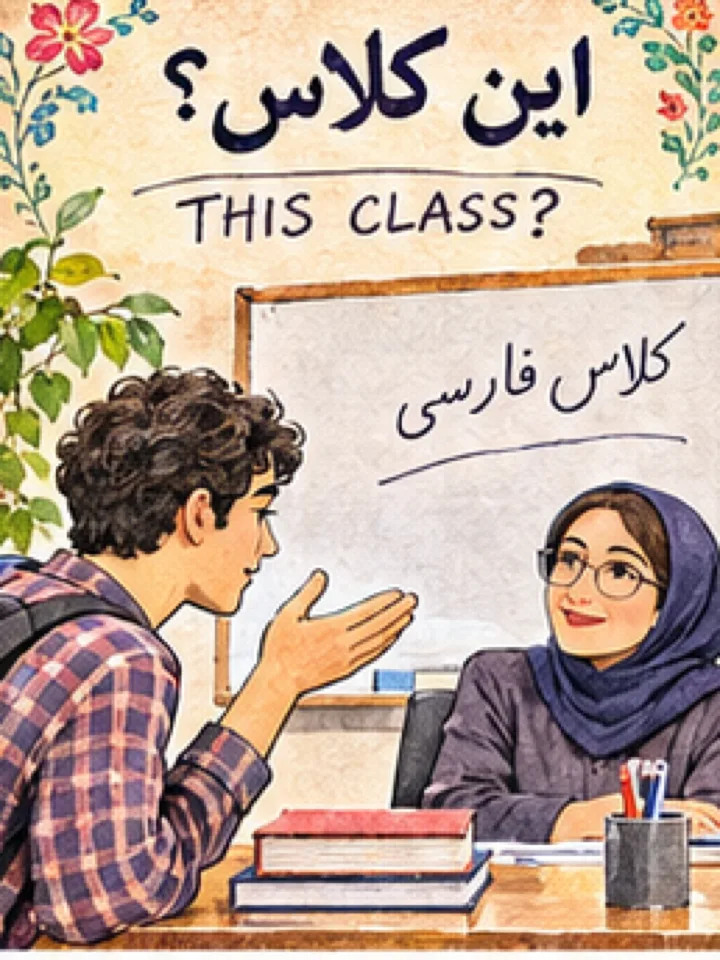
Yes and no questions: are you in this class?
On the first day of a class, Puya thinks he recognizes a classmate called Maryam. He asks the student next to him if she is in the class and if her name is Maryam. It turns out she is Sara. The dialogue is a good model for simple yes and no questions with the verb "to be".
Pay attention to the negative نیستم (nistam), "I am not", and to the way a question is made only by intonation, with no change in word order.
The dialogue
| Speaker | Persian | Pronunciation | English |
|---|---|---|---|
| Puya | شما تو این کلاس هستید؟ | /shomâ tu in kelâs hastid?/ | Are you in this class? |
| Sara | بله، هستم. | /bale, hastam./ | Yes, I am. |
| Puya | اسمتون مریمه؟ | /esmetun maryame?/ | Is your name Maryam? |
| Sara | نه، من نیستم. | /na, man nistam./ | No, I'm not (Maryam). |
| Puya | اسم شما چیه؟ | /esm-e shomâ chiye?/ | What is your name? |
| Sara | اسم من سارا هست. | /esm-e man sârâ hast./ | My name is Sara. |
Key words and phrases
| Persian | Pronunciation | English |
|---|---|---|
| کلاس | /kelâs/ | class |
| این | /in/ | this |
| این کلاس | /in kelâs/ | this class |
| تو | /tu/ | in (spoken) |
| هستید؟ | /hastid?/ | are you? (polite) |
| بله | /bale/ | yes (polite) |
| هستم | /hastam/ | I am |
| نه | /na/ | no |
| نیستم | /nistam/ | I am not |
| اسمتون | /esmetun/ | your name (spoken, polite) |
| چیه؟ | /chiye?/ | what is it? |
| مریمه | /maryame/ | is Maryam (spoken) |
Spoken vs written Persian
Spoken Persian shortens many words in this dialogue. Note especially تو (tu), the everyday word for "in", which is written در (dar). It is spelled like تو (to), "you", but pronounced with a long u.
| Spoken / written | Pronunciation | Meaning |
|---|---|---|
| تو / در | /tu / dar/ | in |
| هستین / هستید | /hastin / hastid/ | you are (polite) |
| اسمتون / اسمتان | /esmetun / esmetân/ | your name |
| مریمه / مریم است | /maryame / maryam ast/ | is Maryam |
| چیه / چیست | /chiye / chist/ | what is it? |
| نه / خیر | /na / kheyr/ | no (خیر is formal) |
Yes, no and "I am not"
بله (bale) is the polite "yes" and آره (âre) the casual one you use with friends. For "no", نه (na) is everyday and خیر (kheyr) is formal, heard in offices or on the phone with strangers.
The negative of هستم (hastam) is نیستم (nistam): نیستی (nisti), نیست (nist), نیستیم (nistim), نیستید (nistid), نیستند (nistand). In the dialogue, من نیستم answers "Is your name Maryam?", so it means "I'm not (her)". A fuller answer would be نه، من مریم نیستم (na, man maryam nistam).
Puya uses شما (shomâ) with a classmate he does not know. This is normal politeness between strangers, even of the same age.
Try it yourself
- Ask a classmate politely whether they are in this class: شما تو این کلاس هستید؟
- Answer yes with بله، هستم (bale, hastam) and no with نه، نیستم (na, nistam).
- Guess someone's name as a question: اسمتون علیه؟ (esmetun aliye?), "Is your name Ali?"
- Correct someone politely: نه، اسم من سارا هست (na, esm-e man sârâ hast).
Remember that a yes or no question in Persian looks exactly like a statement. شما تو این کلاس هستید means "you are in this class", and only the rising voice at the end turns it into a question. In writing, the question mark does the same job. You can also start with آیا (âyâ) in formal writing, but it is rare in speech.
Practice
-
Ask politely: "Are you in this class?"
Show answer
shomâ tu in kelâs hastid? شما تو این کلاس هستید؟
-
How do you say "No, I'm not Maryam"?
Show answer
na, man maryam nistam نه، من مریم نیستم
-
What is the written form of {{اسمتون مریمه؟}}?
Show answer
esmetân maryam ast? اسمتان مریم است؟
-
Which word for "yes" is casual?
Show answer
âre آره
-
What does {{تو}} mean when pronounced tu?
Show answer
in
Find more dialogues in the Farsi conversation lessons series, and review the sounds behind the transliteration on the Persian pronunciation page.
Introduce ⇒ معرفی کردن

| English | Pronunciation | persian | ||
| puya: | Are you in this class? | shomâ tu in kelâs hastin? | شما تو این کلاس هستید؟ | :پویا |
| Sara: | Yes I am | bale hastam | .بله هستم | :سارا |
| puya: | Is your name maryam? | esmetun maryame? | اسمتون مریمه؟ | :پویا |
| Sara: | No I am not | na man nistam | .نه من نیستم | :سارا |
| puya: | What is your name? | esme shomâ chiye? | اسم شما چیه؟ | :پویا |
| Sara: | I am sara. | esme man sârâ hast | .اسم سارا هست | :سارا |


Take this lesson further
Study with the book
Farsi Conversations: Learn the Most Common Words and Phrases Farsi Speakers use Every Day
This free lesson is part of Farsi conversation lessons. The book puts the whole series in one printable PDF you can study offline.
Serious about Persian? Get all 30 of our Persian learning books for $199.99 (55% less than buying them one by one).
Free Persian Starter Kit (PDF)
The Persian alphabet chart and the 101 most common Persian words with pronunciation, in one printable PDF. You also get a one-time 15% code for any of our books.
We will email you new lessons and book news from Learn Persian Online. Unsubscribe any time.Free: 100 Core Persian Words + 20 Survival Phrases
Get the 14-page printable Starter Pack (all 32 letters, a 7-day reading plan, 100 core words and 20 survival phrases) and a short 5-email course. Free.