200 Most Common Persian Verbs
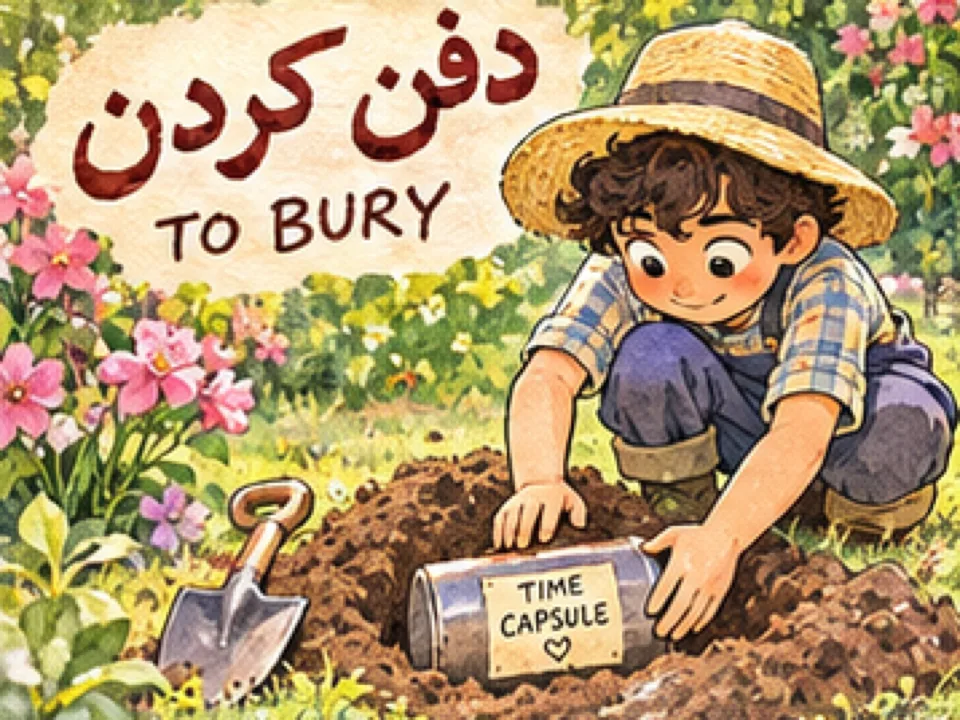
دَفن کَردَن
Watch and listen to Reza Nazari explain this verb. More in the free 200 Persian Verbs video course.
Bury
مُتَرادِفِ فارسی: دَر خاک نَهادَن– بِه خاک سِپُردَن
مُتَضادِ فارسی: اِحیا کَردَن
:صَرف
گُذَشتِه: دَفن کَردَم – دَفن کَردی – دَفن کَرد – دَفن کَردیم – دَفن کَردید – دَفن کَردَند
حال: دَفن می کُنَم – دَفن می کُنی – دَفن می کُنَد – دَفن می کُنیم – دَفن می کُنید – دَفن می کُنَند
:مِثال
.آنها جَسَدِ مُردِه را دَر زیرِ خاک دَفن کَردَند
.دُزد اَشیاءِ قیمَتی را زیرِ خاک دَفن کَرد
.حافِظ دَر شیراز دَفن شُدِه اَست
دفن کردن (dafn kardan) means "to bury" in Persian. See its conjugation, the passive دفن شدن, translated examples and a quiz.
How to use دفن کردن (dafn kardan)
دفن کردن is a compound verb: the Arabic-origin noun دفن (dafn, "burial") plus کردن. It means "to bury", whether a person, an animal or an object: گنج را دفن کردند (ganj râ dafn kardand, "they buried the treasure"). The thing buried takes را, and the place usually takes در or زیر.
The passive دفن شدن (dafn shodan, "to be buried") is very common, especially for famous people: سعدی در شیراز دفن شده است ("Saadi is buried in Shiraz"). The verb is neutral to formal. In everyday speech many people say خاک کردن (khâk kardan) for burying a person, and a funeral is مراسم خاکسپاری (marâsem-e khâksepâri).
Verb stems
| Infinitive | دفن کردن | /dafn kardan/ | to bury |
|---|---|---|---|
| Past stem | دفن کرد | /dafn kard/ | used for past tenses |
| Present stem | دفن کن | /dafn kon/ | used for present, subjunctive and imperative |
Conjugation of دفن کردن
| Person | Simple past | Present | Future | Subjunctive |
|---|---|---|---|---|
| من I |
دفن کردم /dafn kardam/ |
دفن میکنم /dafn mikonam/ |
دفن خواهم کرد /dafn khâham kard/ |
دفن کنم /dafn konam/ |
| تو you (sg.) |
دفن کردی /dafn kardi/ |
دفن میکنی /dafn mikoni/ |
دفن خواهی کرد /dafn khâhi kard/ |
دفن کنی /dafn koni/ |
| او he / she |
دفن کرد /dafn kard/ |
دفن میکند /dafn mikonad/ |
دفن خواهد کرد /dafn khâhad kard/ |
دفن کند /dafn konad/ |
| ما we |
دفن کردیم /dafn kardim/ |
دفن میکنیم /dafn mikonim/ |
دفن خواهیم کرد /dafn khâhim kard/ |
دفن کنیم /dafn konim/ |
| شما you (pl./polite) |
دفن کردید /dafn kardid/ |
دفن میکنید /dafn mikonid/ |
دفن خواهید کرد /dafn khâhid kard/ |
دفن کنید /dafn konid/ |
| آنها they |
دفن کردند /dafn kardand/ |
دفن میکنند /dafn mikonand/ |
دفن خواهند کرد /dafn khâhand kard/ |
دفن کنند /dafn konand/ |
Negative and imperative
| Persian | Pronunciation | English |
|---|---|---|
| دفن نکردم | /dafn nakardam/ | I did not bury |
| دفن نمیکنم | /dafn nemikonam/ | I do not bury / I am not burying |
| دفن کن! | /dafn kon!/ | Bury! (to one person) |
| دفن کنید! | /dafn konid!/ | Bury! (to several people, or politely) |
| دفن نکن! | /dafn nakon!/ | Don't bury! |
The examples above, translated
| Persian | Pronunciation | English |
|---|---|---|
| آنها جسد مرده را در زیر خاک دفن کردند. | /ânhâ jasad-e morde râ dar zir-e khâk dafn kardand./ | They buried the dead body in the ground. |
| دزد اشیاء قیمتی را زیر خاک دفن کرد. | /dozd ashyâ-ye gheymati râ zir-e khâk dafn kard./ | The thief buried the valuables underground. |
| حافظ در شیراز دفن شده است. | /hâfez dar shirâz dafn shode ast./ | Hafez is buried in Shiraz. |
More example sentences
| Persian | Pronunciation | English |
|---|---|---|
| سگ استخوان را در باغ دفن کرد. | /sag ostokhân râ dar bâgh dafn kard./ | The dog buried the bone in the garden. |
| فردوسی در توس دفن شده است. | /ferdosi dar tus dafn shode ast./ | Ferdowsi is buried in Tus. |
| مردم مردهها را در قبرستان دفن میکنند. | /mardom morde-hâ râ dar ghabrestân dafn mikonand./ | People bury the dead in the cemetery. |
| دزدها پول را زیر درخت دفن کردند. | /dozd-hâ pul râ zir-e derakht dafn kardand./ | The thieves buried the money under a tree. |
Common phrases
| Persian | Pronunciation | English |
|---|---|---|
| دفن شدن | /dafn shodan/ | to be buried |
| مراسم خاکسپاری | /marâsem-e khâksepâri/ | funeral, burial ceremony |
| به خاک سپردن | /be khâk sepordan/ | to lay to rest (formal) |
| محل دفن | /mahall-e dafn/ | burial place |
In spoken Persian
In speech the present shortens to دفن میکنن (dafn mikonan, "they bury"). For people, everyday speech prefers خاکش کردن (khâkesh kardan, "they buried him"), as in کجا خاکش کردن؟ (kojâ khâkesh kardan?, "where was he buried?").
Watch out for
- The negative goes on کردن: دفن نکردند (dafn nakardand). For "to be buried", switch to شدن: دفن شد (dafn shod), as in the third example on the page.
Practice
-
Translate into Persian: "They buried the box underground."
Show answer
ânhâ ja'be râ zir-e khâk dafn kardand. آنها جعبه را زیر خاک دفن کردند.
-
What does this sentence mean? پدربزرگم در روستا دفن شده است.
Show answer
My grandfather is buried in the village.
-
Give the future tense form for "we".
Show answer
dafn khâhim kard دفن خواهیم کرد
Related verbs in this course
This is lesson 123 of 200 Most Common Persian Verbs. For the sounds used in the pronunciation guide, see Persian pronunciation.


Take this lesson further

Study with the book
200 Absolutely Essential Persian Verbs
This free lesson is part of 200 Most Common Persian Verbs. The book puts the whole series in one printable PDF you can study offline.
Serious about Persian? Get all 30 of our Persian learning books for $199.99 (55% less than buying them one by one).
Free Persian Starter Kit (PDF)
The Persian alphabet chart and the 101 most common Persian words with pronunciation, in one printable PDF. You also get a one-time 15% code for any of our books.
We will email you new lessons and book news from Learn Persian Online. Unsubscribe any time.Free: 100 Core Persian Words + 20 Survival Phrases
Get the 14-page printable Starter Pack (all 32 letters, a 7-day reading plan, 100 core words and 20 survival phrases) and a short 5-email course. Free.
Practise with free Persian games