200 Most Common Persian Verbs
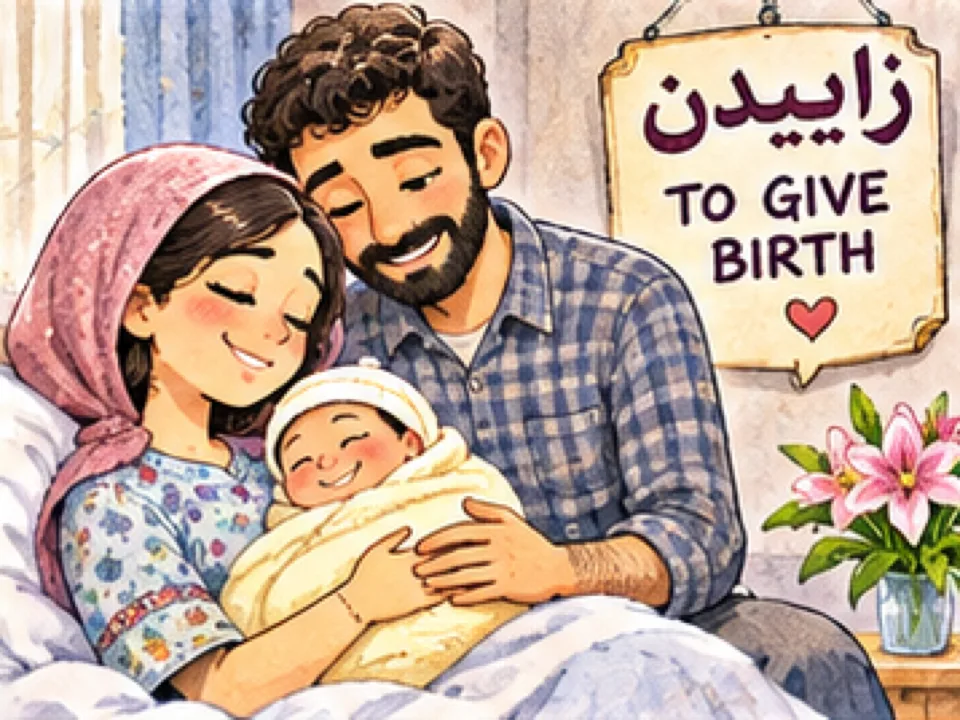
زاییدَن
Watch and listen to Reza Nazari explain this verb. More in the free 200 Persian Verbs video course.
Birth- Bear
مُتَرادِفِ فارسی: بدنیا آوردن
مُتَضادِ فارسی: بدنیا آوردن
:صَرف
گُذَشتِه: زاییدَم – زاییدی – زایید – زاییدیم – زاییدید – زاییدَند
حال: می زایَم – می زایی – می زایَد – می زاییم – می زایید – می زایَند
:مِثال
.گُربِه یِک بَچِه زایید
.آن خانُم یِک پِسَر زایید
.خواهَرِ مَن دوقلو زایید
زاییدن (zâyidan) means "to give birth" in Persian. Learn its stems, full conjugation, examples, polite alternatives and a short quiz.
How to use زاییدن (zâyidan)
زاییدن is a simple verb that means "to give birth" or "to bear young". Its past stem is زایید (zâyid) and its present stem is زا (zâ), which becomes زای (zây) before a personal ending, as in میزاید (mizâyad). It can take an object, as in سگ پنج توله زایید ("the dog had five puppies"), or stand on its own.
Today زاییدن is used mainly for animals. Said about a woman it can sound blunt or rustic, so in polite speech and writing Persians prefer به دنیا آوردن (be donyâ âvardan, "to bring into the world") or زایمان کردن (zâymân kardan, "to deliver a baby"). The related noun زایمان (zâymân, "childbirth, delivery") is the normal medical word.
Verb stems
| Infinitive | زاییدن | /zâyidan/ | to give birth (mainly of animals) |
|---|---|---|---|
| Past stem | زایید | /zâyid/ | used for past tenses |
| Present stem | زا | /zâ/ | used for present, subjunctive and imperative |
Conjugation of زاییدن
| Person | Simple past | Present | Future | Subjunctive |
|---|---|---|---|---|
| من I |
زاییدم /zâyidam/ |
میزایم /mizâyam/ |
خواهم زایید /khâham zâyid/ |
بزایم /bezâyam/ |
| تو you (sg.) |
زاییدی /zâyidi/ |
میزایی /mizâyi/ |
خواهی زایید /khâhi zâyid/ |
بزایی /bezâyi/ |
| او he / she |
زایید /zâyid/ |
میزاید /mizâyad/ |
خواهد زایید /khâhad zâyid/ |
بزاید /bezâyad/ |
| ما we |
زاییدیم /zâyidim/ |
میزاییم /mizâyim/ |
خواهیم زایید /khâhim zâyid/ |
بزاییم /bezâyim/ |
| شما you (pl./polite) |
زاییدید /zâyidid/ |
میزایید /mizâyid/ |
خواهید زایید /khâhid zâyid/ |
بزایید /bezâyid/ |
| آنها they |
زاییدند /zâyidand/ |
میزایند /mizâyand/ |
خواهند زایید /khâhand zâyid/ |
بزایند /bezâyand/ |
Negative and imperative
| Persian | Pronunciation | English |
|---|---|---|
| نزاییدم | /nazâyidam/ | I did not give birth |
| نمیزایم | /nemizâyam/ | I do not give birth / I am not giving birth |
| بزا! | /bezâ!/ | Give birth! (to one person; rarely used) |
| بزایید! | /bezâyid!/ | Give birth! (to several, or politely; rarely used) |
| نزا! | /nazâ!/ | Don't give birth! (rarely used) |
The examples above, translated
| Persian | Pronunciation | English |
|---|---|---|
| گربه یک بچه زایید. | /gorbe yek bachche zâyid./ | The cat gave birth to a kitten. |
| آن خانم یک پسر زایید. | /ân khânom yek pesar zâyid./ | That woman gave birth to a boy. |
| خواهر من دوقلو زایید. | /khâhar-e man dogholu zâyid./ | My sister gave birth to twins. |
More example sentences
| Persian | Pronunciation | English |
|---|---|---|
| سگ ما دیشب پنج توله زایید. | /sag-e mâ dishab panj tule zâyid./ | Our dog gave birth to five puppies last night. |
| گاو همسایه هر سال یک گوساله میزاید. | /gâv-e hamsâye har sâl yek gusâle mizâyad./ | The neighbor's cow has a calf every year. |
| گوسفندها معمولاً در بهار میزایند. | /gusfand-hâ ma'mulan dar bahâr mizâyand./ | Sheep usually give birth in spring. |
| اسب ما هنوز نزاییده است. | /asb-e mâ hanuz nazâyide ast./ | Our horse has not given birth yet. |
Common phrases
| Persian | Pronunciation | English |
|---|---|---|
| به دنیا آوردن | /be donyâ âvardan/ | to give birth (polite, for people) |
| زایمان | /zâymân/ | childbirth, delivery |
| زایشگاه | /zâyeshgâh/ | maternity hospital |
| زایش | /zâyesh/ | birth; creation, generation |
In spoken Persian
In speech the past forms stay the same, with the usual short ending for "they": زاییدن (zâyidan, "they gave birth"), which sounds just like the infinitive. Present forms are rare. For people, Tehranis normally say بچهش به دنیا اومد (bachchash be donyâ umad, "her baby was born") or زایمان کرد (zâymân kard, "she gave birth").
Watch out for
- Note: the page lists به دنیا آوردن as both the synonym and the opposite. It is a synonym; this verb has no real opposite. Also, the imperative forms exist in grammar but are hardly ever used.
- For people, especially in polite conversation, say پسری به دنیا آورد (pesari be donyâ âvard, "she gave birth to a boy") rather than زایید.
Practice
-
Translate into Persian: "The cat had four kittens."
Show answer
gorbe chahâr bachche zâyid. گربه چهار بچه زایید.
-
What is the present stem of this verb? زاییدن
Show answer
zâ (zây before an ending) زا
-
What does this sentence mean? خواهرم یک دختر به دنیا آورد.
Show answer
My sister gave birth to a girl.
This is lesson 135 of 200 Most Common Persian Verbs. For the sounds used in the pronunciation guide, see Persian pronunciation.


Take this lesson further

Study with the book
200 Absolutely Essential Persian Verbs
This free lesson is part of 200 Most Common Persian Verbs. The book puts the whole series in one printable PDF you can study offline.
Serious about Persian? Get all 30 of our Persian learning books for $199.99 (55% less than buying them one by one).
Free Persian Starter Kit (PDF)
The Persian alphabet chart and the 101 most common Persian words with pronunciation, in one printable PDF. You also get a one-time 15% code for any of our books.
We will email you new lessons and book news from Learn Persian Online. Unsubscribe any time.Free: 100 Core Persian Words + 20 Survival Phrases
Get the 14-page printable Starter Pack (all 32 letters, a 7-day reading plan, 100 core words and 20 survival phrases) and a short 5-email course. Free.
Practise with free Persian games