200 Most Common Persian Verbs
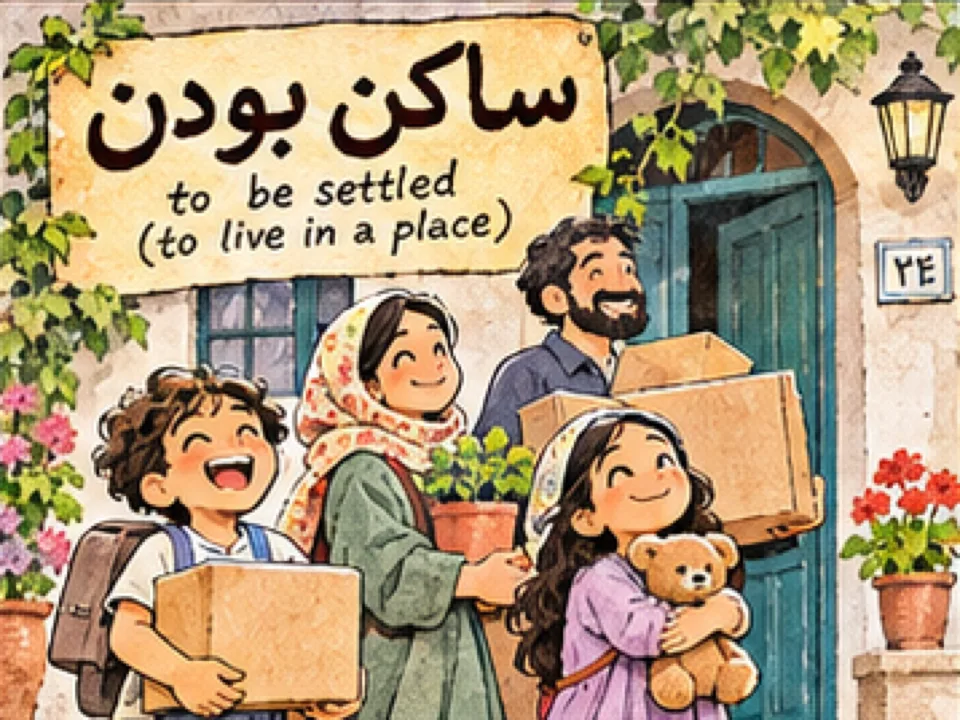
ساکِن بودَن
Watch and listen to Reza Nazari explain this verb. More in the free 200 Persian Verbs video course.
Dwell
مُتَرادِفِ فارسی: اِقامَت داشتَن – سُکونَت داشتَن
مُتَضادِ فارسی: مسافِر بودَن
:صَرف
گُذَشتِه: ساکِن بودَم – ساکِن بودی – ساکِن بود – ساکِن بودیم – ساکِن بودید – ساکِن بودَند
حال: ساکِن هَستَم – ساکِن هَستی – ساکِن هَست – ساکِن هَستیم – ساکِن هَستید – ساکِن هَستَند
:مِثال
.مَن دَر ایران ساکِن هَستَم
.آنها دَر خانِه روبِهرو ساکِن بودَند
ساکن بودن (sâken budan) means "to reside, to live (somewhere)" in Persian. Here are its stems, full conjugation, examples, common phrases and a short quiz.
How to use ساکن بودن (sâken budan)
ساکن بودن means "to reside" or "to live" somewhere. It combines the adjective ساکن (sâken, "resident, settled; still") with بودن (budan, "to be"), so literally "to be resident". The place takes در: در شیراز ساکن هستیم, "we live in Shiraz". Because it is built on بودن, the present tense has no می.
The verb is formal and appears on forms and in the news: ساکن تهران (sâken-e tehrân) means "a resident of Tehran". In conversation people usually say زندگی کردن (zendegi kardan): در تهران زندگی میکنم, "I live in Tehran". The present can also use the short endings: ساکنم (sâkenam), ساکنی (sâkeni), ساکن است (sâken ast).
Verb stems
| Infinitive | ساکن بودن | /sâken budan/ | to live (somewhere), to reside |
|---|---|---|---|
| Past stem | ساکن بود | /sâken bud/ | used for past tenses |
| Present stem | ساکن باش | /sâken bâsh/ | used for present, subjunctive and imperative |
Conjugation of ساکن بودن
| Person | Simple past | Present | Future | Subjunctive |
|---|---|---|---|---|
| من I |
ساکن بودم /sâken budam/ |
ساکن هستم /sâken hastam/ |
ساکن خواهم بود /sâken khâham bud/ |
ساکن باشم /sâken bâsham/ |
| تو you (sg.) |
ساکن بودی /sâken budi/ |
ساکن هستی /sâken hasti/ |
ساکن خواهی بود /sâken khâhi bud/ |
ساکن باشی /sâken bâshi/ |
| او he / she |
ساکن بود /sâken bud/ |
ساکن است /sâken ast/ |
ساکن خواهد بود /sâken khâhad bud/ |
ساکن باشد /sâken bâshad/ |
| ما we |
ساکن بودیم /sâken budim/ |
ساکن هستیم /sâken hastim/ |
ساکن خواهیم بود /sâken khâhim bud/ |
ساکن باشیم /sâken bâshim/ |
| شما you (pl./polite) |
ساکن بودید /sâken budid/ |
ساکن هستید /sâken hastid/ |
ساکن خواهید بود /sâken khâhid bud/ |
ساکن باشید /sâken bâshid/ |
| آنها they |
ساکن بودند /sâken budand/ |
ساکن هستند /sâken hastand/ |
ساکن خواهند بود /sâken khâhand bud/ |
ساکن باشند /sâken bâshand/ |
Negative and imperative
| Persian | Pronunciation | English |
|---|---|---|
| ساکن نبودم | /sâken nabudam/ | I did not live (there) |
| ساکن نیستم | /sâken nistam/ | I do not live (there) |
| ساکن باش! | /sâken bâsh!/ | Live (there)! (to one person, almost never used) |
| ساکن باشید! | /sâken bâshid!/ | Live (there)! (to several people, almost never used) |
| ساکن نباش! | /sâken nabâsh!/ | Don't live (there)! (almost never used) |
The examples above, translated
| Persian | Pronunciation | English |
|---|---|---|
| من در ایران ساکن هستم. | /man dar irân sâken hastam./ | I live in Iran. |
| آنها در خانه روبهرو ساکن بودند. | /ânhâ dar khâne-ye ruberu sâken budand./ | They lived in the house across the street. |
| ما در این شهر ساکن هستیم. | /mâ dar in shahr sâken hastim./ | We live in this city. |
More example sentences
| Persian | Pronunciation | English |
|---|---|---|
| خانوادهی من در اصفهان ساکن هستند. | /khânevâde-ye man dar esfahân sâken hastand./ | My family lives in Isfahan. |
| قبلاً در کانادا ساکن بودیم. | /ghablan dar kânâdâ sâken budim./ | We used to live in Canada. |
| چند سال است که در این محله ساکن هستید؟ | /chand sâl ast ke dar in mahalle sâken hastid?/ | How many years have you lived in this neighborhood? |
| او دیگر در این آپارتمان ساکن نیست. | /u digar dar in âpârtemân sâken nist./ | He doesn't live in this apartment anymore. |
Common phrases
| Persian | Pronunciation | English |
|---|---|---|
| ساکن شدن | /sâken shodan/ | to settle (in a place) |
| ساکنان | /sâkenân/ | residents, inhabitants |
| محل سکونت | /mahall-e sokunat/ | place of residence |
| زندگی کردن | /zendegi kardan/ | to live |
In spoken Persian
In Tehran speech ساکن بودن sounds official, so people say تهران زندگی میکنم (tehrân zendegi mikonam), usually dropping در. When the verb is used, the short forms are normal: ساکنم (sâkenam), "I live (there)", and ساکنه (sâkene), "he lives (there)".
Watch out for
- Note: the page gives ساکن هست for "he/she". The standard form is ساکن است (sâken ast); هست is used only for emphasis.
- The imperative forms (ساکن باش, ساکن باشید) are grammatical but almost never used with this meaning.
Practice
-
Translate into Persian (formal): "We live in Tehran."
Show answer
mâ dar tehrân sâken hastim. ما در تهران ساکن هستیم.
-
Make this sentence negative: او در این شهر ساکن است.
Show answer
u dar in shahr sâken nist. او در این شهر ساکن نیست.
-
Give the future-tense form for "I".
Show answer
sâken khâham bud ساکن خواهم بود
This is lesson 138 of 200 Most Common Persian Verbs. For the sounds used in the pronunciation guide, see Persian pronunciation.
.ما دَر این شَهر ساکِن هَستیم


Take this lesson further

Study with the book
200 Absolutely Essential Persian Verbs
This free lesson is part of 200 Most Common Persian Verbs. The book puts the whole series in one printable PDF you can study offline.
Serious about Persian? Get all 30 of our Persian learning books for $199.99 (55% less than buying them one by one).
Free Persian Starter Kit (PDF)
The Persian alphabet chart and the 101 most common Persian words with pronunciation, in one printable PDF. You also get a one-time 15% code for any of our books.
We will email you new lessons and book news from Learn Persian Online. Unsubscribe any time.Free: 100 Core Persian Words + 20 Survival Phrases
Get the 14-page printable Starter Pack (all 32 letters, a 7-day reading plan, 100 core words and 20 survival phrases) and a short 5-email course. Free.
Practise with free Persian games