200 Most Common Persian Verbs
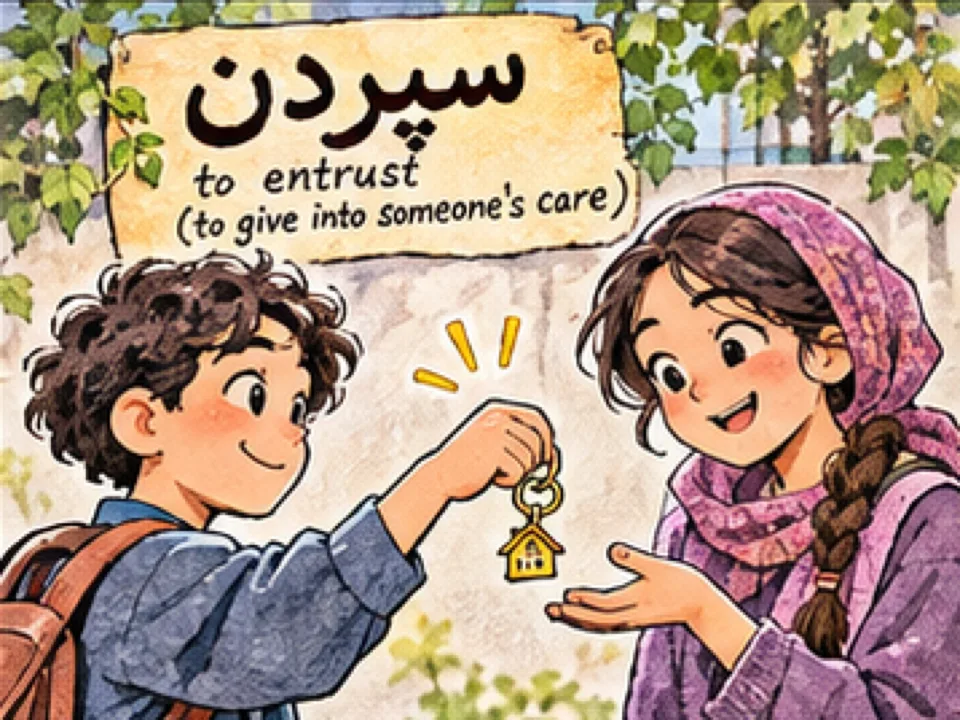
سِپُردَن
Watch and listen to Reza Nazari explain this verb. More in the free 200 Persian Verbs video course.
Depute – Consign
مُتَرادِفِ فارسی: دَر اِختیار قَرار دادَن
مُتَضادِ فارسی: نِگَه داشتَن
:صَرف
گُذَشتِه: سِپُردَم – سِپُردی – سِپُرد – سِپُردیم – سِپُردید – سِپُردَند
حال: می سِپارَم – می سِپاری – می سپارَد – می سپاریم – می سپارید – می سپارَند
:مِثال
.او بِه مَن یِک کِتاب اَمانت سِپُرد
.مَن دُختَرِ خود را بِه مادَرَم سِپُردَم
سپردن (sepordan) means "to entrust, to hand over" in Persian. Here are its stems, full conjugation, examples with English, common phrases and a short quiz.
How to use سپردن (sepordan)
سپردن is a simple transitive verb meaning "to entrust" or "to hand something over for safekeeping". You entrust something to someone with به: کلید را به همسایه سپردم, "I left the key with the neighbor". Its present stem is irregular: سپار (sepâr), so the present is میسپارم (misepâram).
It also means "to tell someone to do something" or "to ask them to make sure of it": به من سپرد که دیر نکنم, "he told me not to be late". Common set phrases include به خاطر سپردن (be khâter sepordan, "to memorize") and جان سپردن (jân sepordan, "to pass away"). The related noun سپرده (seporde) means a bank "deposit".
Verb stems
| Infinitive | سپردن | /sepordan/ | to entrust, to hand over; to tell (someone to do something) |
|---|---|---|---|
| Past stem | سپرد | /sepord/ | used for past tenses |
| Present stem | سپار | /sepâr/ | used for present, subjunctive and imperative |
Conjugation of سپردن
| Person | Simple past | Present | Future | Subjunctive |
|---|---|---|---|---|
| من I |
سپردم /sepordam/ |
میسپارم /misepâram/ |
خواهم سپرد /khâham sepord/ |
بسپارم /besepâram/ |
| تو you (sg.) |
سپردی /sepordi/ |
میسپاری /misepâri/ |
خواهی سپرد /khâhi sepord/ |
بسپاری /besepâri/ |
| او he / she |
سپرد /sepord/ |
میسپارد /misepârad/ |
خواهد سپرد /khâhad sepord/ |
بسپارد /besepârad/ |
| ما we |
سپردیم /sepordim/ |
میسپاریم /misepârim/ |
خواهیم سپرد /khâhim sepord/ |
بسپاریم /besepârim/ |
| شما you (pl./polite) |
سپردید /sepordid/ |
میسپارید /misepârid/ |
خواهید سپرد /khâhid sepord/ |
بسپارید /besepârid/ |
| آنها they |
سپردند /sepordand/ |
میسپارند /misepârand/ |
خواهند سپرد /khâhand sepord/ |
بسپارند /besepârand/ |
Negative and imperative
| Persian | Pronunciation | English |
|---|---|---|
| نسپردم | /nasepordam/ | I did not entrust |
| نمیسپارم | /nemisepâram/ | I do not entrust |
| بسپار! | /besepâr!/ | Entrust (it)! (to one person) |
| بسپارید! | /besepârid!/ | Entrust (it)! (to several people, or politely) |
| نسپار! | /nasepâr!/ | Don't entrust (it)! |
The examples above, translated
| Persian | Pronunciation | English |
|---|---|---|
| او به من یک کتاب امانت سپرد. | /u be man yek ketâb amânat sepord./ | He left a book with me for safekeeping. |
| من دختر خود را به مادرم سپردم. | /man dokhtar-e khod râ be mâdaram sepordam./ | I left my daughter in my mother's care. |
| آنها به من سپردند که به پدرم حرفی نزنم. | /ânhâ be man sepordand ke be pedaram harfi nazanam./ | They told me not to say anything to my father. |
More example sentences
| Persian | Pronunciation | English |
|---|---|---|
| این شعر را به خاطر بسپار. | /in she'r râ be khâter besepâr./ | Memorize this poem. |
| وقتی سفر میروم، گربهام را به دوستم میسپارم. | /vaghti safar miravam, gorbe-am râ be dustam misepâram./ | When I travel, I leave my cat with my friend. |
| مدیر این پروژه را به من سپرد. | /modir in porozhe râ be man sepord./ | The manager put me in charge of this project. |
| چمدانت را به هتل بسپار. | /chamedânat râ be hotel besepâr./ | Leave your suitcase with the hotel. |
Common phrases
| Persian | Pronunciation | English |
|---|---|---|
| به خاطر سپردن | /be khâter sepordan/ | to memorize |
| جان سپردن | /jân sepordan/ | to pass away |
| امانت سپردن | /amânat sepordan/ | to leave something in someone's trust |
| سپرده | /seporde/ | (bank) deposit |
In spoken Persian
In Tehran speech: بهش سپردم (behesh sepordam), "I told him (to do it)" or "I left it with him", and میسپارمش به تو (misepâramesh be to), "I'm leaving it with you". For "to tell someone to do something", people also say سفارش کردن (sefâresh kardan).
Watch out for
- The present stem is سپار (sepâr), not "sepor": میسپارم, بسپار.
- Note: the page's English "Depute – Consign" is unusual; "to entrust" or "to hand over" is clearer.
Practice
-
Translate into Persian: "Memorize these words."
Show answer
in kalamât râ be khâter besepâr. این کلمات را به خاطر بسپار.
-
What is the present stem of this verb? سپردن
Show answer
sepâr سپار
-
What does this sentence mean? کلید را به همسایه سپردم.
Show answer
I left the key with the neighbor.
Related verbs in this course
- نگه داشتن (negah dâshtan): to keep, to hold, to stop (a vehicle)
- گرفتن (gereftan): to take, to get, to catch, to hold
This is lesson 139 of 200 Most Common Persian Verbs. For the sounds used in the pronunciation guide, see Persian pronunciation.
.آنها بِه مَن سِپُردَند کِه بِه پِدَرَم حَرفی نَزَنَم


Take this lesson further

Study with the book
200 Absolutely Essential Persian Verbs
This free lesson is part of 200 Most Common Persian Verbs. The book puts the whole series in one printable PDF you can study offline.
Serious about Persian? Get all 30 of our Persian learning books for $199.99 (55% less than buying them one by one).
Free Persian Starter Kit (PDF)
The Persian alphabet chart and the 101 most common Persian words with pronunciation, in one printable PDF. You also get a one-time 15% code for any of our books.
We will email you new lessons and book news from Learn Persian Online. Unsubscribe any time.Free: 100 Core Persian Words + 20 Survival Phrases
Get the 14-page printable Starter Pack (all 32 letters, a 7-day reading plan, 100 core words and 20 survival phrases) and a short 5-email course. Free.
Practise with free Persian games