200 Most Common Persian Verbs
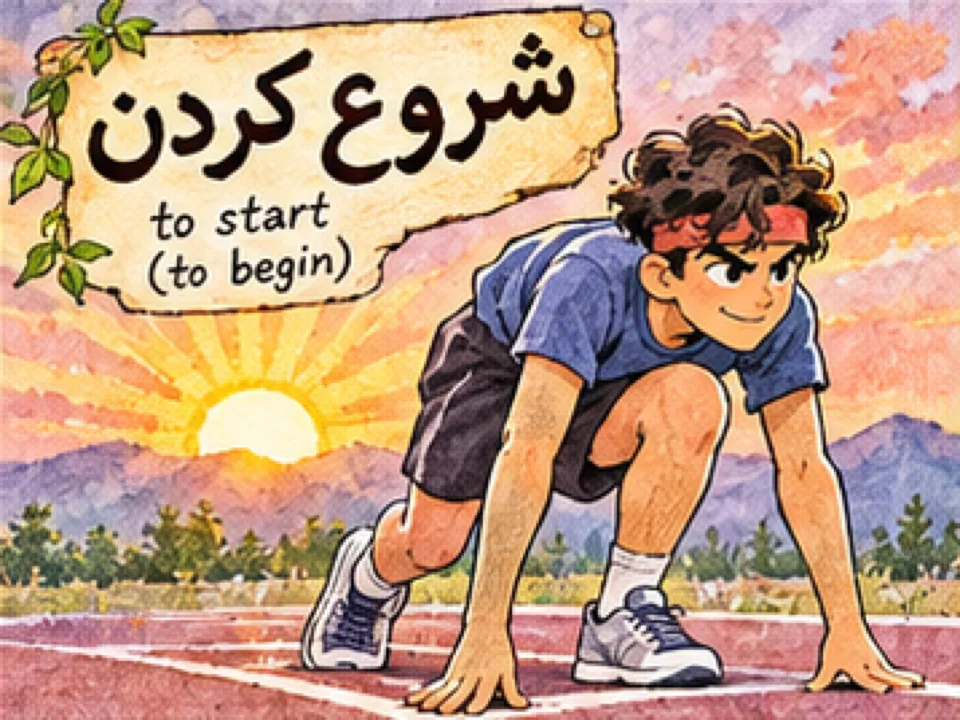
شروع کَردَن
Watch and listen to Reza Nazari explain this verb. More in the free 200 Persian Verbs video course.
Start – Begin
مُتَرادِفِ فارسی: آغاز کَردَن – افتِتاح کَردَن
مُتَضادِ فارسی: خاتِمِه دادَن – پایان دادَن
:صَرف
گُذَشتِه: شُروع کَردَم – شُروع کَردی – شُروع کَرد – شُروع کَردیم – شُروع کَردید – شُروع کَردَند
حال: شُروع می کُنَم – شُروع می کُنی – شُروع می کُنَد – شُروع می کُنیم – شُروع می کُنید – شُروع می کُنَند
:مِثال
.او یِک کارِ جَدید شُروع کَرد
.مَن شُروع کَردَم بِه دَرس خواندَن
شروع کردن (shoru' kardan) means "to start, to begin" in Persian. Here are its stems, full conjugation, examples, common phrases and a short quiz.
How to use شروع کردن (shoru' kardan)
شروع کردن is a compound verb: the Arabic-origin noun شروع (shoru', "beginning") plus کردن. It is the everyday verb for "to start" or "to begin" something. It can take a direct object, کار را شروع کردم ("I started the work"), or به plus an infinitive: شروع کرد به خندیدن, "she started laughing".
شروع کردن is transitive: someone starts something. When something starts by itself, use شروع شدن (shoru' shodan): کلاس ساعت نه شروع میشود, "the class starts at nine". A more formal synonym is آغاز کردن (âghâz kardan). Learners often say "kelâs shoru' mikonad", which sounds as if the class is starting something.
Verb stems
| Infinitive | شروع کردن | /shoru' kardan/ | to start, to begin |
|---|---|---|---|
| Past stem | شروع کرد | /shoru' kard/ | used for past tenses |
| Present stem | شروع کن | /shoru' kon/ | used for present, subjunctive and imperative |
Conjugation of شروع کردن
| Person | Simple past | Present | Future | Subjunctive |
|---|---|---|---|---|
| من I |
شروع کردم /shoru' kardam/ |
شروع میکنم /shoru' mikonam/ |
شروع خواهم کرد /shoru' khâham kard/ |
شروع کنم /shoru' konam/ |
| تو you (sg.) |
شروع کردی /shoru' kardi/ |
شروع میکنی /shoru' mikoni/ |
شروع خواهی کرد /shoru' khâhi kard/ |
شروع کنی /shoru' koni/ |
| او he / she |
شروع کرد /shoru' kard/ |
شروع میکند /shoru' mikonad/ |
شروع خواهد کرد /shoru' khâhad kard/ |
شروع کند /shoru' konad/ |
| ما we |
شروع کردیم /shoru' kardim/ |
شروع میکنیم /shoru' mikonim/ |
شروع خواهیم کرد /shoru' khâhim kard/ |
شروع کنیم /shoru' konim/ |
| شما you (pl./polite) |
شروع کردید /shoru' kardid/ |
شروع میکنید /shoru' mikonid/ |
شروع خواهید کرد /shoru' khâhid kard/ |
شروع کنید /shoru' konid/ |
| آنها they |
شروع کردند /shoru' kardand/ |
شروع میکنند /shoru' mikonand/ |
شروع خواهند کرد /shoru' khâhand kard/ |
شروع کنند /shoru' konand/ |
Negative and imperative
| Persian | Pronunciation | English |
|---|---|---|
| شروع نکردم | /shoru' nakardam/ | I did not start |
| شروع نمیکنم | /shoru' nemikonam/ | I do not start / I am not starting |
| شروع کن! | /shoru' kon!/ | Start! (to one person) |
| شروع کنید! | /shoru' konid!/ | Start! (to several people, or politely) |
| شروع نکن! | /shoru' nakon!/ | Don't start! |
The examples above, translated
| Persian | Pronunciation | English |
|---|---|---|
| او یک کار جدید شروع کرد. | /u yek kâr-e jadid shoru' kard./ | He started a new job. |
| من شروع کردم به درس خواندن. | /man shoru' kardam be dars khândan./ | I started studying. |
| بچه شروع کرد به گریه کردن. | /bachche shoru' kard be gerye kardan./ | The child started crying. |
More example sentences
| Persian | Pronunciation | English |
|---|---|---|
| از فردا ورزش را شروع میکنم. | /az fardâ varzesh râ shoru' mikonam./ | I'll start exercising tomorrow. |
| بیا کار را شروع کنیم. | /biyâ kâr râ shoru' konim./ | Let's start the work. |
| او پارسال یادگیری فارسی را شروع کرد. | /u pârsâl yâdgiri-ye fârsi râ shoru' kard./ | She started learning Persian last year. |
| فیلم ساعت هشت شروع میشود. | /film sâ'at-e hasht shoru' mishavad./ | The movie starts at eight. |
Common phrases
| Persian | Pronunciation | English |
|---|---|---|
| شروع شدن | /shoru' shodan/ | to begin (by itself), to start |
| از اول شروع کردن | /az avval shoru' kardan/ | to start over |
| آغاز کردن | /âghâz kardan/ | to begin (formal) |
| شروع به کار کردن | /shoru' be kâr kardan/ | to start working, to begin operating |
In spoken Persian
In Tehran speech the endings shorten: شروع میکنه (shoru' mikone), شروع میکنن (shoru' mikonan). With an infinitive, speakers often drop به: شروع کرد گریه کردن (shoru' kard gerye kardan), "he started crying".
Watch out for
- Use شروع شدن, not شروع کردن, when the subject is an event that starts by itself: جلسه شروع شد (jalase shoru' shod), "the meeting started".
- Note: on the page بچه in example 3 is marked with the vowel e on the first letter; it is pronounced bachche.
Practice
-
Translate into Persian: "We started the lesson."
Show answer
dars râ shoru' kardim. درس را شروع کردیم.
-
Fill in the missing verb ("The class starts at ten"): کلاس ساعت ده شروع ___.
Show answer
mishavad, because the class starts by itself (shoru' shodan). میشود
-
Give the imperative for several people ("Start!").
Show answer
shoru' konid! شروع کنید!
This is lesson 145 of 200 Most Common Persian Verbs. For the sounds used in the pronunciation guide, see Persian pronunciation.
.بِچِه شُروع کَرد بِه گِریِه کَردَن


Take this lesson further

Study with the book
200 Absolutely Essential Persian Verbs
This free lesson is part of 200 Most Common Persian Verbs. The book puts the whole series in one printable PDF you can study offline.
Serious about Persian? Get all 30 of our Persian learning books for $199.99 (55% less than buying them one by one).
Free Persian Starter Kit (PDF)
The Persian alphabet chart and the 101 most common Persian words with pronunciation, in one printable PDF. You also get a one-time 15% code for any of our books.
We will email you new lessons and book news from Learn Persian Online. Unsubscribe any time.Free: 100 Core Persian Words + 20 Survival Phrases
Get the 14-page printable Starter Pack (all 32 letters, a 7-day reading plan, 100 core words and 20 survival phrases) and a short 5-email course. Free.
Practise with free Persian games