200 Most Common Persian Verbs
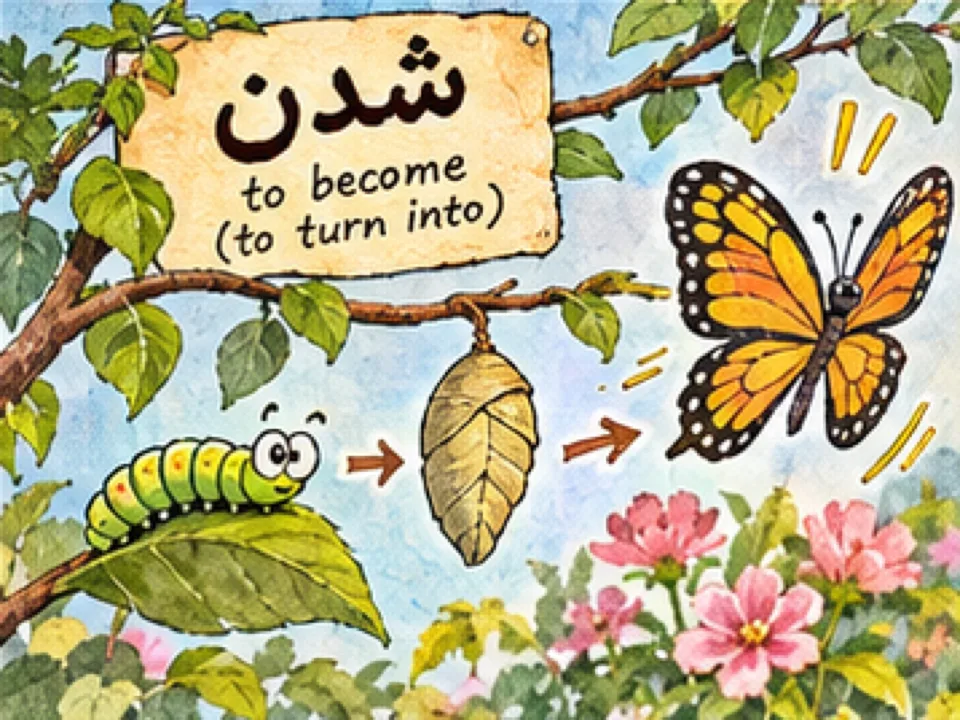
شُدَن
Watch and listen to Reza Nazari explain this verb. More in the free 200 Persian Verbs video course.
Become – Be
مُتَرادِفِ فارسی: گَشتَن – گَردیدَن
:مُتَضادِ فارسی
:صَرف
گُذَشتِه: شُدَم – شُدی – شُد – شُدیم – شُدید – شُدَند
حال: می شَوَم – می شَوی – می شَوَد – می شَویم – می شَوید – می شَوَند
:مِثال
.گُل هایِ باغچِه زود بُزرگ شُدَن
.او می گویَد بُزرگ شُدَم یِک پِزِشک می شَوَم
شدن (shodan) means "to become, to get" in Persian. Here are its stems, full conjugation, examples with English, common phrases and a short quiz.
How to use شدن (shodan)
شدن means "to become" or "to get": خسته شدم, "I got tired", دکتر شد, "she became a doctor". It is intransitive and one of the most frequent verbs in Persian. Its stems are irregular: past شد (shod), present شو (shav), giving میشوم (mishavam) and the subjunctive بشوم (beshavam).
شدن is also a light verb that forms hundreds of intransitive compounds: تمام شدن (to end), بیدار شدن (to wake up), غرق شدن (to drown). It builds the passive voice too: ساخته شد (sâkhte shod), "it was built". And میشود on its own means "it is possible": میشود بیایم؟, "Can I come?"
Verb stems
| Infinitive | شدن | /shodan/ | to become, to get |
|---|---|---|---|
| Past stem | شد | /shod/ | used for past tenses |
| Present stem | شو | /shav/ | used for present, subjunctive and imperative |
Conjugation of شدن
| Person | Simple past | Present | Future | Subjunctive |
|---|---|---|---|---|
| من I |
شدم /shodam/ |
میشوم /mishavam/ |
خواهم شد /khâham shod/ |
بشوم /beshavam/ |
| تو you (sg.) |
شدی /shodi/ |
میشوی /mishavi/ |
خواهی شد /khâhi shod/ |
بشوی /beshavi/ |
| او he / she |
شد /shod/ |
میشود /mishavad/ |
خواهد شد /khâhad shod/ |
بشود /beshavad/ |
| ما we |
شدیم /shodim/ |
میشویم /mishavim/ |
خواهیم شد /khâhim shod/ |
بشویم /beshavim/ |
| شما you (pl./polite) |
شدید /shodid/ |
میشوید /mishavid/ |
خواهید شد /khâhid shod/ |
بشوید /beshavid/ |
| آنها they |
شدند /shodand/ |
میشوند /mishavand/ |
خواهند شد /khâhand shod/ |
بشوند /beshavand/ |
Negative and imperative
| Persian | Pronunciation | English |
|---|---|---|
| نشدم | /nashodam/ | I did not become |
| نمیشوم | /nemishavam/ | I do not become / I am not becoming |
| بشو! | /besho!/ | Become! (to one person) |
| بشوید! | /beshavid!/ | Become! (to several people, or politely) |
| نشو! | /nasho!/ | Don't become! |
The examples above, translated
| Persian | Pronunciation | English |
|---|---|---|
| گلهای باغچه زود بزرگ شدند. | /gol-hâ-ye bâghche zud bozorg shodand./ | The flowers in the garden grew quickly. |
| او میگوید بزرگ شدم یک پزشک میشوم. | /u miguyad bozorg shodam yek pezeshk mishavam./ | He says, "When I grow up, I'll become a doctor." |
| تو عصبانی شدی. | /to asabâni shodi./ | You got angry. |
More example sentences
| Persian | Pronunciation | English |
|---|---|---|
| هوا کمکم سرد میشود. | /havâ kam-kam sard mishavad./ | The weather is gradually getting cold. |
| دوست دارم معلم بشوم. | /dust dâram mo'allem beshavam./ | I'd like to become a teacher. |
| دیروز در مدرسه چه شد؟ | /diruz dar madrese che shod?/ | What happened at school yesterday? |
| این خانه صد سال پیش ساخته شد. | /in khâne sad sâl pish sâkhte shod./ | This house was built a hundred years ago. |
Common phrases
| Persian | Pronunciation | English |
|---|---|---|
| چه شد؟ | /che shod?/ | What happened? |
| میشود…؟ | /mishavad…?/ | Is it possible…? May I…? |
| تمام شدن | /tamâm shodan/ | to end, to run out |
| خوب شدن | /khub shodan/ | to get better, to recover |
In spoken Persian
شدن changes a lot in Tehran speech: میشوم becomes میشم (misham), میشود becomes میشه (mishe), and بشوم becomes بشم (besham). میشه؟ (mishe?) is the everyday way to ask "Can I?" or "Is it OK?", and چی شد؟ (chi shod?) means "What happened?"
Watch out for
- Note: in the page's first example, شدن should be شدند ("they grew"): گلهای باغچه زود بزرگ شدند.
- Do not confuse شدن (to become) with بودن (to be): خسته بودم means "I was tired", خسته شدم means "I got tired".
Practice
-
Translate into Persian: "I got tired."
Show answer
khaste shodam. خسته شدم.
-
How do Tehranis ask "Is it possible? Can I?"
Show answer
mishe? میشه؟
-
Give the subjunctive form for "we".
Show answer
beshavim بشویم
Related verbs in this course
This is lesson 144 of 200 Most Common Persian Verbs. For the sounds used in the pronunciation guide, see Persian pronunciation.
.تو عَصَبانی شُدی


Take this lesson further

Study with the book
200 Absolutely Essential Persian Verbs
This free lesson is part of 200 Most Common Persian Verbs. The book puts the whole series in one printable PDF you can study offline.
Serious about Persian? Get all 30 of our Persian learning books for $199.99 (55% less than buying them one by one).
Free Persian Starter Kit (PDF)
The Persian alphabet chart and the 101 most common Persian words with pronunciation, in one printable PDF. You also get a one-time 15% code for any of our books.
We will email you new lessons and book news from Learn Persian Online. Unsubscribe any time.Free: 100 Core Persian Words + 20 Survival Phrases
Get the 14-page printable Starter Pack (all 32 letters, a 7-day reading plan, 100 core words and 20 survival phrases) and a short 5-email course. Free.
Practise with free Persian games