200 Most Common Persian Verbs
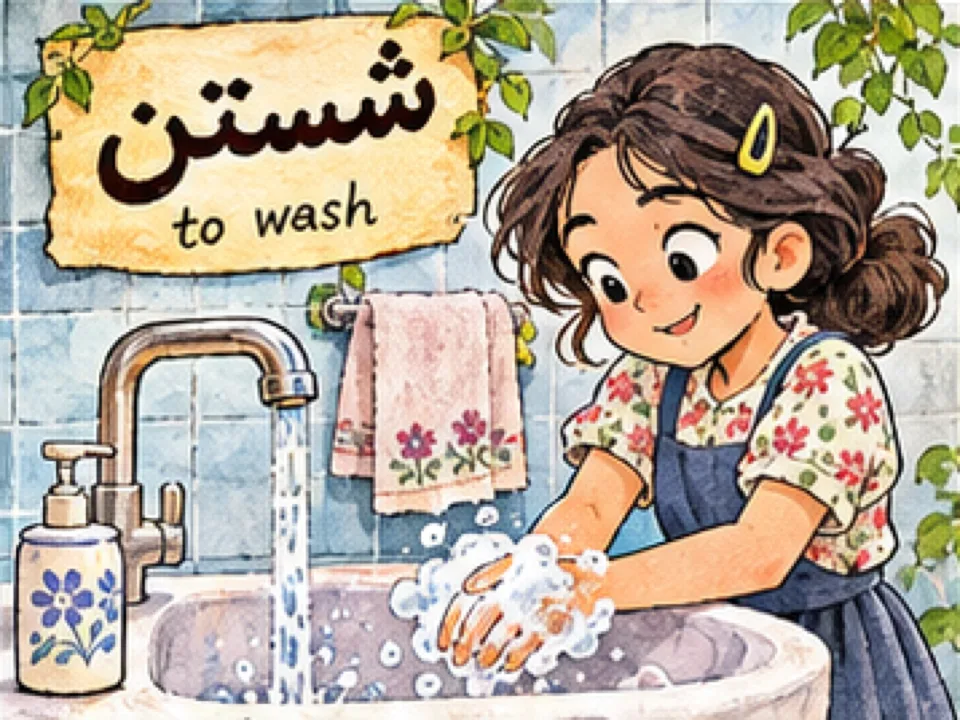
شُستَن
Watch and listen to Reza Nazari explain this verb. More in the free 200 Persian Verbs video course.
Wash – Launder
مُتَرادِفِ فارسی: تَمیز کَردَن
مُتَضادِ فارسی: کَثیف کَردَن
:صَرف
گُذَشتِه: شُستَم – شُستی – شُست – شُستیم – شُستید – شُستَند
حال: می شویَم – می شویی – می شویَد – می شویی- می شویید – می شویَند
:مِثال
.مَن لِباس ها را شُستَم
.تو ظَرف ها را می شویی
شستن (shostan) means "to wash" in Persian. Here are its stems, full conjugation, examples with English, common phrases and a short quiz.
How to use شستن (shostan)
شستن is a simple transitive verb meaning "to wash": dishes, clothes, hands, a car. Its present stem in standard written Persian is شوی (shuy), so the present tense is میشویم (mishuyam), "I wash", and میشوییم (mishuyim), "we wash". These two look very similar; the extra ی marks "we".
In everyday speech almost everyone uses a different stem, شور (shur): میشورم (mishuram), بشور (beshur). This is the form you will hear at home and in shops, while میشویم belongs to writing. Related words include دستشویی (dastshuyi, "restroom, washbasin"), ظرفشویی (zarfshuyi, "dishwashing; dishwasher") and ماشین لباسشویی (mâshin-e lebâsshuyi, "washing machine").
Verb stems
| Infinitive | شستن | /shostan/ | to wash |
|---|---|---|---|
| Past stem | شست | /shost/ | used for past tenses |
| Present stem | شوی | /shuy/ | used for present, subjunctive and imperative |
Conjugation of شستن
| Person | Simple past | Present | Future | Subjunctive |
|---|---|---|---|---|
| من I |
شستم /shostam/ |
میشویم /mishuyam/ |
خواهم شست /khâham shost/ |
بشویم /beshuyam/ |
| تو you (sg.) |
شستی /shosti/ |
میشویی /mishuyi/ |
خواهی شست /khâhi shost/ |
بشویی /beshuyi/ |
| او he / she |
شست /shost/ |
میشوید /mishuyad/ |
خواهد شست /khâhad shost/ |
بشوید /beshuyad/ |
| ما we |
شستیم /shostim/ |
میشوییم /mishuyim/ |
خواهیم شست /khâhim shost/ |
بشوییم /beshuyim/ |
| شما you (pl./polite) |
شستید /shostid/ |
میشویید /mishuyid/ |
خواهید شست /khâhid shost/ |
بشویید /beshuyid/ |
| آنها they |
شستند /shostand/ |
میشویند /mishuyand/ |
خواهند شست /khâhand shost/ |
بشویند /beshuyand/ |
Negative and imperative
| Persian | Pronunciation | English |
|---|---|---|
| نشستم | /nashostam/ | I did not wash |
| نمیشویم | /nemishuyam/ | I do not wash / I am not washing |
| بشوی! | /beshuy!/ | Wash! (to one person) |
| بشویید! | /beshuyid!/ | Wash! (to several people, or politely) |
| نشوی! | /nashuy!/ | Don't wash! |
The examples above, translated
| Persian | Pronunciation | English |
|---|---|---|
| من لباسها را شستم. | /man lebâs-hâ râ shostam./ | I washed the clothes. |
| تو ظرفها را میشویی. | /to zarf-hâ râ mishuyi./ | You wash the dishes. |
| آنها فرش میشویند. | /ânhâ farsh mishuyand./ | They wash carpets. |
More example sentences
| Persian | Pronunciation | English |
|---|---|---|
| قبل از غذا دستهایت را بشوی. | /ghabl az ghazâ dast-hâyat râ beshuy./ | Wash your hands before eating. |
| امشب من ظرفها را میشویم. | /emshab man zarf-hâ râ mishuyam./ | Tonight I'll wash the dishes. |
| پدرم هر جمعه ماشین را میشوید. | /pedaram har jom'e mâshin râ mishuyad./ | My father washes the car every Friday. |
| این پیراهن را با آب سرد شستم. | /in pirâhan râ bâ âb-e sard shostam./ | I washed this shirt in cold water. |
Common phrases
| Persian | Pronunciation | English |
|---|---|---|
| دستشویی | /dastshuyi/ | restroom; washbasin |
| ماشین لباسشویی | /mâshin-e lebâsshuyi/ | washing machine |
| ظرف شستن | /zarf shostan/ | to do the dishes |
| شستشو | /shostoshu/ | washing, cleaning |
In spoken Persian
In Tehran speech شستن uses the stem شور (shur) in the present: میشورم (mishuram), میشوره (mishure), بشور (beshur). The past stays the same: شستم (shostam). So "wash the dishes" in a Tehran kitchen is ظرفا رو بشور (zarfâ ro beshur).
Watch out for
- Note: the page's present-tense table lists میشویی twice; the form for "we" should be میشوییم (mishuyim).
- Keep the two stems apart by style: write میشویم, بشویید, but say میشورم, بشورین.
Practice
-
Translate into Persian (written style): "Wash your hands."
Show answer
dast-hâyat râ beshuy. دستهایت را بشوی.
-
Give the written present-tense form for "we".
Show answer
mishuyim میشوییم
-
What does this colloquial sentence mean? ظرفا رو بشور.
Show answer
Wash the dishes.
Related verbs in this course
This is lesson 146 of 200 Most Common Persian Verbs. For the sounds used in the pronunciation guide, see Persian pronunciation.
.آنها فَرش می شویَند


Take this lesson further

Study with the book
200 Absolutely Essential Persian Verbs
This free lesson is part of 200 Most Common Persian Verbs. The book puts the whole series in one printable PDF you can study offline.
Serious about Persian? Get all 30 of our Persian learning books for $199.99 (55% less than buying them one by one).
Free Persian Starter Kit (PDF)
The Persian alphabet chart and the 101 most common Persian words with pronunciation, in one printable PDF. You also get a one-time 15% code for any of our books.
We will email you new lessons and book news from Learn Persian Online. Unsubscribe any time.Free: 100 Core Persian Words + 20 Survival Phrases
Get the 14-page printable Starter Pack (all 32 letters, a 7-day reading plan, 100 core words and 20 survival phrases) and a short 5-email course. Free.
Practise with free Persian games